Why Are Hollow Concrete Blocks and Solid Concrete Bricks Used for Different Construction Projects?Concrete blocks are among the most widely used building materials in modern construction. Whether for residential housing, commercial buildings or industrial projects, different types of concrete masonry units are selected according to structural requirements, project budgets and local building standards.
Among the various concrete products available today, hollow concrete blocks and solid concrete bricks are the two most common choices. Although both are manufactured from similar raw materials, they differ significantly in structure, weight, strength, thermal performance and applications.
Understanding these differences helps contractors, builders and block manufacturers select the most suitable product for each construction project while improving construction efficiency and reducing overall costs.
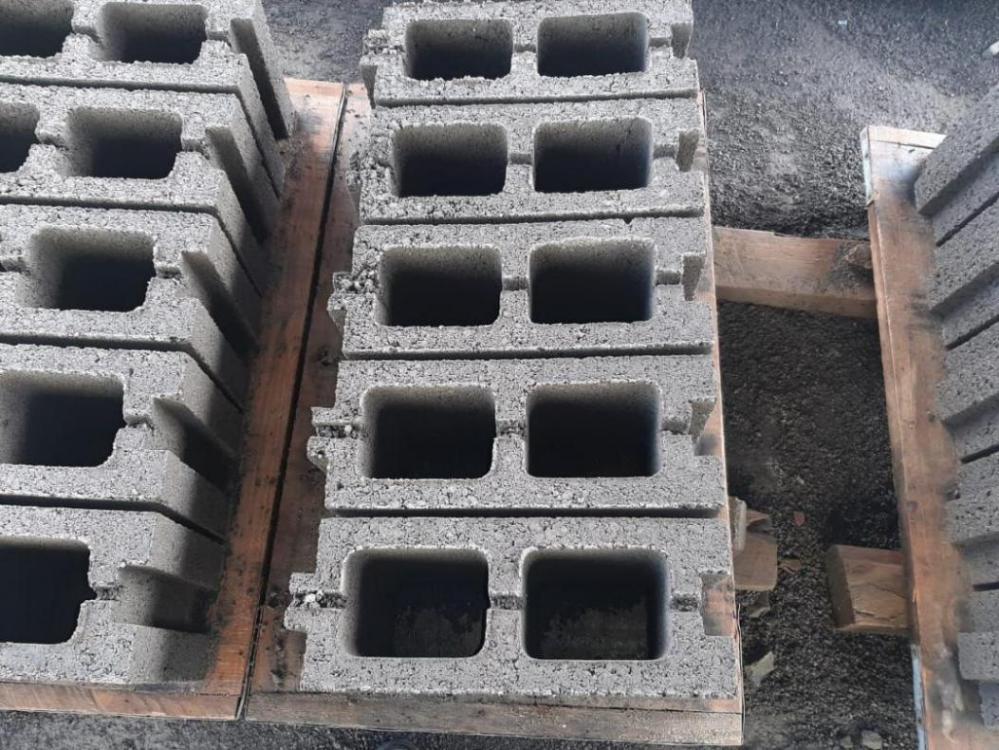
What Is a Hollow Concrete Block?
A hollow concrete block is a precast concrete masonry unit designed with one or more hollow cores. These hollow sections reduce the overall weight of the block while maintaining sufficient structural strength for most building applications.
Compared with traditional solid bricks, hollow blocks require less raw material, making them more economical to manufacture and easier to transport. Their internal cavities also improve thermal insulation and sound insulation, making them particularly suitable for residential buildings in many countries.
Modern automatic concrete block machines can manufacture various hollow block sizes simply by replacing the mould. Common products include 4-inch, 6-inch and 8-inch hollow concrete blocks used in residential, commercial and industrial construction.
The main raw materials include cement, sand, crushed stone, fly ash and water. Through hydraulic pressure and synchronized vibration, the concrete mixture is compacted into moulds to produce blocks with high dimensional accuracy and consistent compressive strength.
What Is a Solid Concrete Brick?
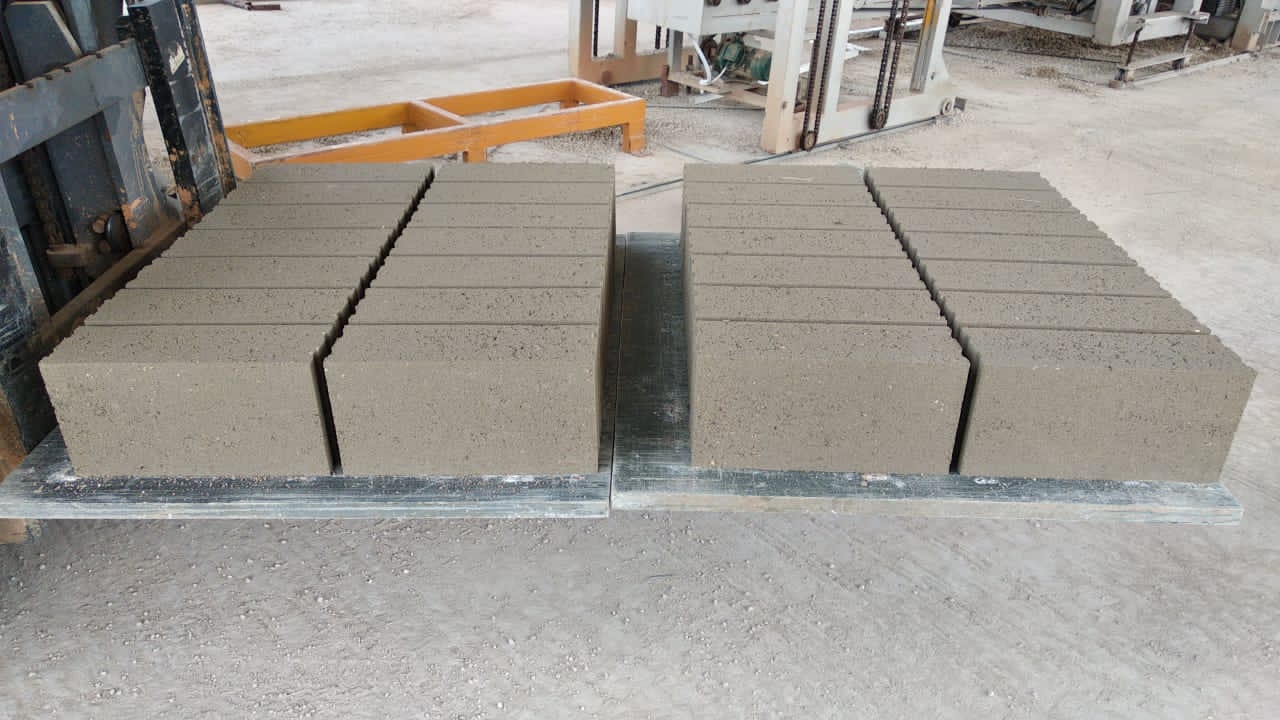
A solid concrete brick is a dense precast concrete product without hollow cavities. Since the entire cross-section is filled with concrete, solid bricks generally provide higher compressive strength and better impact resistance than hollow blocks.
Solid concrete bricks are widely used for foundations, retaining walls, load-bearing structures, boundary walls, industrial buildings and other applications requiring high structural performance.
Although solid bricks consume more concrete and are heavier than hollow blocks, they offer excellent durability and long service life under demanding working conditions.
Modern production lines allow manufacturers to switch from hollow blocks to solid bricks quickly by changing the mould, greatly improving equipment utilization and production flexibility.
Advantages of Hollow Concrete Blocks
Hollow concrete blocks have become one of the most popular construction materials worldwide because
they provide a good balance between strength, cost efficiency and construction convenience.
With the development of modern block making technology, hollow blocks can meet the requirements
of many residential, commercial and industrial projects.
1. Lower Material Consumption and Production Cost
The hollow structure reduces the amount of concrete required for each block.
For block manufacturers, this means lower raw material consumption and improved production efficiency.
Compared with solid bricks, hollow blocks can help reduce manufacturing costs while maintaining reliable performance.
2. Lightweight and Easier Installation
Because of their internal cavities, hollow concrete blocks are lighter than solid concrete bricks.
This makes transportation easier and reduces labor requirements during construction.
3. Better Thermal and Sound Insulation Performance
The air spaces inside hollow blocks provide additional insulation properties.
They help reduce heat transfer and improve indoor comfort, which is especially valuable in regions
with hot climates.
4. Higher Production Efficiency for Block Factories
Hollow blocks are widely produced in modern concrete block factories because they provide high market demand
and efficient production. A professional automatic concrete block machine can produce thousands of hollow blocks per day with stable quality.
Advantages of Solid Concrete Bricks
Although hollow blocks are widely used in modern construction, solid concrete bricks remain an important
building material for projects requiring higher density and structural strength.
1. Higher Strength and Load-Bearing Capacity
Since solid bricks contain concrete throughout the entire structure, they provide excellent compressive strength
and resistance to heavy loads. They are commonly selected for foundations, industrial buildings and other
high-strength applications.
2. Excellent Durability
Solid concrete bricks have a dense structure that provides good resistance against impact, weather conditions
and long-term environmental exposure. With proper production and curing, they can provide a very long service life.
3. Suitable for Heavy-Duty Construction Projects
For projects where structural stability is the priority, solid bricks remain a reliable choice.
Many construction companies use solid concrete bricks for boundary walls, retaining structures and load-bearing walls.
Typical Applications of Hollow Blocks and Solid Bricks
Different construction projects require different types of concrete products.
Selecting the correct block type can improve construction efficiency and reduce project costs.
| Product Type | Typical Applications |
|---|
| Hollow Concrete Blocks | Residential houses, apartment buildings, partition walls, commercial buildings and general construction projects. |
| Solid Concrete Bricks | Foundations, retaining walls, industrial buildings, heavy-duty walls and high-strength structures. |
How Are Hollow Blocks and Solid Bricks Manufactured?
Both hollow concrete blocks and solid concrete bricks are produced through similar manufacturing processes.
The main difference comes from the concrete block mould design.
The typical production process includes:
- Raw material batching: Cement, sand, crushed stone, fly ash and water are accurately measured.
- Concrete mixing: The materials are mixed evenly to achieve consistent quality.
- Block forming: The concrete mixture is filled into moulds and compressed through hydraulic pressure.
- Vibration: High-performance vibration systems compact the material and improve block density.
- Curing: Finished products are cured to achieve required strength before delivery.
By changing different concrete block moulds, manufacturers can produce various products including hollow blocks,
solid bricks, pavers and other precast concrete products.
Can One Automatic Concrete Block Machine Produce Both Products?
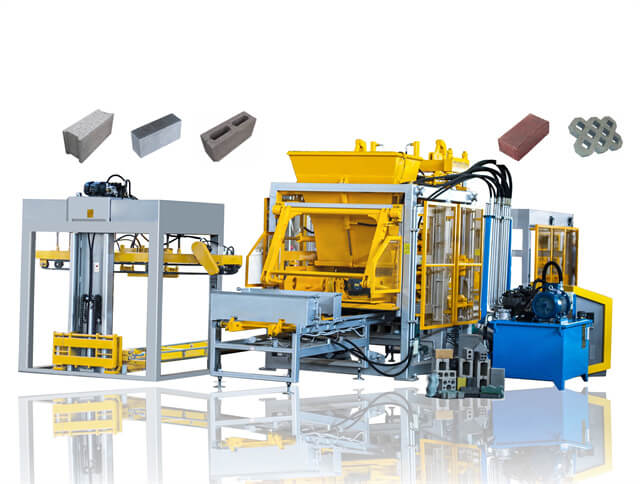
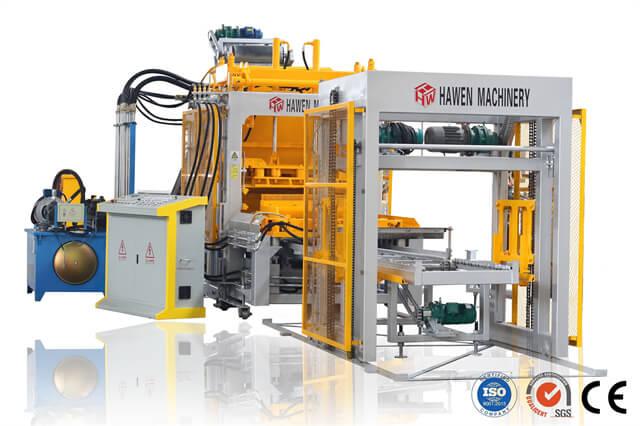
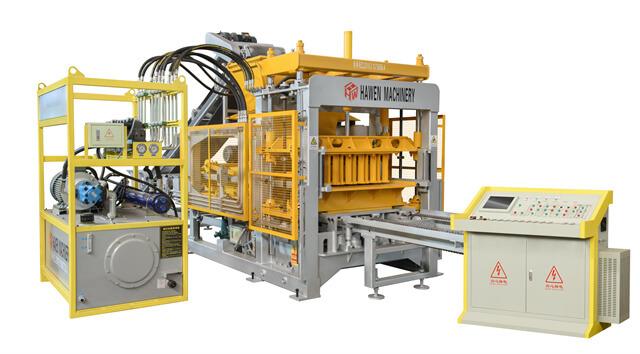
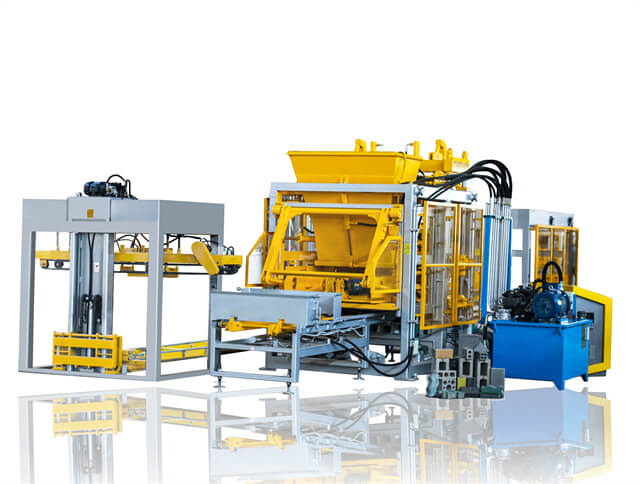
Yes. Modern automatic concrete block machines are designed with flexible production capabilities.
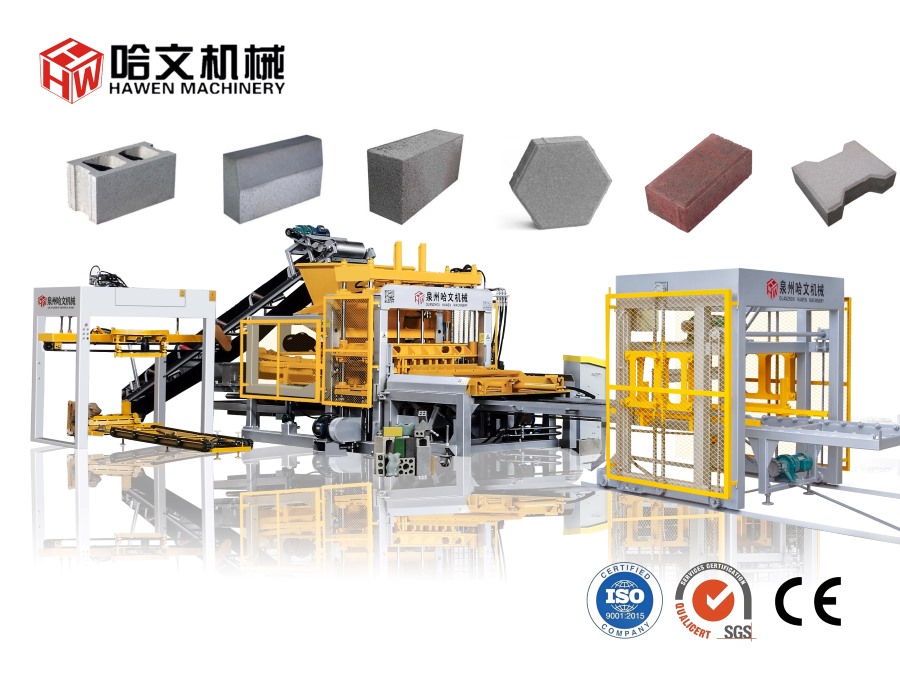
By replacing different moulds, one machine can manufacture multiple concrete products according to market demand.
For example, the same block making machine can produce:
- Hollow concrete blocks in different sizes, such as 4-inch, 6-inch and 8-inch blocks.
- Solid concrete bricks for stronger structural applications.
- Interlocking paving blocks for roads and landscaping projects.
- Customized precast concrete products according to customer requirements.
This flexibility allows block manufacturers to serve different construction markets without investing
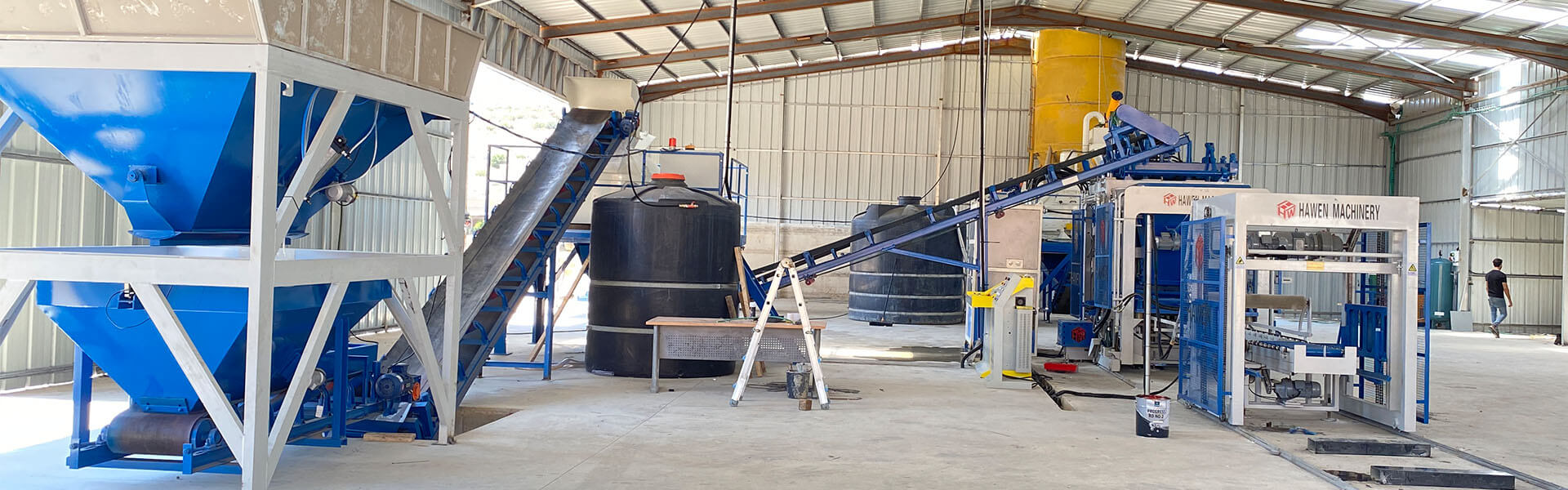
in multiple machines. A complete concrete block production line can significantly improve factory efficiency and investment return.
Conclusion
Hollow concrete blocks and solid concrete bricks both play important roles in modern construction.
Hollow blocks provide advantages in lightweight construction, material efficiency and production cost,
while solid bricks offer higher density and strength for demanding applications.
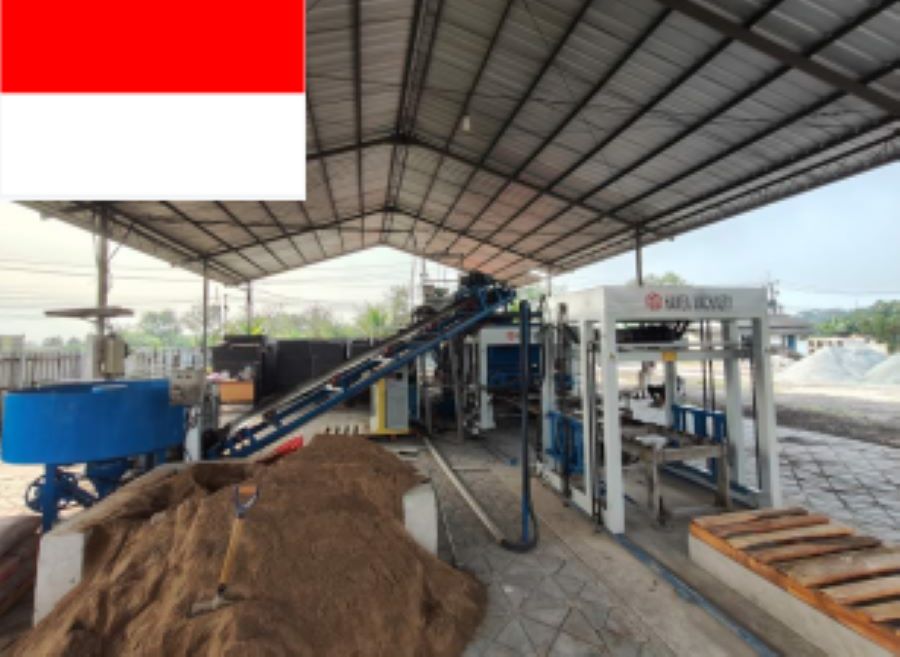
For block manufacturers, choosing a flexible automatic concrete block machine is an effective way to produce different concrete products and adapt to changing market demands.
With the right equipment, manufacturers can improve production efficiency, maintain stable quality
and build long-term business growth.
Frequently Asked Questions
1. Can the same machine produce hollow blocks and solid bricks?
Yes. Most modern block making machines can produce both products by changing the concrete block mould.
2. Which is stronger, hollow blocks or solid bricks?
Solid bricks usually provide higher compressive strength because they contain more concrete.
However, properly manufactured hollow blocks can also meet the requirements of many construction projects.
3. Which product is more profitable for block manufacturers?
It depends on the local market demand. Hollow blocks usually have wider applications, while solid bricks
can provide additional opportunities for special construction projects.
4. What machine is suitable for producing hollow blocks and solid bricks?
An automatic concrete block machine with interchangeable moulds is the ideal solution because it allows
manufacturers to produce multiple products with one production line.





 Tel: +86-13905968794
 Email: export@hwmachines.com
 MP/WhatsApp: +86-13905968794
 Manufacturer Address:Nanan,Quanzhou City,Fujian Province,China