Cement must reach the concrete mixer in a controlled and measurable way before a block machine can produce stable products. In a small factory, cement may be carried in bags and poured directly into the mixer. In a larger automatic line, bulk cement is normally stored in a silo, transferred by screw conveyor, weighed automatically, and discharged into a planetary or twin-shaft mixer. Between these two situations, there are several intermediate solutions, and each has a different cost, labor demand, accuracy level, dust control condition, and suitable production scale.
For concrete block production, the way cement is transported to the mixer affects more than convenience. It affects batching accuracy, mixing consistency, production rhythm, worker safety, dust control, and long-term operating cost. A good block making machine still depends on correct material supply. If cement feeding is slow, inaccurate, dusty, or unstable, the mixer may receive different cement quantities from batch to batch, and finished blocks may show strength or color variation.
This article explains the main ways to move cement to the concrete mixer, including manual bag feeding, small hopper feeding, bulk bag feeding, cement silo with screw conveyor, and pneumatic transfer. It also discusses which method is more suitable for small, medium, and large-scale block production. The goal is to help buyers choose a cement feeding method that matches output requirement, local cement supply form, factory layout, labor cost, and automation level.
Cement transfer before concrete mixing
Cement transfer is the step between storage and mixing. The storage may be 50 kg bags, jumbo bags, a small hopper, a steel silo, or a bulk delivery truck. The mixer may be a small drum mixer, pan mixer, planetary mixer, or twin-shaft mixer. The transfer method connects these two points and determines how fast and accurately cement reaches the batch.
The transfer method should not be chosen only by equipment price. A low-cost method may be suitable for a small plant, but it can become expensive if it slows the production line or requires many workers. A fully automatic method may look more expensive at first, but it can reduce labor, dust, cement waste, and batching error when daily output is high. The correct choice depends on the whole production plan.
In block production, cement is usually weighed before mixing. The weighing may be manual, semi-automatic, or fully automatic. Manual feeding can rely on bag count, but this is less precise if bags are damaged, partly used, or have weight variation. Automatic systems usually use a cement scale or weighing hopper, which improves repeatability and supports recipe control for hollow blocks, pavers, kerbstones, and face-mix products.
Manual bag feeding to the mixer
Manual bag feeding is the simplest method. Workers carry cement bags and pour them into the mixer or into a small charging hopper above the mixer. This method needs little equipment and can be started quickly. It is common in small block plants, trial production, temporary projects, and markets where bulk cement delivery is not available.
The advantage is low initial investment. A small factory can begin production without installing a cement silo, screw conveyor, dust collector, or automatic cement scale. It also gives flexibility when the plant uses different cement brands or small production batches. For a new investor testing local block demand, manual feeding may be acceptable at the beginning.
The limitations become clear when output increases. Workers must lift heavy bags, dust exposure is higher, feeding speed is limited, and batching accuracy depends on human operation. If a machine cycle is fast but cement loading is slow, the mixer becomes the bottleneck. Manual bag feeding is also less suitable for colored pavers or high-strength blocks where accurate cement proportion is important.
Small hopper or bulk bag feeding
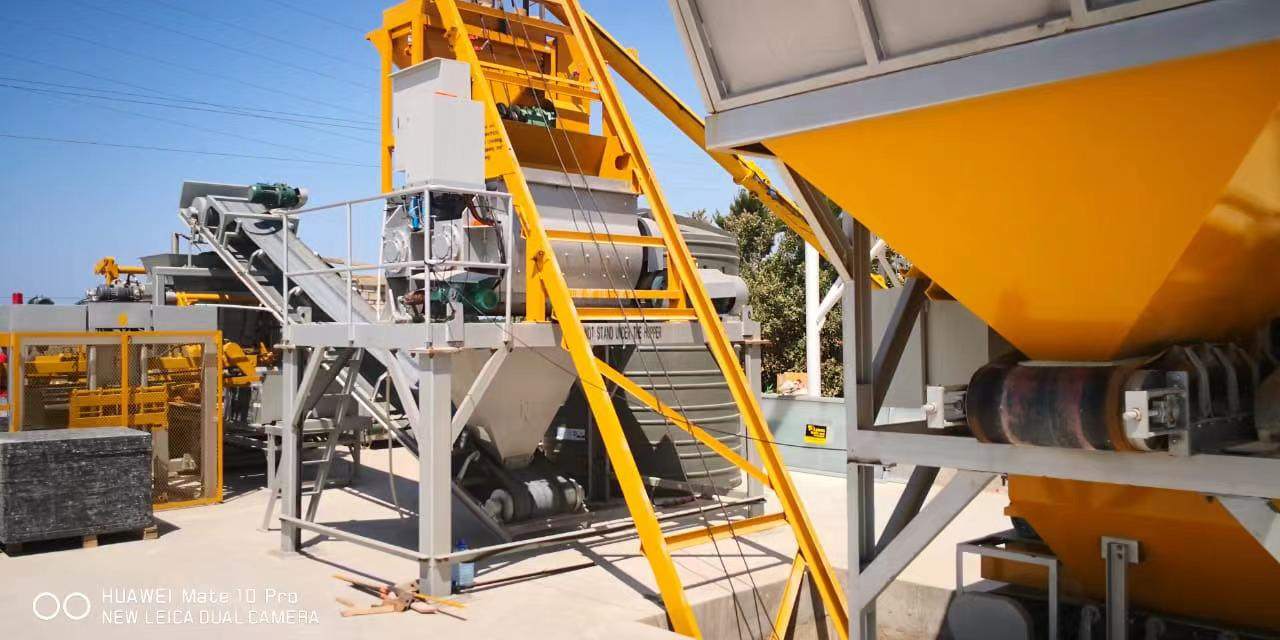
Small hopper feeding is an intermediate method. Cement can be poured into a hopper manually or loaded from bags, then discharged into a weighing system or mixer. Bulk bag feeding uses jumbo bags lifted by forklift, crane, or a simple frame, with cement discharged from the bag into a hopper or screw feeder. These methods reduce some manual lifting and can improve the feeding rhythm compared with individual bags.
Bulk bag feeding is useful where cement is available in large bags but a fixed silo is not practical. It may suit medium-small plants, rented factory spaces, mobile production, or projects that do not want to build a full silo foundation. The system can be combined with a small screw conveyor and dust collection cover to reduce dust and improve weighing control.
The main limitation is continuity. A jumbo bag must be lifted, positioned, opened, and replaced. If the plant has high daily output, bag changing can interrupt production. The discharge can also be unstable if the cement compacts inside the bag or contains moisture. For medium production, this method can be a useful bridge; for large automatic lines, a silo system is usually more efficient.
Cement silo with screw conveyor
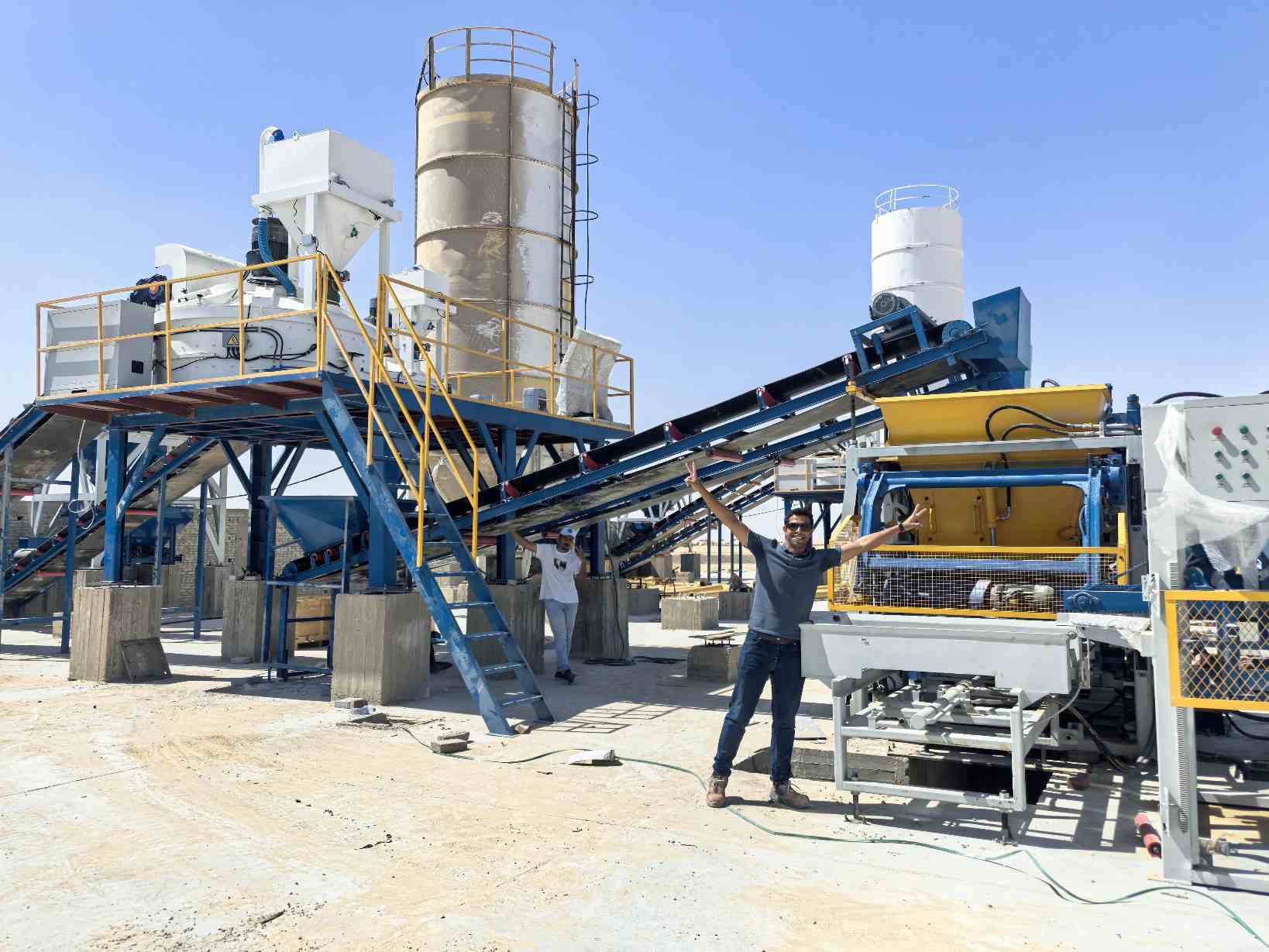
The most common automatic method is a cement silo connected to a screw conveyor and cement weighing system. Bulk cement is delivered by tanker truck and blown into the silo through the filling pipe. During batching, the silo discharges cement into the screw conveyor, the screw conveyor moves cement to the cement scale or weighing hopper, and the weighed cement is then discharged into the mixer.
This method is suitable for continuous production because the silo stores enough cement for many batches. The screw conveyor provides enclosed transfer, reducing dust and material loss. The cement weighing system improves batch accuracy. In a complete automatic line, the PLC can coordinate aggregate weighing, cement weighing, water dosing, mixer discharge, and material feeding to the forming machine.
For medium and large factories, silo plus screw conveyor is usually the best balance between automation, cost, accuracy, and reliability. It is especially suitable when local cement is available in bulk. It also supports larger mixers and faster machines because cement can be supplied without workers opening bags every cycle. The system should be sized according to daily cement consumption, mixer batch volume, screw conveyor length, and required batching speed.
Pneumatic cement transfer and long-distance layouts
Pneumatic cement transfer uses air pressure to move cement through pipes. In block plants, pneumatic transfer is often involved when bulk cement trucks fill silos. In some factory layouts, pneumatic conveying may also move powder from one storage point to another or support special long-distance arrangements. It is useful where the silo and mixer are separated, or where the layout cannot easily use a short screw conveyor.
The advantage is layout flexibility. Pipes can route around obstacles more easily than some mechanical conveyors. Pneumatic systems can move powder over longer distances and can be enclosed for dust control. They may be useful in large plants with multiple silos, multiple mixers, or special site restrictions.
The limitation is complexity. Pneumatic transfer needs air supply, filters, valves, pressure control, pipe design, and dust collection. It can consume more energy and requires good sealing. If the system is not designed correctly, cement may settle in pipes, create blockages, or cause dust leakage. For most standard block plants, a silo with screw conveyor to a nearby mixer is simpler; pneumatic transfer becomes more relevant when distance or layout demands it.
Cement weighing before mixing
No matter which transfer method is selected, cement weighing is the control point that protects mix proportion. In small manual production, weighing may be approximate by bag count. In semi-automatic production, workers may load cement into a hopper with a scale. In automatic production, the cement scale receives powder from the screw conveyor and stops feeding when the target weight is reached.
Accurate cement weighing matters because cement controls paste content, strength development, color tone, and cost. Under-dosing can reduce strength and create loose corners. Over-dosing increases cost and may make the mix sticky. For colored pavers, cement variation can change the visible shade even if pigment dosage is unchanged. This is why cement feeding should be evaluated together with the batching machine and mixer.
In automatic systems, two-stage cement feeding can improve accuracy. The screw conveyor runs faster at first, then slows near the target weight. This reduces overshoot. In some plants, inverter control is used for the screw conveyor motor. For high-output machines, this small control detail can help stabilize strength and reduce cement waste over many daily batches.
Comparison table by production scale
| Production scale | Suitable cement transfer method | Reason for selection |
|---|
| Very small or trial production | Manual bag feeding directly to mixer or small charging hopper. | Lowest investment, simple setup, suitable where production volume is limited. |
| Small regular production | Manual bag feeding with platform, small hopper, or semi-automatic scale. | Improves operation slightly while keeping equipment cost manageable. |
| Medium block plant | Bulk bag feeding or compact silo with screw conveyor and cement scale. | Balances labor saving, batching accuracy, dust control, and investment. |
| Large automatic production line | Cement silo, screw conveyor, automatic cement weighing, and PLC control. | Supports continuous production, fast batching, stable quality, and lower labor dependence. |
| Special long-distance layout | Pneumatic transfer combined with silo, filter, and weighing system. | Useful when storage and mixing areas are far apart or site layout is restricted. |
Buyer selection checkpoints
Buyers should first confirm how cement is supplied locally. If bulk cement trucks are available, a silo system usually becomes more attractive as output increases. If only bagged cement is available, the plant may start with manual or hopper feeding. If jumbo bags are common, bulk bag feeding can reduce labor compared with small bags. The cement supply form often determines the realistic transfer method.
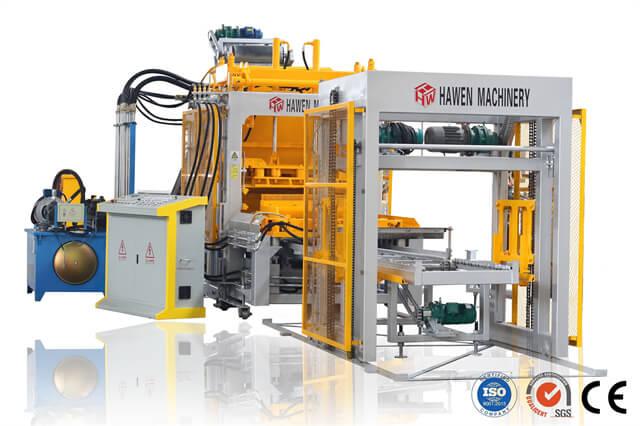
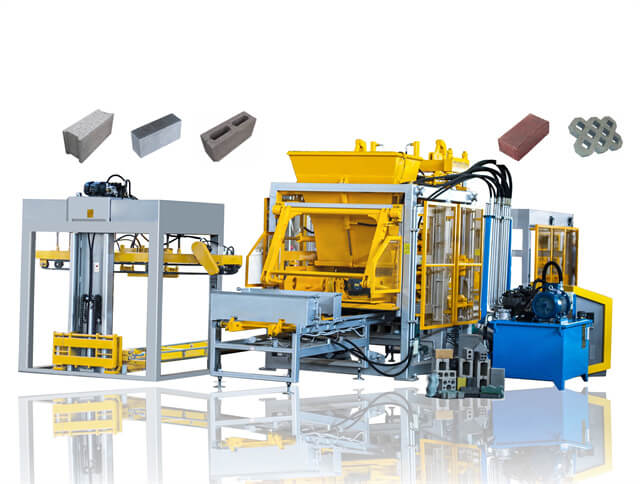
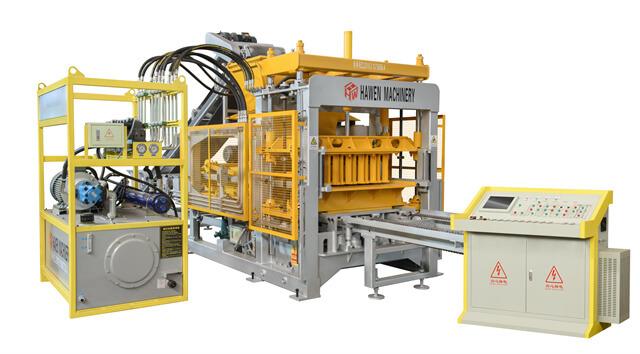
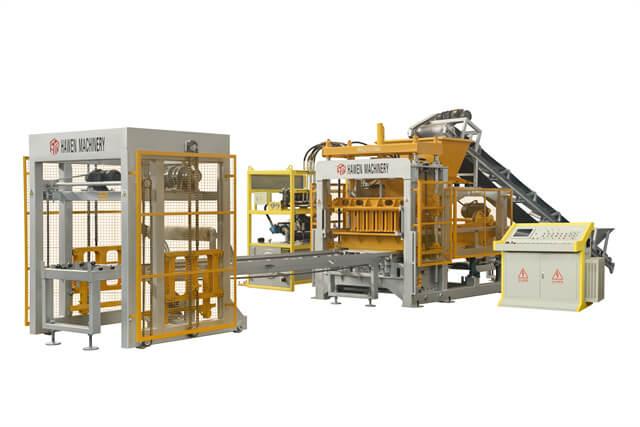
The second checkpoint is production capacity. A small machine may not justify a large silo at the beginning, while a high-output machine such as a QT15 automatic concrete paver block machine should not depend on slow manual cement loading. The cement feeding method must keep up with mixer cycle time and forming machine demand. Otherwise, the main machine waits for material and real output falls below expectation.
The third checkpoint is factory layout. Measure the distance between cement storage, mixer, batching machine, and forming machine. A short layout can use a screw conveyor efficiently. A long or irregular layout may need a different arrangement. Silo foundation, truck access, dust collector maintenance space, and screw conveyor angle should be reviewed before equipment is ordered.
The fourth checkpoint is product requirement. Simple hollow blocks may tolerate slightly more manual operation in a small plant. High-strength blocks, colored pavers, face-mix products, and project-specified kerbstones need better weighing and consistency. If product quality is inspected strictly, automatic cement weighing and stable transfer are worth more than their hardware cost suggests.
FAQ
How many common ways are there to move cement to the mixer?
In block production, the common methods include manual bag feeding, small hopper feeding, bulk bag feeding, cement silo with screw conveyor, and pneumatic transfer. Some plants use a combination of these methods during different growth stages.
Which method is best for a small block factory?
Manual bag feeding or small hopper feeding is usually enough for a small factory with limited output. If labor cost, dust, or accuracy becomes a problem, the factory can upgrade to bulk bag or silo feeding later.
When should a factory use a cement silo?
A cement silo is more suitable when bulk cement is locally available, daily output is stable, and the plant needs automatic weighing, lower labor cost, better dust control, and continuous mixer supply.
Is pneumatic cement transfer necessary for every plant?
No. Most standard block plants use screw conveyors from silo to scale or mixer. Pneumatic transfer is mainly useful for long-distance layouts, multiple storage points, or special site restrictions.
Conclusion
Cement can be moved to the concrete mixer by manual bag feeding, small hopper feeding, bulk bag feeding, cement silo with screw conveyor, or pneumatic transfer. Each method has a suitable production scale. Manual feeding is simple and low-cost for small plants. Bulk bag or hopper feeding is useful for medium-small production. Silo plus screw conveyor and automatic weighing is the most practical choice for medium and large automatic block production. Pneumatic transfer is mainly selected when layout distance or site restrictions require it.
For buyers, the best method should be chosen according to local cement supply, daily output, mixer capacity, labor cost, dust control requirement, weighing accuracy, and factory layout. A cement transfer system that matches the production scale helps the mixer receive accurate powder at the right time. When cement transfer, weighing, mixing, forming, vibration, and curing are coordinated, the block plant can achieve more stable strength, color, and daily output.





 Tel: +86-13905968794
 Email: export@hwmachines.com
 MP/WhatsApp: +86-13905968794
 Manufacturer Address:Nanan,Quanzhou City,Fujian Province,China