Why Do Concrete Blocks Have Low Compressive Strength?Why Do Concrete Blocks Have Low Compressive Strength?
Low compressive strength is one of the most serious quality problems in concrete block manufacturing. Blocks that fail strength requirements may crack during transportation, collapse during masonry work, or fail construction inspections, resulting in customer complaints and financial losses.
The compressive strength of concrete blocks depends on many factors, including raw material quality, mix design, moisture content, vibration efficiency, curing conditions, and machine stability. Even small variations in production parameters can significantly influence final product performance.
This guide explains the major causes of low block strength and provides practical solutions for factories operating automatic concrete block machines and complete block production lines.
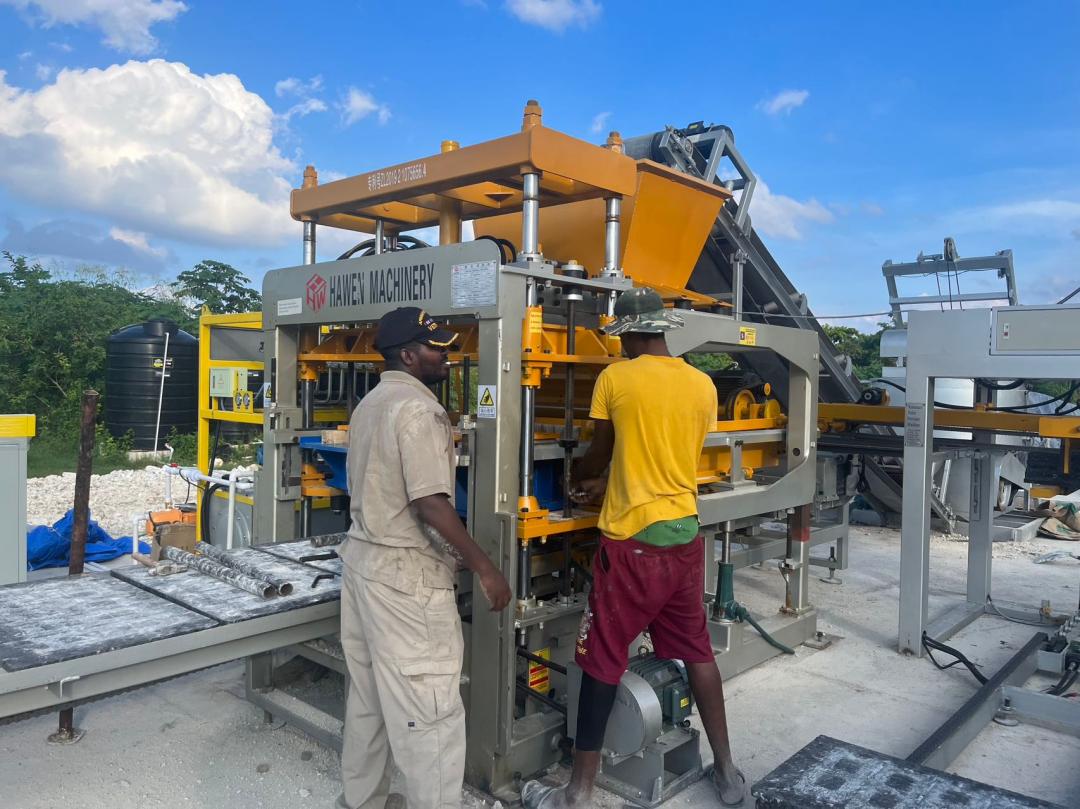 Understand the Strength Problem First
Why Compressive Strength Matters
Compressive strength directly determines whether concrete blocks can safely be used in residential housing, commercial buildings, industrial projects, and infrastructure construction.
Products with insufficient strength may develop cracks during transportation or installation, reducing service life and damaging customer confidence.
For manufacturers, low strength usually means higher rejection rates, increased production costs, and lower profitability.
How to Identify Strength Problems
Before adjusting machine settings, factories should determine whether the strength problem occurs consistently or only under certain production conditions.
- Do blocks break during handling?
- Does strength vary between different production shifts?
- Did the problem begin after changing raw materials?
- Does the issue become worse during rainy seasons?
- Are only certain products affected?
These observations can help narrow down the root cause.
| Problem Pattern | Possible Cause | First Inspection Point |
|---|
| All products show low strength | Improper mix design or curing | Check cement dosage and curing conditions |
| Strength varies between batches | Moisture inconsistency | Inspect aggregate moisture content |
| Only one product type is affected | Incorrect machine parameters | Review production recipes |
Material and Production Factors
Raw Material Quality
Raw materials are the foundation of concrete block strength. Poor aggregate grading, excessive clay content, low-quality cement, and unstable storage conditions can significantly reduce compressive strength.
Factories should establish strict inspection standards for incoming materials and maintain consistent batching procedures.
A reliable batching machine helps maintain accurate material proportions during production.
Stable cement feeding through a cement silo system also contributes to more consistent product quality.
Mix Design and Water Control
Incorrect water content is one of the most common causes of low block strength.
Excessive water increases porosity and reduces density, while insufficient water prevents proper cement hydration.
Factories should establish suitable mix ratios according to local raw materials and environmental conditions.
A suitable concrete mixer ensures uniform distribution of cement and moisture throughout the mixture.
For high-quality products, manufacturers often use a planetary concrete mixer or a twin-shaft concrete mixer .
Vibration and Compaction Efficiency
The strength of concrete blocks is closely related to compaction density.
Insufficient vibration leaves excessive voids inside the products, while excessive vibration may cause material segregation.
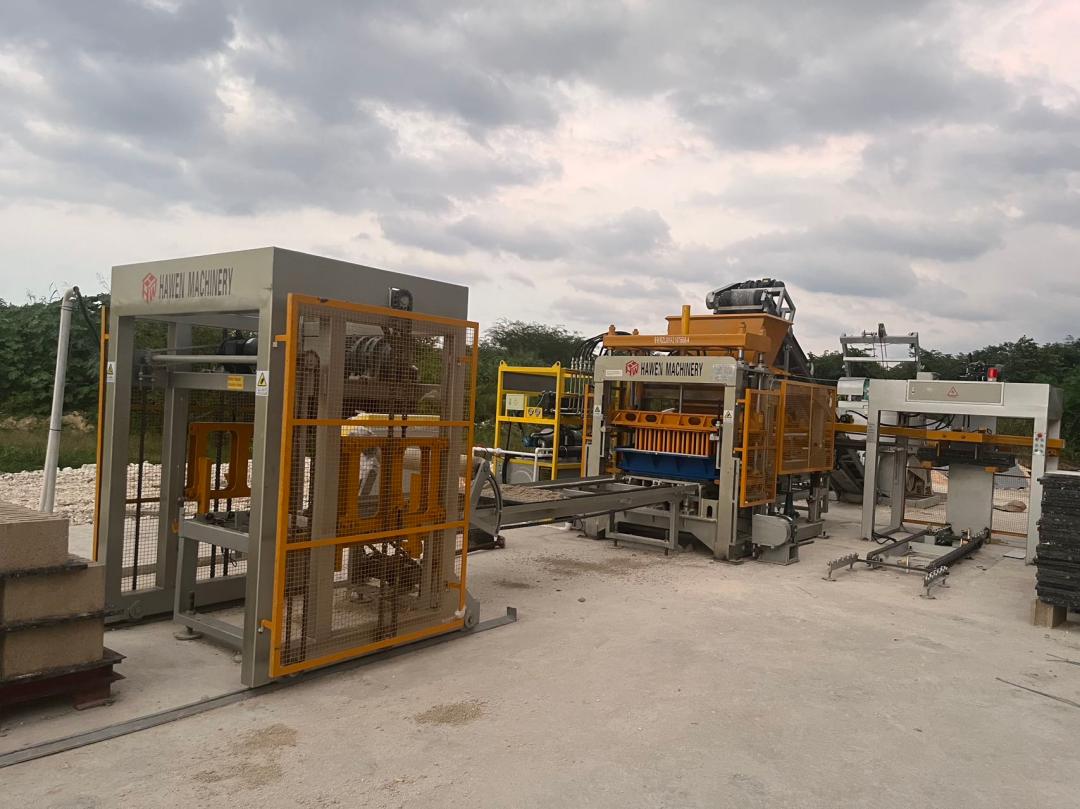
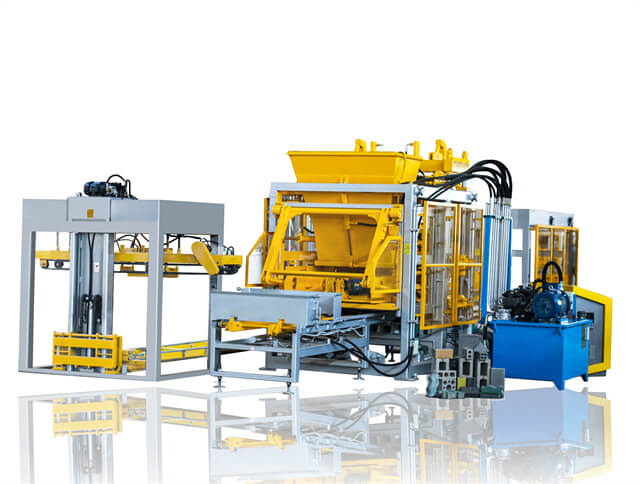
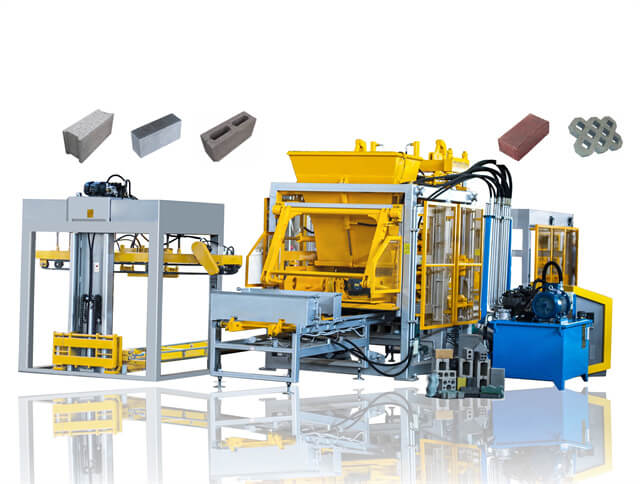
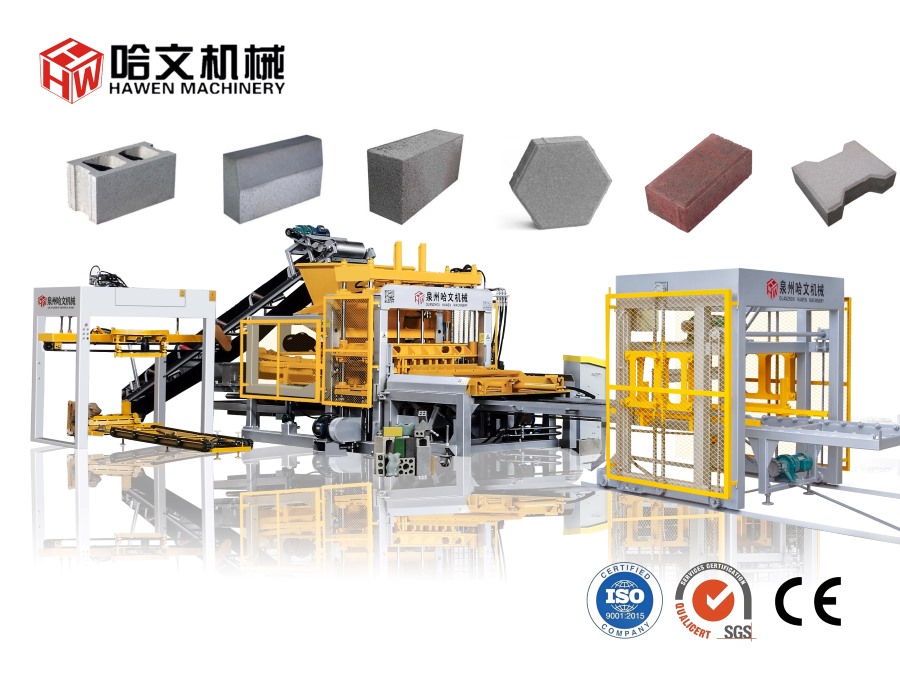
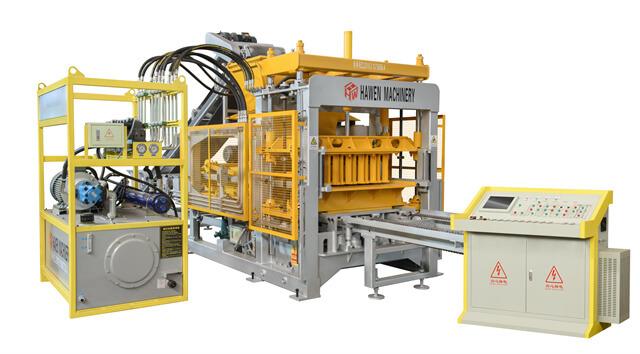
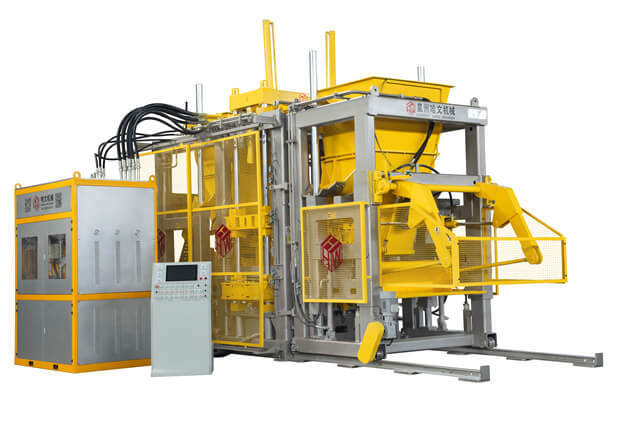
Modern automatic concrete block machines adopt advanced vibration technology to improve density and compressive strength.
HAWEN machines utilize heavy-duty four-shaft vibration systems, helping achieve more uniform compaction and better product performance.
 Mould Condition and Machine Precision
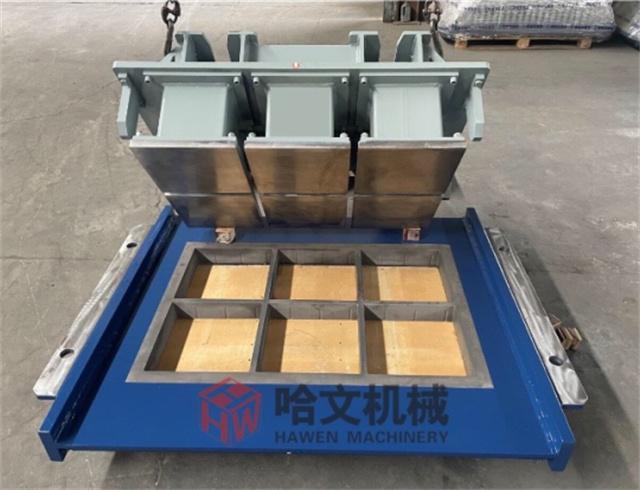
Worn mould liners, inaccurate tamper heads, and poor machine alignment may indirectly affect block density and dimensional consistency.
If mould cavities become excessively worn, material distribution may become uneven, leading to local strength reduction.
Regular inspection of concrete block moulds is essential for maintaining stable product quality.
Manufacturers producing paving products should also periodically inspect interlocking paver moulds .
Curing Process and Strength Development
Even perfectly manufactured blocks may exhibit low strength if curing conditions are poor.
Proper curing maintains moisture inside products and allows sufficient cement hydration.
Premature drying, excessive temperatures, or insufficient curing time can significantly reduce final compressive strength.
Factories should maintain stable curing conditions and avoid moving products too early after production.
Proper handling using an automatic block stacker and an automatic cuber system can also reduce product damage.
Factory Checklist for Improving Strength
Factory Checklist
| Check Item | Inspection Point | Why It Matters |
|---|
| Aggregate quality | Particle grading and cleanliness | Improves internal structure |
| Cement dosage | Mix proportion consistency | Directly affects strength development |
| Water content | Moisture control | Controls density and hydration |
| Vibration settings | Frequency and duration | Determines compaction efficiency |
| Mould condition | Wear and alignment | Ensures consistent product geometry |
| Curing process | Humidity and curing time | Promotes strength development |
 Conclusion
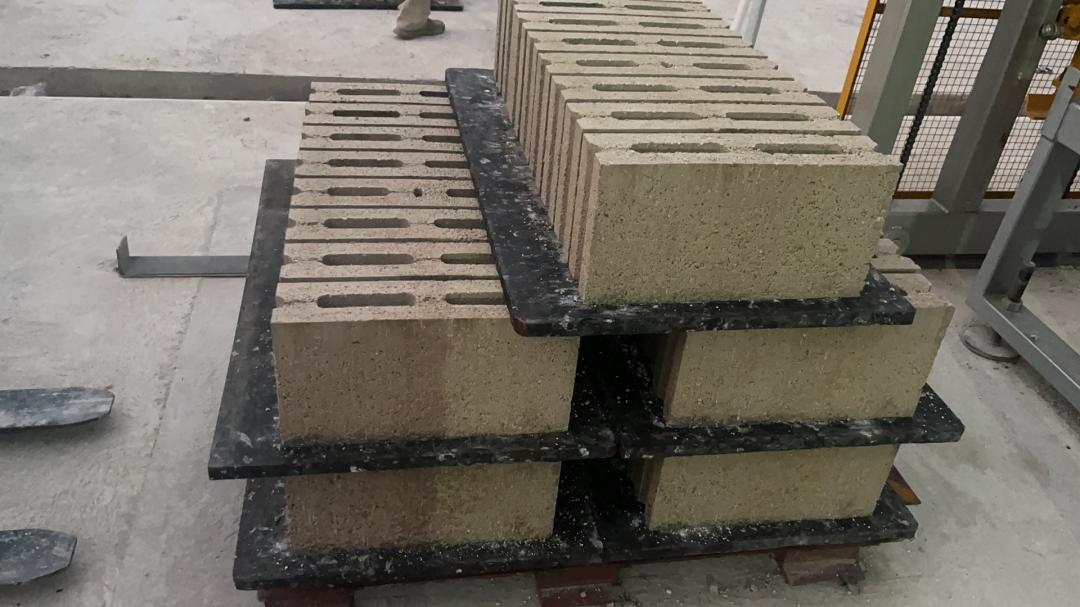
Low compressive strength is usually caused by multiple factors rather than a single machine problem.
Factories should systematically inspect raw materials, mix design, vibration parameters, mould condition, and curing methods.
With proper production management and reliable equipment, manufacturers can significantly improve product strength, reduce rejection rates, and increase customer satisfaction.
For modern block plants, investing in a stable automatic concrete block machine and optimized production process is one of the most effective ways to achieve consistent product quality.
FAQ
Why do my concrete blocks fail compressive strength tests?
The most common reasons are poor raw materials, excessive water content, insufficient compaction, and inadequate curing.
Can low cement dosage reduce block strength?
Yes. Insufficient cement directly affects product density and bonding performance.
Does vibration affect compressive strength?
Yes. Proper vibration significantly improves compaction density and final product strength.
Can mould wear influence block strength?
Indirectly, yes. Uneven filling and inconsistent geometry may lead to local strength reduction.
How can automatic block machines improve product quality?
Advanced PLC control systems, stable hydraulic components, precision moulds, and efficient vibration technology help maintain repeatable production conditions and improve block quality.





 Tel: +86-13905968794
 Email: export@hwmachines.com
 MP/WhatsApp: +86-13905968794
 Manufacturer Address:Nanan,Quanzhou City,Fujian Province,China