When a concrete block plant already owns a working block machine but its mould has reached the end of useful life, purchasing a replacement from another supplier can be commercially attractive. A specialist mould manufacturer may offer shorter delivery, additional product designs, improved wear materials, or more competitive lifecycle cost. However, a replacement mould is not a universal spare part. It must match the existing machine interface and reproduce the required concrete product under the plant's actual production conditions.
The largest procurement risks usually come from incomplete information rather than obvious manufacturing defects. A mould can be made from good steel and still fail to install because the mounting points are wrong. It can fit the machine but produce blocks with incorrect wall thickness. It can reproduce the external dimensions but perform poorly because cavity layout, tamper clearance, mould height, or demoulding stroke does not match the machine. This guide explains what an existing block producer should evaluate and what information a mould supplier needs before design begins.
Why a Replacement Mould Is Not a Simple Copy
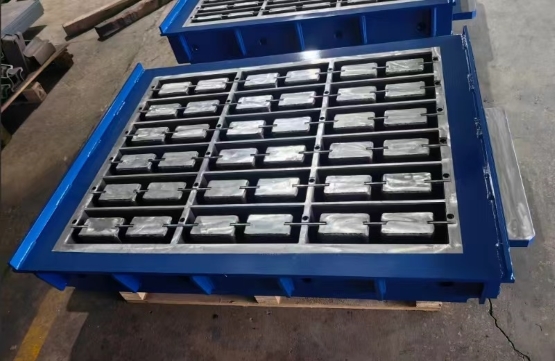
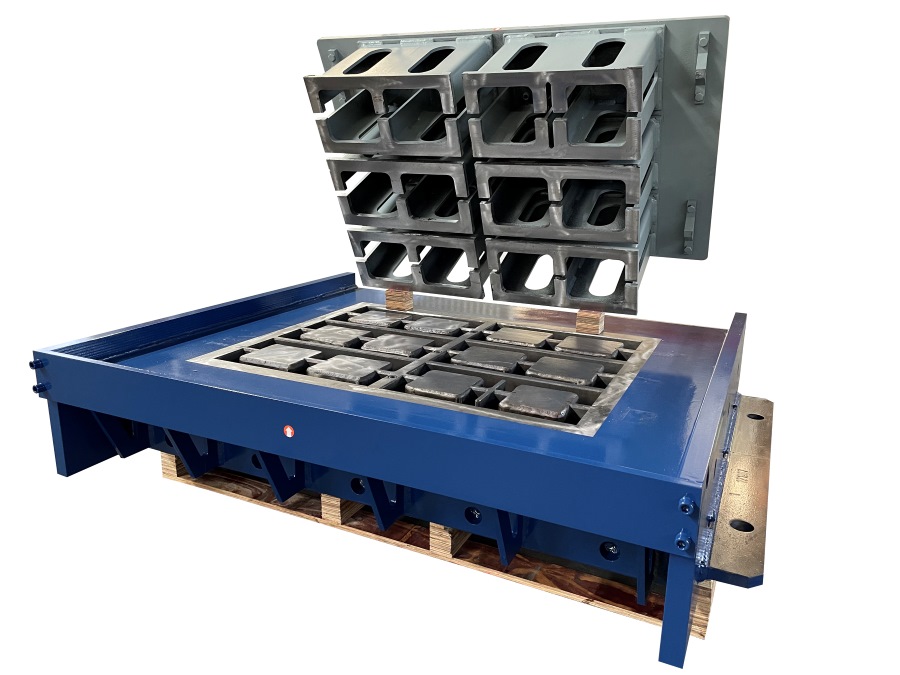
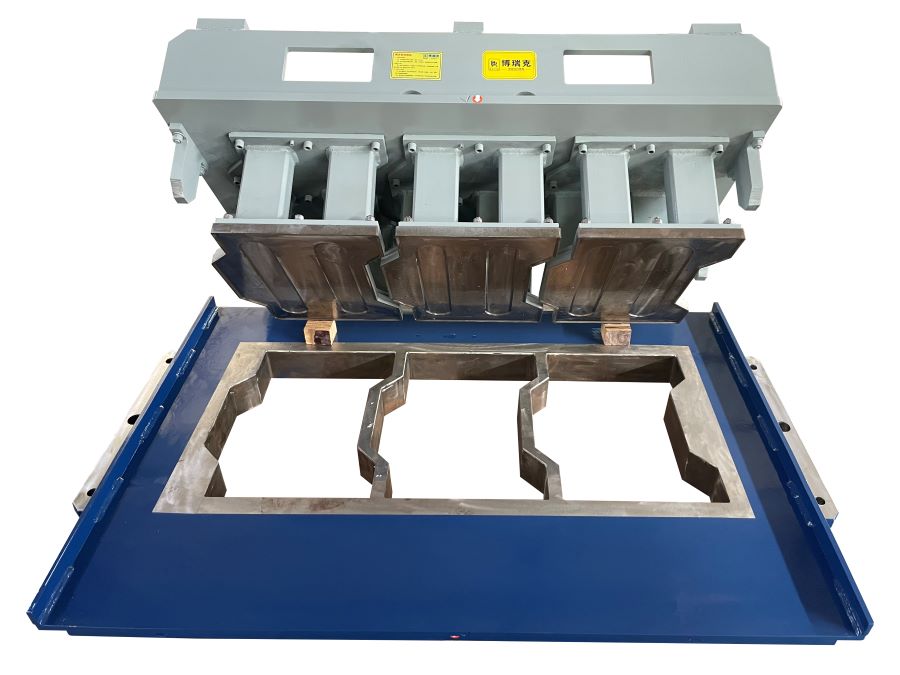
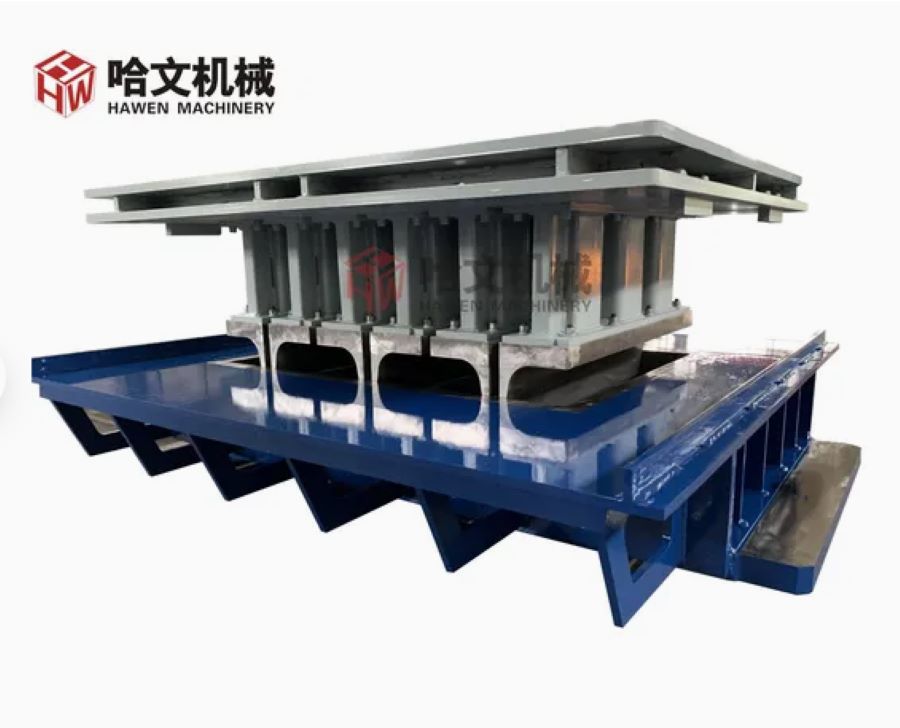
A production mould is an assembly connecting the finished product design with the mechanical behavior of the block machine. The mould box defines the side geometry and cavity layout. The tamper head or press shoe forms the top surface and transfers pressing force. Core components form holes and recesses. Frames, guide parts, mounting plates, stops, and support surfaces connect these components to the machine.
An old mould is useful as a reference, but it should not be copied blindly. After thousands of cycles, cavity walls, liners, shoes, guide parts, cores, and mounting surfaces may have worn. Clearance may have increased, edges may have become rounded, and dimensions may no longer represent the original design. If a new supplier copies every worn dimension, the new mould can reproduce the defects the plant is trying to remove.
The buyer should separate three information groups: the required finished block, the original machine interface, and the measured condition of the old mould. Where these sources disagree, the discrepancy must be reviewed before drawing approval. A new concrete block mould should restore the intended product and machine fit, not simply duplicate wear.
Replacement is also an opportunity to review recurring production problems. If the old mould repeatedly produced chipped corners, variable block weight, difficult demoulding, or rapid wear in one location, the cause may involve feeding, material grading, vibration, alignment, or pallet condition. The buyer and supplier should identify whether a design correction is justified instead of assuming the former geometry was optimal.
Factors to Evaluate Before Selecting a Mould Supplier
The first factor is proven compatibility experience. Ask whether the supplier has designed moulds for the same machine brand, model series, pallet format, and forming principle. Brand experience is helpful but does not remove the need for measurement, because machines of the same brand may have different years, modifications, interfaces, or regional configurations.
The second factor is engineering capability. A supplier should be able to convert block drawings, machine measurements, and old-mould information into a complete manufacturing drawing. The drawing should show cavity layout, product quantity per cycle, critical dimensions, mould height, frame size, mounting points, tamper connection, core arrangement, clearances, and replaceable wear components.
The third factor is manufacturing control. Buyers should ask which operations are performed in-house, how critical dimensions are inspected, and whether cavity and tamper components are machined after heat treatment when required. CNC machining, wire cutting, grinding, welding control, and dimensional inspection all contribute to repeatability. The name of a manufacturing process alone does not prove accuracy; inspection records are more useful.
The fourth factor is lifecycle support. Clarify whether liners, tamper shoes, core components, guide bushes, and other wearing parts can be replaced separately. Ask how spare parts will be identified in future orders and whether final drawings are retained. A lower purchase price may be less economical if the complete mould must be replaced whenever one local wear part reaches its limit.
Finally, evaluate communication discipline. A reliable supplier should identify missing data, mark assumptions, and wait for drawing approval before production. A quotation issued from only a product photograph may be preliminary, but it should not be treated as a confirmed technical solution.
Machine Interface and Production Compatibility
The existing machine determines the mould's external limits and connection points. Essential data include machine manufacturer, exact model, serial number or production year, pallet dimensions, maximum forming area, minimum and maximum product height, mould lifting arrangement, demoulding stroke, tamper-head mounting, guide system, feed-box clearance, and vibration-table contact area.
Photographs should show the machine nameplate, empty mould position, old mould installed, tamper connection, side mounting, guide parts, and pallet under the mould. A scale or dimension label should appear in close-up photographs. Wide workshop pictures provide context but cannot replace measured interface dimensions.
Pallet size must be stated as actual length, width, and thickness, together with usable forming area. The cavity layout must leave appropriate edge distances and spacing while matching feeder coverage. Increasing pieces per cycle may appear attractive, but an overcrowded layout can create poor filling, weak edges, or uneven compaction. The machine must also have enough forming force, vibration distribution, and discharge clearance for the proposed layout.
Older equipment may have been modified during service. A useful example is an old MASA machine replacement mould application in which machine model and 1400 x 1100 mm pallet information formed part of the compatibility basis. The practical lesson is that the supplier needs the plant's actual configuration, not only a catalogue downloaded for a similar machine.
Operating conditions also matter. Tell the supplier the typical cycle time, vibration type, working shifts, material abrasiveness, daily output, and changeover method. If the plant uses face mix, special inserts, heated shoes, product-height adjustment, or quick-change equipment, these requirements must appear in the technical package.
Product Geometry, Output, and Quality Requirements
A finished-product drawing should include overall length, width, height, wall and web thickness, hole dimensions, draft angles, chamfers, radii, grooves, tongues, frogs, spacers, surface texture, and logo position. Mark critical dimensions and their tolerances. If the product must comply with a local standard, provide the standard designation and relevant dimensional or performance requirements.
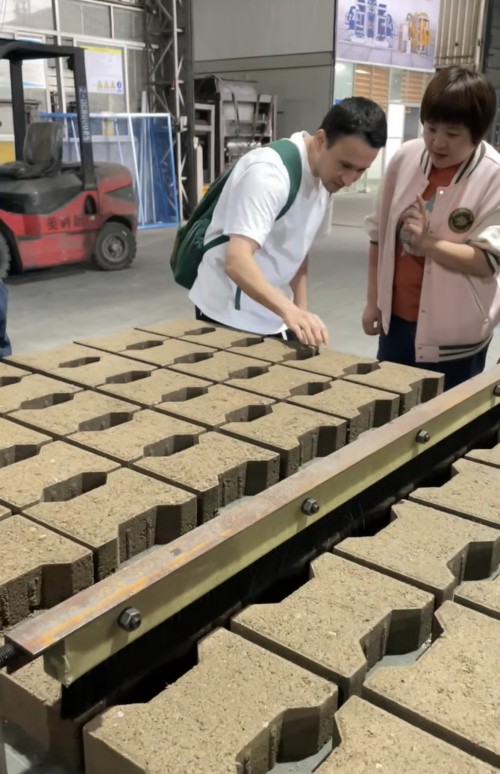
Physical samples can reveal details that drawings miss, but the buyer should specify whether the sample represents the desired new product or a worn-mould product that must be corrected. Measure several acceptable blocks rather than one unit. Concrete products can vary because of moisture, compaction, curing, and handling, so a single sample should not be treated as a perfect steel dimension.
Product type changes the design priority. An automatic hollow block mould requires stable cores, controlled web thickness, suitable draft, and reliable filling around narrow sections. An interlocking paver mould emphasizes edge fit, face quality, height consistency, and accurate repeating geometry. A curb stone mould must handle larger product mass, profile accuracy, and appropriate support during demoulding.
The buyer should state the required pieces per cycle but allow the supplier to verify feasibility. Cavity count affects output, block spacing, material flow, vibration response, mould structural strength, and tamper weight. It should be confirmed against pallet area and machine capacity, not selected only by maximizing arithmetic output.
Quality expectations should be measurable. Define acceptable block dimensions, unit weight range, surface appearance, edge condition, demoulding behavior, and relevant cured-product tests. If the old mould has a known defect, provide photographs showing the exact cavity position and frequency. This helps the supplier distinguish a geometric issue from random material or machine variation.
Material, Heat Treatment, and Service Life
Mould material should be selected by component and wear mechanism. Cavity liners, cores, tamper shoes, frame members, and suspension parts do not necessarily need identical steel. Abrasive aggregates, high vibration intensity, long shifts, pigment, and aggressive cleaning can increase wear. Ask the supplier to identify materials for major components rather than describing the complete assembly only as “alloy steel.”
Heat treatment can improve surface hardness and wear resistance, but hardness is not the only target. Excessive brittleness can create cracking or chipping under impact and cyclic stress. The quotation should identify the treatment method, treated components, target hardness range, effective treatment depth where relevant, and inspection method. Carburizing, nitriding, and quenching produce different material responses and should be matched to the selected steel.
Service-life claims require a defined basis. Ask whether the figure means machine cycles, production hours, or pieces and what wear limit ends the stated life. Clarify the reference material, maintenance method, vibration setting, and product type. A highly abrasive mix can wear a mould faster than a controlled natural-aggregate mix. Cavity count also means that cycles and individual pieces are not interchangeable measures.
Replaceable wear parts can reduce lifecycle cost, but their interfaces must remain stable. Confirm which parts are replaceable, expected replacement procedure, spare-part lead time, and whether special tools are needed. It may be economical to order critical spares with the mould, especially when international transport time is long.
The most efficient request for quotation is a structured technical package. Information should be labeled, measured in one unit system, and linked to photographs or drawings. Do not send several unnamed images through separate messages and expect the supplier to determine which machine or product each one represents.
| Information group | What to provide | Why it matters |
|---|
| Block machine | Brand, exact model, year or serial number, nameplate photo, machine manual or interface drawing | Identifies the base machine and possible configuration |
| Pallet and forming area | Pallet length, width, thickness, usable area, pallet material, and photos | Determines cavity layout and support conditions |
| Old mould interface | Overall dimensions, height, mounting holes, guide parts, tamper connection, stops, clearances, and labeled photos | Confirms installation and machine movement compatibility |
| Finished product | Dimensioned drawing, multiple sample photos, critical tolerances, unit weight, application, and standard | Defines the product the new mould must produce |
| Production target | Desired pieces per cycle, daily output, cycle time, shifts, product change frequency | Supports layout and durability decisions |
| Concrete mixture | Aggregate type, maximum particle size, abrasiveness, moisture behavior, face-mix or pigment use | Influences filling, clearance, wear, and material selection |
| Existing problems | Wear locations, defect photos, cavity map, maintenance history, and reason for replacement | Prevents known defects from being repeated |
Measurements should be taken with suitable tools and repeated where possible. State whether each dimension comes from an original drawing, the machine, the worn mould, or a finished block. This source label is important because the supplier may need to compensate for wear or concrete release behavior.
Drawing Approval, Inspection, and Acceptance
Before manufacturing begins, the supplier should issue an approval drawing. The buyer's production, maintenance, and quality personnel should review it together. Confirm machine interface, product geometry, cavity count, orientation, overall dimensions, mould height, mounting points, tamper connection, critical clearances, replaceable parts, and drawing revision.
Commercial documents should define the approved drawing number, material specification, heat treatment, hardness range, included spare parts, delivery scope, packing, documentation, and acceptance method. If the order depends on a sample, identify and retain that sample. Verbal descriptions such as “same as our old mould” are too ambiguous for contract control.
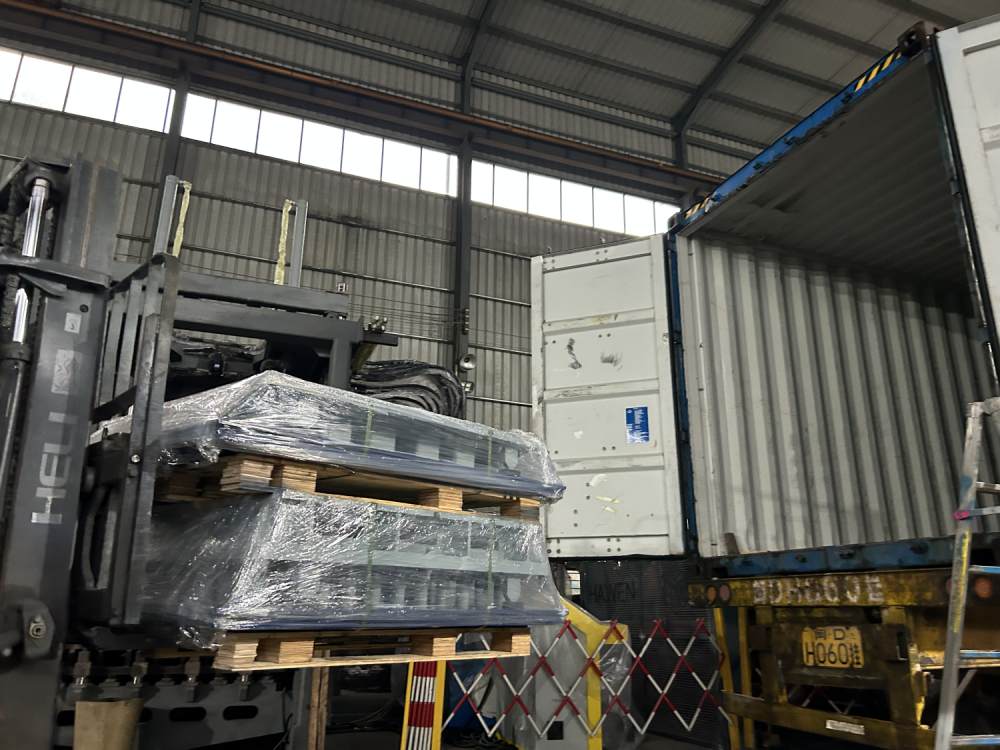
Pre-shipment inspection may include dimensional reports, hardness records, material certificates where agreed, photographs, assembly checks, and trial fitting to a verified interface. When an identical machine is unavailable at the supplier's factory, both parties should agree on which dimensions prove compatibility. Shipping protection should prevent corrosion and movement of the heavy assembly.
After delivery, inspect the mould before production. Verify transport condition, dimensions, mounting, guide movement, and safe clearance. Begin with controlled low-risk trials, then observe feeding, vibration, pressing, demoulding, block height, cavity-by-cavity mass, edges, and surface quality. Do not immediately run maximum output before the interface and product have been confirmed.
Frequently Asked Questions
Can a supplier manufacture a replacement mould from photographs only?
Photographs can support a preliminary review, but they are normally insufficient for confirmed manufacture. Accurate machine-interface dimensions, pallet data, product drawings, and mounting details are required.
Should the new mould use exactly the same dimensions as the worn mould?
Not automatically. Wear may have changed cavity, shoe, guide, and clearance dimensions. Compare the old mould with original drawings, machine measurements, and required finished-product dimensions before approval.
Is the highest hardness always the best choice?
No. Wear resistance must be balanced with toughness and the correct steel and treatment depth. An excessively brittle component may chip or crack under cyclic impact.
Can the cavity count be increased when ordering the replacement?
Possibly, but the supplier must verify pallet area, spacing, feeding, vibration distribution, tamper weight, machine capacity, and demoulding clearance. More cavities are useful only if product quality remains stable.
What information most often delays a replacement-mould order?
Missing mounting dimensions, unclear tamper connections, incomplete product drawings, unconfirmed pallet size, and conflicting measurements are common causes. A labeled technical package reduces repeated clarification.
Conclusion
Purchasing a replacement mould from a different supplier is a technical integration project, not simply a steel purchase. The producer must evaluate machine compatibility, product geometry, cavity layout, material selection, heat treatment, replaceable wear parts, manufacturing accuracy, supplier experience, and lifecycle support.
The most valuable contribution from the buyer is complete, traceable information: machine identification, pallet and forming data, measured interfaces, old-mould condition, finished-product requirements, raw materials, output targets, and known defects. When both parties confirm these details through an approved drawing and documented acceptance plan, the new mould is far more likely to install smoothly, restore block quality, and deliver predictable service life.





 Tel: +86-13905968794
 Email: export@hwmachines.com
 MP/WhatsApp: +86-13905968794
 Manufacturer Address:Nanan,Quanzhou City,Fujian Province,China