Choosing a kerbstone block machine is not only a question of machine size. For roadwork, drainage channels, car parks, industrial yards, and municipal paving projects, the buyer must match product shape, mould accuracy, vibration strength, hydraulic stability, material feeding, curing flow, and downstream handling. A machine that works well for simple hollow blocks may not automatically be the best choice for long kerbstones, heavy curb units, radius pieces, or drainage-edge products.
This guide explains how to select a kerbstone brick machine for practical production. It focuses on the decisions that affect daily output, product consistency, edge quality, and long-term operating cost. The goal is not to push the largest model first. The goal is to help buyers choose a block making machine line that fits the product drawing, the project schedule, and the factory layout.
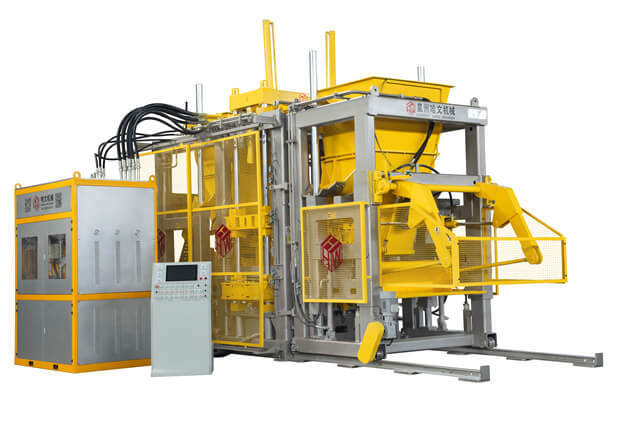
Kerbstone Machine Selection Framework
Kerbstone machine selection starts with the product
The first step is to define the kerbstone, not the machine. Buyers should prepare drawings for straight curbstones, road-edge kerbs, garden kerbs, heavy-duty curb stones, drainage kerbs, and any radius or corner units. Product length, height, thickness, face texture, chamfer, side profile, and unit weight all influence the required mould, vibration energy, pallet strength, and handling method.
A kerbstone usually places more stress on the production line than a small paver. The product can be longer, heavier, and more sensitive to demoulding damage. If the unit has a visible face, the surface finish also matters. This is why the correct solid cement block machine or kerbstone production line should be selected around product geometry and project requirements.
Factory note: A buyer should avoid asking only for pieces per hour. For kerbstones, linear meters per shift, acceptable surface finish, and safe handling strength are often more useful production indicators.
Choose capacity by linear-meter demand
Kerbstone capacity should be discussed in relation to project demand. A road contractor may think in linear meters, while a factory may quote pieces per pallet or cycles per hour. These figures must be converted carefully. Different product lengths can change the number of pieces per pallet and the final linear-meter output.
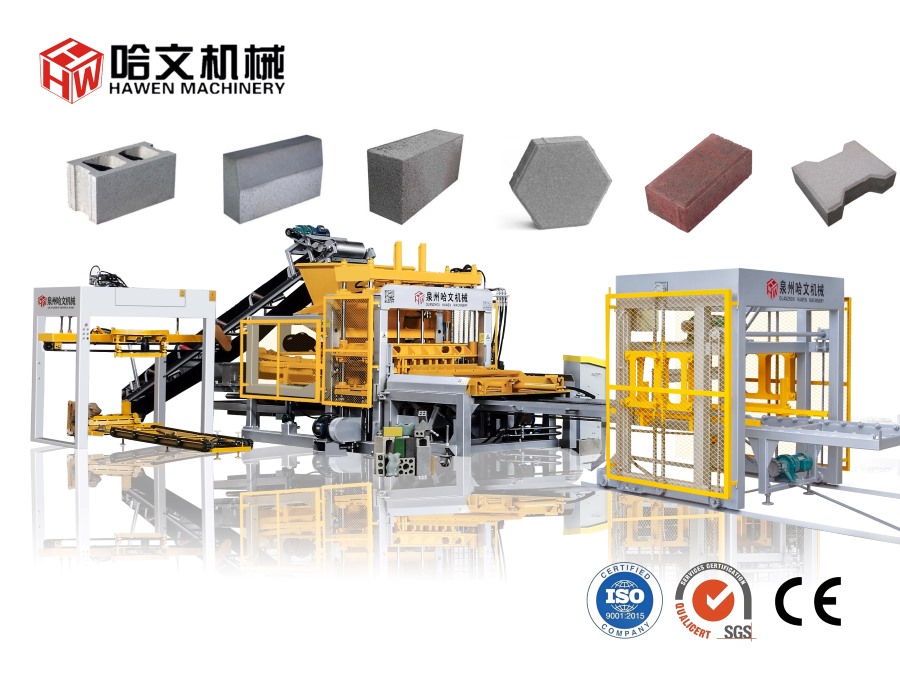
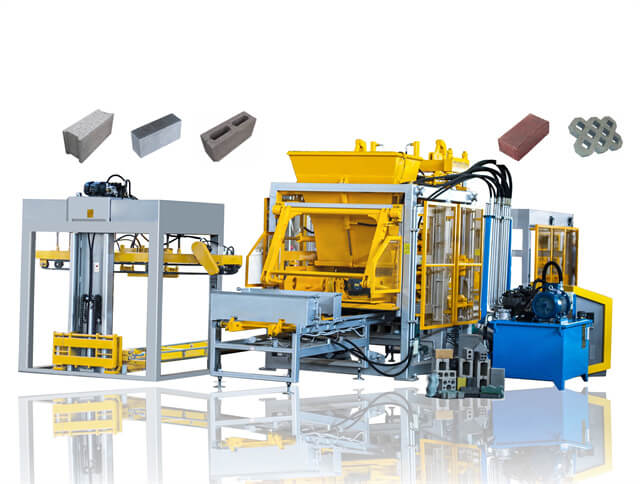
For medium and large projects, a higher-capacity concrete paver and fly ash brick making machine may be suitable when the factory needs to produce kerbstones together with pavers, solid blocks, and other concrete products. For a smaller market, a compact cement paver brick production machine may be easier to operate and maintain.
The buyer should also consider product changeover. If the same plant produces kerbstones in the morning and paving blocks in the afternoon, mould changing time, pallet size, material recipe, and curing space must be included in the real capacity calculation. A block machine that looks fast on paper may lose efficiency if every product switch is poorly planned.
| Buyer question | Why it matters | Practical check |
|---|
| What is the main kerbstone length? | Product length affects pieces per mould and pallet layout. | Compare output in linear meters, not only pieces. |
| Will the plant produce radius pieces? | Curved units may need a dedicated mould and special handling. | Confirm drawing, demoulding direction, and pallet support. |
| Is the visible face smooth or textured? | Surface finish depends on mix design, mould quality, and vibration. | Ask for sample product photos or factory test video. |
| How will fresh kerbs be moved? | Heavy units can crack if handled too early or unsupported. | Plan pallet type, curing route, and forklift access together. |
Core Machine Decisions
Mould design for straight radius and drainage units
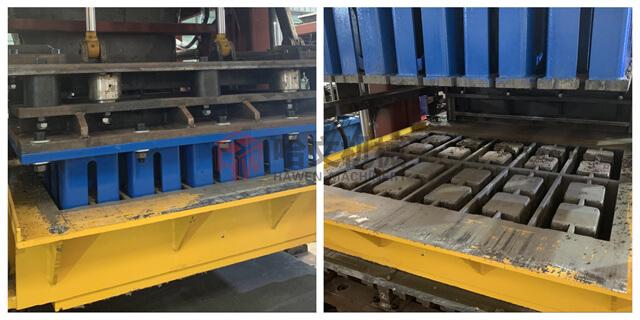
The mould is the center of kerbstone quality. Straight kerbs require dimensional accuracy along the full length. Radius kerbs need stable geometry so the curve matches the road design. Drainage kerbs may include grooves, slopes, channels, or side openings, so demoulding must be smooth and repeatable.
HAWEN Machinery designs moulds compatible with major block machine brands such as Masa, Hess, Zenith, Poyatos, Besser, Tiger, Columbia, Quadra, and Omag. The moulds are produced according to original specifications so that fit, movement, and product size remain consistent. Wear parts are heat-treated for better abrasion resistance, and hardness is checked at HRC 59-61.
A precise kerbstone mould can reduce edge damage, height variation, and surface defects. It also helps the operator keep the brick making machine stable during repeated production. When buyers need both straight and radius units, they should confirm whether each product requires a separate mould set or whether one frame can support multiple inserts.
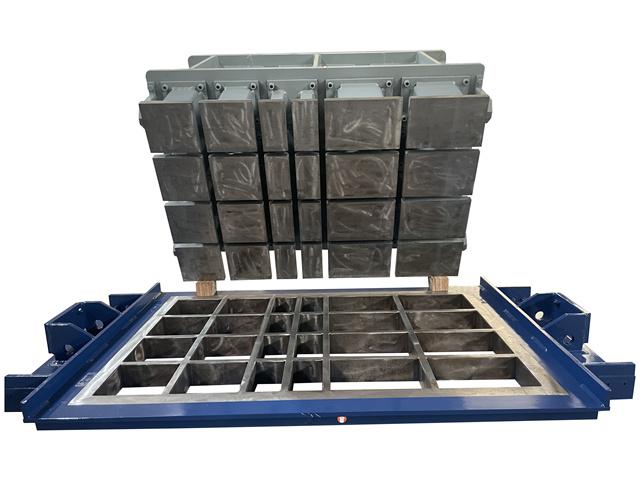
For factories that also produce paving stones, an interlocking paver mould can be planned together with the kerbstone mould package. This allows the plant to serve road-edge, sidewalk, and courtyard projects from the same production platform.
Vibration and compaction for dense kerbstones
Kerbstones need dense compaction because they often work along road edges, drainage lines, parking areas, and exposed outdoor zones. Poor compaction can lead to weak corners, rough surfaces, low edge strength, or uneven density along the product length. The vibration system should be evaluated as carefully as the frame size.
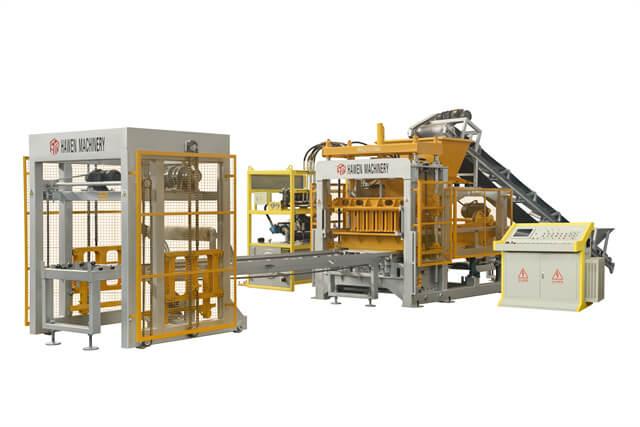
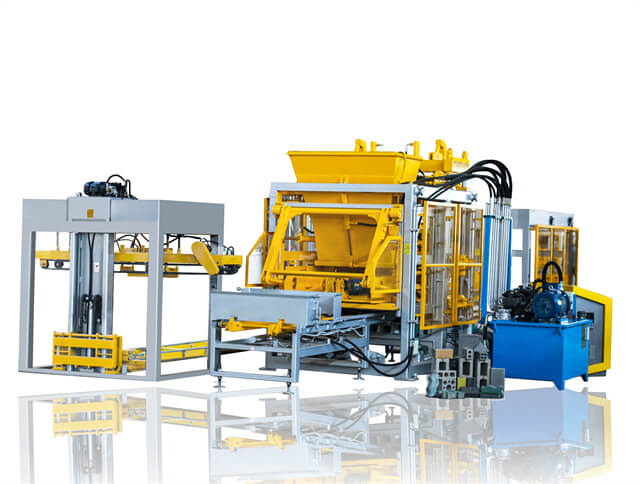
HAWEN Machinery uses a four-shaft vibration box structure with eccentric blocks arranged outside the housing. This design helps reduce internal vibration resistance, keeps compaction more even across the mould, and supports efficient cement use while maintaining production stability. For kerbstones, this is especially important because the product body is usually larger than a standard paving block.
The buyer should ask how vibration frequency, amplitude, feeding time, pressing time, and demoulding movement are adjusted for different kerbstone sizes. A good block machine should allow controlled adjustment rather than relying on one fixed setting for every product.
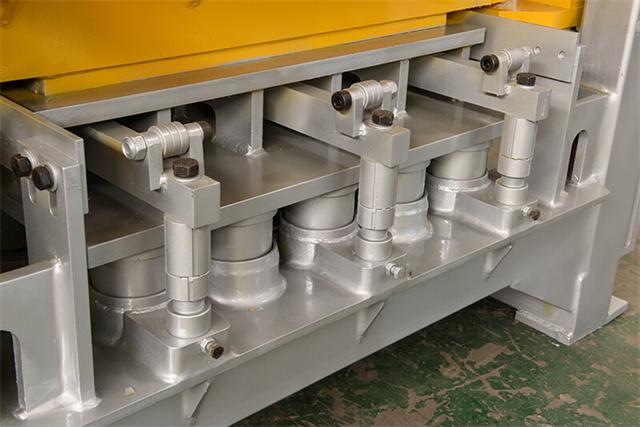
Hydraulic station and demoulding stability
The hydraulic station affects pressing force, mould movement, demoulding smoothness, and long-term reliability. Kerbstones can be sensitive during release because of their length and weight. If the hydraulic movement is unstable, the product may show cracks, chipped edges, or height inconsistency even when the concrete mix is correct.
In HAWEN block machines, the hydraulic station is configured with Japanese YUKEN proportional and directional valve technology and an American ALBERT hydraulic pump. The purpose is to combine accurate motion control with dependable pressure response under repeated production loads. For buyers, the important point is not only the brand name. It is the way the hydraulic system supports smooth demoulding and stable operation during daily production.
When comparing offers, ask for hydraulic drawings, valve information, pump information, cooling arrangement, filter access, and maintenance points. A kerbstone plant should be easy to inspect because the hydraulic system is one of the main areas that protects product consistency.
Control system and operator adjustment
The control system should make the machine easier to run, not harder to understand. Kerbstone production needs recipe memory, clear alarms, repeatable cycle adjustment, and simple operator guidance. If the same plant produces different products, the operator must switch settings without losing quality control.
HAWEN Machinery integrates a Siemens S7-200 PLC with a touch panel and remote monitoring capability. The operating status of the brick machine can be reviewed in real time, and parameters can be optimized remotely when support is needed. This helps the plant maintain stable production when changing between kerbstones, pavers, hollow blocks, or solid products.
For a buyer, a good control system should answer practical questions. Can the operator save product recipes? Are alarms clear? Can the supplier help diagnose issues remotely? Is the electrical cabinet organized and labeled? These details become important after installation, when daily production begins.
Production Line Matching
Batching mixing and material preparation
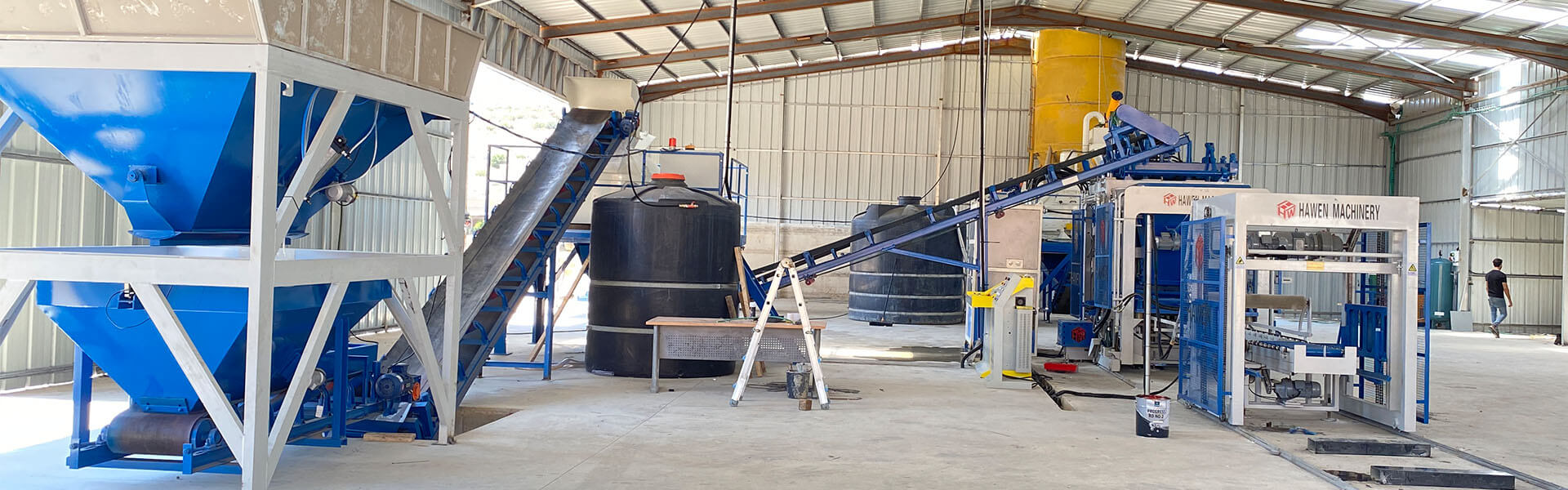
Material preparation has a direct effect on kerbstone quality. The aggregate grading, sand moisture, cement dispersion, water control, and mixing time must be stable. A strong forming machine cannot correct poor batching or inconsistent mixing. This is why the feeding system should be considered part of the kerbstone machine decision.
A concrete mixer should match the batch volume and material recipe. For high-quality face products, a planetary concrete mixer can support efficient mixing and material uniformity. For larger production lines, a twin-shaft concrete mixer may be selected according to plant layout and material demand.
Cement feeding should also be steady. A cement silo in block making needs suitable filters, discharge control, and screw conveying. If cement feeding is unstable, the block making machine may receive material with changing strength and color, which can affect kerbstone appearance and project acceptance.
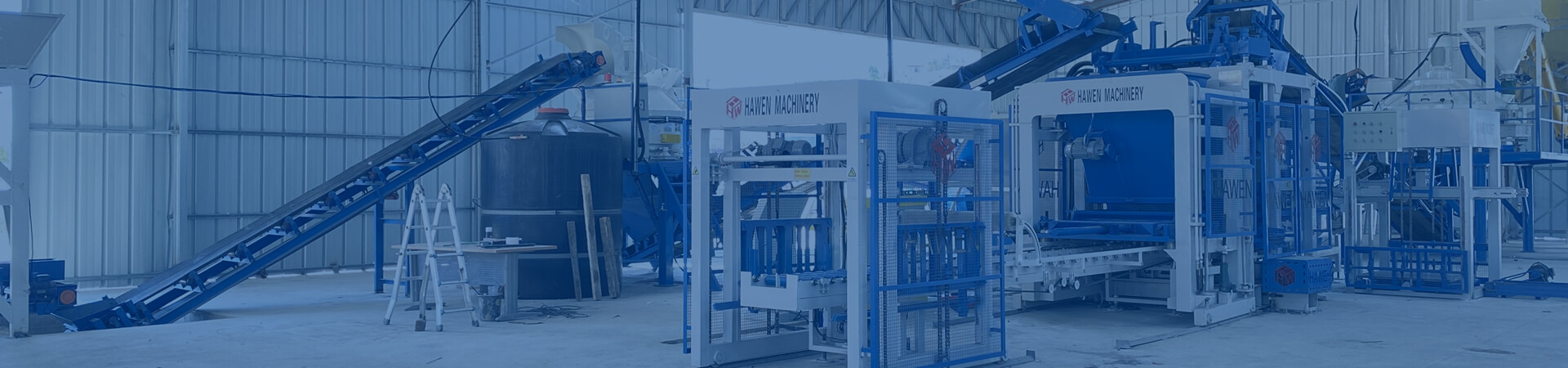
Pallet curing and handling layout
Kerbstones are heavier than many standard concrete products, so pallet support and handling routes should be planned early. Fresh kerbs must stay flat and supported after demoulding. If the pallet bends, the product may crack or twist before it develops enough strength for stacking.
A stable GMT pallet can support repeated circulation when its size and stiffness match the product. The buyer should confirm pallet thickness, loaded weight, board cleaning method, and curing route. If the factory uses forklifts, the turning radius and aisle width must allow safe movement of fresh products.
For plants with higher output, an automatic offline palletizing system can improve downstream organization. An automatic pallet provider can also support smoother empty-pallet return. These systems should be selected after confirming product strength, pallet size, and yard layout.
Small factories may choose a compact automatic interlocking paver brick machine for flexible local production. Larger road-supply factories may need a heavier line with better automation. The correct answer depends on the product mix, labor cost, project deadlines, and available site space.
Procurement and Verification
Buyer checklist before ordering
Before ordering a kerbstone block machine, the buyer should send product drawings, expected output, local raw materials, site layout, labor plan, curing method, and photos of similar target products. A serious supplier should use this information to recommend the forming machine, mould, mixer, batching system, pallet, curing method, and handling equipment as one complete system.
Reviewer observation: Strong competitor content usually answers the buyer's hidden questions: product fit, daily output, mould changeover, material control, installation space, and after-sales support. A useful blog should therefore connect machine features with production problems, instead of only listing machine parts.
| Item to verify | What to ask | Risk if ignored |
|---|
| Product drawing | Can the mould produce the exact kerbstone profile? | Wrong size, poor fit on site, rejected project supply |
| Vibration system | Can vibration settings be adjusted for heavy and long products? | Uneven density, weak corners, rough surface finish |
| Hydraulic movement | Is demoulding stable for long kerbstones? | Cracks, chipped edges, unstable height |
| Material preparation | Does the mixer and batching system match output demand? | Color variation, strength variation, slow production |
| Curing and handling | Can pallets, forklifts, and yard space support fresh products? | Early damage, congestion, production stoppage |
It is also useful to request factory testing when the product is special. A test can show material feeding, vibration behavior, demoulding movement, surface finish, and early handling condition. For kerbstones with demanding project acceptance, this step gives the buyer more confidence than a general machine brochure.
Conclusion
A kerbstone block machine should be chosen from the product outward. Start with the drawing, then confirm mould design, vibration compaction, hydraulic demoulding, PLC control, material preparation, pallet support, curing flow, and handling layout. This method helps the buyer avoid a common mistake: buying a machine by capacity label while ignoring the real production conditions behind kerbstone quality.
HAWEN Machinery approaches kerbstone production as a complete manufacturing system. The forming machine, mould, mixer, batching section, pallet flow, and automation level must work together. When these parts are matched correctly, a brick making machine is no longer just a piece of equipment in a factory. It becomes a stable source of road edges, drainage lines, sidewalks, public spaces, and project confidence. Good kerbstones do more than hold pavement in place. They give the finished road a clean boundary, guide water away from damage, and quietly turn concrete production into infrastructure that people rely on every day.
FAQ
What type of block machine is suitable for concrete kerbstones?
A suitable machine should match the kerbstone size, unit weight, mould layout, vibration demand, pallet support, and curing method. Larger or longer kerbstones usually need stronger compaction and smoother demoulding than small pavers.
Should I calculate kerbstone output by pieces or by linear meters?
Use both, but linear meters are often more useful for road projects. Different kerbstone lengths can make piece counts misleading when comparing actual project supply.
Can one brick machine make kerbstones, pavers, and hollow blocks?
Yes, many automatic lines can produce different concrete products by changing moulds and adjusting settings. The buyer must confirm pallet size, mould changeover, material recipe, and curing flow for each product.
Why is mould quality so important for kerbstone production?
The mould controls product profile, edge shape, surface line, height accuracy, and demoulding behavior. A weak or inaccurate mould can create visible defects even when the machine frame is strong.
What should I check in the hydraulic system before buying?
Check valve and pump configuration, pressure stability, cooling, filter access, hydraulic drawings, and demoulding smoothness. Kerbstones are heavy products, so controlled movement is important.
Does vibration design affect cement consumption?
Efficient vibration can improve compaction and reduce the need to compensate with excess cement. The final mix still depends on local materials, product requirements, and curing practice.
What information should I send HAWEN for a kerbstone machine recommendation?
Send product drawings, target output, raw-material details, site layout, curing method, pallet preference, labor plan, and any finished-product standard required by the project.





 Tel: +86-13905968794
 Email: export@hwmachines.com
 MP/WhatsApp: +86-13905968794
 Manufacturer Address:Nanan,Quanzhou City,Fujian Province,China