Concrete blocks from the same production order should remain within an established weight range. When individual units become noticeably heavier or lighter, the difference usually points to variation in concrete volume, moisture, density, mould filling, compaction, or product geometry. Weight variation is therefore more than a shipping concern. It is a practical signal of process stability.
A heavier block is not automatically stronger, and a lighter block is not automatically defective. The result must be interpreted alongside dimensions, cavity shape, moisture condition, density, surface quality, and required performance tests. This guide explains how manufacturers can measure block-weight variation, identify where it begins, and correct the process without blindly increasing cement.
Weight as a Production Indicator
What Block Weight Actually Indicates
Block weight is the combined result of net concrete volume and apparent density at the time of weighing. Net volume depends on external dimensions, cavity dimensions, webs, face shells, chamfers, and surface features. Density depends on raw materials, moisture, compaction, and entrapped voids. A meaningful comparison must therefore involve units made with the same mould and weighed at a comparable age and moisture condition.
| Weight condition | Possible interpretation | Required confirmation |
|---|
| Uniformly heavier batch | Higher moisture, more material per cavity, changed aggregate density, or altered product dimensions | Moisture, dimensions, recipe, and average unit mass |
| Uniformly lighter batch | Lower filling mass, lower-density aggregate, excessive voids, or dimensional change | Fill height, density, mould condition, and test performance |
| Variation across one pallet | Uneven feeding, material distribution, mould wear, or vibration imbalance | Position-based weighing and cavity inspection |
| Weight changes during the shift | Aggregate moisture, feed consistency, material segregation, or parameter drift | Time-based samples and batch records |
Definition note: Green weight is measured shortly after demoulding. Shipping or dry weight is measured later. These values are not directly interchangeable because concrete loses moisture during curing and storage.
How to Measure Weight Variation Correctly
Use a calibrated scale with suitable capacity and resolution. Establish a fixed sampling age. Identify every unit by production time, pallet, and mould position. Weighing random blocks without position data may show that variation exists, but it will not show where the problem originates.
A practical sample should include units from the left, center, and right sides of the pallet. It should also cover the beginning, middle, and end of the shift. Record product dimensions, visible defects, recipe number, material moisture, machine program, and mould ID with each sample set.
Variation check = highest sampled weight - lowest sampled weight. Relative variation = variation check / sample average x 100.
The calculation describes spread. It does not set an acceptance limit. The factory should establish its own controlled range from validated production, customer specifications, and applicable product requirements.
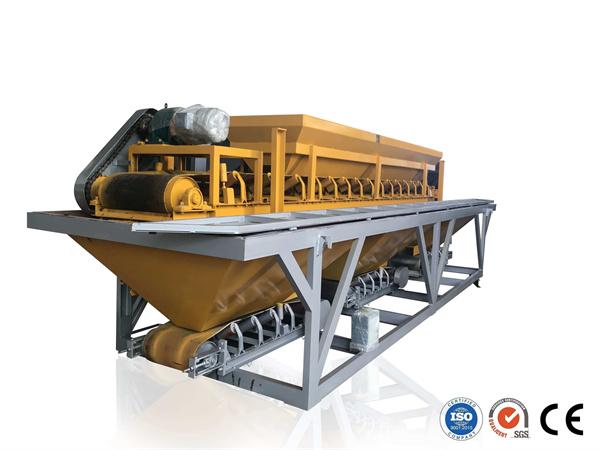
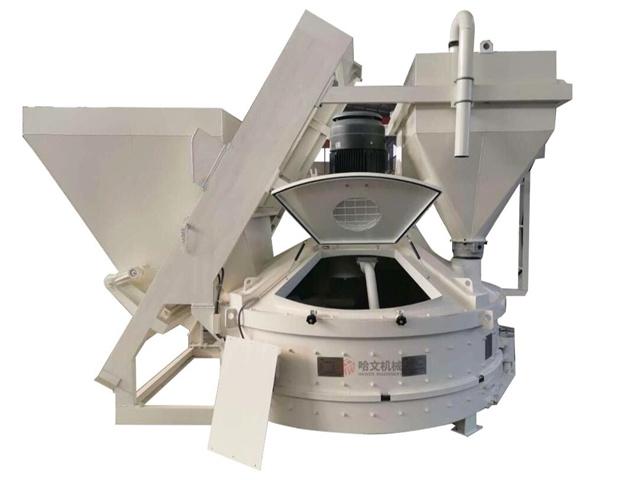
A planetary concrete mixer can support uniform dispersion, but the test must begin before mixing. Aggregate and cement quantities need accurate measurement, and moisture carried by the aggregate must be included in the water balance.
Root Causes and Diagnostic Patterns
Main Causes of Different Block Weights
Batching variation: Incorrect aggregate weights, cement-scale drift, feeder leakage, or inconsistent manual additions change the mass entering the mixer. A small error repeated throughout a batch can shift the average weight of every block.
Aggregate moisture: Wet sand is heavier than the same quantity of dry sand and carries water into the mix. If moisture is not measured, the effective recipe changes with weather and stockpile condition. A controlled cement storage and feeding system cannot correct an unmeasured change in aggregate water.
Segregation and mixing: Inadequate dispersion creates local differences in coarse particles, fines, cement, pigment, and water. Excessive transport or poorly designed transfer points can also separate particles after mixing.
Uneven mould filling: Material may accumulate near the feeder entry or fail to reach distant cavities. Worn scraper components, unsuitable feed timing, and inconsistent material level can produce repeatable position-based weight differences.
Vibration inconsistency: Compaction energy affects entrapped voids and apparent density. Poor synchronization, loose components, unstable motor performance, or an unsuitable setting may compact one area differently from another.
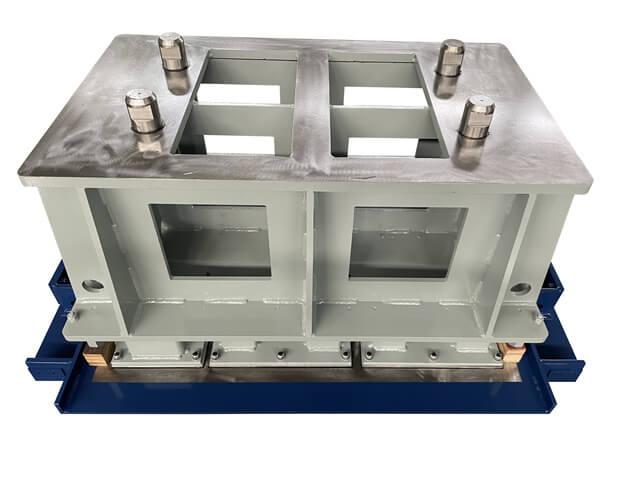
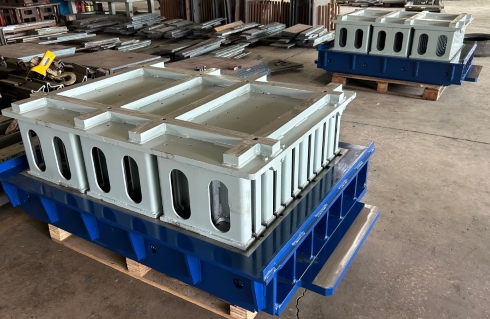
Mould wear: Cavity wear, worn tamper shoes, damaged liners, and loose mounting can change product volume. Accurate hollow block mould geometry is essential when the weight-control target is based on a validated product drawing.
Pallet condition: Flexing, contamination, or damage can affect product height and demoulding stability. The selected GMT pallet should remain compatible with the machine, product load, and handling environment.
Handling and moisture loss: Blocks weighed at different ages or after different exposure conditions may appear inconsistent even when their green mass was similar. Sampling procedure must separate manufacturing variation from normal drying.
What Pallet Position Patterns Reveal
A weight map is more useful than a single average. Mark each mould position on a simple diagram and write the corresponding unit weight. Repeated spatial patterns often identify the responsible system.
| Pattern | Likely area to inspect | First action |
|---|
| Near-side units are consistently heavier | Feeder distribution and travel | Inspect material level, sweep action, and feed timing. |
| One cavity is repeatedly different | Mould cavity or tamper shoe | Measure dimensions and inspect wear or buildup. |
| Center differs from both edges | Vibration transfer, mould support, or filling distribution | Check fastening, vibration behavior, and material distribution. |
| All positions drift together over time | Recipe, moisture, scales, or machine setting | Compare batch records and moisture readings. |
An entry-level QT4 interlocking paver brick machine and a higher-capacity QT12 hydraulic block line have different pallet layouts. The diagnostic principle remains the same: connect each weighed unit to its exact mould position.
Diagnostic Matrix
| Weight finding | Supporting symptom | Likely correction |
|---|
| Heavy and wet-looking units | Slow demoulding or soft edges | Verify aggregate moisture and effective water content. |
| Light units with rough surfaces | Incomplete corners or open texture | Check fill quantity, grading, and compaction. |
| Weight is stable but dimensions vary | Height or cavity differences | Inspect mould, tamper, pallet, and mechanical alignment. |
| Weight varies after curing only | Different storage or airflow exposure | Standardize curing and weighing age. |
Step-by-Step Corrective Plan
Hold the affected batch. Separate questionable pallets and preserve representative samples. Record the shift, mould, recipe, operator, and material lots.
Confirm the measurement system. Check scale calibration, weighing surface, sample age, and identification. A false measurement problem should not trigger a recipe change.
Create a pallet weight map. Weigh units by position over several cycles. Determine whether the variation is spatial, time-based, or random.
Audit material input. Verify aggregate and cement scales, moisture correction, feeder leakage, mixer discharge, and unrecorded manual additions.
Inspect filling and forming. Review material-car travel, distribution, vibration settings, hydraulic movement, mould fastening, and pallet condition.
Change one variable at a time. Produce marked trial cycles after each adjustment. Compare unit mass, dimensions, appearance, and required performance.
Approve a stable setting. Release the process only after repeated cycles remain within the factory's validated control range.
A QT6 concrete block production line can support repeatable output when the complete material and handling system is balanced. Adding cement should not be the first response to a mechanical distribution problem.
Equipment Control and Long-Term Stability
Equipment Factors and HAWEN Machinery
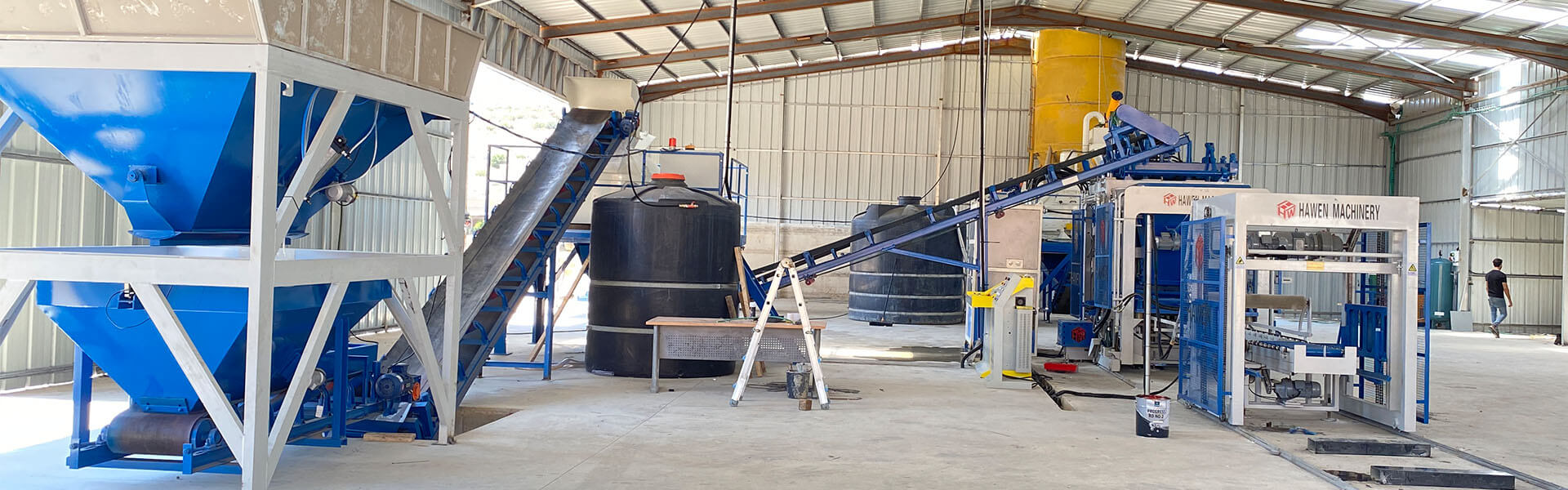
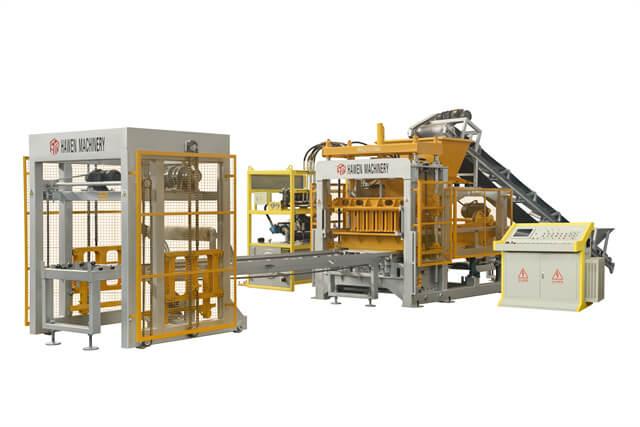
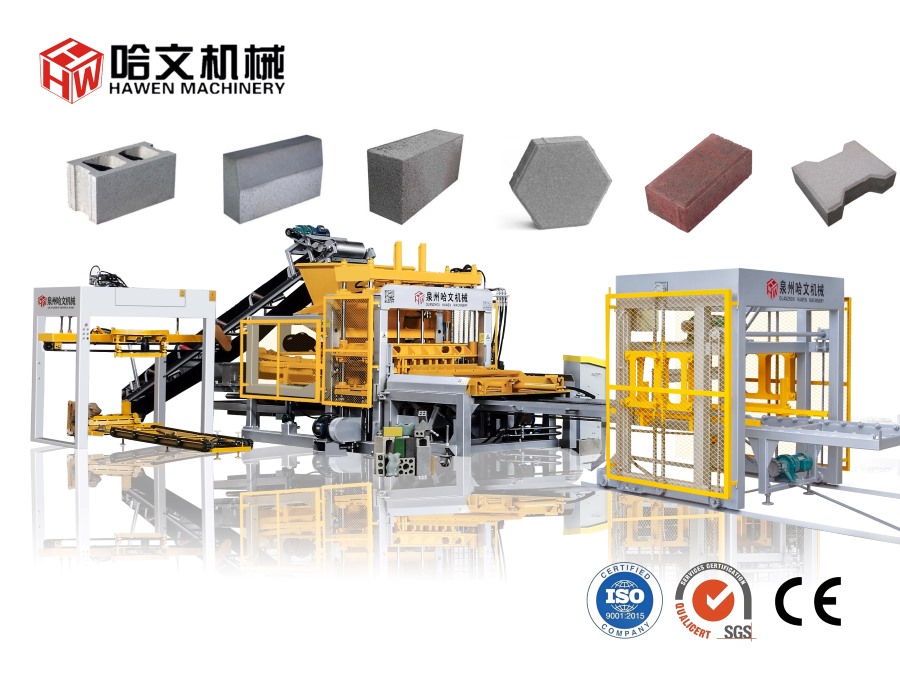
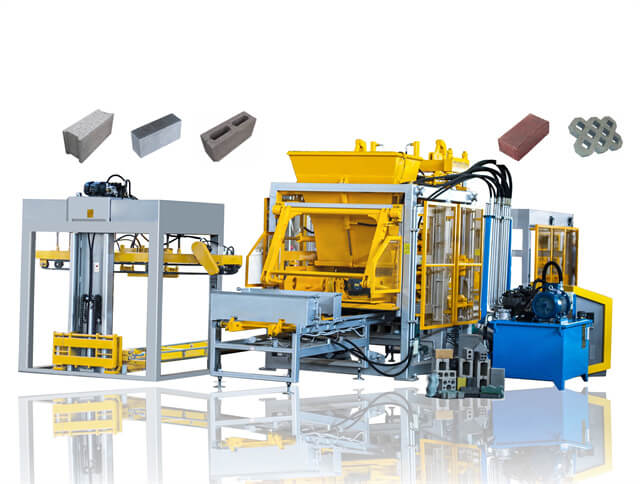
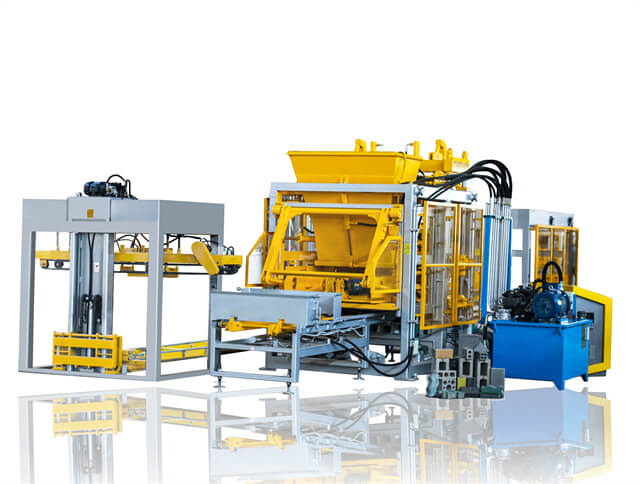
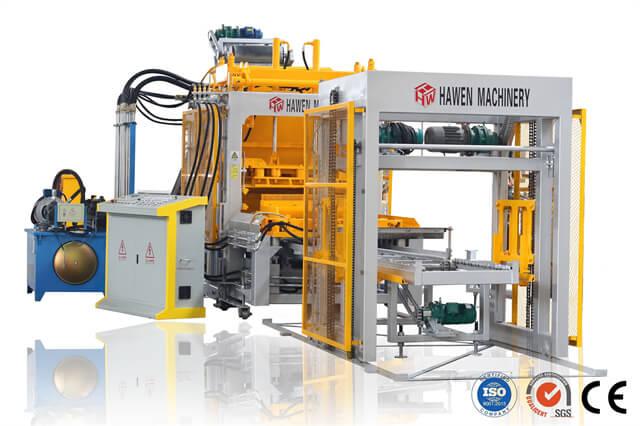
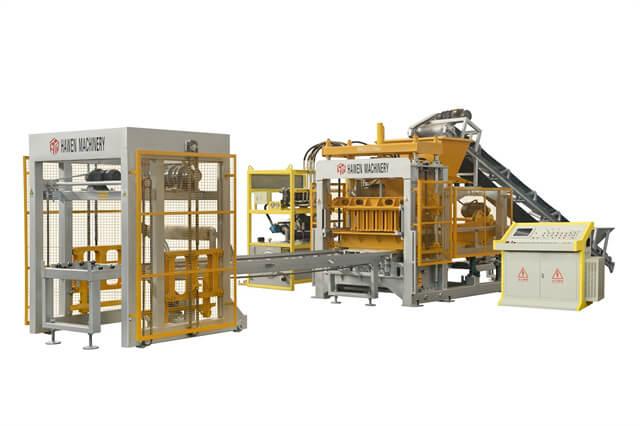
HAWEN Machinery approaches weight consistency as a complete-line issue. Accurate batching, uniform mixing, controlled feeding, stable compaction, mould precision, pallet support, and careful handling must work together. A fast brick making machine cannot compensate for unstable raw-material input.
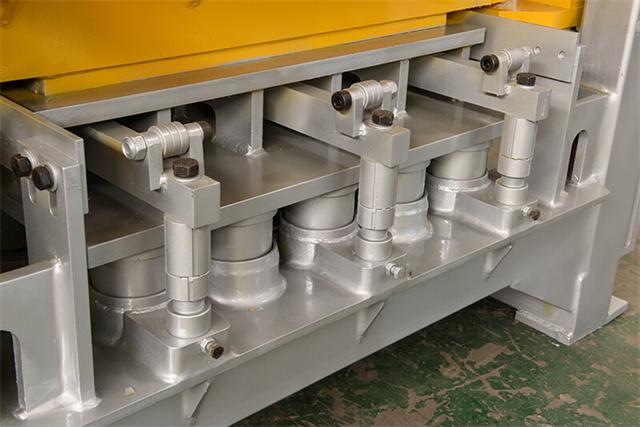
HAWEN's four-shaft vibration box places the eccentric blocks outside the housing. The arrangement reduces internal resistance and helps distribute vibration evenly across the forming area. Consistent energy transfer supports uniform compaction and can reduce unnecessary cement compensation.
The hydraulic station uses proportional and directional valves from Japan's YUKEN together with an American ALBERT pump. Controlled hydraulic movement supports repeatable pressing and demoulding under sustained production loads.
A Siemens S7-200 PLC, touch panel, and remote monitoring functions manage the operating sequence. HAWEN technicians can review the real-time status of a customer's block making machine and assist with parameter optimization. Repeatable settings make weight trends easier to trace across shifts.
For moulds, HAWEN supports interfaces used by Masa, Hess, Zenith, Poyatos, Besser, Tiger, Columbia, Quadra, Omag, and other established platforms. Components follow the relevant original dimensions for accurate fit. Heat treatment improves wear resistance, and hardness is verified at HRC 59-61. Stable cavity geometry protects both product dimensions and concrete volume.
A QT10 solid cement block machine or a large QT15 concrete paver machine should be selected from real product drawings and demand. Larger capacity does not remove the need for position-based quality checks.
Daily Weight-Control Plan
Define a sampling frequency for every product and shift. Keep the weighing age consistent. Record average mass, spread, dimensions, moisture observations, and mould position. Review trends rather than isolated numbers.
Use alert and action levels based on validated factory data. An alert level triggers investigation. An action level holds production until the cause is addressed. The limits should reflect the product specification and the measuring capability of the factory.
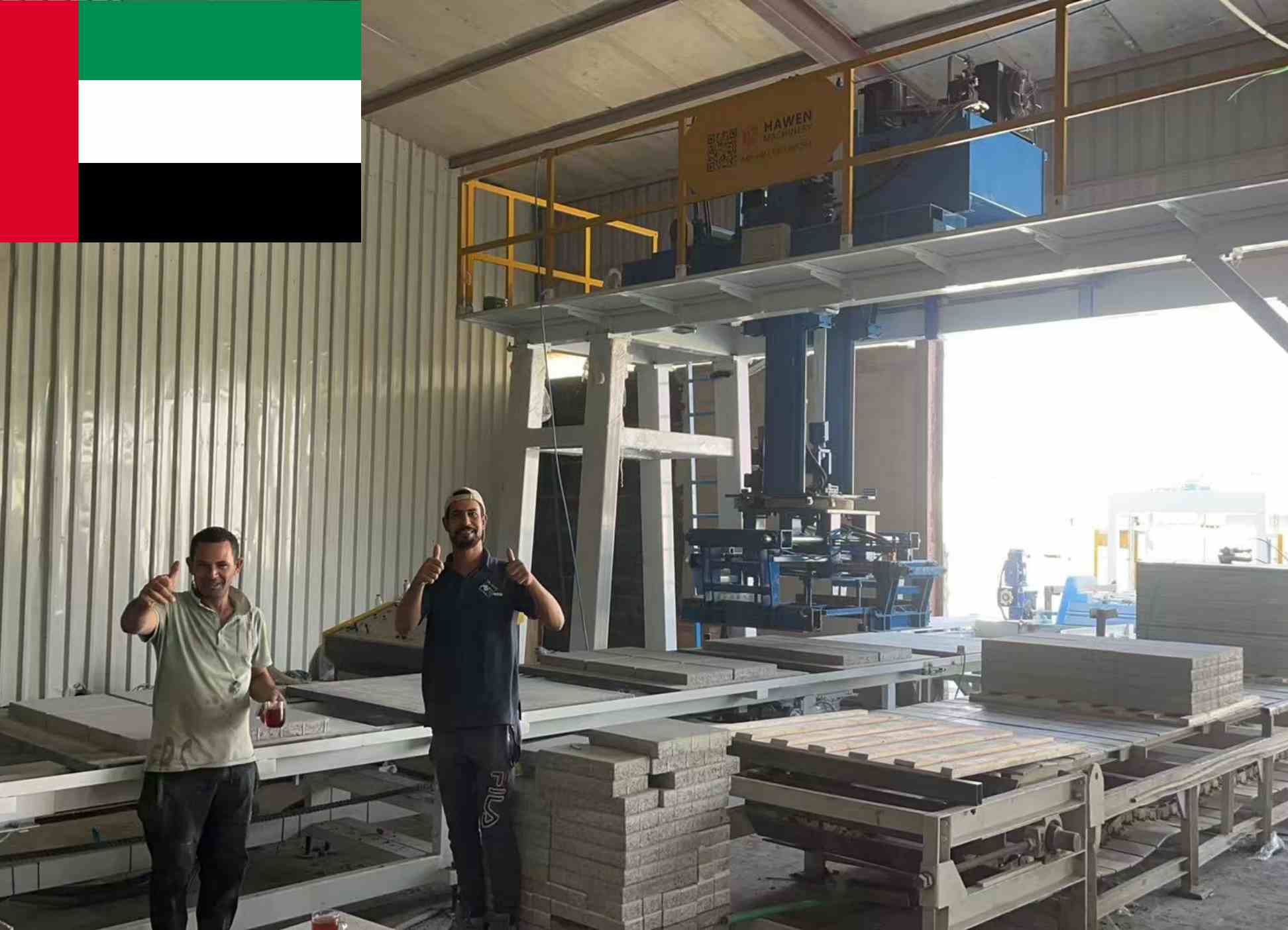
Link weight records to rejection data. If average weight remains stable while edge damage rises, the issue may be handling rather than material quantity. An offline palletizing system may reduce manual handling variation where production volume supports automation.
Conclusion
Concrete blocks have different weights when their concrete volume, moisture, density, or process conditions vary. The most effective investigation combines calibrated weighing with mould-position mapping, material records, dimensional checks, and forming observations.
Weight control is valuable because it turns a visible symptom into a measurable production language. When batching, mixing, vibration, hydraulics, moulds, pallets, and people operate as one controlled system, the factory gains more than uniform blocks. It gains the ability to learn from every cycle, protect raw materials, strengthen customer trust, and convert industrial repetition into dependable structures that will shape daily life far beyond the production floor.
FAQ
Does a heavier concrete block always have higher strength?
No. Weight may rise because of moisture or excess material. Strength must be verified through the required test method and interpreted with dimensions and density.
When should blocks be weighed?
Use a consistent age and condition. Green-weight checks are useful for immediate process control. Later weights require standardized curing and storage conditions.
Why are blocks on one side of the pallet heavier?
The pattern often indicates uneven feeding, material distribution, mould wear, or vibration transfer. Map several consecutive cycles before adjusting the recipe.
Can adding cement make block weight more consistent?
It may increase average mass but will not correct scale errors, moisture variation, poor filling, or vibration imbalance. Diagnose the process first.
How can operators track weight without slowing production?
Use a defined small sample from fixed mould positions at scheduled intervals. Record it digitally or on a simple control sheet and investigate trends.
Can mould wear change block weight?
Yes. Worn cavities or tamper shoes can change product volume and dimensions. Regular inspection helps separate mould wear from recipe variation.




 Tel: +86-13905968794
 Email: export@hwmachines.com
 MP/WhatsApp: +86-13905968794
 Manufacturer Address:Nanan,Quanzhou City,Fujian Province,China