The number of cement bags required for 1,000 concrete blocks cannot be determined from block count alone. Cement demand changes with block dimensions, cavity percentage, target density, aggregate grading, mix design, bag weight, compaction efficiency, and the proportion of rejected units. A hollow wall block and a solid concrete brick may have similar external dimensions but contain very different quantities of concrete.
The most reliable answer comes from measured batch yield. Record the cement charged into one verified batch, count the acceptable blocks produced from that batch, and scale the result to 1,000 saleable units. This article explains that method and introduces planning formulas for a new block making machine project. It also shows how batching, mixing, mould condition, vibration, hydraulic pressure, and curing influence real cement consumption.
Calculation Principles
Direct Answer and Calculation Boundary
There is no responsible universal answer such as a fixed number of bags for every 1,000 blocks. The word “block” may refer to a hollow masonry unit, a solid brick, an interlocking paver, or a kerbstone. Bag weight also differs by market. A useful answer must therefore state the product drawing, cement mass per batch, accepted batch yield, and net cement weight per bag.
The preferred factory formula is:
Cement bags for 1,000 saleable blocks = cement kilograms charged per batch / acceptable blocks per batch x 1,000 / kilograms per cement bag.
This formula automatically reflects the actual recipe and block geometry. It also avoids uncertain assumptions about cavity volume. Use acceptable blocks, not the theoretical number formed by the brick machine. Products rejected after demoulding or curing still consumed cement and must be carried by the saleable units.
Calculation note: Keep delivery freight, packaging, tax, and selling margin outside this material calculation. They belong in the cost model, not in the physical cement requirement.
Key Terms Used in Cement Calculations
| Term | Meaning | Common error |
|---|
| Batch cement mass | Net cement placed in the mixer for one traceable batch. | Using a nominal feeder setting without verifying scale accuracy. |
| Formed output | All units discharged by the block machine. | Treating formed units as saleable units. |
| Acceptable yield | Units that meet the required dimensions, appearance, handling quality, and test criteria. | Ignoring later curing or transport damage. |
| Net bag weight | The labeled cement mass in one local bag. | Copying a bag size from another country. |
| Cement factor | Cement mass used per accepted block or per unit volume of compacted concrete. | Applying one factor to hollow blocks, solid bricks, and pavers. |
Method 1: Measured Batch Yield
Measured batch yield is the best method for an operating factory. Begin with calibrated batching equipment. Select a normal production recipe and record the dry aggregate, cement, water, pigment, and admixture inputs. Identify the mould and machine program used for the batch.
Count all pallets formed from that batch. After the agreed inspection stage, count acceptable products. Then calculate cement per accepted block and convert the result into local bags. Repeat the exercise across several representative batches. One unusually smooth run may not represent daily production.
| Worksheet field | Factory entry |
|---|
| Product name and drawing number | Enter the exact block specification |
| Cement charged per batch | Enter verified kilograms |
| Units formed from the batch | Enter counted pieces |
| Units rejected | Enter pieces and rejection reasons |
| Acceptable batch yield | Formed units minus rejected units |
| Local cement bag weight | Enter net kilograms per bag |
A modern interlocking paver brick machine may form several products by changing moulds. Each product needs its own worksheet. Never transfer the result from a small hollow block to a dense paving unit merely because both run on the same frame.
Method 2: Pre-Purchase Planning
A new factory has no production history. It must estimate cement demand from product volume or expected compacted mass. The product drawing provides external dimensions and cavity geometry. The proposed mix design supplies the cement proportion. Target density and an expected acceptance factor complete the planning model.
Planning cement mass = target saleable quantity x estimated concrete mass per block x planned cement fraction / expected acceptance rate.
Convert the resulting cement mass into bags using the local net bag weight. This is a feasibility estimate, not a production guarantee. Verify it through material trials before ordering cement for continuous production.
A medium-capacity cement paver and brick production machine may suit one demand level, while a larger automatic concrete paver block machine serves a different production scale. Machine size changes hourly material demand. It does not establish the correct cement proportion by itself.
Variables, Diagnosis, and Solutions
Variables That Change Cement Demand
Block geometry: External dimensions are insufficient. Hollow percentage, web thickness, face-shell thickness, chamfers, and surface texture determine the concrete volume. A drawing is more reliable than a product name.
Product function: Walling units, load-bearing blocks, paving products, and kerbstones face different performance requirements. The mix should be designed around applicable local specifications and verified tests. A lower cement dose is not economical if it creates weak edges or rejected products.
Aggregate grading: Well-graded particles pack efficiently and reduce void space. Poor grading may demand more paste to fill gaps and maintain cohesion. Dust, clay, elongated particles, and unstable recycled content also affect water demand and compaction.
Moisture condition: Wet sand already carries water. If the control system adds the full dry-weather quantity, the mixture may become too wet. This can reduce green strength, slow demoulding, and change density. Moisture correction is therefore part of cement control.
Compaction: Uniform vibration and pressing help a dry-cast mixture reach the required density. Weak or uneven compaction may lead operators to add cement as a quick remedy. That approach raises cost without correcting the mechanical cause.
Acceptance rate: Every broken, misshapen, or underfilled unit increases cement consumption per saleable block. A high-output brick making machine is not efficient when its reject rate is unstable.
Why a Factory Uses Too Much Cement
| Observed problem | Likely cause | Corrective check |
|---|
| Bag use is higher than the recipe predicts | Scale error, feeder leakage, unrecorded manual addition, or wrong bag weight | Calibrate the cement scale and reconcile silo or bag inventory. |
| Block weights vary across one pallet | Uneven mould filling or vibration distribution | Compare left, center, and right unit masses and inspect the feeder. |
| Operators add cement after rain | Aggregate moisture is not measured or compensated | Measure moisture and correct added water before changing cement. |
| Edges break during demoulding | Incorrect moisture, poor grading, worn mould parts, or unstable compaction | Review the full forming process before increasing binder content. |
| Cement per saleable unit rises | Rejects, downtime, inconsistent batch yield, or handling damage | Track loss by reason and production stage. |
How to Reduce Cement Use Responsibly
Measure the present condition. Record cement mass, acceptable batch yield, block mass, moisture, dimensions, and test results. A factory cannot improve a number it does not measure consistently.
Stabilize aggregate grading. Separate unsuitable contamination. Control the blend of coarse and fine particles. Consistent packing can reduce paste demand without weakening the product.
Correct water for aggregate moisture. Do not use cement to compensate for an uncontrolled wet mix. Update water addition when weather or stockpile conditions change.
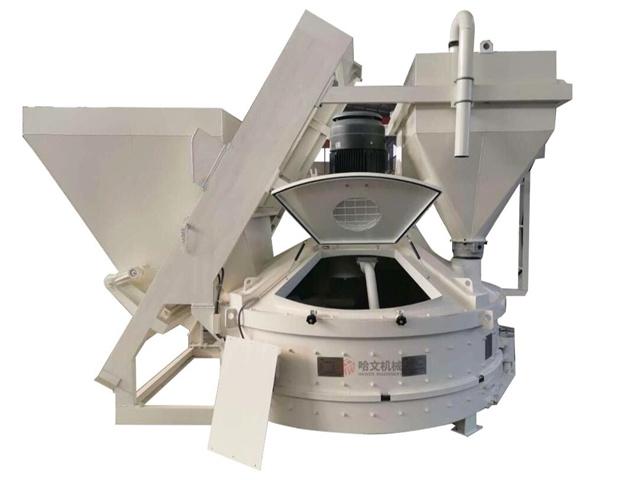
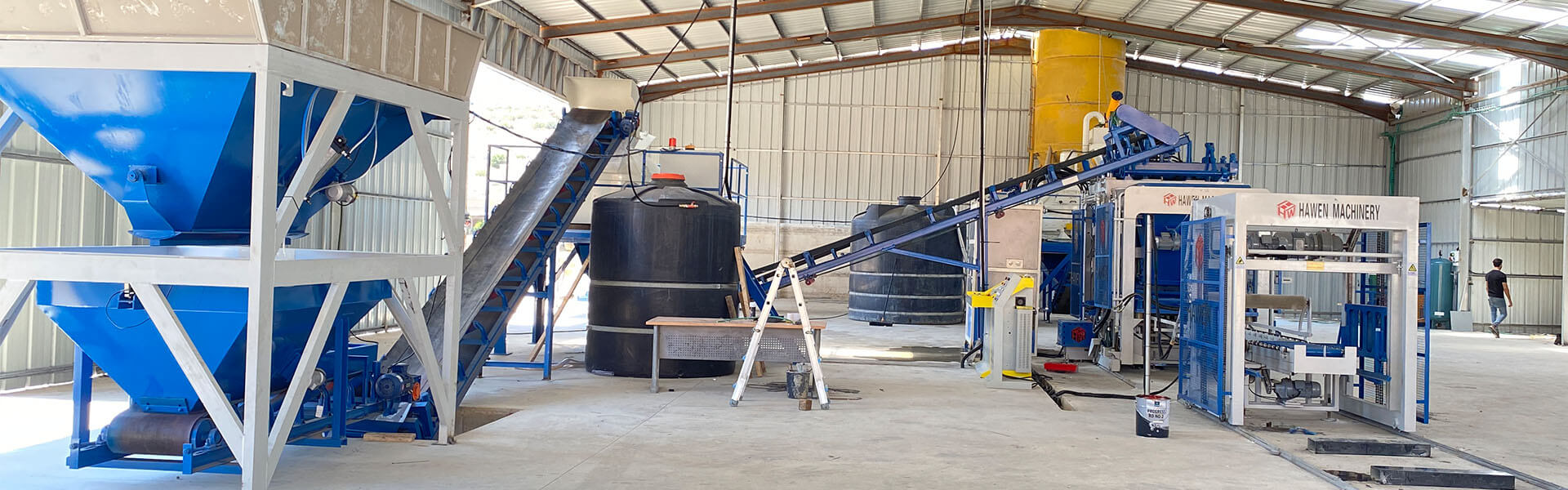
Improve mixing uniformity. Confirm charging sequence, actual mixing time, blade condition, and discharge completeness. A suitable concrete mixer should distribute cement and moisture evenly without leaving material in dead zones.
Optimize forming parameters. Check filling height, vibration synchronization, pressing, demoulding, and mould alignment. Change one setting at a time. Retain comparison samples.
Reduce rejection and handling damage. Review pallets, transfer equipment, curing, cubing, and forklift routes. An automatic offline palletizing system can support consistent downstream handling where the production scale justifies it.
Validate before reducing the recipe. Confirm dimensions, mass, surface quality, handling strength, and required laboratory performance. The lowest cement dose is not the objective. The objective is the lowest verified consumption per acceptable product.
Engineering note: Change only one major variable during each controlled trial. Simultaneous changes to water, cement, vibration, and curing may improve the result, but they conceal which correction actually worked.
Equipment and Purchasing Decisions
Equipment Control and HAWEN Machinery
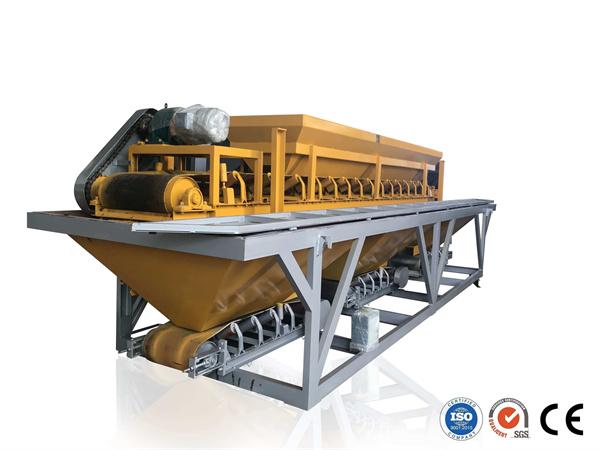
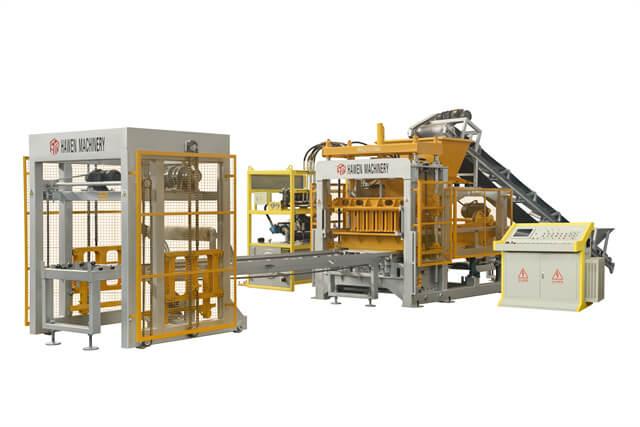
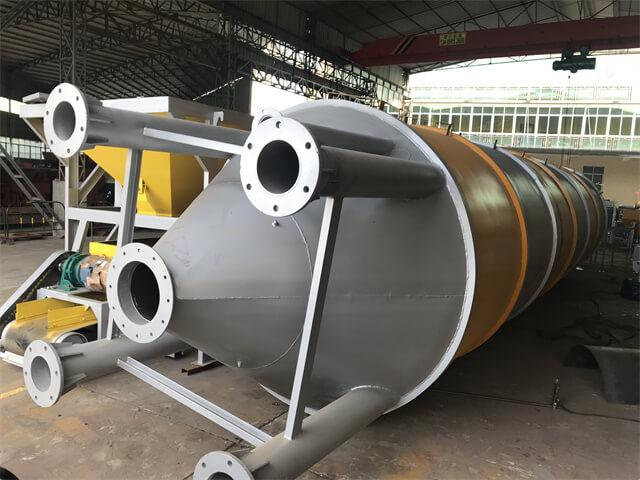
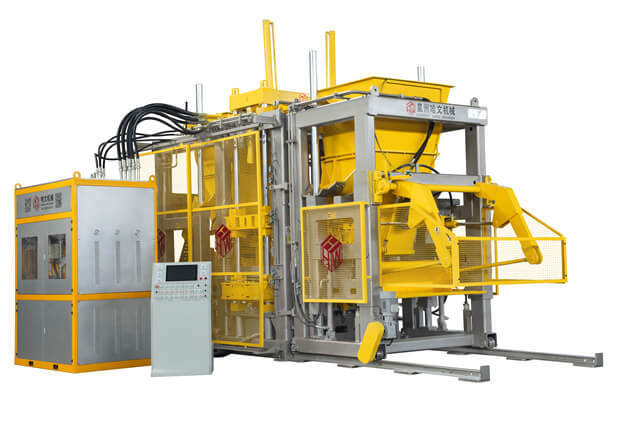
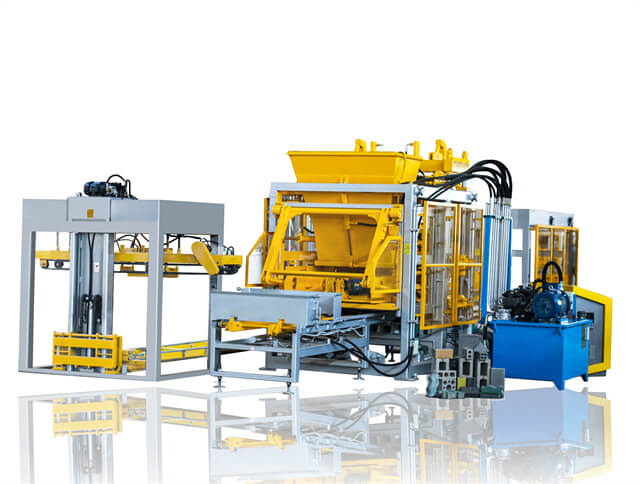
HAWEN Machinery supplies complete production equipment for hollow blocks, solid bricks, pavers, and kerbstones. Cement efficiency begins before forming. A calibrated cement storage and feeding system, accurate batching, and uniform mixing provide the block machine with a repeatable material charge.
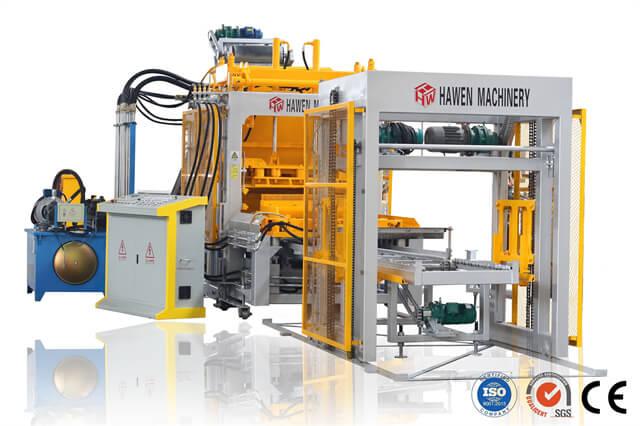
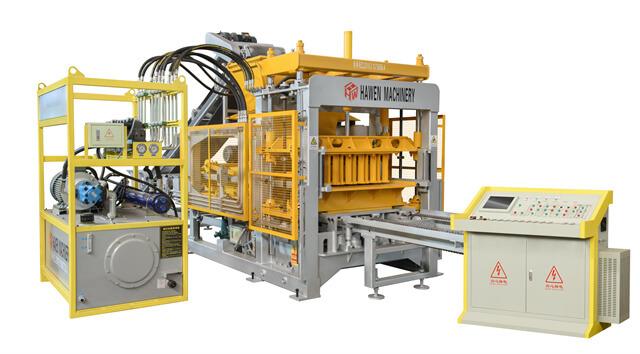
During forming, HAWEN uses a four-shaft vibration box with eccentric blocks positioned outside the housing. This arrangement reduces internal resistance and promotes even vibration across the mould area. Uniform compaction can reduce density variation and unnecessary cement compensation while supporting efficient cycles.
The hydraulic circuit also affects repeatability. HAWEN configurations use Japanese YUKEN proportional and directional valves together with an American ALBERT hydraulic pump. This combination supports controlled movement, dependable load delivery, and stable operation during repeated forming cycles.
Machine sequences are managed through a Siemens S7-200 PLC, an operator-friendly touch panel, and remote monitoring functions. HAWEN technicians can review operating status and support parameter optimization remotely. A stable program helps the block making machine repeat feeding, vibration, pressing, and demoulding settings across shifts.
Capacity should match demand. A QT8 fly-ash brick and paver machine, a QT10 solid cement block line, and a QT12 hydraulic hollow block line serve different output plans. Each model still requires a product-specific batch-yield test.
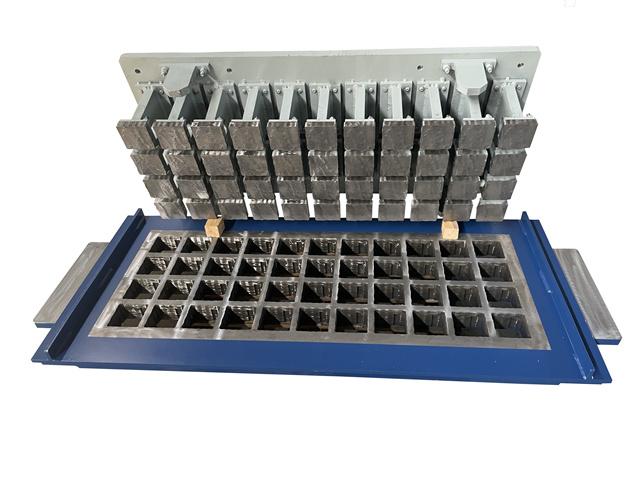
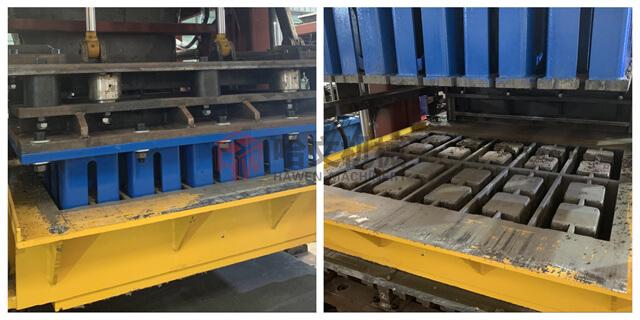
Mould geometry establishes the concrete volume of every unit. HAWEN manufactures moulds compatible with major platforms such as Masa, Hess, Zenith, Poyatos, Besser, Tiger, Columbia, Quadra, and Omag. Interfaces follow the relevant original specifications for accurate fit and smooth operation. Wear components undergo heat treatment, with hardness testing controlled at HRC 59-61. This supports wear resistance and preserves dimensional consistency over the service life.
A stable pallet also protects fresh units. The selected GMT production pallet must match the machine, product load, vibration environment, and handling system. Flexing or damaged pallets can affect block height and increase downstream losses.
Buyer Verification Checklist
Before purchasing a brick making machine, send the supplier the exact product drawings and target daily output. Ask for pieces per mould, a realistic cycle range, batch capacity, mixer selection, cement-weighing accuracy, pallet requirement, mould scope, and curing plan.
Request a sample calculation that begins with cement kilograms per batch and ends with acceptable products per batch. Ask which assumptions are measured and which are estimated. Confirm that auxiliary equipment is included in the proposed line. The main forming machine cannot maintain output when batching, mixing, pallet supply, or curing capacity is undersized.
During a factory test, observe several consecutive batches. Check block mass across different mould positions. Review edge quality, dimensions, surface texture, and demoulding stability. A short demonstration can show that the machine runs. A traceable yield test shows whether it runs economically.
Conclusion
The cement required for 1,000 concrete blocks should be calculated from verified cement input and acceptable batch yield. Block count alone cannot provide the answer. Product geometry, bag weight, aggregate grading, moisture, compaction, mould condition, and rejection rate all change the result.
For a new block making machine project, use a transparent planning model and confirm it through local material trials. For an operating factory, measure real batch yield and improve the process before reducing cement. This approach protects product performance while exposing waste that a simple mix ratio cannot reveal.
FAQ
Can one cement-bag estimate be used for both hollow blocks and solid bricks?
No. Their net concrete volumes and target densities differ. Calculate each product from its own drawing and measured batch yield.
Should rejected blocks be included in the calculation?
Yes. Rejected products consumed cement. Divide cement input by acceptable output to understand the true requirement per saleable block.
Why does cement consumption change between dry and rainy seasons?
Aggregate moisture changes the effective water content and may alter filling, compaction, and rejection. Measure moisture and correct water addition before changing cement dosage.
Can stronger vibration reduce cement consumption?
More vibration is not automatically better. Uniform, correctly timed vibration can improve density. Excessive or poorly synchronized vibration may cause segregation, equipment wear, or cycle instability.
How often should a factory recalculate bags per 1,000 blocks?
Recalculate after changes in product design, mould, cement source, aggregate grading, recipe, machine settings, rejection rate, or bag weight. Periodic checks also identify gradual drift.
What data should be sent to HAWEN for a material-consumption estimate?
Send block drawings, required product types, local material information, cement bag weight, target output, curing method, available factory area, and preferred automation level. The estimate becomes stronger when local trial data are available.
Why is accurate cement planning more important than simply buying the cheapest machine?
The machine price is paid once, while cement, rejected products, energy, and downtime shape production every day. A precise process turns raw material into dependable masonry with less uncertainty and less waste. At its best, a well-designed concrete products plant does more than manufacture blocks. It converts engineering discipline into durable buildings, productive local industry, and infrastructure that can carry human activity long after the production cycle has ended.




 Tel: +86-13905968794
 Email: export@hwmachines.com
 MP/WhatsApp: +86-13905968794
 Manufacturer Address:Nanan,Quanzhou City,Fujian Province,China