How Much Investment Is Needed to Start a Block Business
Author:HAWEN Block MachineFROM:Brick Production Machine Manufacturer
TIME:2026-05-27
The concrete block industry has become one of the most resilient sectors within the construction supply chain. As urbanization accelerates across Africa, Southeast Asia, the Middle East, and Latin America, the demand for reliable masonry materials continues to expand steadily. Consequently, an increasing number of entrepreneurs are exploring opportunities in the concrete block business, particularly in the segment of automated block machine and brick making machine production.
Yet one question invariably emerges at the outset:
How much investment is actually required to start a block factory?
The answer is far more nuanced than a single figure. Investment requirements depend on production capacity, automation level, land conditions, labor structure, local electricity costs, and market positioning. A small manual operation may begin with relatively limited capital, whereas a fully automatic block making machine production line represents a long-term industrial investment designed for large-scale manufacturing efficiency.
This article provides a structured overview of the principal investment components involved in establishing a concrete block production business, while also examining how prudent equipment selection can significantly reduce operational risk and improve long-term profitability.
1. Factory Land and Infrastructure Costs
Before purchasing a block machine or brick machine, investors must first evaluate the physical conditions required for production.
A small-scale block factory generally requires sufficient space for:
Raw material storage
Aggregate feeding
Mixing operations
Block forming
Wet block curing
Finished product storage
Forklift circulation
Even compact block making machine plants require rational workflow planning. Poor factory layout often leads to unnecessary transportation distances, labor inefficiency, and elevated production costs.
In many developing markets, entrepreneurs initially lease industrial land to reduce upfront capital expenditure. This approach preserves liquidity during the early operational phase and mitigates financial pressure before sales channels stabilize.
Note: An efficient layout frequently saves more money over time than simply purchasing cheaper equipment.
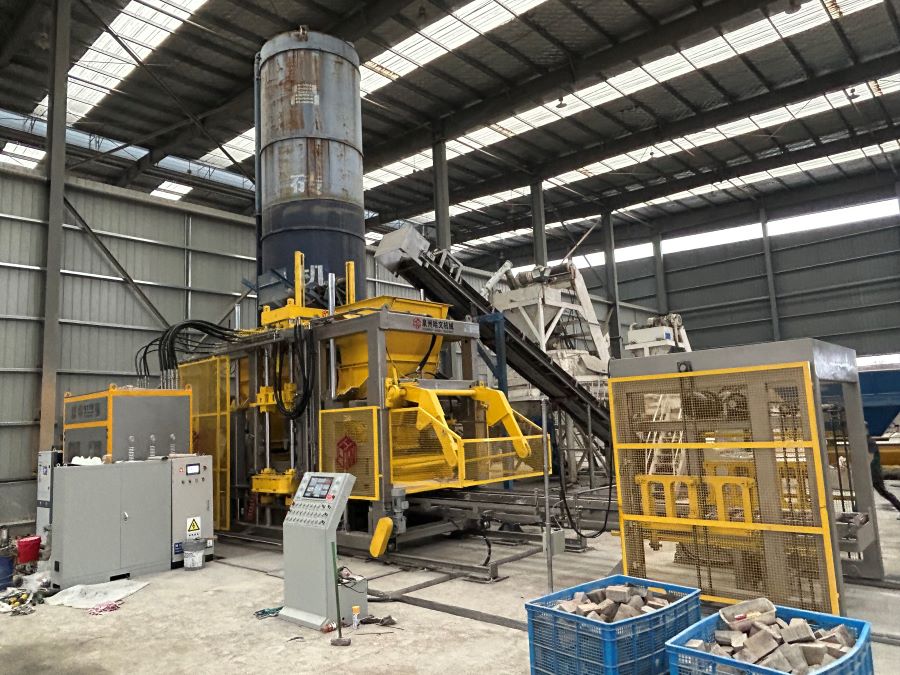
For medium and large automatic brick making machine projects, investors should additionally consider:
Three-phase power infrastructure
Water supply systems
Drainage systems
Curing chambers
Truck access roads
These auxiliary expenditures are frequently underestimated during the planning stage.
2. Raw Material Investment
Raw materials constitute one of the largest recurring expenditures in any concrete block business.
Typical materials include:
Cement
Sand
Stone dust
Crushed aggregate
Fly ash
Slag
Construction waste
Industrial solid waste
The viability of a block production business depends heavily on local raw material accessibility. Transportation costs can rapidly erode profit margins if aggregates are sourced from distant suppliers.
Modern block machine production increasingly emphasizes industrial waste recycling. Materials such as fly ash, slag, and recycled concrete not only reduce environmental burden but also lower production expenditure when processed correctly.
This is particularly important for investors operating in regions where cement prices fluctuate sharply.
A well-designed brick making machine production line can substantially optimize cement utilization through advanced vibration compaction and precise batching systems.
3. Investment in the Block Machine Production Line
The core investment of the business is naturally the block machine itself.
Different production scales require different equipment configurations.
Small Manual or Semi-Automatic Setup
Suitable for:
Start-up entrepreneurs
Rural construction markets
Low initial demand
Typical equipment may include:
Small mixer
Conveyor
Semi-automatic block machine
Manual pallet handling
Advantages:
Lower capital threshold
Easier operation
Faster initial setup
Disadvantages:
High labor dependency
Lower consistency
Limited daily output
Fully Automatic Block Making Machine Plant
Suitable for:
Commercial-scale production
Municipal projects
Paver manufacturing
Large construction supply chains
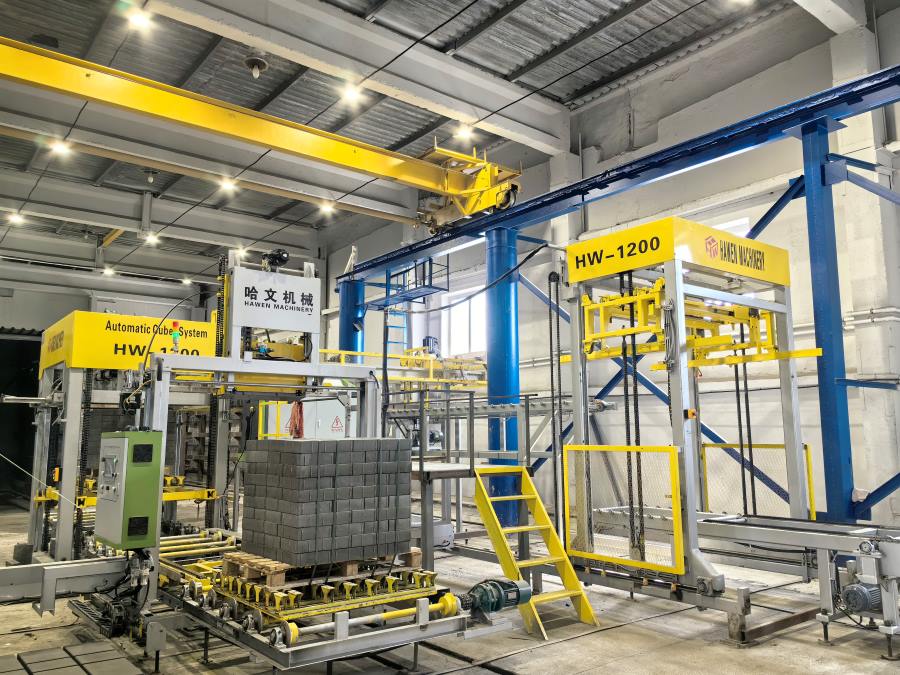
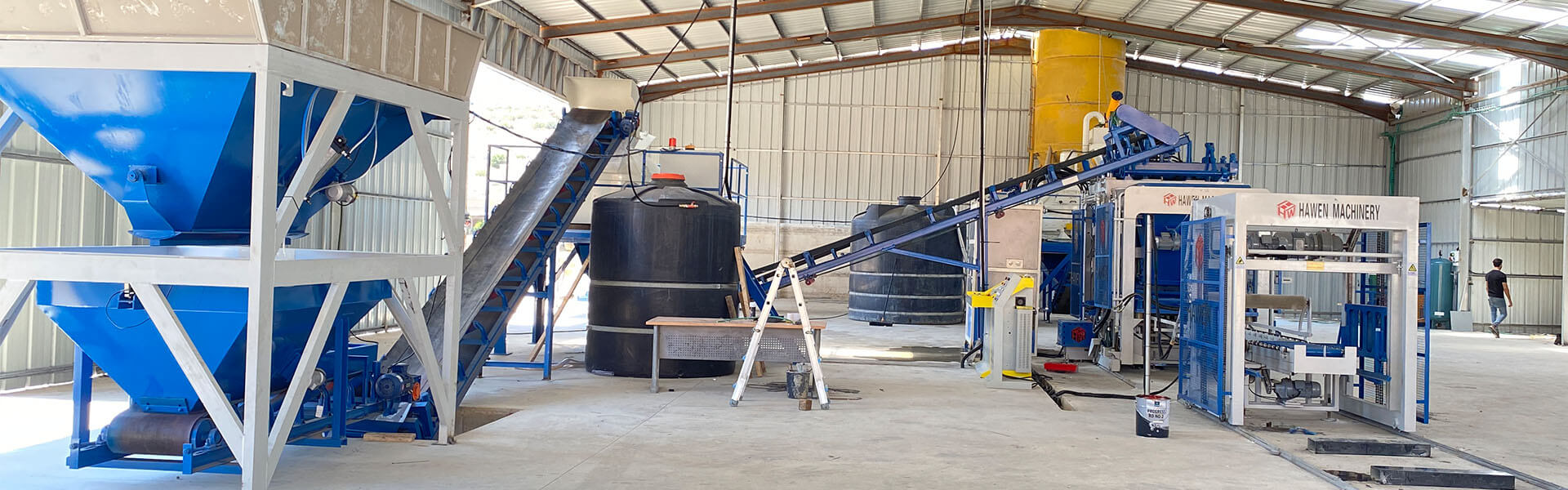
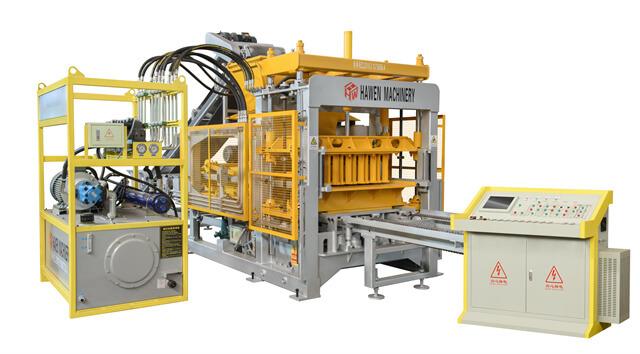
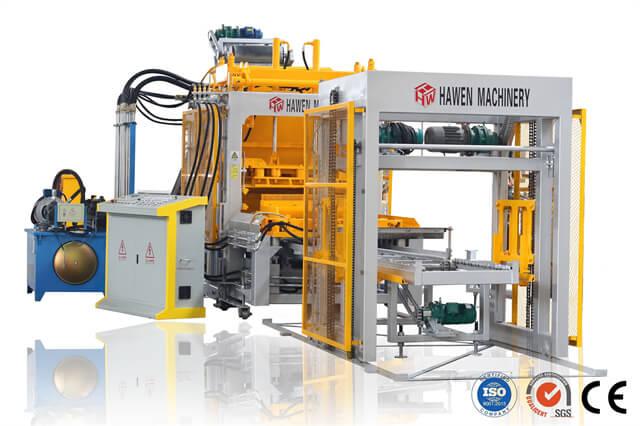
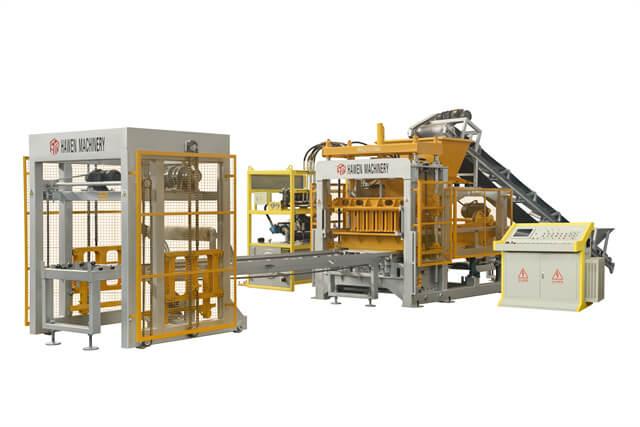
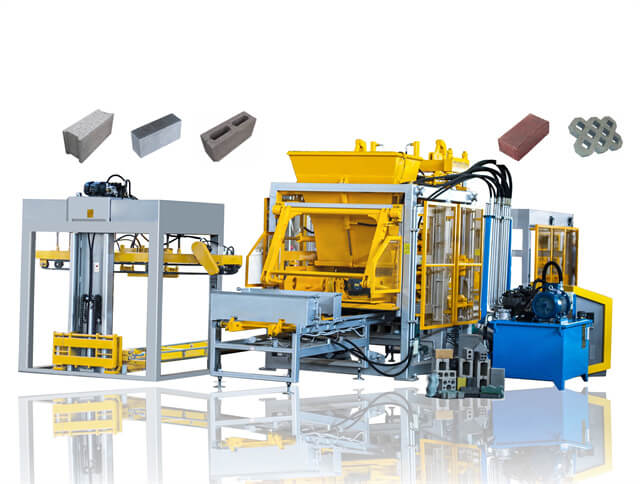
A modern automatic brick machine line generally includes:
Automatic batching machine
Concrete mixer
Belt conveyor system
Automatic block machine
Elevator and lowerator
Finger car system
Curing chamber
Automatic cuber
Automatic packing system
At Hawen Machinery, fully automatic block making machine systems are engineered to improve production continuity while reducing labor intensity and material wastage.
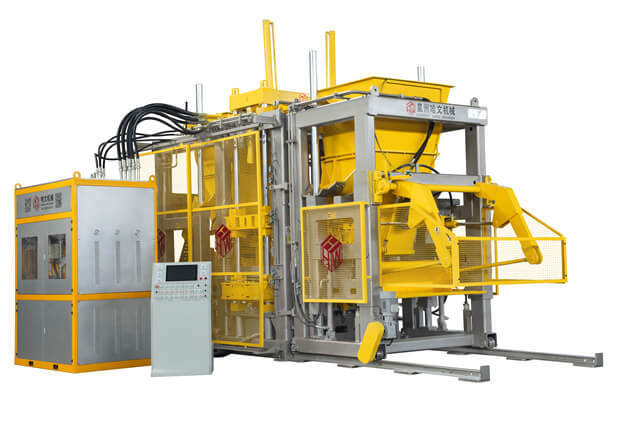
For example, Hawen Machinery adopts a four-shaft vibration box structure with externally mounted eccentric blocks. This configuration minimizes vibration resistance, enhances compaction uniformity, and lowers cement consumption without compromising block density.
In practical terms, better compaction directly translates into:
Higher block strength
Reduced rejection rates
Lower raw material expenditure
These factors profoundly affect long-term profitability.
4. Hydraulic and Electrical System Investment
Many inexperienced investors focus exclusively on machine price while overlooking the importance of hydraulic and electrical reliability.
However, the operational stability of a block machine largely depends on these core systems.
At Hawen Machinery, the hydraulic unit integrates Japanese YUKEN proportional and directional valves together with high-performance American ALBERT hydraulic pumps. This combination delivers:
Stable pressure output
Precise movement synchronization
Improved overload resistance
Extended service life
A reliable hydraulic system reduces downtime, which is often one of the most expensive hidden costs in block production.
Similarly, intelligent control architecture plays an increasingly important role in automated manufacturing.
Hawen Machinery incorporates a SIEMENS S7-200 PLC control system with touch-screen operation and remote monitoring capability. Operators can monitor machine status in real time, optimize operating parameters remotely, and maintain stable product consistency throughout continuous production cycles.
For investors managing multiple factories or overseas operations, remote diagnostics significantly improve management efficiency.
5. Mold Investment and Product Diversification
Many newcomers underestimate the strategic importance of molds.
In reality, molds determine:
Product dimensions
Surface quality
Productivity
Market flexibility
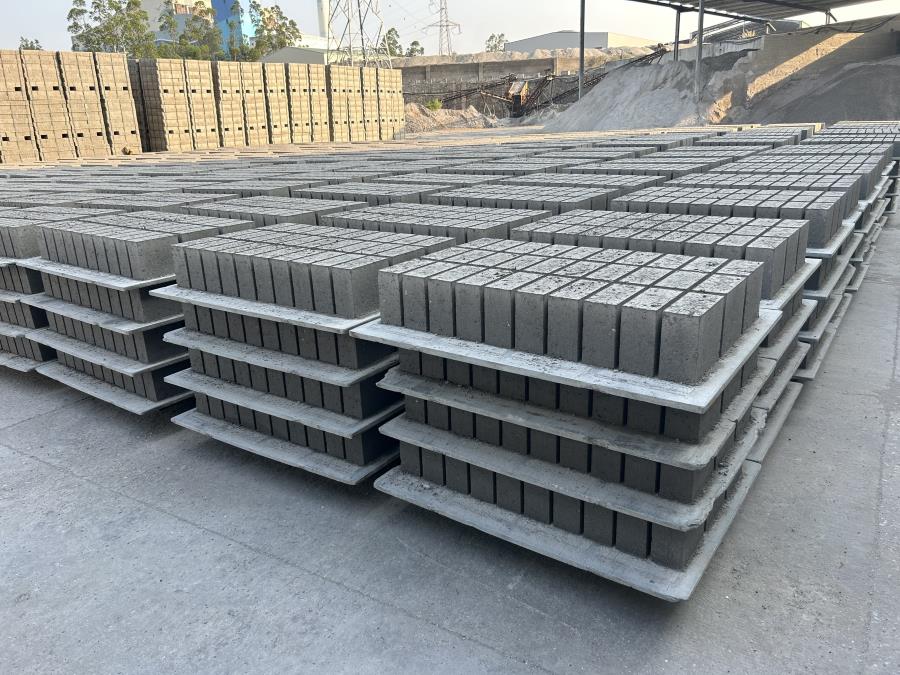
A single block making machine can manufacture:
Hollow blocks
Solid bricks
Curbstones
Interlocking pavers
Grass planting blocks
provided that compatible molds are available.
Hawen Machinery designs molds compatible with internationally recognized block machine brands such as Masa, Hess, Zenith, Poyatos, Besser, Tiger, Columbia, Quadar, Omag, and others. By adhering to original technical specifications, these molds ensure smooth installation, dimensional precision, and stable long-term performance across different platforms.
Additionally, all molds undergo heat treatment to enhance wear resistance, with hardness testing typically reaching HRC60–62.
This substantially prolongs mold lifespan under high-frequency vibration conditions.
6. Labor and Operating Costs
The level of automation directly influences labor expenditure.
Manual production may initially appear economical, but long-term operational inefficiency often increases total costs through:
Inconsistent quality
High breakage rates
Labor turnover
Slow production cycles
By contrast, a fully automatic brick machine system can dramatically reduce manpower requirements while improving production stability.
In many regions, rising labor costs are accelerating the transition toward automated block machine manufacturing.
The objective is not merely to reduce headcount. Rather, it is to improve operational predictability and manufacturing consistency.
7. Transportation and Logistics Costs
Transportation costs are another frequently neglected factor.
Investors must account for:
Sea freight
Inland trucking
Customs clearance
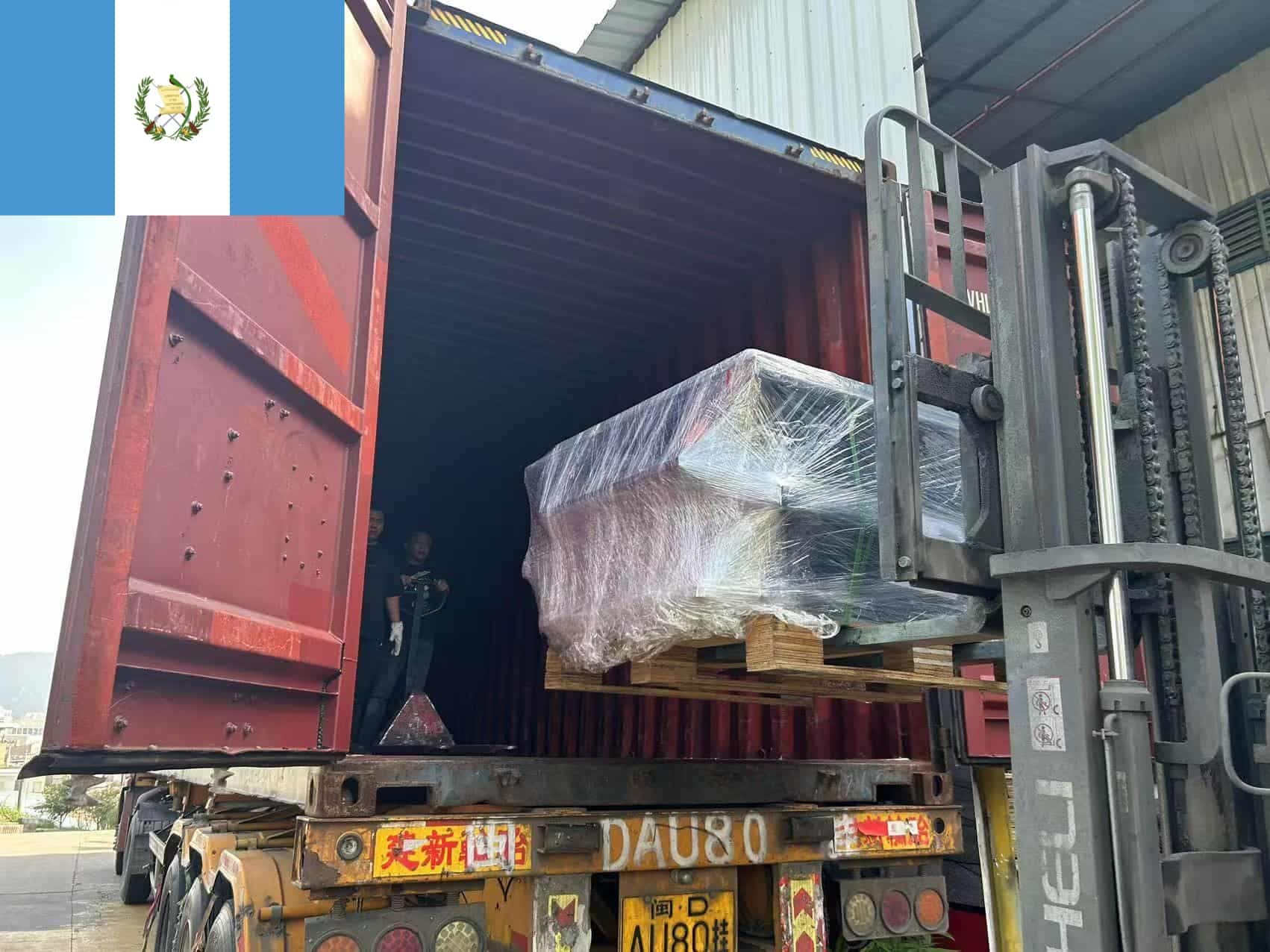
Container unloading
Forklift equipment
For international buyers, container optimization is extremely important. Rational loading plans reduce shipping expenditure significantly, especially for complete automatic brick making machine production lines.
Moreover, local after-sales support availability should be evaluated carefully before purchasing equipment.
A lower-priced machine with poor technical support may ultimately become more expensive.
8. How to Reduce Initial Investment Risk
One of the most effective strategies is phased expansion.
Many successful manufacturers begin with:
One block machine
Limited molds
Basic product range
After establishing stable local demand, they gradually expand into:
Colored pavers
Curbstones
Automatic cubing systems
Additional molds
Higher-capacity production lines
This incremental approach improves cash flow resilience and reduces financial exposure.
In industrial manufacturing, sustainability is rarely achieved through aggressive expansion alone. It is achieved through disciplined operational planning.
Conclusion
Starting a concrete block business is not merely about purchasing a brick machine or installing a block making machine production line. It is about constructing an integrated manufacturing ecosystem in which equipment, materials, labor, logistics, and market demand operate in strategic equilibrium.
The true determinant of success is not who spends the most money at the beginning. It is who allocates capital with the greatest intelligence, operational foresight, and long-term discipline.
A reliable block machine may produce thousands of concrete blocks every day. Yet behind every finished block stands a far more important structure: a carefully calculated industrial strategy.
In the coming decade, the global construction industry will increasingly prioritize efficiency, sustainability, and intelligent manufacturing. Entrepreneurs who understand this transition today will not merely participate in the block industry — they will help define its future.
FAQ
1. Can I start a block business with a semi-automatic block machine?
Yes. Many successful factories initially begin with semi-automatic brick making machine systems to reduce initial investment pressure. The key is selecting equipment that allows future expansion.
2. Which raw materials are most suitable for concrete block production?
Common materials include cement, sand, stone dust, fly ash, slag, and crushed aggregate. The optimal formulation depends on local material availability and target block strength requirements.
3. Is a fully automatic block machine worth the investment?
For medium and large-scale production, fully automatic block machine systems significantly improve efficiency, reduce labor dependence, and enhance product consistency, which often lowers long-term operating costs.
4. Why is vibration technology important in a brick machine?
Vibration directly affects block density and compressive strength. Advanced vibration systems improve compaction uniformity while reducing cement consumption and product defects.
5. How important are molds in block production?
Extremely important. High-quality molds determine dimensional precision, production efficiency, and finished block appearance. Heat-treated molds with HRC60–62 hardness offer better durability under continuous industrial operation.






 Tel: +86-13905968794
 Email: export@hwmachines.com
 MP/WhatsApp: +86-13905968794
 Manufacturer Address:Nanan,Quanzhou City,Fujian Province,China