Setting up a small block factory is often perceived as a straightforward investment in machinery. In reality, it is a structured engineering system where each piece of equipment plays a specific role in determining production stability, product consistency, and long-term profitability.
A small-scale concrete production line is not defined by size alone, but by how efficiently each unit—from material preparation to final stacking—works in coordination. Whether producing hollow blocks, paving bricks, or curbstones, a reliable configuration is essential for stable operation of a block machine or a compact brick machine system.
This guide outlines the essential equipment required to establish a functional and efficient small block manufacturing facility.
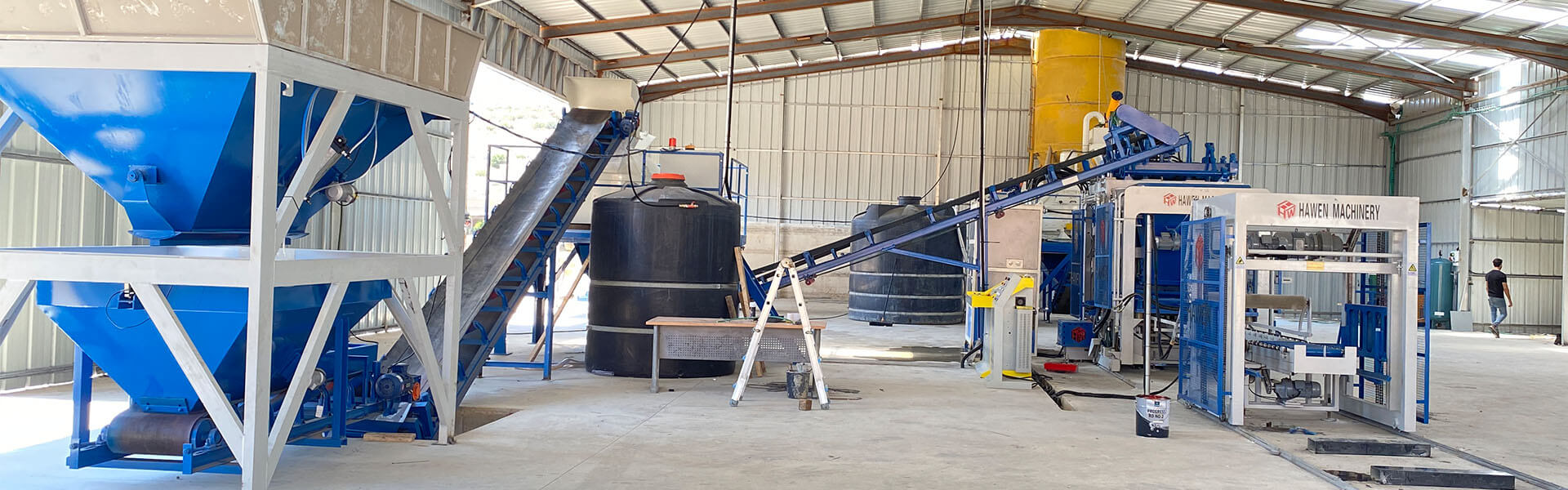
1. Raw Material Storage and Feeding System
Every production cycle begins with raw material handling. Even the most advanced block making machine cannot compensate for inconsistent material input.
A basic system includes:
Aggregate storage bins
Cement silo or bag cement feeding system
Weighing conveyor
Material batching hopper
The primary function of this stage is to ensure accurate proportioning of cement, sand, and aggregates. Even minor deviations in ratio can significantly affect compressive strength and surface quality.
In small factories, simplicity and stability are more important than over-complex automation. However, accurate weighing remains non-negotiable for consistent output.
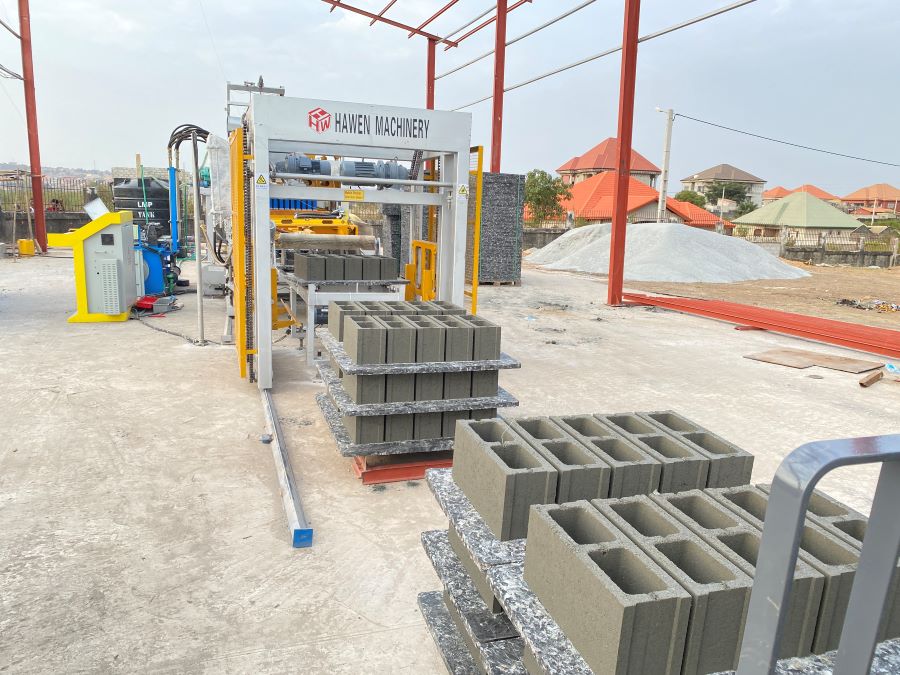
2. Concrete Batching Machine
The batching system is responsible for determining the final quality of every concrete block.
It ensures:
Precise material measurement
Controlled mixing ratios
Consistent batch output
For small factories, a compact batching machine is typically sufficient. However, its accuracy directly influences the performance of the entire production line.
A poorly calibrated batching system often leads to:
Weak blocks
Uneven density
Excessive cement consumption
Surface defects
In practical terms, batching accuracy defines the foundation of product reliability.
3. Concrete Mixer System
Once materials are measured, they must be uniformly mixed before entering the molding stage.
A forced pan mixer or twin-shaft mixer is commonly used in small block production setups.
Key functions include:
Homogenizing aggregates and cement
Ensuring consistent moisture distribution
Preventing material segregation
Without proper mixing, even high-end equipment cannot produce stable-quality products. This stage directly determines whether a brick making machine can operate at its designed efficiency level.
Uniform mixing is not a secondary step—it is a structural requirement.
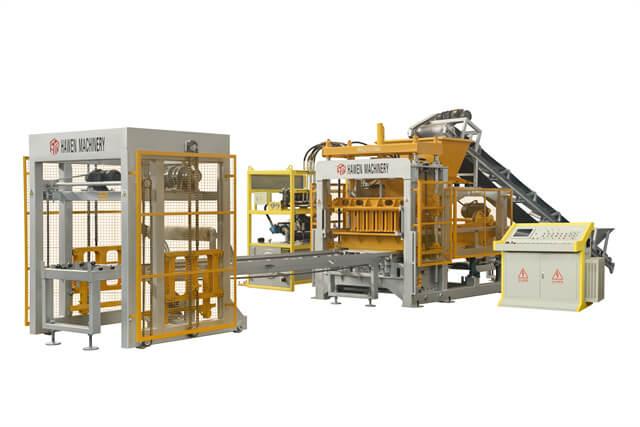
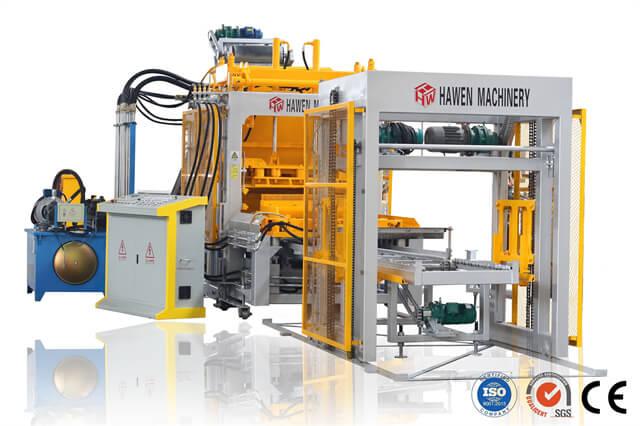
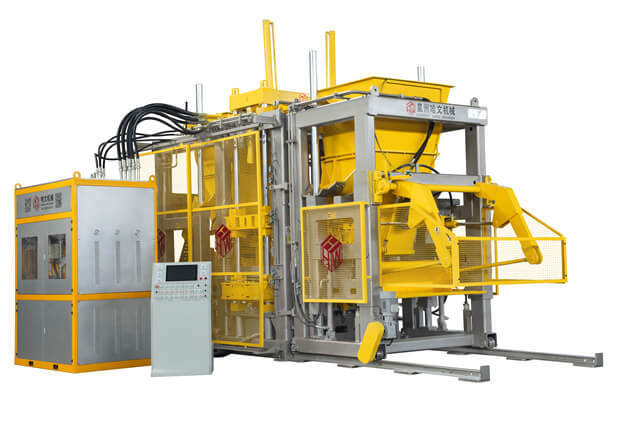
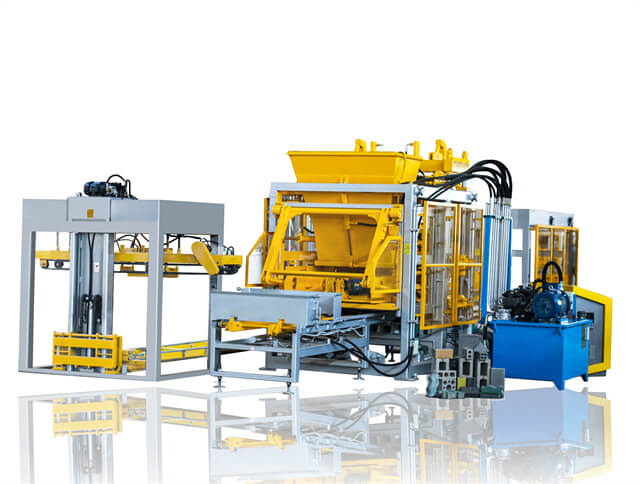
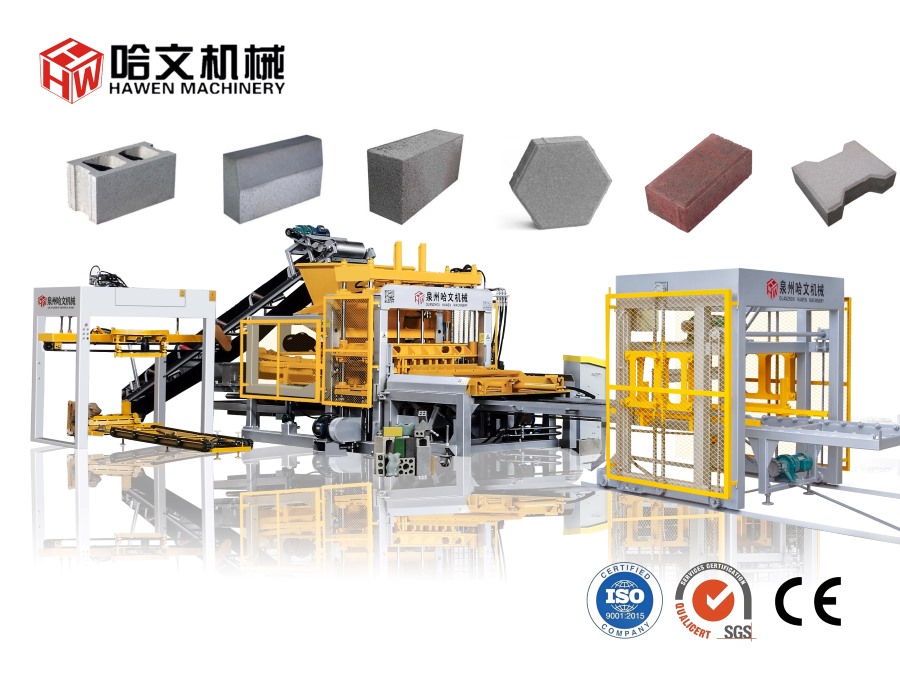
4. Main Forming Equipment (Block Machine)
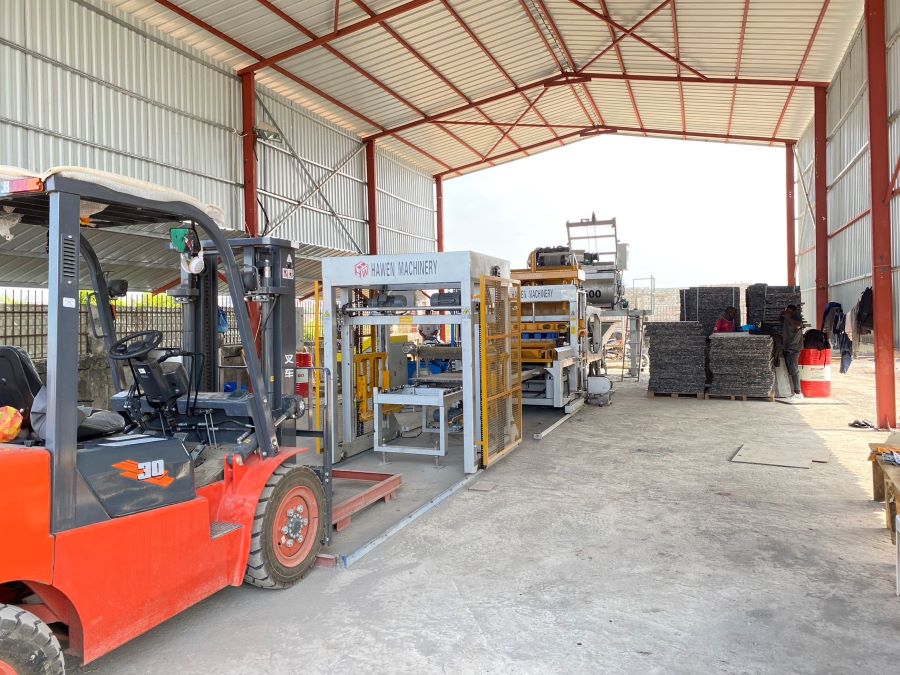
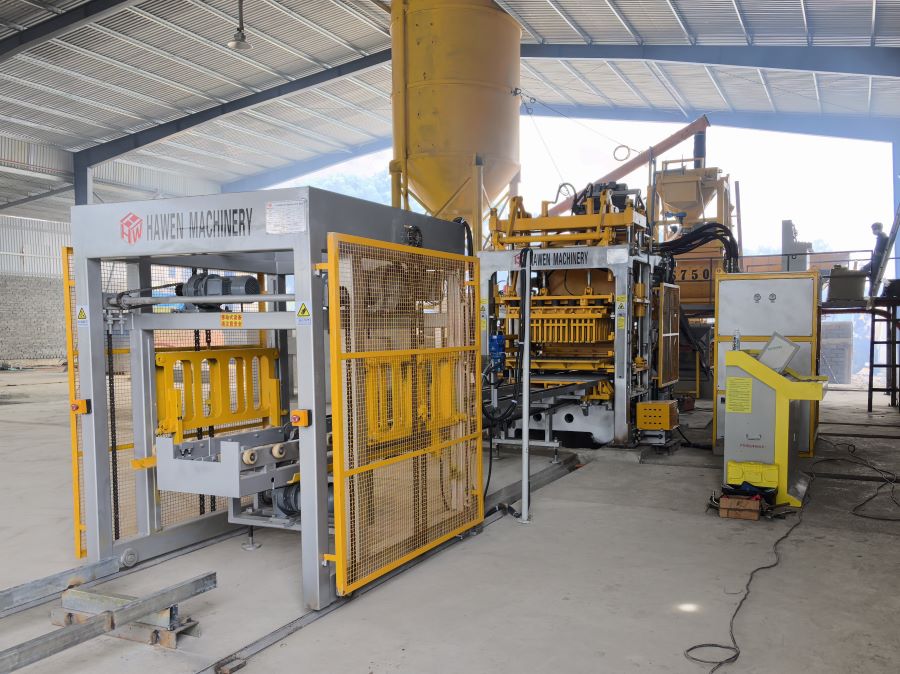
The core of the entire factory is the block machine itself. This is where raw concrete is transformed into final products.
A typical small-scale system includes:
Hydraulic forming unit
Vibration system
Mold chamber
Feeding car or material distributor
At Hawen Machinery, the hydraulic system integrates precision components such as Japanese YUKEN proportional control valves combined with high-efficiency ALBERT hydraulic pumps. This configuration ensures stable pressure output and consistent forming force during continuous production cycles.
The system is designed to maintain hydraulic stability even under high-frequency industrial operation, reducing pressure fluctuation and improving product consistency.
For operators, this directly translates into smoother machine behavior and more predictable production output.
5. Vibration System
Vibration technology plays a decisive role in determining block density and structural strength.
An inefficient vibration system leads to:
Hollow internal structure
Low compressive strength
Uneven surface texture
High rejection rate
Hawen Machinery adopts a four-shaft vibration box structure with eccentric blocks positioned externally to the housing. This reduces internal mechanical resistance and improves energy transfer efficiency during vibration cycles.
The result is:
More uniform compaction
Reduced cement consumption
Improved mechanical stability
Longer equipment lifespan
In modern block making machine systems, vibration quality is often more critical than raw machine power.
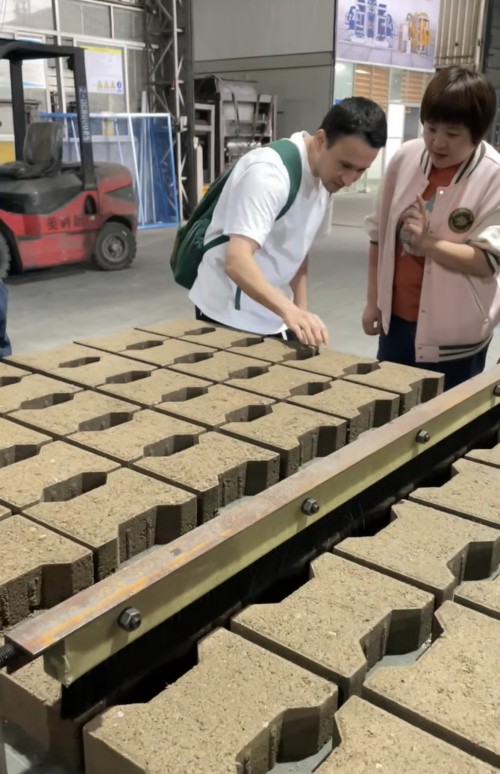
6. Mould System
Moulds determine the final shape, precision, and surface quality of every product.
A small factory typically requires multiple mould sets, such as:
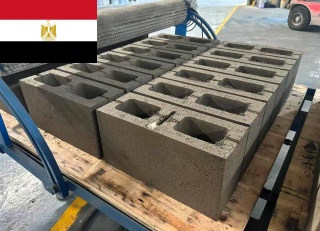
Hollow block moulds
Solid block moulds
Interlocking paver moulds
Curbstone moulds
Hawen Machinery designs moulds compatible with leading global block machine brands, including Masa, Hess, Zenith, Poyatos, Besser, Tiger, Columbia, Quadar, Omag, and others. These moulds follow original engineering standards to ensure precise fitting and stable operational alignment.
All moulds undergo heat treatment processes to improve wear resistance. Surface hardness is controlled within HRC 60–62, ensuring a balance between durability and toughness.
In real production environments, mould precision directly affects machine stability and product consistency.
7. Control System (PLC Automation)
Even in small factories, automation significantly improves efficiency and reduces human error.
A modern control system typically includes:
PLC controller
Touch-screen interface
Electrical cabinet
Sensor feedback system
At Hawen Machinery, the SIEMENS S7-200 PLC system is integrated with intuitive touch-screen operation and optional remote monitoring functions. This allows operators to adjust production parameters, monitor machine status, and maintain stable output with minimal manual intervention.
For small block factories, automation does not mean complexity—it means consistency.
8. Auxiliary Equipment
In addition to core systems, several supporting units are essential for smooth operation:
Pallet feeding system
Block stacking or cubing system
Conveyor belts
Curing racks or curing yard equipment
Forklift or manual handling tools
These components ensure that production flow remains continuous from molding to final stacking.
Even simple auxiliary systems can significantly reduce labor intensity and improve overall productivity.
Conclusion
A small block factory is not defined by how few machines it contains, but by how effectively each system works together as a unified production chain.
From batching and mixing to forming, vibration, molding, and stacking, every stage contributes to the final product quality and operational stability. Even a compact brick machine setup requires careful integration of mechanical precision, material control, and process discipline.
At its core, block production is not simply manufacturing—it is system engineering.
Factories that succeed in this industry are not those that merely invest in equipment, but those that understand how each component influences the next. When properly configured, even a small production line can achieve remarkable efficiency, consistency, and profitability.
Because in modern construction materials manufacturing, success is not determined by scale alone, but by structure, coordination, and long-term operational intelligence.
And ultimately, every well-designed factory reflects the same principle:





 Tel: +86-13905968794
 Email: export@hwmachines.com
 MP/WhatsApp: +86-13905968794
 Manufacturer Address:Nanan,Quanzhou City,Fujian Province,China