What Is the Cheapest Way to Produce Concrete Blocks ?
Author:HAWEN Block MachineFROM:Brick Production Machine Manufacturer
TIME:2026-04-27
In the economics of block manufacturing, “cheap” is often misunderstood as merely reducing upfront expenditure. In reality, the lowest-cost production model is one that minimizes unit cost over time while maintaining acceptable quality standards. This distinction is critical. A superficially inexpensive process that leads to high rejection rates, excessive cement consumption, or frequent downtime will ultimately prove uneconomical.
Therefore, the central question is not how to spend less, but how to produce more efficiently with fewer resources.
1. Optimizing Raw Material Utilization
Raw materials—cement, aggregates, and water—constitute the largest share of production cost. Among these, cement is the most expensive component. Consequently, reducing cement consumption without compromising strength is the most direct path to cost efficiency.
A well-optimized mix design achieves this balance by improving particle packing density. When aggregates are properly graded, void spaces are minimized, allowing the same structural integrity to be achieved with less binder.
Note: Even a small reduction in cement ratio, when scaled across thousands of blocks per day, can generate substantial cost savings.
2. Improving Compaction Efficiency Instead of Adding Cement
A common but flawed approach to increasing block strength is simply adding more cement. This method is both costly and inefficient. Strength is not determined solely by binder content, but also by compaction quality.
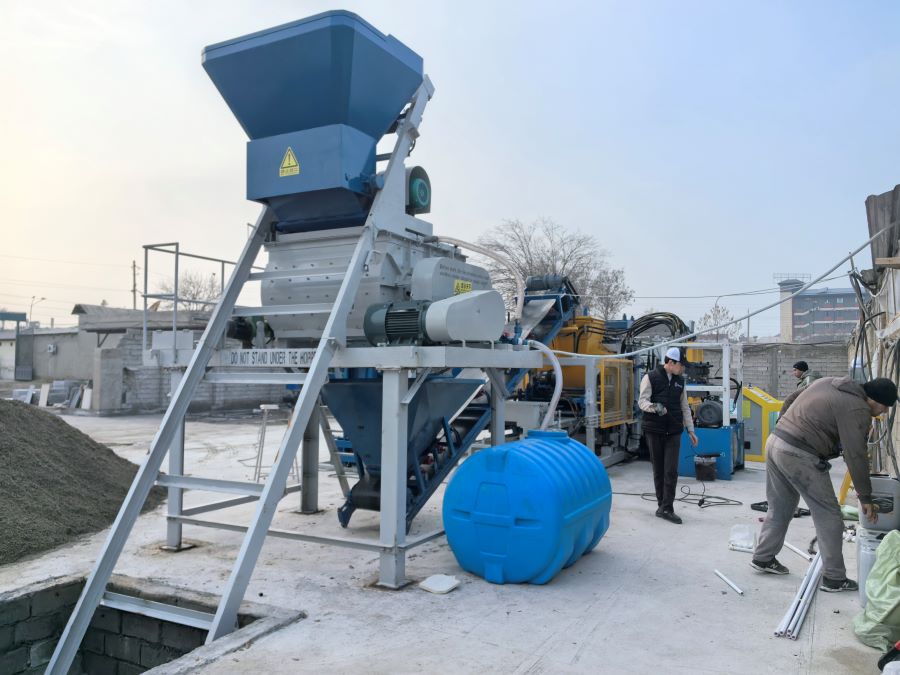
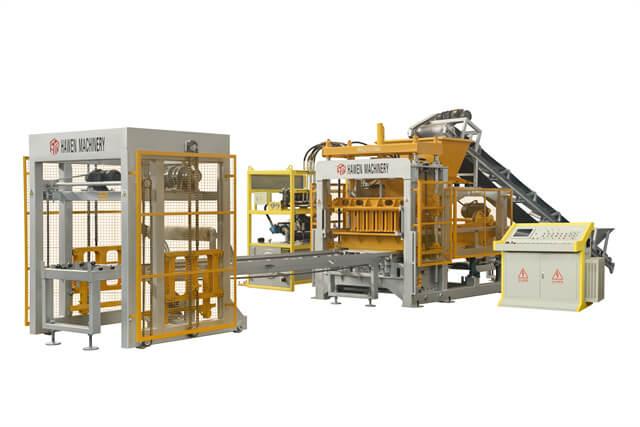
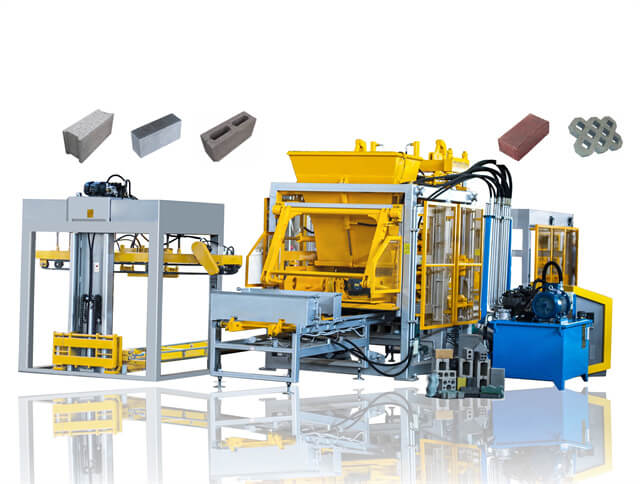
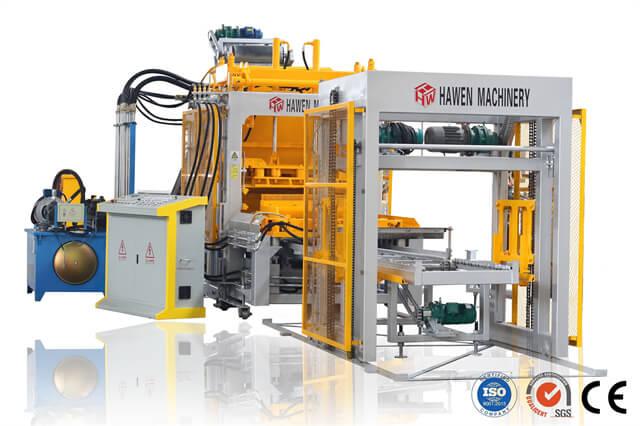
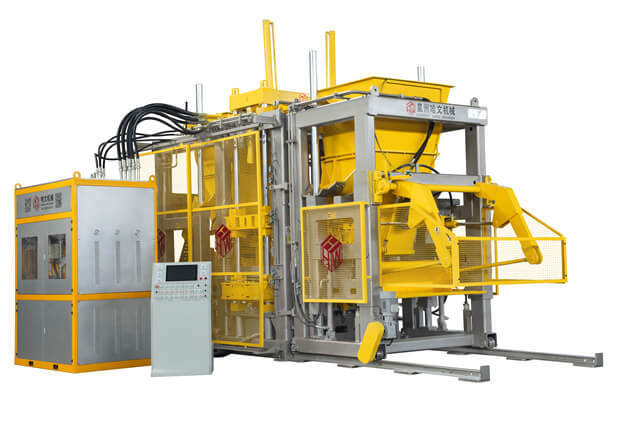
Hawen Machinery adopts a four-shaft vibration box design, positioning eccentric blocks outside the housing. This configuration reduces resistance during vibration, ensures uniform compaction, and lowers cement consumption while improving overall efficiency.
By enhancing compaction, manufacturers can achieve higher density blocks with less cement, effectively reducing material cost per unit.
3. Leveraging Automation to Reduce Labor Costs
Labor is another significant cost factor, particularly in regions where manual operation remains prevalent. While automation requires initial investment, it dramatically reduces long-term operational expenses.
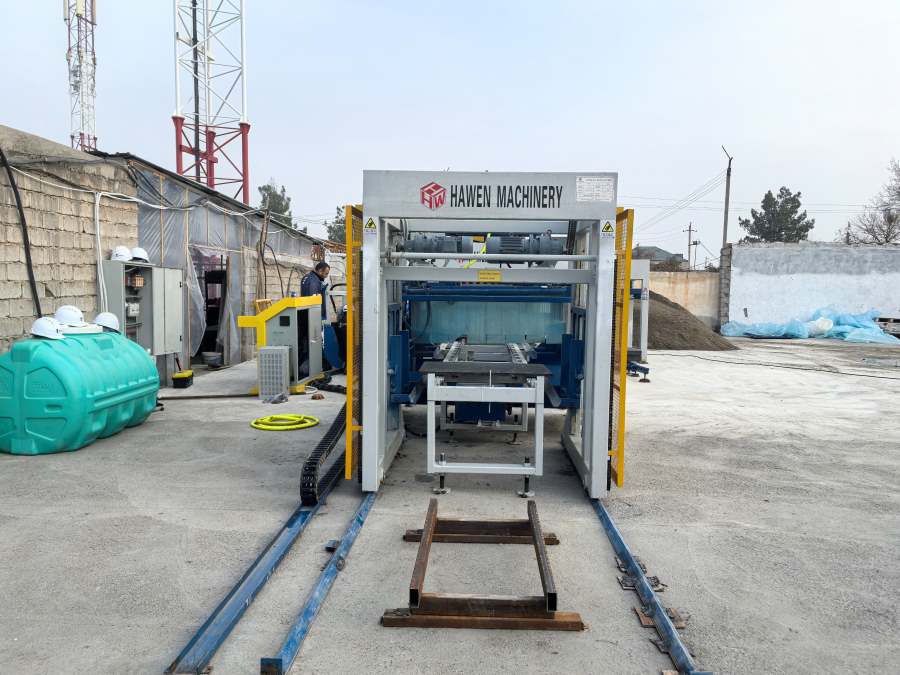
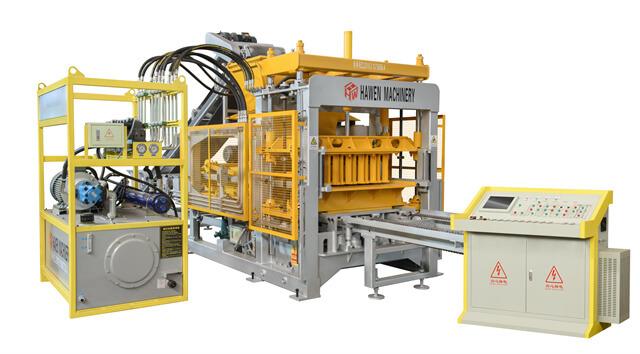
Hawen Machinery integrates a SIEMENS S7-200 PLC system with an intuitive touch panel and remote monitoring capabilities. Through this system, operators can supervise the entire production process, adjust parameters in real time, and ensure consistent output with minimal manual intervention.
This not only reduces labor dependency but also minimizes human error, which is often a hidden source of inefficiency.
4. Ensuring Hydraulic System Efficiency and Stability
Hydraulic systems govern critical functions such as mold movement and pressure application. Inefficient hydraulic performance can lead to energy waste, inconsistent compaction, and increased maintenance costs.
In advanced configurations, hydraulic stations utilize high-precision components, including Japanese YUKEN proportional and directional valves paired with American ALBERT hydraulic pumps. This combination ensures accurate flow control, stable pressure output, and long-term durability.
A stable hydraulic system reduces energy consumption and prevents costly downtime, both of which contribute directly to lower production costs.
5. Extending Mold Lifespan and Reducing Replacement Frequency
Mold wear is an often-overlooked cost driver. Frequent replacement not only increases direct expenses but also disrupts production continuity.
Hawen Machinery designs molds compatible with leading brands such as MASA, HESS, ZENITH, POYATOS, BESSER, TIGER, and others. These molds are manufactured according to original specifications, ensuring precise fit and consistent block quality. Moreover, all molds undergo heat treatment to enhance wear resistance and durability.
By extending mold lifespan, manufacturers can significantly reduce long-term operational costs while maintaining product consistency.
6. Minimizing Waste Through Process Control
Waste—whether in the form of rejected blocks, material spillage, or energy inefficiency—directly erodes profitability. Effective process control is therefore essential.
Real-time monitoring systems allow operators to detect deviations in vibration, pressure, or material flow. Early intervention prevents defects from accumulating, thereby reducing waste and improving yield.
In economic terms, waste reduction is equivalent to cost reduction.
7. Choosing the Right Production Scale
Paradoxically, the cheapest method is not always the smallest or simplest setup. Low-capacity manual production may have minimal initial cost, but its unit cost is often higher due to inefficiency and labor intensity.
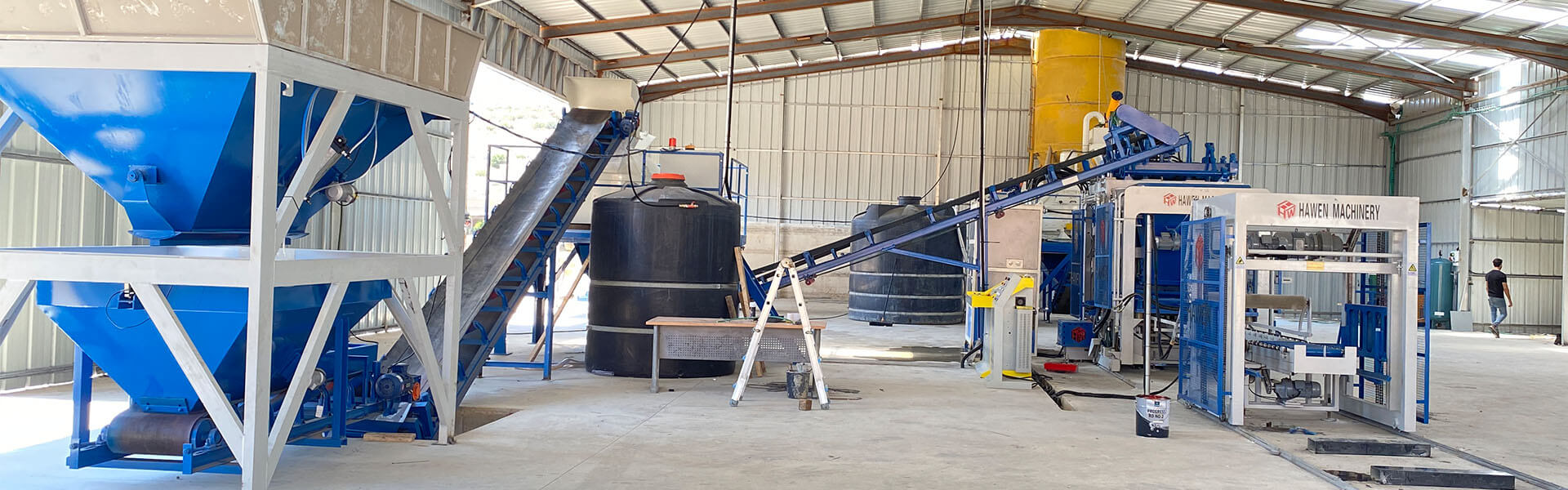
Conversely, a well-configured automated production line, though requiring higher initial investment, can achieve lower cost per block through economies of scale, consistent quality, and reduced waste.
The optimal choice depends on production volume, market demand, and resource availability.
FAQ: Cost Optimization in Block Production
1. Is using less cement always the cheapest option?
Not necessarily. Excessive reduction can compromise strength and increase rejection rates, which ultimately raises costs.
2. Can small factories achieve low production costs?
Yes, by optimizing mix design, improving compaction, and implementing basic automation, small-scale operations can remain competitive.
3. How important is machine quality in cost reduction?
Extremely important. High-quality machines reduce downtime, improve efficiency, and lower maintenance expenses over time.
4. Does automation always reduce costs?
In the long run, yes. While initial investment is higher, automation significantly lowers labor costs and improves production consistency.
Conclusion
The cheapest way to produce concrete blocks is not defined by minimal spending, but by maximal efficiency. It is achieved through a systematic alignment of material optimization, mechanical precision, and intelligent control.
In this framework, every element—raw materials, machinery, process design—must operate in concert. Cost reduction is no longer a matter of compromise, but of refinement. It requires eliminating inefficiencies rather than sacrificing quality.
Ultimately, the most economical production system is one that transforms every unit of input—material, energy, and time—into consistent, reliable output. In doing so, it redefines “cheap” not as a limitation, but as a disciplined pursuit of industrial excellence.




 Tel: +86-13905968794
 Email: export@hwmachines.com
 MP/WhatsApp: +86-13905968794
 Manufacturer Address:Nanan,Quanzhou City,Fujian Province,China