How Moisture Content Affects Concrete Block Formation
Author:HAWEN Block MachineFROM:Brick Production Machine Manufacturer
TIME:2026-04-11
Introduction: The Most Underestimated Variable in Block Production
In concrete block manufacturing, moisture content is often treated as a routine parameter. In reality, it is one of the most decisive variables governing block formation, directly influencing compaction efficiency, dimensional accuracy, surface quality, and compressive strength.
Too little moisture leads to poor bonding and weak structure. Too much moisture compromises shape stability and increases porosity after curing. Achieving the optimal moisture window is therefore not a matter of approximation, but of precise control.
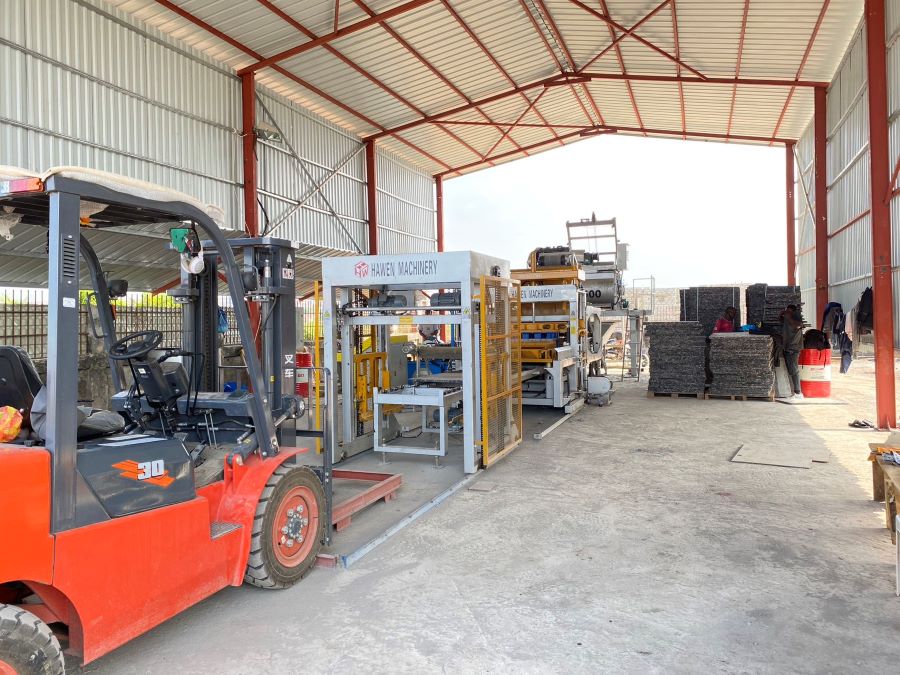
1. Moisture Content and the Mechanics of Compaction
Concrete block production relies on semi-dry mixes rather than fluid concrete. In this context, moisture acts as a facilitator of particle movement and rearrangement during vibration and pressing.
When moisture content is optimal:
Particles slide and interlock efficiently
Internal voids are minimized
Density increases significantly
However, insufficient moisture results in poor cohesion, making it difficult to achieve uniform compaction. Conversely, excessive water creates a lubricated but unstable matrix, reducing internal friction and leading to deformation during demolding.
Note: In block manufacturing, compaction efficiency is often more sensitive to moisture variation than to cement content.
2. Impact on Block Strength and Density
Moisture content directly affects the water-to-cement ratio, which is a critical determinant of compressive strength.
Low moisture: incomplete hydration, weak bonding
Optimal moisture: balanced hydration, high density, strong structure
High moisture: increased porosity after evaporation, reduced strength
A well-controlled moisture level ensures that hydration proceeds efficiently without introducing excess voids. This balance is essential for producing high-strength, durable blocks.
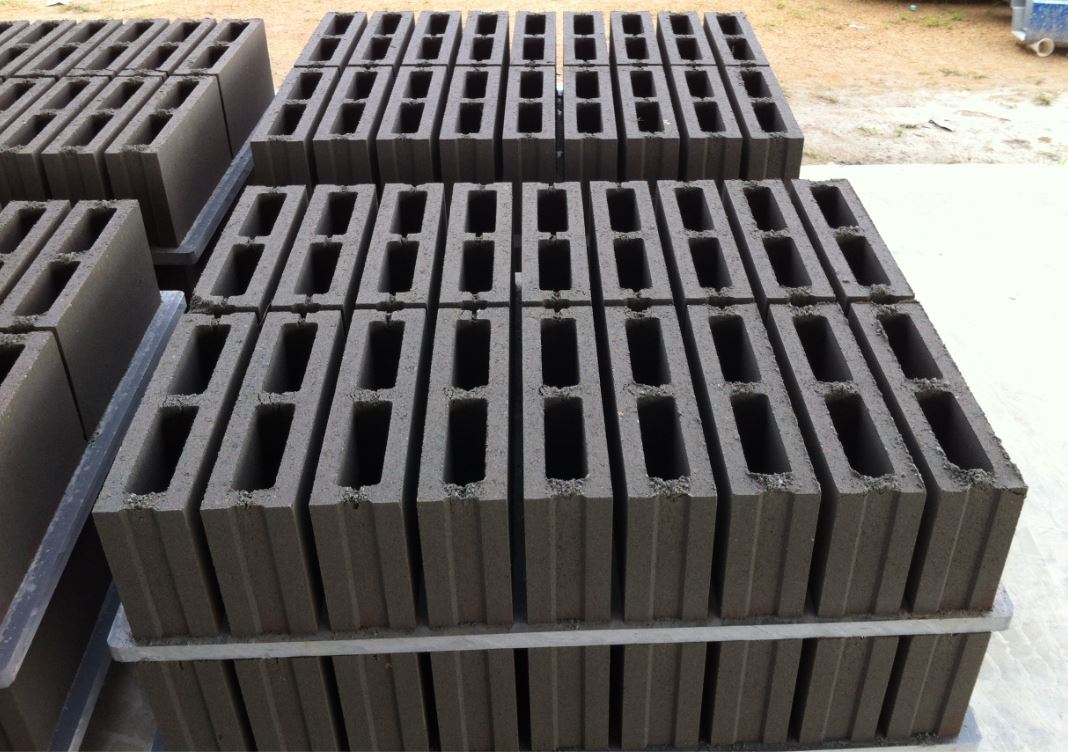
3. Surface Quality and Dimensional Stability
Moisture content also plays a crucial role in surface finish and dimensional precision.
Dry mixes often produce rough, cracked surfaces
Overly wet mixes can cause edge collapse or deformation
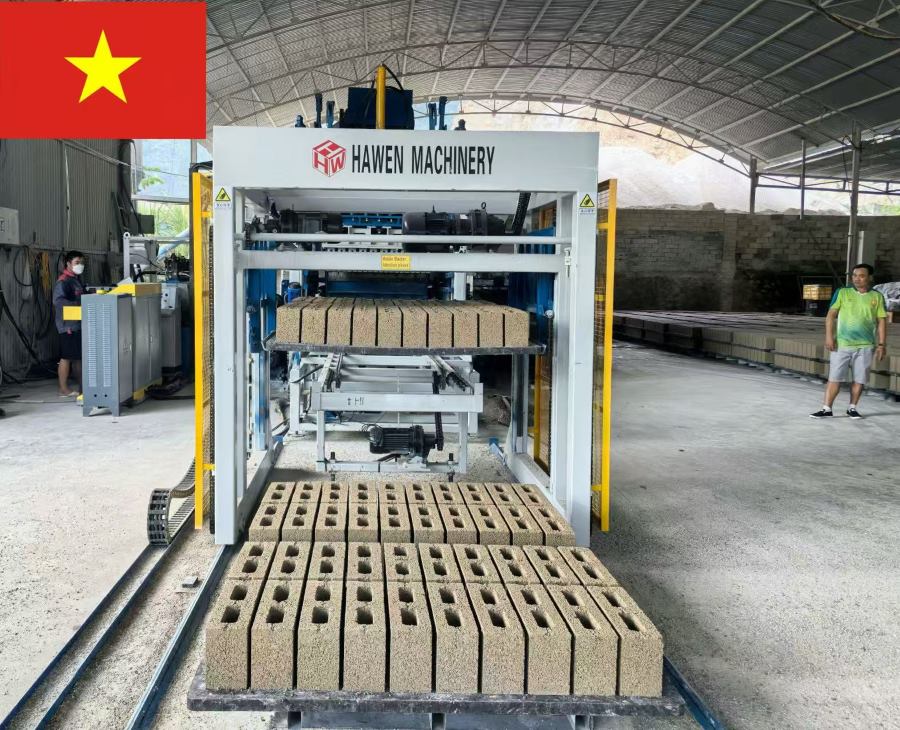
Optimal moisture ensures clean edges, smooth surfaces, and consistent geometry
Annotation: Surface quality is not merely aesthetic; it reflects internal uniformity and structural reliability.
4. Interaction with Vibration Technology
Moisture content and vibration efficiency are closely interrelated. Even a well-designed mix cannot perform effectively without proper compaction energy.
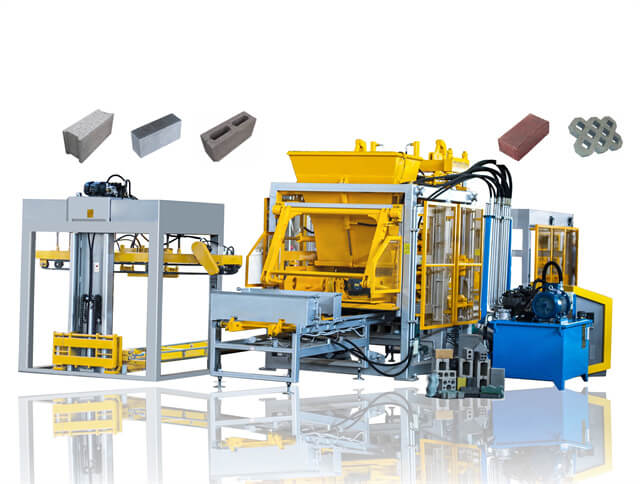
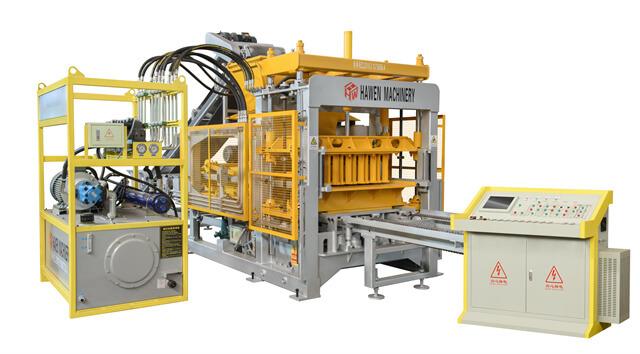
Hawen Machinery adopts a four-shaft vibration box design, positioning eccentric blocks outside the housing. This configuration reduces resistance during vibration, ensures uniform energy distribution, and enhances compaction efficiency.
As a result, the system tolerates slight moisture fluctuations while still achieving dense, uniform blocks. At the same time, it allows manufacturers to reduce cement consumption without compromising quality.
5. Process Stability Through Intelligent Control
Maintaining consistent moisture content across batches is a significant operational challenge, particularly when raw materials vary in humidity.
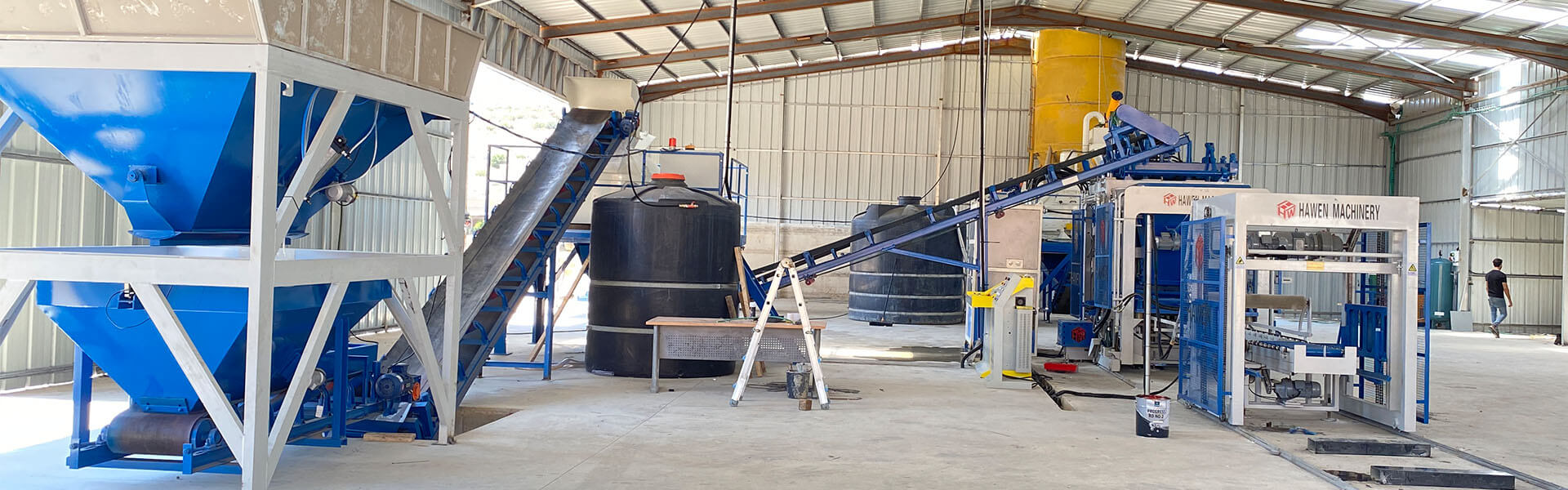
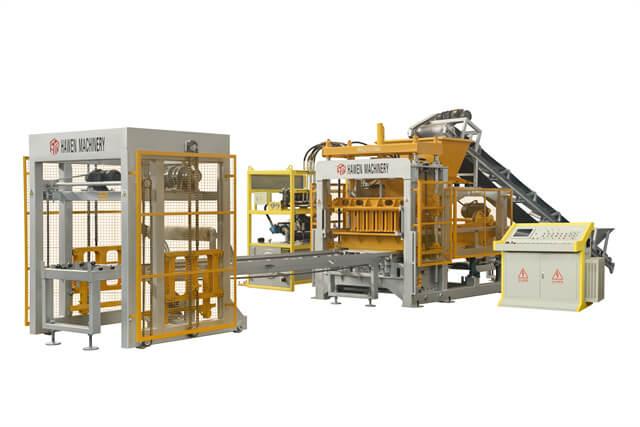
Hawen Machinery integrates a SIEMENS S7-200 PLC system with an intuitive touch panel and remote monitoring capabilities. This enables operators to monitor production conditions in real time, adjust parameters dynamically, and maintain stable moisture control throughout the process.
Insight: In modern production environments, moisture control is increasingly managed as a data-driven variable rather than a manual adjustment.
6. Hydraulic Precision and Material Distribution
Uniform moisture distribution depends not only on mixing but also on stable material transport.
Hawen’s hydraulic system incorporates high-performance components such as Japanese YUKEN proportional and directional valves paired with American ALBERT pumps. This configuration ensures smooth and accurate control of material feeding, allowing evenly mixed materials to reach the mold without segregation.
Stable feeding is particularly critical when moisture content is near its optimal threshold, where even minor inconsistencies can affect block quality.
7. Mold Performance Under Varying Moisture Conditions
The interaction between moisture and mold design is often overlooked.
Hawen Machinery manufactures molds compatible with leading brands including MASA, HESS, ZENITH, POYATOS, BESSER, and TIGER. These molds are heat-treated and engineered to precise specifications, ensuring durability and consistent performance.
High-quality molds maintain dimensional accuracy even when moisture levels fluctuate slightly, reducing defects and improving overall yield.
Conclusion: Precision in Every Drop
Moisture content is not merely a supporting parameter; it is a central determinant of concrete block formation. From compaction and strength to surface finish and production stability, its influence permeates every stage of the process.
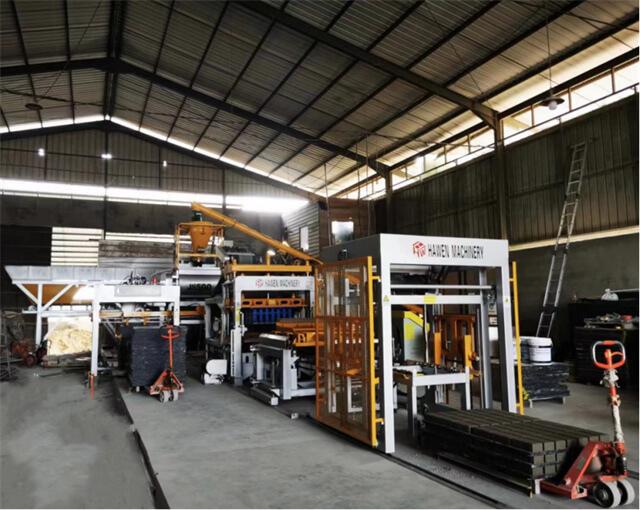
When precise moisture control is combined with advanced machinery—optimized vibration systems, intelligent control platforms, and stable hydraulic operations—the result is a manufacturing system capable of delivering consistent, high-quality output under varying conditions.
Hawen Machinery represents this integration of material science and engineering precision. By transforming moisture control from an अनुमान-based adjustment into a measurable, controllable variable, it enables manufacturers to achieve both efficiency and excellence.
In the evolving landscape of construction materials, where quality standards continue to rise, mastering moisture content is not just a technical requirement—it is a strategic advantage that defines long-term success.
FAQ
1. What is the ideal moisture content for concrete block production?
The optimal moisture level varies depending on materials, but it typically falls within a narrow range that allows proper compaction without causing deformation. Trial testing and process monitoring are essential.
2. How can I tell if the moisture content is too high or too low?
Low moisture results in weak, crumbly blocks, while high moisture causes deformation and surface defects. Visual inspection combined with density and strength testing provides reliable indicators.
3. Does moisture content affect production efficiency?
Yes. Incorrect moisture levels can lead to higher rejection rates, slower cycle times, and inconsistent quality, all of which reduce overall efficiency.
4. How can moisture consistency be maintained in production?
By controlling raw material storage, using accurate dosing systems, and implementing real-time monitoring through advanced control systems, manufacturers can maintain stable moisture levels across batches.






 Tel: +86-13905968794
 Email: export@hwmachines.com
 MP/WhatsApp: +86-13905968794
 Manufacturer Address:Nanan,Quanzhou City,Fujian Province,China