Top Reasons for Poor Quality Concrete Blocks in Production
Author:HAWEN Block MachineFROM:Brick Production Machine Manufacturer
TIME:2026-03-27
In concrete block manufacturing, poor quality rarely stems from a single catastrophic failure. More often, it is the cumulative effect of small but persistent deviations across materials, machinery, and process control. These deviations, if left unaddressed, result in blocks that fail to meet structural, dimensional, or durability requirements, ultimately affecting both project performance and commercial credibility.
This article identifies the principal causes of poor-quality concrete blocks in production and outlines practical, engineering-oriented strategies to eliminate them.
1. Inconsistent or Substandard Raw Materials
The foundation of block quality lies in material integrity. Variations in aggregate grading, contamination, or fluctuating moisture levels can significantly impair block performance.
Key risks:
weak internal bonding due to improper mix composition
excessive water leading to reduced strength
Mitigation strategy:
implement strict material inspection protocols
maintain consistent aggregate grading and moisture control
calibrate mix proportions based on real-time conditions
Annotation: Material inconsistency is often invisible during mixing but becomes evident in strength and durability tests.
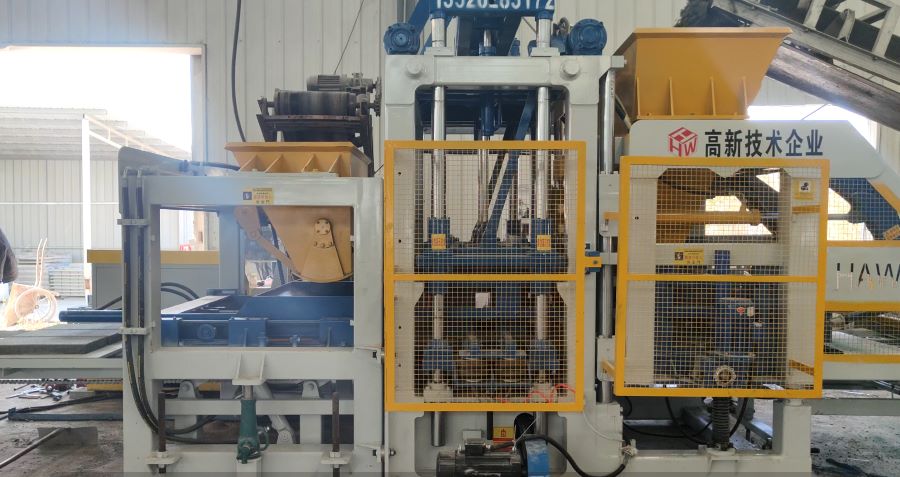
2. Inefficient Compaction and Vibration
Compaction directly determines the density and internal cohesion of concrete blocks. Insufficient or uneven vibration leads to voids, weak zones, and surface defects.
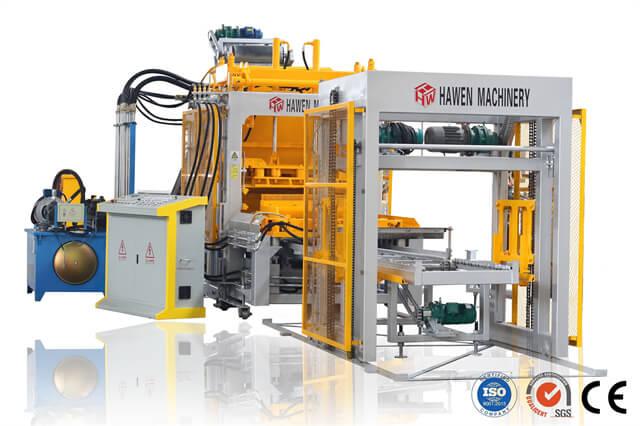
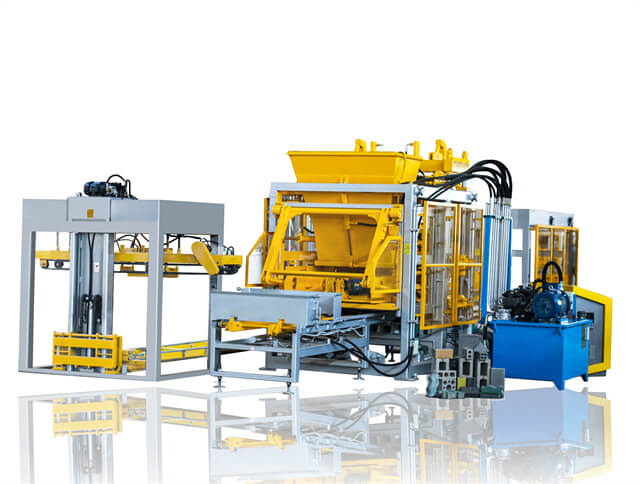
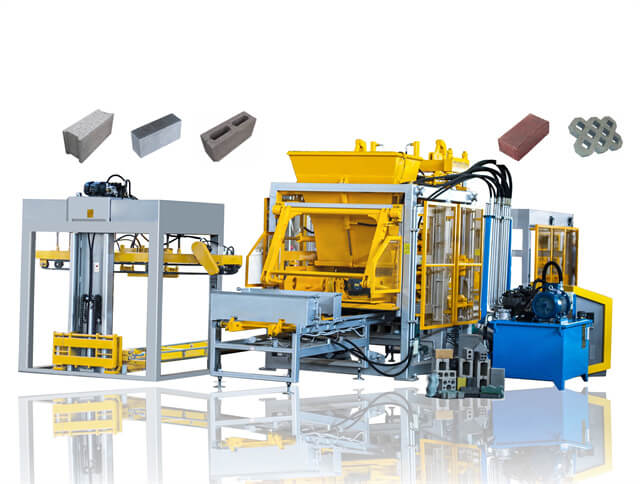
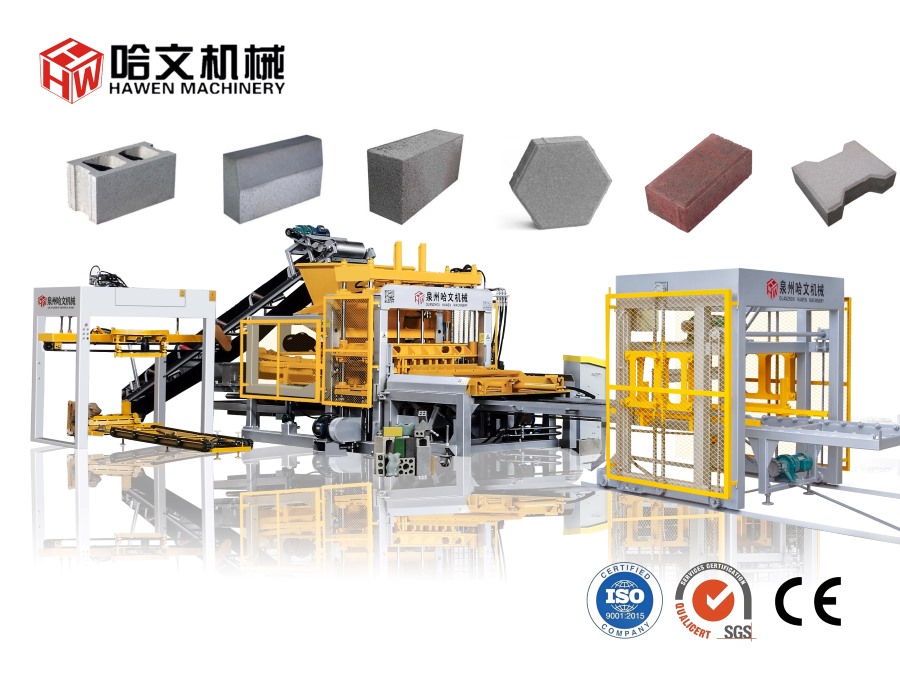
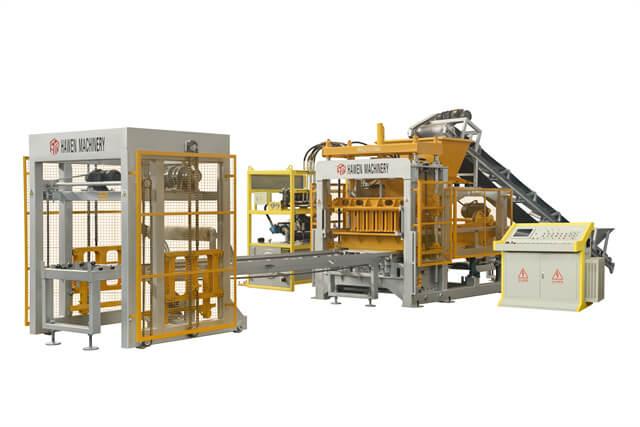
At Hawen Machinery, a four-shaft vibration box design with externally positioned eccentric blocks is employed. This configuration reduces resistance during vibration, ensures uniform compaction, and lowers cement consumption while improving overall efficiency.
Common causes:
improper vibration frequency or amplitude
mechanical wear in vibration components
Solution:
optimize vibration parameters for each product type
ensure regular maintenance of vibration systems
3. Unstable Hydraulic Performance
The hydraulic system governs forming pressure and operational synchronization. Instability in this system leads to inconsistent density and dimensional variation.
Hawen Machinery utilizes a hydraulic configuration integrating precision-controlled proportional and directional valves from Japan together with robust American hydraulic pumps, delivering accurate pressure regulation, high load capacity, and sustained operational reliability.
Typical issues:
fluctuating pressure during continuous operation
delayed response affecting forming consistency
Solution:
monitor hydraulic performance continuously
conduct preventive maintenance and timely component replacement
4. Lack of Intelligent Process Control
Without advanced control systems, production relies heavily on manual adjustments, which introduce variability between operators and shifts.
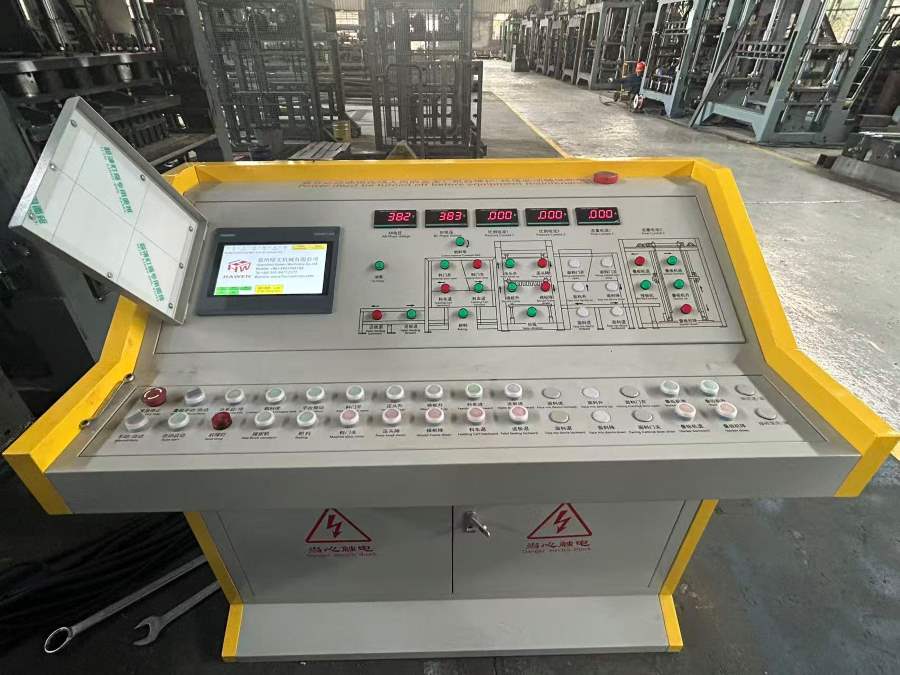
Hawen Machinery integrates a SIEMENS S7-200 PLC system with an intuitive touch panel and remote monitoring capabilities. Through this system, operators can track real-time operating conditions, optimize parameters remotely, and ensure consistent production quality.
Annotation: Automation transforms production from an experience-driven activity into a data-governed process.
5. Poor Mold Quality and Maintenance
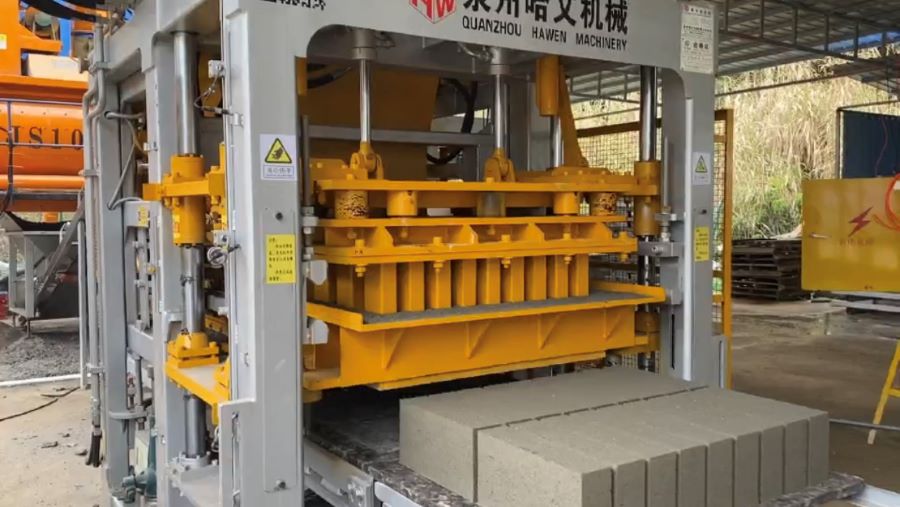
Molds define the geometry and surface characteristics of blocks. Worn or poorly designed molds result in dimensional inaccuracies and surface irregularities.
Hawen Machinery designs molds compatible with leading brands such as MASA, HESS, ZENITH, POYATOS, BESSER, TIGER, all of which undergo heat treatment to ensure durability and precision.
Common problems:
uneven wear leading to dimensional deviation
improper installation causing misalignment
Solution:
conduct regular mold inspection and maintenance
ensure precise installation and alignment before production
6. Improper Curing Practices
Curing is a critical stage that determines the final strength and durability of concrete blocks. Inadequate curing results in incomplete cement hydration and structural weakness.
Common mistakes:
insufficient curing time
uncontrolled temperature and humidity
Solution:
maintain stable curing environments
standardize curing cycles for all production batches
7. Poor Coordination Across the Production Line
Even when individual components function properly, lack of coordination can lead to system-wide inefficiencies.
irregular material feeding disrupts consistency
unsynchronized vibration and pressure affect compaction
inconsistent curing undermines final performance
Solution:
Adopt an integrated production approach where all processes operate in harmony, supported by intelligent control systems.
Transforming Production Quality Through System Integration
Poor-quality concrete blocks are not inevitable; they are preventable through systematic process optimization. Modern manufacturing demands a shift from isolated problem-solving to holistic production management, where each stage is aligned with the others.
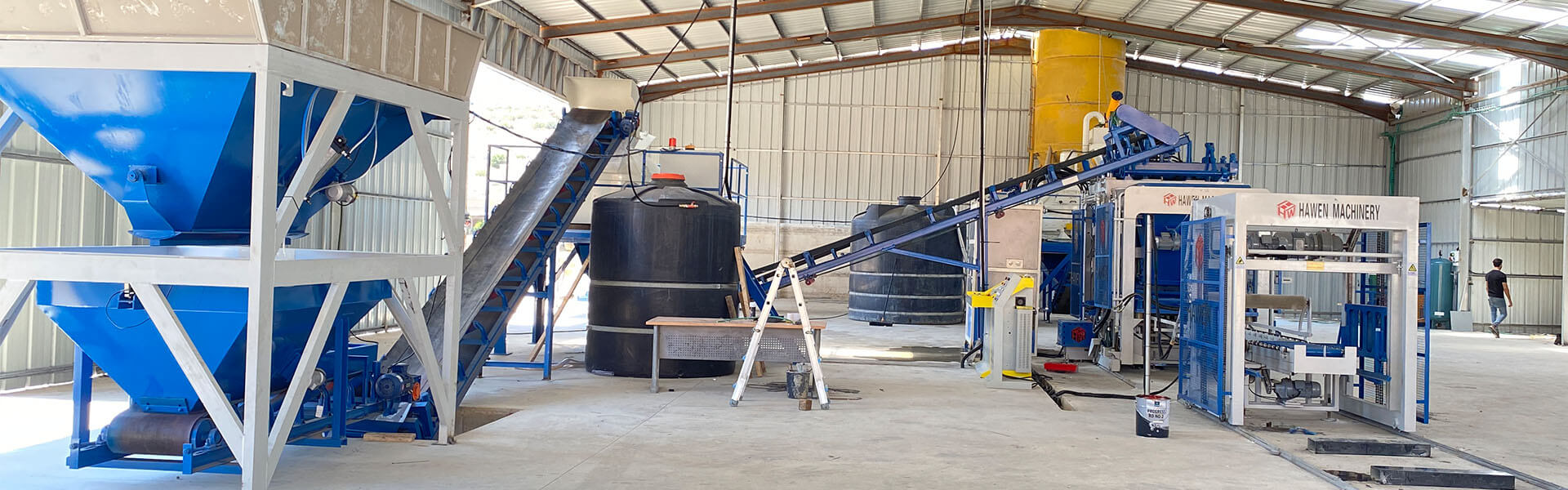
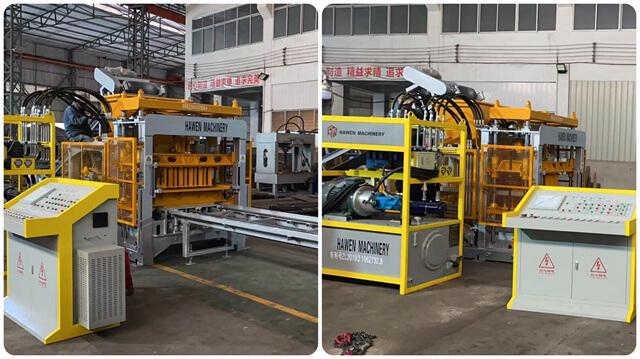
Hawen Machinery exemplifies this approach by integrating advanced vibration technology, precise hydraulic systems, intelligent PLC control, and high-quality molds, enabling manufacturers to achieve consistent and reliable production outcomes.
In the broader context of construction, where safety, durability, and efficiency are paramount, quality is no longer a competitive advantage—it is a baseline expectation. The real differentiation lies in the ability to deliver that quality consistently, at scale, and under varying conditions.
Ultimately, the pursuit of quality in concrete block production reflects a deeper industrial evolution: from fragmented operations to fully integrated, precision-driven manufacturing systems. It is within this transformation that manufacturers move beyond merely avoiding defects, toward establishing a standard of excellence that defines their position in the global market.
FAQ: Poor Quality Concrete Blocks in Production
1. What is the most common cause of poor block quality?
Material inconsistency and inadequate compaction are the most frequent causes, often compounded by unstable hydraulic performance.
2. How can manufacturers quickly improve block quality?
By optimizing mix design, vibration parameters, hydraulic stability, and curing conditions, significant improvements can be achieved in a short time.
3. Why does block quality vary between batches?
Variations in raw materials, operator adjustments, and environmental conditions can all contribute to batch-to-batch inconsistency.
4. Can advanced machinery eliminate quality issues completely?
Advanced machinery greatly reduces variability, but proper operation, maintenance, and process control remain essential.
5. How important is curing in overall block quality?
Curing is critical, as it determines the final strength and durability of the block after forming.





 Tel: +86-13905968794
 Email: export@hwmachines.com
 MP/WhatsApp: +86-13905968794
 Manufacturer Address:Nanan,Quanzhou City,Fujian Province,China