Starting a concrete block manufacturing business is both a technical undertaking and a strategic investment decision. With the steady expansion of infrastructure and housing projects worldwide, the demand for high-quality concrete blocks continues to grow. However, success in this industry depends not merely on acquiring equipment, but on establishing a well-structured, efficient, and scalable production system.
This guide outlines a step-by-step approach to building a block manufacturing business, combining practical considerations with insights into modern production technology.
Step 1: Conduct Market Research and Feasibility Analysis
Before any capital investment, it is essential to evaluate the local construction market. Demand for concrete blocks varies depending on infrastructure activity, urban development, and regional building practices.
A comprehensive feasibility study should include:
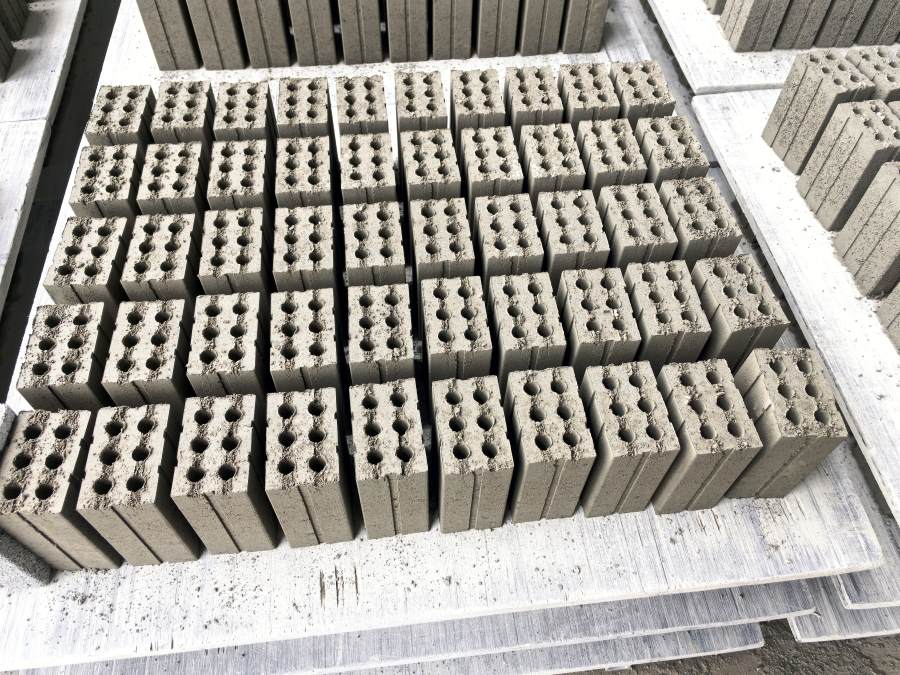
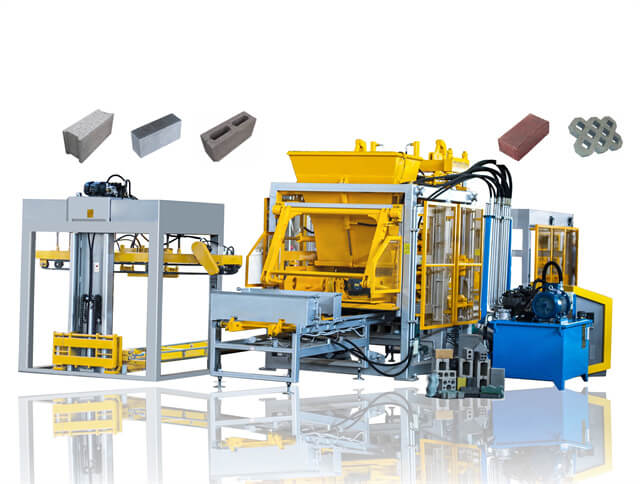
local demand for different block types (solid, hollow, pavers)
pricing structure and competitor analysis
transportation and logistics costs
availability of raw materials such as cement, sand, and aggregates
Note: In many regions, transportation costs can significantly affect profitability, making proximity to construction sites a critical factor.
Step 2: Define Product Range and Production Capacity
Once market conditions are understood, the next step is to determine what products to manufacture and at what scale.
Key decisions include:
block specifications and dimensions
daily or monthly production targets
level of automation (manual, semi-automatic, or fully automatic)
Selecting the appropriate production capacity ensures that the business can meet demand without overinvesting in equipment.
Step 3: Select Suitable Equipment and Technology
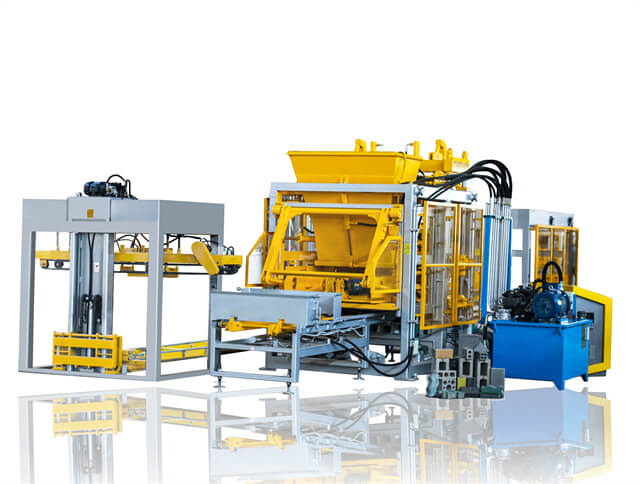
Equipment selection is one of the most critical stages in establishing a block manufacturing plant. Modern block machines differ significantly in terms of efficiency, automation, and product quality.
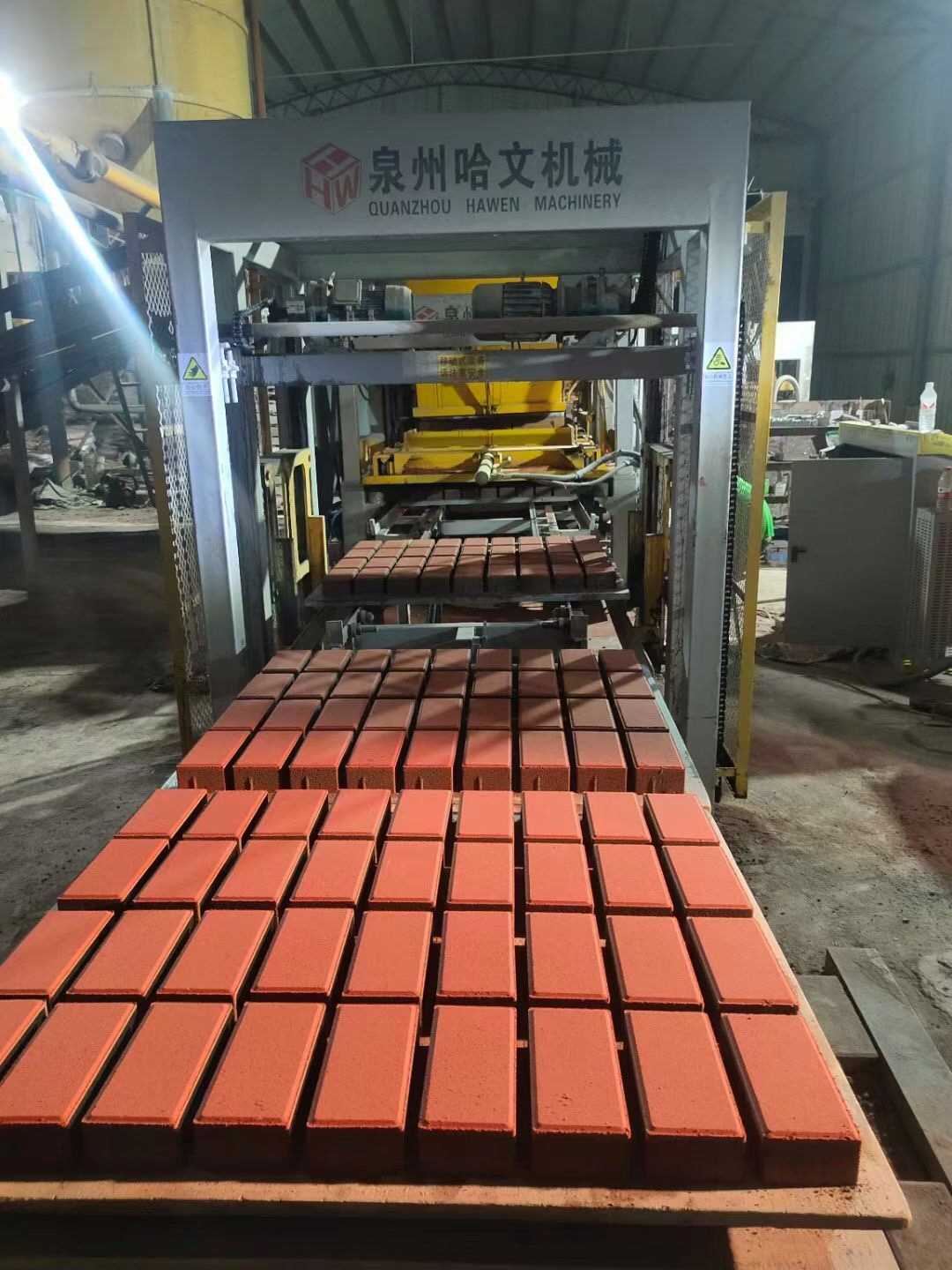
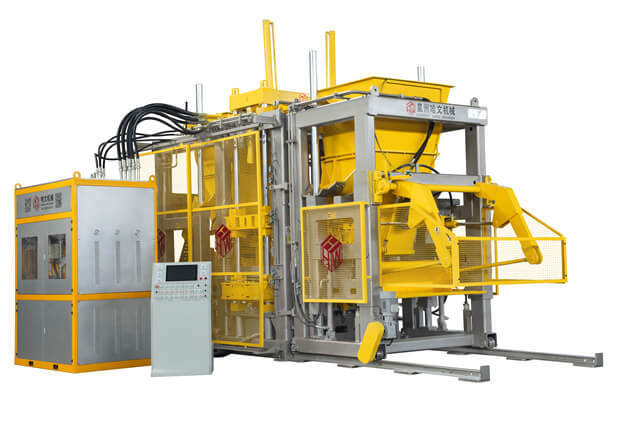
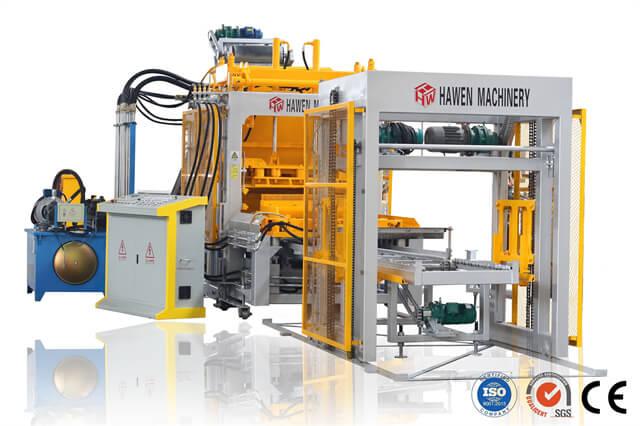
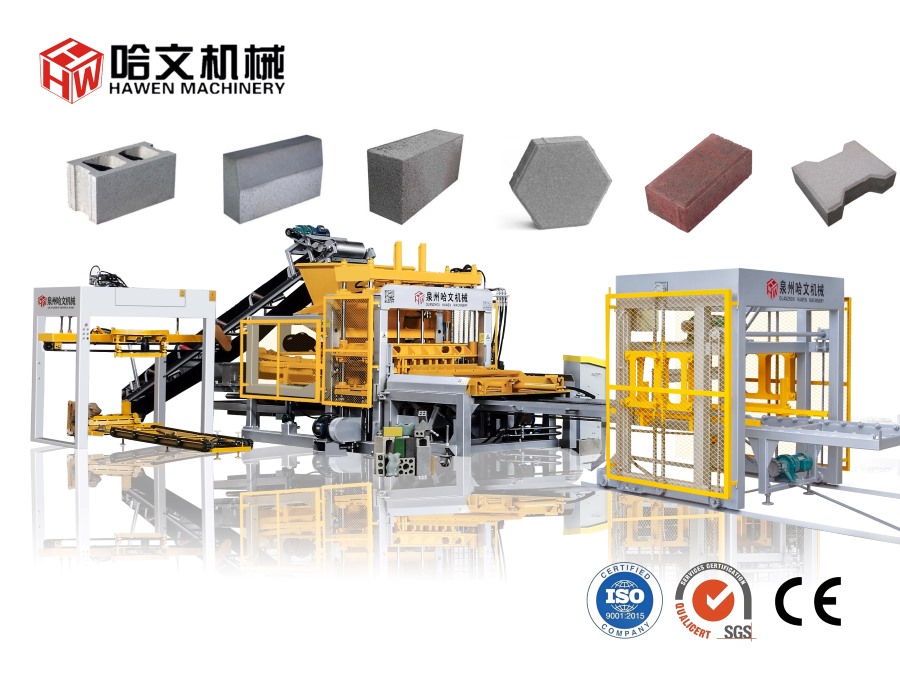
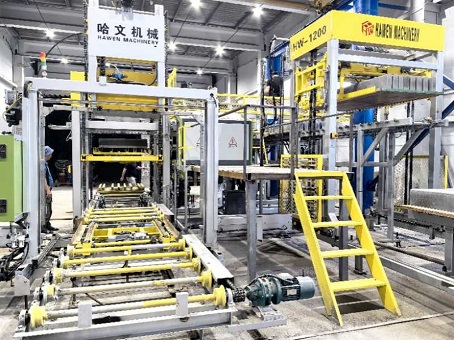
At Hawen Machinery, block production systems are designed with a focus on precision, durability, and intelligent control.
Vibration System
Hawen Machinery adopts a four-shaft vibration box design, positioning eccentric blocks outside the housing. This reduces resistance during vibration, ensures uniform compaction, and lowers cement consumption while improving overall efficiency.
Hydraulic System
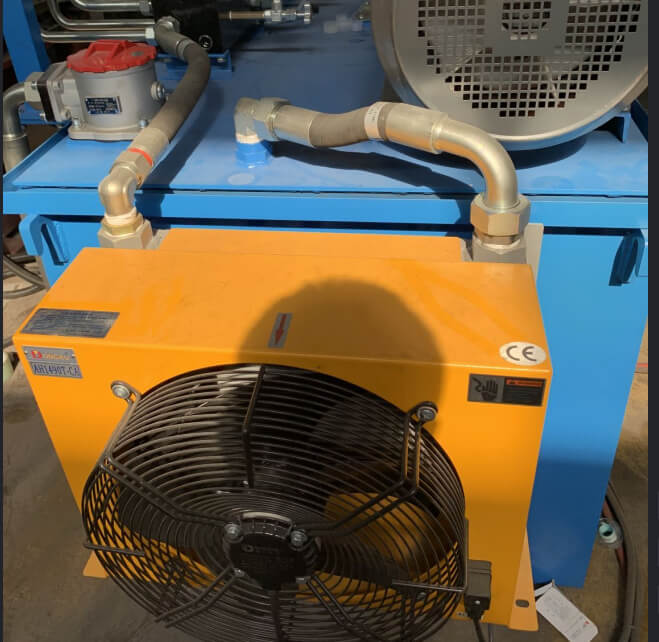
In Hawen’s configuration, the hydraulic station incorporates proportional and directional valves sourced from Japan’s YUKEN, paired with hydraulic pumps supplied by the American brand ALBERT. This setup allows for stable pressure regulation and precise control of machine movements, even under continuous production conditions.
Control System
Hawen Machinery integrates a SIEMENS S7-200 PLC, combined with an intuitive touch panel and remote monitoring functionality. Through this system, operators can track real-time machine performance, optimize parameters remotely, and maintain consistent production quality.
Mold System
Hawen Machinery designs molds compatible with leading block machine brands, including MASA, HESS, ZENITH, POYATOS, BESSER, TIGER, and others. These molds follow original specifications and undergo heat treatment, ensuring precise fit, long service life, and consistent block dimensions.
Step 4: Plan Factory Layout and Production Flow
An efficient plant layout is essential for maintaining smooth production and minimizing operational bottlenecks.
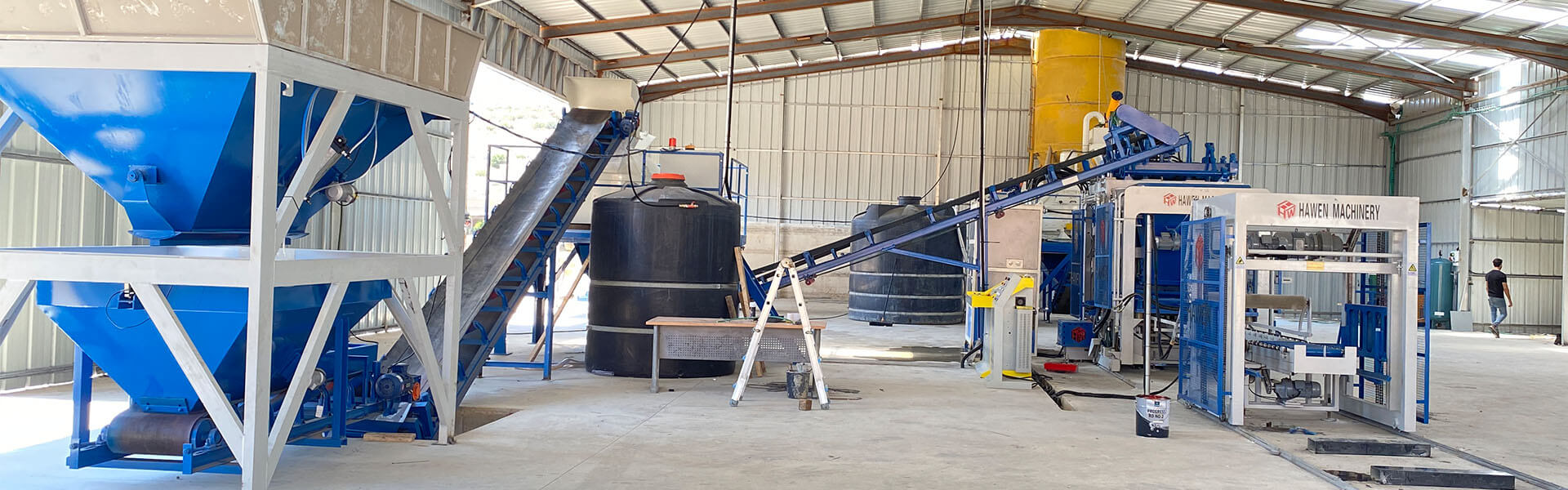
A typical block manufacturing plant includes:
raw material storage area
batching and mixing system
block forming machine
curing area
finished product storage
The layout should ensure a logical flow of materials, reducing unnecessary handling and improving overall productivity.
Annotation: Poor plant design can reduce efficiency even when high-quality machines are used.
Step 5: Secure Raw Material Supply and Quality Control
The quality of raw materials directly affects the performance of finished blocks. It is therefore crucial to establish reliable supply chains for cement, aggregates, and additives.
At the same time, implementing quality control measures ensures consistency. This includes:
testing material ratios
monitoring moisture content
adjusting mix design based on production conditions
Consistent raw material quality is a prerequisite for stable production output.
Step 6: Train Operators and Establish Standard Procedures
Even with advanced automation, human factors remain important. Operators must understand how to manage equipment, adjust parameters, and respond to production issues.
Training should cover:
machine operation and safety procedures
parameter adjustment for different block types
routine maintenance and troubleshooting
Standard operating procedures (SOPs) help maintain consistency and reduce errors during daily production.
Step 7: Implement Maintenance and Continuous Optimization
A block manufacturing plant is a long-term investment. To ensure stable operation, regular maintenance and system optimization are essential.
Key practices include:
scheduled inspection of hydraulic and vibration systems
timely replacement of worn components
continuous monitoring of production efficiency
Modern control systems with remote monitoring capabilities make it easier to identify inefficiencies and improve performance over time.
 From Investment to Industrial Capability
Starting a concrete block manufacturing business is not simply about producing building materials. It is about building an industrial capability that integrates engineering, process control, and market responsiveness.
At Hawen Machinery, the focus is not only on supplying equipment, but on enabling manufacturers to establish efficient, reliable, and scalable production systems. By combining advanced vibration technology, precise hydraulic control, intelligent automation, and durable mold engineering, modern block plants can achieve both high productivity and consistent product quality.
Ultimately, the success of a block manufacturing business depends on its ability to deliver reliable products at competitive cost while adapting to evolving construction demands. In a world where infrastructure defines economic development, concrete blocks are more than simple units—they are the building blocks of cities, communities, and future growth.
From Investment to Industrial Capability
Starting a concrete block manufacturing business is not simply about producing building materials. It is about building an industrial capability that integrates engineering, process control, and market responsiveness.
At Hawen Machinery, the focus is not only on supplying equipment, but on enabling manufacturers to establish efficient, reliable, and scalable production systems. By combining advanced vibration technology, precise hydraulic control, intelligent automation, and durable mold engineering, modern block plants can achieve both high productivity and consistent product quality.
Ultimately, the success of a block manufacturing business depends on its ability to deliver reliable products at competitive cost while adapting to evolving construction demands. In a world where infrastructure defines economic development, concrete blocks are more than simple units—they are the building blocks of cities, communities, and future growth.
FAQ: Starting a Block Manufacturing Business
1. How much investment is required to start a block manufacturing plant?
The investment depends on the level of automation and production capacity. Fully automatic plants require higher initial investment but offer greater efficiency and lower long-term operating costs.
2. What type of block machine is best for beginners?
For new businesses, it is important to choose equipment that balances cost and performance. Semi-automatic machines may be suitable for small-scale production, while automatic systems are ideal for larger operations with stable demand.
3. How important is location for a block manufacturing business?
Location is critical. Proximity to raw materials and construction sites reduces transportation costs and improves overall profitability.
4. Can automation reduce labor requirements?
Yes. Modern block machines significantly reduce manual intervention, allowing fewer operators to manage the entire production process while maintaining consistent quality.





 Tel: +86-13905968794
 Email: export@hwmachines.com
 MP/WhatsApp: +86-13905968794
 Manufacturer Address:Nanan,Quanzhou City,Fujian Province,China