Why Construction Companies Choose HAWEN Block Machine Solutions
In an era defined by urban densification, volatile raw material prices, and increasingly stringent compliance requirements, construction enterprises face a paradox: accelerate output while tightening cost control, enhance structural performance while reducing environmental impact. Under such dual pressures, the selection of block production equipment becomes a strategic decision rather than a routine purchase.
HAWEN block machine solutions emerge as a rational response to this industrial dilemma—anchored in engineering rigor, operational intelligence, and lifecycle economy.
1. Hydraulic Architecture Built for Industrial Continuity
Operational interruption in large-scale construction projects triggers cascading losses—missed delivery schedules, idle labor, contractual penalties, and reputational erosion. Reliability, therefore, constitutes a non-negotiable asset.
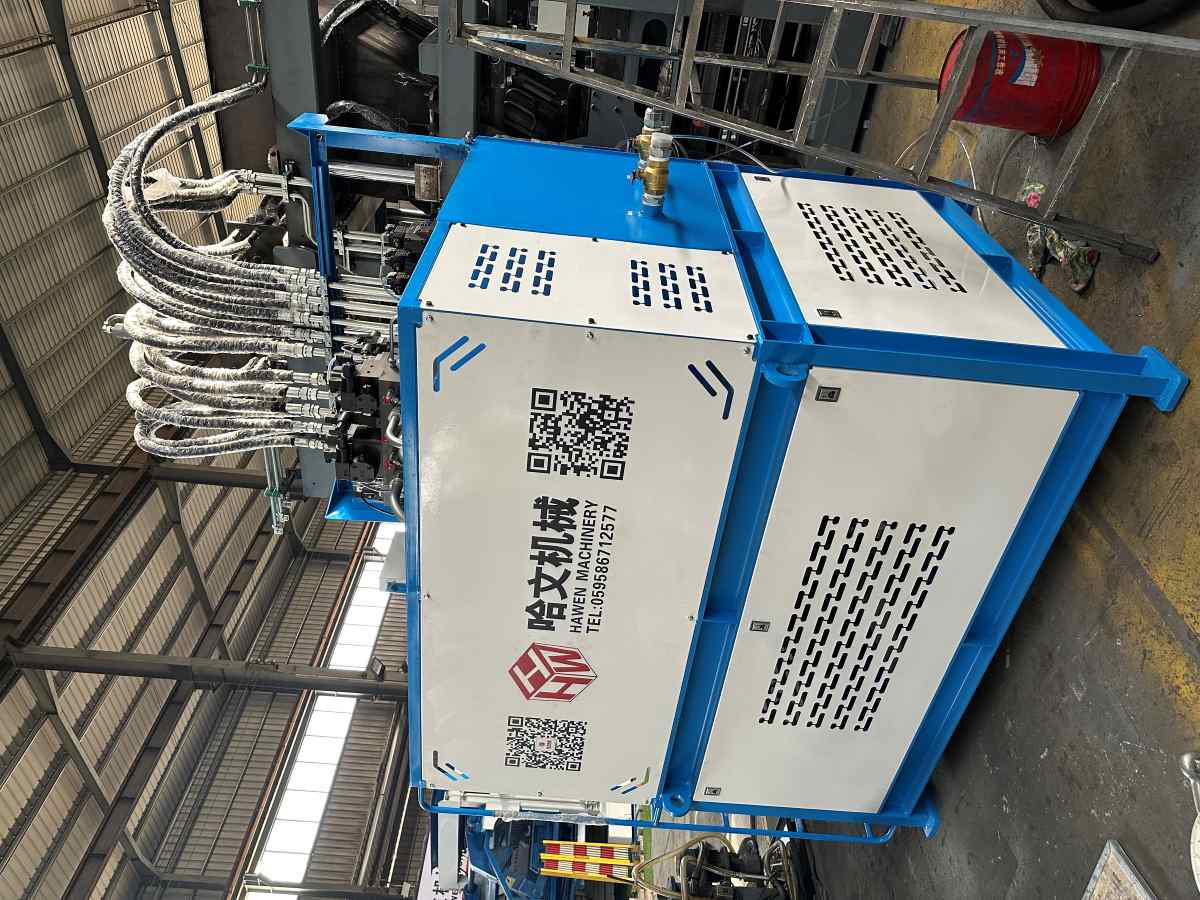
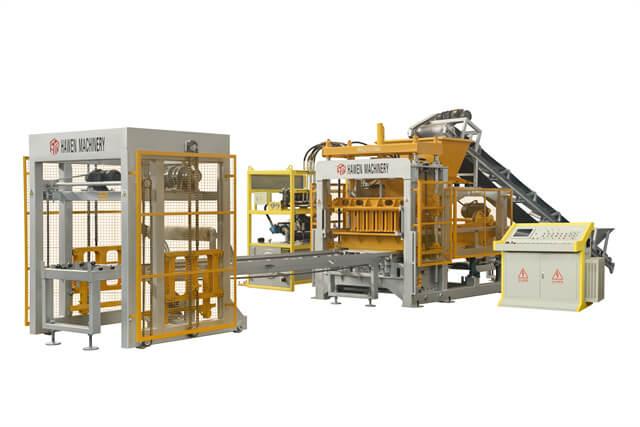
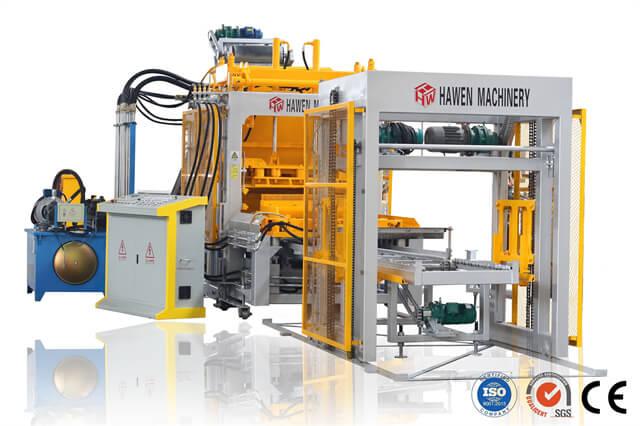
HAWEN Machinery configures its hydraulic stations with Japanese YUKEN proportional and directional control valves, integrated alongside high-efficiency American ALBERT hydraulic pumps. This combination ensures stable pressure regulation, rapid dynamic response, and sustained high-load endurance during continuous-duty cycles.
Rather than tolerating pressure fluctuation—often the root cause of inconsistent block density—this system maintains a stable hydraulic curve, safeguarding compaction uniformity and mechanical longevity.
Technical Implication: Stable hydraulic output minimizes density variance and reduces excessive cement dosing, directly lowering unit production cost in mass manufacturing scenarios.
2. Advanced Vibration Mechanics for Uniform Compaction
In concrete block manufacturing, vibration is not merely a process—it is the determinant of structural integrity. Inadequate vibration distribution results in internal voids, compromised compressive strength, and dimensional deviation.
HAWEN Machinery adopts a four-shaft vibration box structure, with eccentric blocks positioned externally to the housing. This structural innovation reduces internal mechanical resistance during high-frequency oscillation and enhances force transmission efficiency throughout the mold cavity.
The outcome is measurable:
Homogeneous material compaction
Improved compressive strength
Enhanced dimensional precision
Lower cement consumption without strength compromise
Instead of increasing amplitude indiscriminately, HAWEN refines force distribution, aligning mechanical design with material science principles.
3. Intelligent Control as a Production Multiplier
Modern construction enterprises increasingly operate within digitized, data-driven frameworks. Equipment incapable of integrating with such ecosystems becomes operationally obsolete.
HAWEN integrates a SIEMENS S7-200 PLC control system, complemented by a user-friendly touch interface and remote monitoring functionality. Through this architecture, real-time operating parameters can be supervised, adjustments executed remotely, and diagnostics performed proactively.
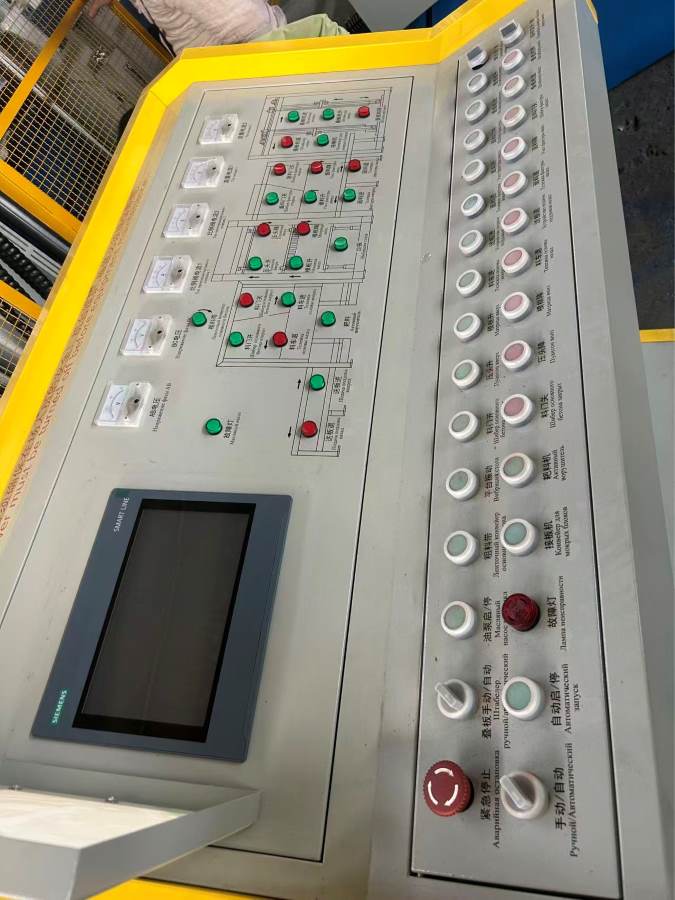 This confers multiple strategic advantages:
Reduced downtime through predictive maintenance
Parameter optimization under varying aggregate compositions
Centralized supervision across multiple production lines
Consistent quality assurance across project sites
The machine evolves from isolated equipment into a controllable production node within a broader industrial network.
4. Mold Engineering with Global Compatibility
Flexibility remains a critical requirement for contractors operating diversified equipment portfolios.
HAWEN Machinery manufactures molds compatible with leading block machine brands such as MASA, HESS, ZENITH, POYATOS, BESSER, and TIGER. By adhering closely to original technical specifications, these molds ensure precise fitment, smooth demolding, and consistent block geometry across different platforms.
This confers multiple strategic advantages:
Reduced downtime through predictive maintenance
Parameter optimization under varying aggregate compositions
Centralized supervision across multiple production lines
Consistent quality assurance across project sites
The machine evolves from isolated equipment into a controllable production node within a broader industrial network.
4. Mold Engineering with Global Compatibility
Flexibility remains a critical requirement for contractors operating diversified equipment portfolios.
HAWEN Machinery manufactures molds compatible with leading block machine brands such as MASA, HESS, ZENITH, POYATOS, BESSER, and TIGER. By adhering closely to original technical specifications, these molds ensure precise fitment, smooth demolding, and consistent block geometry across different platforms.
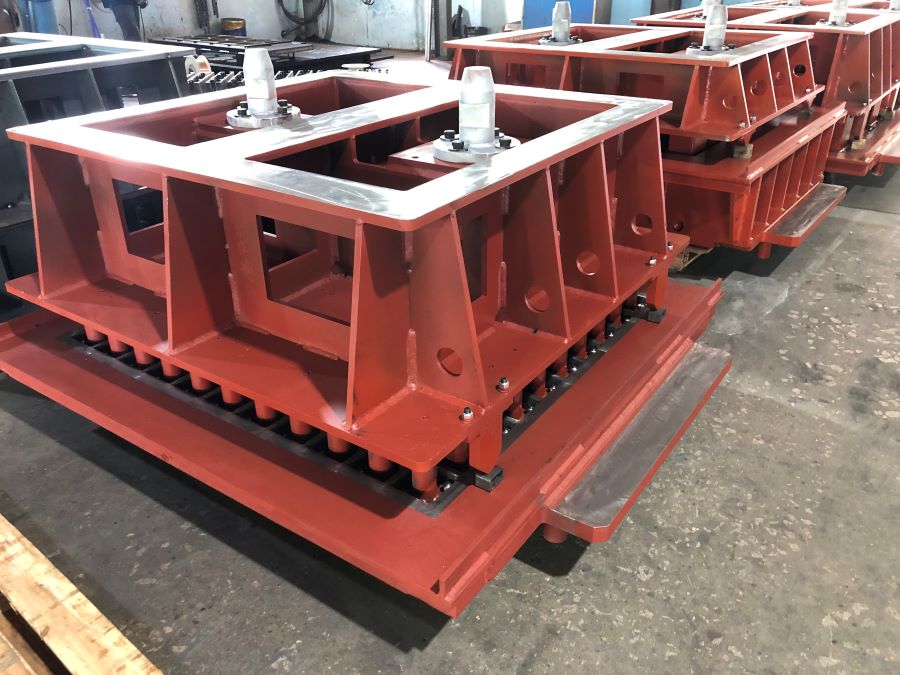 Each mold undergoes systematic heat treatment to enhance hardness and wear resistance under high-frequency vibration conditions. Precision machining and structural reinforcement extend service life while preserving dimensional accuracy.
For construction companies, this compatibility translates into reduced replacement costs, shorter procurement cycles, and minimized operational disruption.
5. Lifecycle Economics Over Short-Term Pricing
In capital-intensive industries, total cost of ownership outweighs initial acquisition expenditure. Equipment that reduces material waste, energy consumption, and maintenance frequency ultimately defines profitability.
HAWEN block machine systems are designed to:
Optimize cement utilization through efficient compaction
Lower energy consumption via improved vibration transmission efficiency
Extend component lifespan through reinforced structural engineering
Support modular expansion for future production scaling
Such characteristics align with the financial imperatives of contractors operating under tight margin structures.
6. Corporate Capability and Manufacturing Integrity
Behind technical specifications stands institutional capacity.
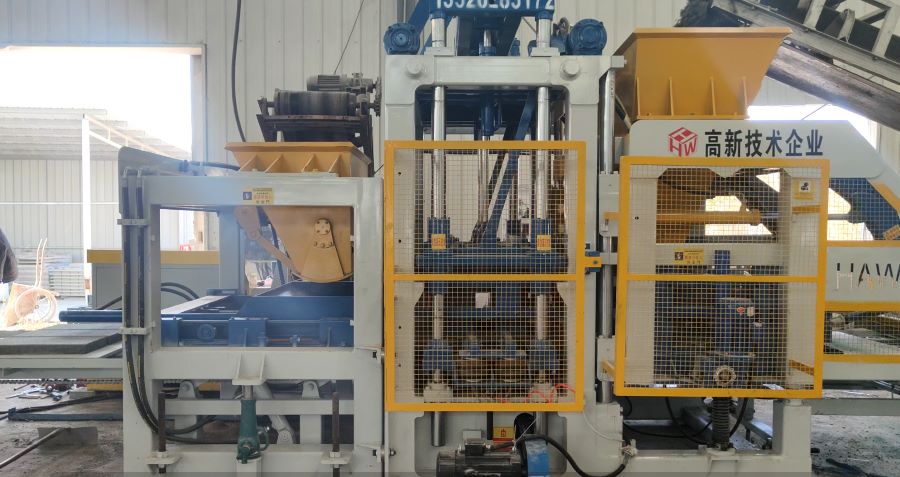
HAWEN Machinery specializes in the research, development, and manufacturing of concrete block making machines and molds. Its vertically integrated production model combines engineering design, precision machining, quality control, and assembly within a standardized manufacturing framework.
The company emphasizes:
Rigorous component sourcing
Structured assembly protocols
Continuous technological refinement
International technical responsiveness
This systemic competence underpins the reliability of every delivered production line.
7. Sustainability and Raw Material Adaptability
As environmental regulations intensify, the ability to incorporate industrial by-products such as fly ash and slag becomes increasingly valuable.
HAWEN systems accommodate diverse material ratios through programmable control logic. The synergy between hydraulic stability, vibration uniformity, and intelligent monitoring ensures consistent block density even when aggregate characteristics fluctuate.
Thus, economic efficiency and environmental responsibility cease to be mutually exclusive objectives.
Conclusion: Engineering Certainty in an Uncertain Industry
To choose a block machine is to choose a production philosophy.
Construction companies demand more than mechanical motion; they require stability under pressure, precision under scale, and intelligence under complexity. They need systems that convert raw aggregates into standardized structural units with minimal waste and maximum predictability.
HAWEN block machine solutions embody this philosophy. Through disciplined hydraulic engineering, scientifically structured vibration mechanics, intelligent digital control, and globally compatible mold design, HAWEN delivers not merely machinery—but operational certainty.
In infrastructure development, certainty is the foundation upon which every structure rises. And in a volatile global economy, certainty becomes the most valuable material of all.
Each mold undergoes systematic heat treatment to enhance hardness and wear resistance under high-frequency vibration conditions. Precision machining and structural reinforcement extend service life while preserving dimensional accuracy.
For construction companies, this compatibility translates into reduced replacement costs, shorter procurement cycles, and minimized operational disruption.
5. Lifecycle Economics Over Short-Term Pricing
In capital-intensive industries, total cost of ownership outweighs initial acquisition expenditure. Equipment that reduces material waste, energy consumption, and maintenance frequency ultimately defines profitability.
HAWEN block machine systems are designed to:
Optimize cement utilization through efficient compaction
Lower energy consumption via improved vibration transmission efficiency
Extend component lifespan through reinforced structural engineering
Support modular expansion for future production scaling
Such characteristics align with the financial imperatives of contractors operating under tight margin structures.
6. Corporate Capability and Manufacturing Integrity
Behind technical specifications stands institutional capacity.
HAWEN Machinery specializes in the research, development, and manufacturing of concrete block making machines and molds. Its vertically integrated production model combines engineering design, precision machining, quality control, and assembly within a standardized manufacturing framework.
The company emphasizes:
Rigorous component sourcing
Structured assembly protocols
Continuous technological refinement
International technical responsiveness
This systemic competence underpins the reliability of every delivered production line.
7. Sustainability and Raw Material Adaptability
As environmental regulations intensify, the ability to incorporate industrial by-products such as fly ash and slag becomes increasingly valuable.
HAWEN systems accommodate diverse material ratios through programmable control logic. The synergy between hydraulic stability, vibration uniformity, and intelligent monitoring ensures consistent block density even when aggregate characteristics fluctuate.
Thus, economic efficiency and environmental responsibility cease to be mutually exclusive objectives.
Conclusion: Engineering Certainty in an Uncertain Industry
To choose a block machine is to choose a production philosophy.
Construction companies demand more than mechanical motion; they require stability under pressure, precision under scale, and intelligence under complexity. They need systems that convert raw aggregates into standardized structural units with minimal waste and maximum predictability.
HAWEN block machine solutions embody this philosophy. Through disciplined hydraulic engineering, scientifically structured vibration mechanics, intelligent digital control, and globally compatible mold design, HAWEN delivers not merely machinery—but operational certainty.
In infrastructure development, certainty is the foundation upon which every structure rises. And in a volatile global economy, certainty becomes the most valuable material of all.
 Frequently Asked Questions (FAQ)
Q1: Can HAWEN block machines operate continuously in high-temperature regions?
Yes. The hydraulic configuration and cooling system are engineered for long-duration operation in demanding climatic environments, maintaining pressure stability and component durability.
Q2: Are HAWEN molds compatible with non-HAWEN machines?
Yes. HAWEN molds are manufactured according to original brand specifications, ensuring accurate installation and stable performance across major international platforms.
Q3: Does the control system support remote diagnostics and optimization?
Yes. The integrated PLC system enables real-time monitoring, remote parameter adjustment, and technical support for rapid troubleshooting.
Q4: How does HAWEN reduce cement consumption while maintaining strength?
Through uniform vibration compaction combined with stable hydraulic pressure control, the system achieves higher density blocks with optimized material ratios, reducing cement usage without compromising structural performance.
Frequently Asked Questions (FAQ)
Q1: Can HAWEN block machines operate continuously in high-temperature regions?
Yes. The hydraulic configuration and cooling system are engineered for long-duration operation in demanding climatic environments, maintaining pressure stability and component durability.
Q2: Are HAWEN molds compatible with non-HAWEN machines?
Yes. HAWEN molds are manufactured according to original brand specifications, ensuring accurate installation and stable performance across major international platforms.
Q3: Does the control system support remote diagnostics and optimization?
Yes. The integrated PLC system enables real-time monitoring, remote parameter adjustment, and technical support for rapid troubleshooting.
Q4: How does HAWEN reduce cement consumption while maintaining strength?
Through uniform vibration compaction combined with stable hydraulic pressure control, the system achieves higher density blocks with optimized material ratios, reducing cement usage without compromising structural performance.





 Tel: +86-13905968794
 Email: export@hwmachines.com
 MP/WhatsApp: +86-13905968794
 Manufacturer Address:Nanan,Quanzhou City,Fujian Province,China