How Block Machines Adapt to Different Raw Material Sources
Author:HAWEN Block MachineFROM:Brick Production Machine Manufacturer
TIME:2026-02-25
How Block Machines Adapt to Different Raw Material Sources
In the global construction industry, raw materials are rarely standardized. Sand in Southeast Asia differs markedly from aggregates in the Middle East; volcanic ash in Africa behaves unlike limestone powder in Europe. Moisture content fluctuates with climate, and gradation varies with quarrying methods. Against this backdrop of heterogeneity, the adaptability of block machines is not a marginal advantage but a structural necessity.
A high-performance block machine must reconcile material variability with dimensional precision, compressive strength, and production efficiency. The question, therefore, is not whether raw materials vary, but how intelligently equipment responds to such variation.
I. Material Variability: The Core Technical Challenge
Concrete block production relies on a calibrated synergy of cement, aggregates, water, and sometimes supplementary cementitious materials such as fly ash or slag. When aggregate particle size distribution shifts, the internal friction coefficient changes. When moisture deviates from the optimal window, compaction efficiency declines. When alternative materials are introduced for sustainability reasons, rheological behavior becomes less predictable.
Without adaptive engineering, these fluctuations result in unstable density, surface defects, excessive cement consumption, or reduced compressive strength. Thus, true competitiveness lies in technological elasticity—the capacity of machinery to recalibrate itself in response to material diversity.
 II. Intelligent Hydraulic Architecture: Stability Under Variable Loads
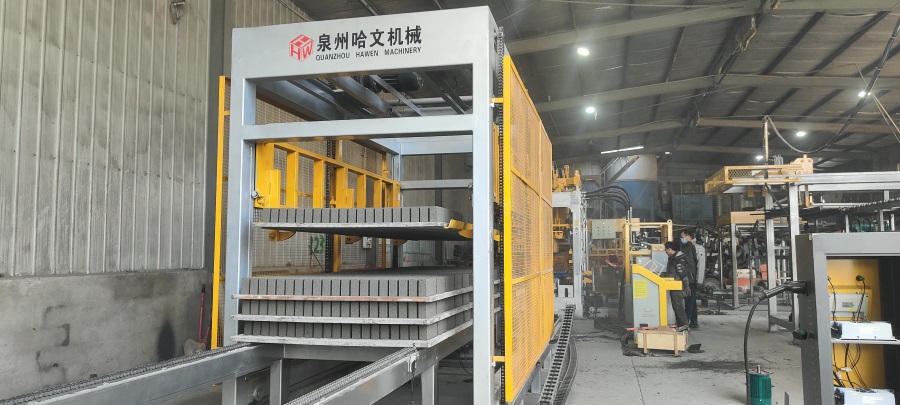
Hydraulic performance determines compaction force, mold lifting precision, and overall cycle stability. When raw material characteristics fluctuate, resistance during pressing changes accordingly. A robust hydraulic configuration must therefore provide both responsiveness and endurance.
In advanced systems, premium proportional and directional control valves sourced from Japan—such as those engineered by YUKEN—are paired with high-efficiency hydraulic pumps manufactured in the United States by ALBERT. This combination enables refined flow regulation and stable pressure output even under heavy-duty, high-frequency cycles.
Rather than merely delivering brute force, such a hydraulic station ensures dynamic balance. Pressure curves can be finely tuned according to the compactability of local aggregates. When coarse materials increase resistance, the system compensates smoothly. When lighter mixtures require delicate handling, it maintains precision without overshoot. The result is structural density without material waste, and durability without mechanical fatigue.
III. Adaptive Vibration Engineering: Uniform Compaction Across Materials
If hydraulics provide force, vibration ensures distribution. The internal arrangement of aggregates during compaction determines block integrity. Uneven vibration leads to microvoids, surface honeycombing, and strength inconsistency.
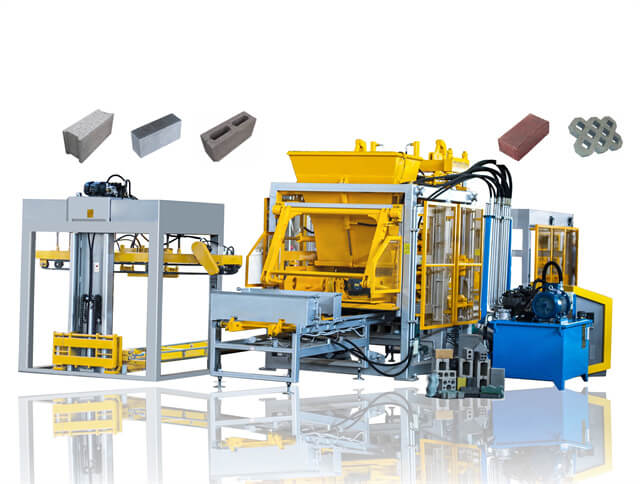
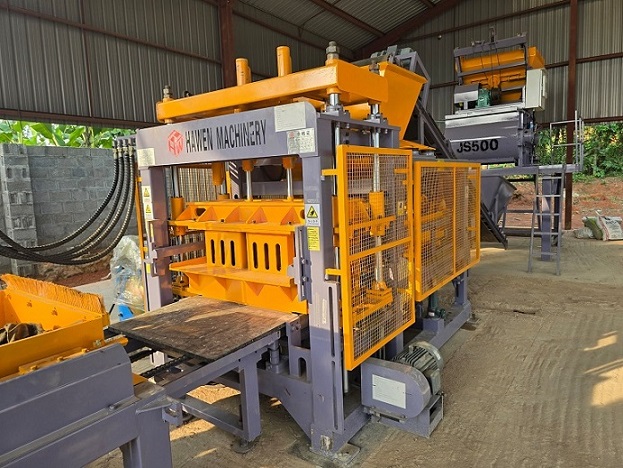
Hawen Machinery employs a four-shaft vibration box configuration, with eccentric blocks strategically positioned outside the housing. This structural arrangement reduces rotational resistance and enhances energy transmission efficiency. By minimizing internal friction, the vibration system delivers uniform compaction throughout the mold cavity.
When processing raw materials with high stone powder content, the system ensures consistent densification. When dealing with leaner mixes aimed at reducing cement usage, it still achieves structural cohesion. This adaptability lowers cement consumption while preserving compressive strength—an increasingly critical balance in cost-sensitive and sustainability-driven markets.
II. Intelligent Hydraulic Architecture: Stability Under Variable Loads
Hydraulic performance determines compaction force, mold lifting precision, and overall cycle stability. When raw material characteristics fluctuate, resistance during pressing changes accordingly. A robust hydraulic configuration must therefore provide both responsiveness and endurance.
In advanced systems, premium proportional and directional control valves sourced from Japan—such as those engineered by YUKEN—are paired with high-efficiency hydraulic pumps manufactured in the United States by ALBERT. This combination enables refined flow regulation and stable pressure output even under heavy-duty, high-frequency cycles.
Rather than merely delivering brute force, such a hydraulic station ensures dynamic balance. Pressure curves can be finely tuned according to the compactability of local aggregates. When coarse materials increase resistance, the system compensates smoothly. When lighter mixtures require delicate handling, it maintains precision without overshoot. The result is structural density without material waste, and durability without mechanical fatigue.
III. Adaptive Vibration Engineering: Uniform Compaction Across Materials
If hydraulics provide force, vibration ensures distribution. The internal arrangement of aggregates during compaction determines block integrity. Uneven vibration leads to microvoids, surface honeycombing, and strength inconsistency.
Hawen Machinery employs a four-shaft vibration box configuration, with eccentric blocks strategically positioned outside the housing. This structural arrangement reduces rotational resistance and enhances energy transmission efficiency. By minimizing internal friction, the vibration system delivers uniform compaction throughout the mold cavity.
When processing raw materials with high stone powder content, the system ensures consistent densification. When dealing with leaner mixes aimed at reducing cement usage, it still achieves structural cohesion. This adaptability lowers cement consumption while preserving compressive strength—an increasingly critical balance in cost-sensitive and sustainability-driven markets.
 IV. Digital Control and Real-Time Optimization
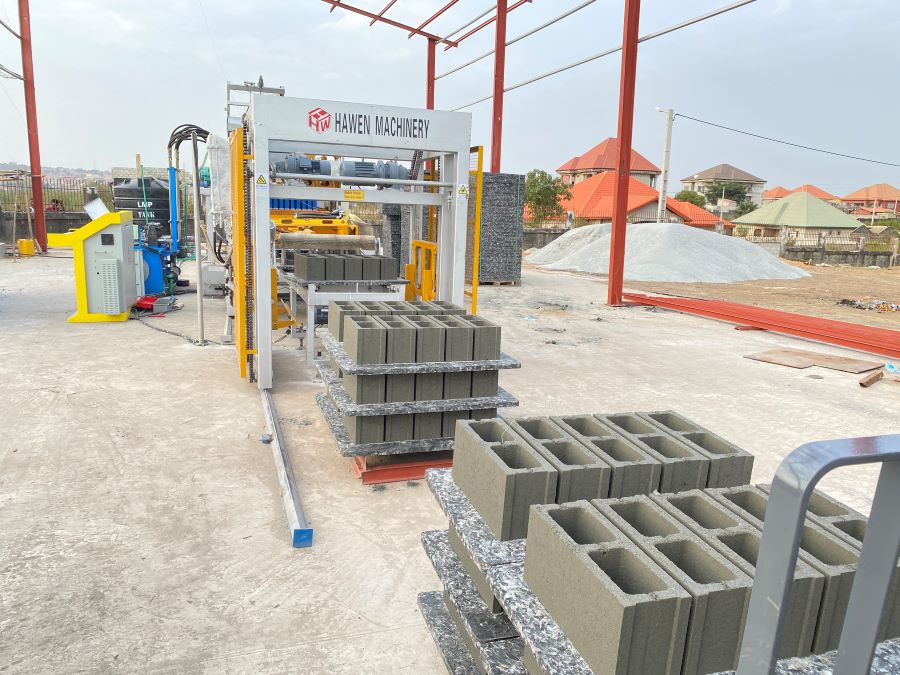
Material variability cannot be addressed by mechanical strength alone; it requires data-driven adjustment. Modern block production increasingly depends on intelligent monitoring systems capable of interpreting operational feedback in real time.
Hawen Machinery integrates a Siemens S7-200 programmable logic controller combined with a user-friendly touch interface and remote diagnostic functionality. Through this digital architecture, operators can monitor vibration frequency, hydraulic pressure, cycle duration, and moisture compensation parameters in real time.
More importantly, remote monitoring capabilities allow technical teams to analyze production data across geographical boundaries. If a customer introduces a new aggregate source, parameters can be recalibrated remotely to optimize density and output stability. This reduces downtime, mitigates trial-and-error losses, and ensures consistent block quality regardless of regional material differences.
V. Mold Precision and Cross-Platform Compatibility
Adaptability extends beyond internal systems to tooling design. Molds must accommodate diverse mix designs without compromising dimensional accuracy or demolding smoothness.
Hawen Machinery engineers molds compatible with leading global block machine manufacturers, including MASA, HESS, ZENITH, POYATOS, BESSER, and TIGER. By adhering strictly to original technical specifications, these molds guarantee precise alignment, seamless installation, and stable production across different platforms.
Material-specific wear resistance treatments can also be applied. For abrasive aggregates, enhanced surface hardening extends service life. For high-moisture mixtures, optimized venting design improves release efficiency. Such refinements ensure that tooling remains resilient even as raw material profiles evolve.
IV. Digital Control and Real-Time Optimization
Material variability cannot be addressed by mechanical strength alone; it requires data-driven adjustment. Modern block production increasingly depends on intelligent monitoring systems capable of interpreting operational feedback in real time.
Hawen Machinery integrates a Siemens S7-200 programmable logic controller combined with a user-friendly touch interface and remote diagnostic functionality. Through this digital architecture, operators can monitor vibration frequency, hydraulic pressure, cycle duration, and moisture compensation parameters in real time.
More importantly, remote monitoring capabilities allow technical teams to analyze production data across geographical boundaries. If a customer introduces a new aggregate source, parameters can be recalibrated remotely to optimize density and output stability. This reduces downtime, mitigates trial-and-error losses, and ensures consistent block quality regardless of regional material differences.
V. Mold Precision and Cross-Platform Compatibility
Adaptability extends beyond internal systems to tooling design. Molds must accommodate diverse mix designs without compromising dimensional accuracy or demolding smoothness.
Hawen Machinery engineers molds compatible with leading global block machine manufacturers, including MASA, HESS, ZENITH, POYATOS, BESSER, and TIGER. By adhering strictly to original technical specifications, these molds guarantee precise alignment, seamless installation, and stable production across different platforms.
Material-specific wear resistance treatments can also be applied. For abrasive aggregates, enhanced surface hardening extends service life. For high-moisture mixtures, optimized venting design improves release efficiency. Such refinements ensure that tooling remains resilient even as raw material profiles evolve.
 VI. Mix Design Flexibility and Sustainable Inputs
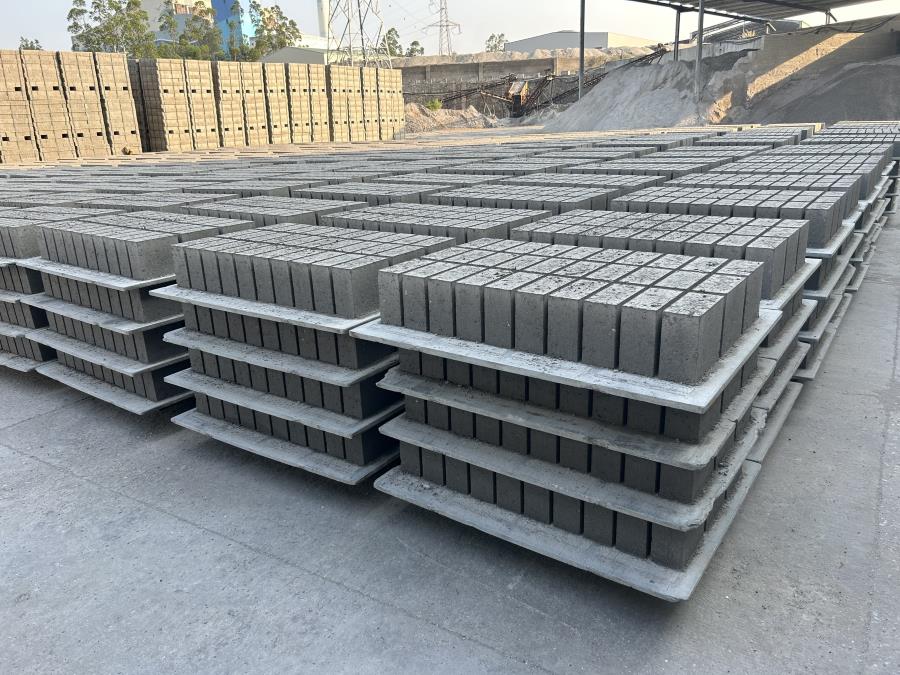
Increasingly, producers seek to incorporate recycled aggregates, construction waste residues, or industrial by-products into their mix designs. While environmentally desirable, these materials introduce higher variability in density and particle geometry.
Adaptive block machines accommodate such experimentation through adjustable vibration amplitude, programmable pressing curves, and modular feeding systems. Instead of forcing uniformity onto inherently diverse materials, the machine aligns its operational logic with material behavior. This synergy reduces rejection rates and fosters sustainable production without sacrificing structural integrity.
VII. Hawen Machinery: Engineering Resilience in a Variable World
In this context, Hawen Machinery positions itself not merely as an equipment supplier but as a systems integrator. From hydraulic calibration to vibration mechanics, from digital monitoring to cross-brand mold compatibility, the company builds machines that interpret rather than resist material diversity.
Its engineering philosophy rests on three pillars: structural robustness, intelligent control, and precision tooling. By synthesizing advanced hydraulic components, high-efficiency vibration design, and internationally standardized mold interfaces, Hawen ensures that customers operating in disparate geographies can achieve consistent output quality.
Conclusion: From Mechanical Equipment to Material Intelligence
Ultimately, the adaptability of block machines reflects a deeper transformation within manufacturing. In an era characterized by resource constraints and regional diversity, rigidity equates to obsolescence. Only equipment capable of analytical responsiveness can thrive.
When a block machine adjusts its hydraulic modulation to compensate for coarse aggregates, recalibrates vibration parameters to accommodate recycled materials, and optimizes production data in real time, it transcends its mechanical identity. It becomes an intelligent intermediary between nature’s variability and architectural precision.
In doing so, it does more than produce concrete blocks. It converts uncertainty into reliability, heterogeneity into uniformity, and local materials into global standards. And in that quiet yet profound transformation lies the true evolution of modern construction technology.
VI. Mix Design Flexibility and Sustainable Inputs
Increasingly, producers seek to incorporate recycled aggregates, construction waste residues, or industrial by-products into their mix designs. While environmentally desirable, these materials introduce higher variability in density and particle geometry.
Adaptive block machines accommodate such experimentation through adjustable vibration amplitude, programmable pressing curves, and modular feeding systems. Instead of forcing uniformity onto inherently diverse materials, the machine aligns its operational logic with material behavior. This synergy reduces rejection rates and fosters sustainable production without sacrificing structural integrity.
VII. Hawen Machinery: Engineering Resilience in a Variable World
In this context, Hawen Machinery positions itself not merely as an equipment supplier but as a systems integrator. From hydraulic calibration to vibration mechanics, from digital monitoring to cross-brand mold compatibility, the company builds machines that interpret rather than resist material diversity.
Its engineering philosophy rests on three pillars: structural robustness, intelligent control, and precision tooling. By synthesizing advanced hydraulic components, high-efficiency vibration design, and internationally standardized mold interfaces, Hawen ensures that customers operating in disparate geographies can achieve consistent output quality.
Conclusion: From Mechanical Equipment to Material Intelligence
Ultimately, the adaptability of block machines reflects a deeper transformation within manufacturing. In an era characterized by resource constraints and regional diversity, rigidity equates to obsolescence. Only equipment capable of analytical responsiveness can thrive.
When a block machine adjusts its hydraulic modulation to compensate for coarse aggregates, recalibrates vibration parameters to accommodate recycled materials, and optimizes production data in real time, it transcends its mechanical identity. It becomes an intelligent intermediary between nature’s variability and architectural precision.
In doing so, it does more than produce concrete blocks. It converts uncertainty into reliability, heterogeneity into uniformity, and local materials into global standards. And in that quiet yet profound transformation lies the true evolution of modern construction technology.





 Tel: +86-13905968794
 Email: export@hwmachines.com
 MP/WhatsApp: +86-13905968794
 Manufacturer Address:Nanan,Quanzhou City,Fujian Province,China