How to Choose the Right Block Machine for Your Factory
Author:HAWEN Block MachineFROM:Brick Production Machine Manufacturer
TIME:2026-01-29
How to Choose the Right Block Machine for Your Factory
Selecting the right block machine is not merely a procurement decision; it is a strategic investment that directly determines production efficiency, product consistency, operating costs, and long-term competitiveness. With a wide range of models, configurations, and automation levels available on the market, manufacturers must evaluate block machines through a structured and rational framework rather than price alone. This article outlines a clear, professional approach to choosing the most suitable block machine for your factory.
1. Clarify Your Production Objectives and Market Positioning
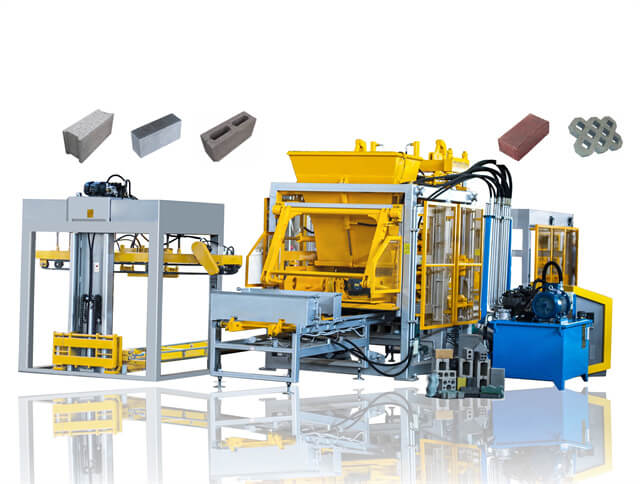
The first step is to define what kind of blocks you intend to produce and for which market. Hollow blocks, solid blocks, pavers, curbstones, or special-shaped products each impose different technical requirements on molds, vibration systems, and hydraulic pressure.
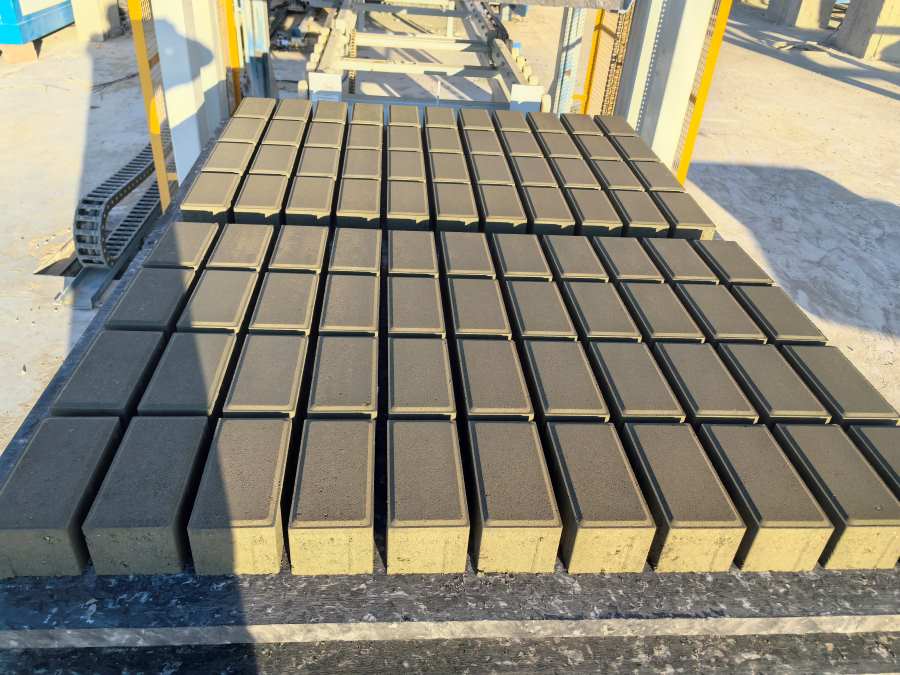 Equally important is output capacity. A small local supplier may prioritize flexibility and moderate output, while a large commercial producer must focus on high hourly capacity, continuous operation, and stable quality. An accurate assessment of daily and annual demand helps avoid both under-investment and excessive capacity that increases idle costs.
2. Evaluate Mechanical Structure and Frame Strength
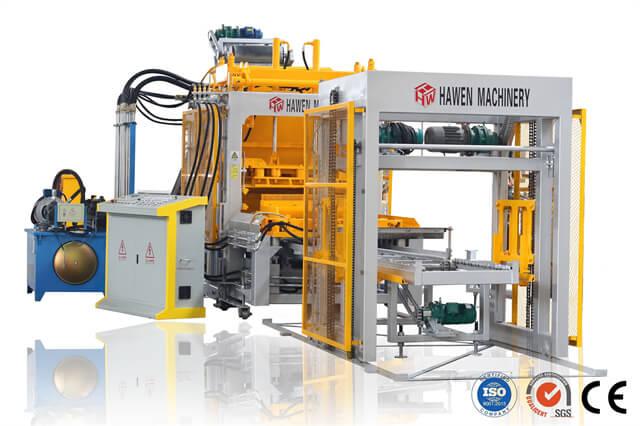
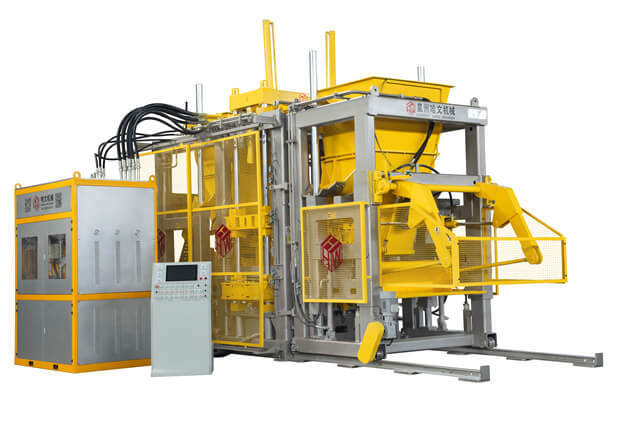
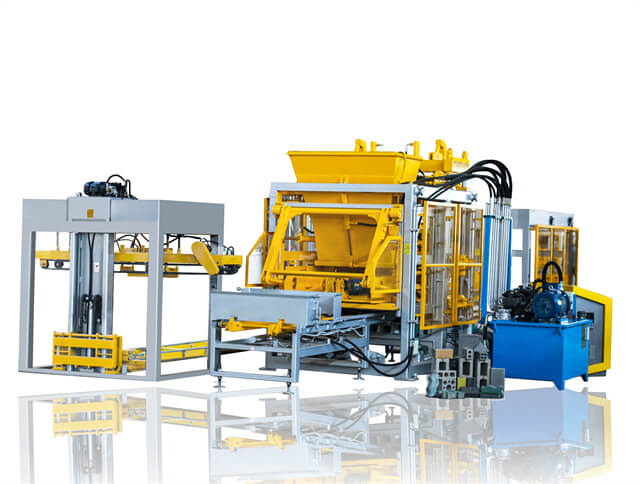
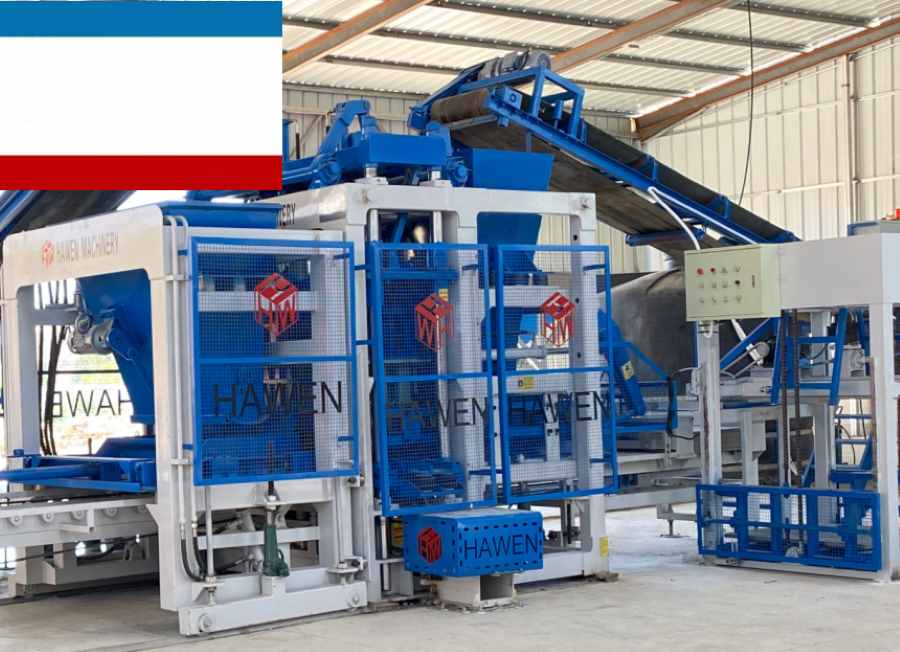
The mechanical structure forms the backbone of a block machine. A rigid, high-strength steel frame minimizes deformation under long-term vibration and heavy loads, ensuring dimensional accuracy of blocks over time. Inferior structures may function in the short term but often lead to mold misalignment, unstable compaction, and accelerated wear.
When comparing machines, attention should be paid to material thickness, welding quality, and overall structural layout. These factors directly affect service life and maintenance frequency.
3. Assess the Vibration System: The Core of Block Quality
Vibration performance is decisive for block density and strength. An advanced vibration system ensures uniform particle rearrangement, reduces internal voids, and allows for lower cement consumption without sacrificing compressive strength.
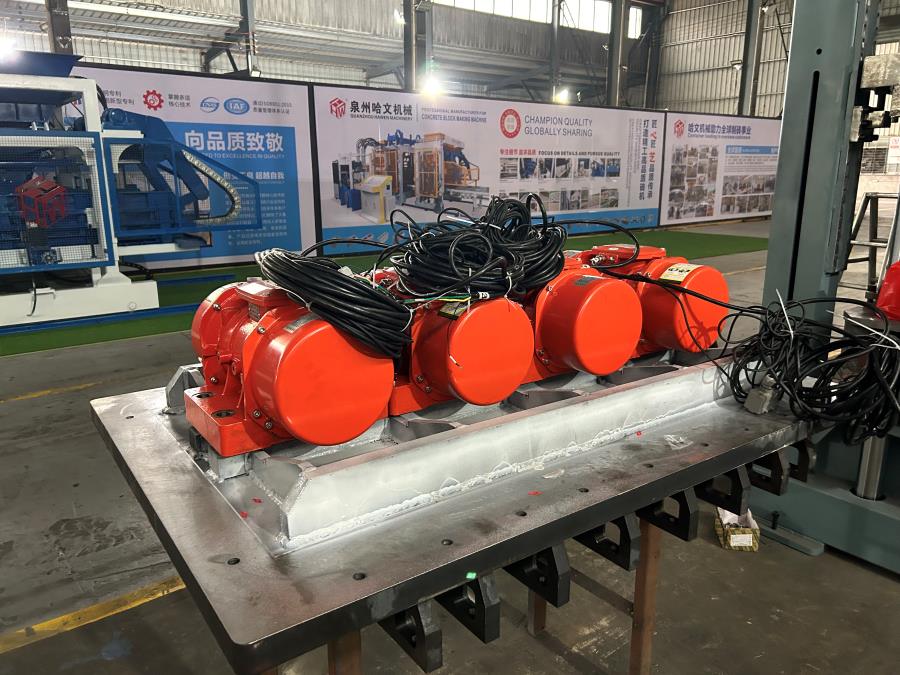
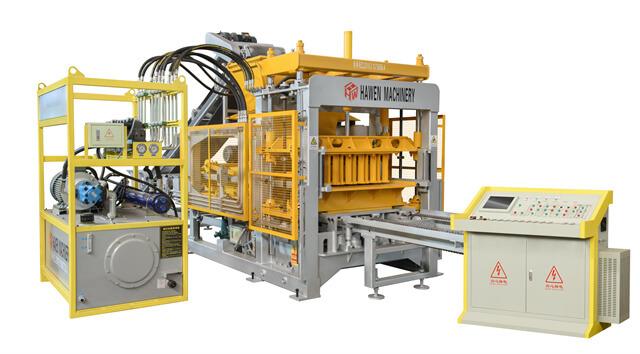
Hawen Machinery adopts a four-shaft vibration box design, positioning eccentric blocks outside the housing. This reduces resistance during vibration, ensures uniform compaction, and lowers cement consumption while improving overall efficiency.
This design not only enhances compaction effectiveness but also reduces mechanical stress, contributing to long-term operational stability.
Equally important is output capacity. A small local supplier may prioritize flexibility and moderate output, while a large commercial producer must focus on high hourly capacity, continuous operation, and stable quality. An accurate assessment of daily and annual demand helps avoid both under-investment and excessive capacity that increases idle costs.
2. Evaluate Mechanical Structure and Frame Strength
The mechanical structure forms the backbone of a block machine. A rigid, high-strength steel frame minimizes deformation under long-term vibration and heavy loads, ensuring dimensional accuracy of blocks over time. Inferior structures may function in the short term but often lead to mold misalignment, unstable compaction, and accelerated wear.
When comparing machines, attention should be paid to material thickness, welding quality, and overall structural layout. These factors directly affect service life and maintenance frequency.
3. Assess the Vibration System: The Core of Block Quality
Vibration performance is decisive for block density and strength. An advanced vibration system ensures uniform particle rearrangement, reduces internal voids, and allows for lower cement consumption without sacrificing compressive strength.
Hawen Machinery adopts a four-shaft vibration box design, positioning eccentric blocks outside the housing. This reduces resistance during vibration, ensures uniform compaction, and lowers cement consumption while improving overall efficiency.
This design not only enhances compaction effectiveness but also reduces mechanical stress, contributing to long-term operational stability.
 4. Examine the Hydraulic Station and Component Brands
The hydraulic system governs pressing force, motion accuracy, and cycle repeatability. A well-designed hydraulic station must deliver stable pressure, precise response, and reliable heat dissipation, especially in high-output production lines.
At Hawen Machinery, the hydraulic station of our block machines adopts Japanese YUKEN proportional and directional valves and an American ALBERT hydraulic pump, combining precise control with high load capacity and long-term durability.
The use of internationally recognized brands significantly reduces failure rates and ensures consistent performance under demanding working conditions.
5. Consider the Control System and Automation Level
Modern block manufacturing increasingly relies on automation and data-driven control. A robust control system improves operational accuracy, reduces labor dependence, and enables fast troubleshooting.
Hawen Machinery integrates a SIEMENS S7-200 PLC with an intuitive touch panel and remote monitoring capabilities. Through this system, we can track the real-time operating status of customers' block machines, optimize operational parameters remotely, and ensure consistent production quality.
Such intelligent control not only enhances productivity but also supports predictive maintenance and long-term process optimization.
6. Balance Initial Investment with Lifecycle Cost
While initial purchase price is an important consideration, it should never be the sole criterion. Energy consumption, cement savings, spare part durability, maintenance costs, and technical support availability all contribute to total cost of ownership. A machine with higher upfront cost but lower operating expenses often proves more economical over its service life.
4. Examine the Hydraulic Station and Component Brands
The hydraulic system governs pressing force, motion accuracy, and cycle repeatability. A well-designed hydraulic station must deliver stable pressure, precise response, and reliable heat dissipation, especially in high-output production lines.
At Hawen Machinery, the hydraulic station of our block machines adopts Japanese YUKEN proportional and directional valves and an American ALBERT hydraulic pump, combining precise control with high load capacity and long-term durability.
The use of internationally recognized brands significantly reduces failure rates and ensures consistent performance under demanding working conditions.
5. Consider the Control System and Automation Level
Modern block manufacturing increasingly relies on automation and data-driven control. A robust control system improves operational accuracy, reduces labor dependence, and enables fast troubleshooting.
Hawen Machinery integrates a SIEMENS S7-200 PLC with an intuitive touch panel and remote monitoring capabilities. Through this system, we can track the real-time operating status of customers' block machines, optimize operational parameters remotely, and ensure consistent production quality.
Such intelligent control not only enhances productivity but also supports predictive maintenance and long-term process optimization.
6. Balance Initial Investment with Lifecycle Cost
While initial purchase price is an important consideration, it should never be the sole criterion. Energy consumption, cement savings, spare part durability, maintenance costs, and technical support availability all contribute to total cost of ownership. A machine with higher upfront cost but lower operating expenses often proves more economical over its service life.
 Conclusion: Choosing Beyond a Machine
Choosing the right block machine is, in essence, choosing a production philosophy—one that balances efficiency with reliability, automation with practicality, and immediate needs with future growth. A well-selected block machine becomes not just a piece of equipment, but a stable production partner that supports sustainable expansion and quality leadership.
At Hawen Machinery, we believe that true value lies in engineering integrity, transparent technology selection, and long-term customer success. When technology, structure, and intelligence converge, a block machine ceases to be a cost center and evolves into a catalyst for industrial excellence.
Conclusion: Choosing Beyond a Machine
Choosing the right block machine is, in essence, choosing a production philosophy—one that balances efficiency with reliability, automation with practicality, and immediate needs with future growth. A well-selected block machine becomes not just a piece of equipment, but a stable production partner that supports sustainable expansion and quality leadership.
At Hawen Machinery, we believe that true value lies in engineering integrity, transparent technology selection, and long-term customer success. When technology, structure, and intelligence converge, a block machine ceases to be a cost center and evolves into a catalyst for industrial excellence.






 Tel: +86-13905968794
 Email: export@hwmachines.com
 MP/WhatsApp: +86-13905968794
 Manufacturer Address:Nanan,Quanzhou City,Fujian Province,China