Ordering replacement mixing blades for a concrete mixer should begin with part identification, not appearance alone. A blade may resemble the installed component while differing in its mounting interface, orientation, working profile, or intended position. These differences can remain unclear when an enquiry contains only a photograph and a general mixer model.
For a concrete block plant, an incorrect replacement can affect more than the maintenance schedule. It can delay planned work, leave the mixer unavailable, and create uncertainty about which parts belong in the assembly. A controlled purchasing process helps the supplier review the actual requirement before parts are manufactured or dispatched.
This guide explains the information buyers should confirm when ordering replacement mixing blades. It focuses on identification, drawings, scope, communication, and receiving checks. It does not provide installation settings, wear limits, fastening values, or instructions for entering a mixer. Inspection and replacement work should follow the applicable supplier instructions and the plant's authorized procedures.
The core principle: a replacement blade is confirmed by the installed mixer's identity, the part's assembly position, a controlled dimensional basis, and an agreed supply scope — not by a photograph or a model name. Prepare these four items before requesting a quotation.
A mixer photograph provides equipment context, but replacement compatibility requires identification of the installed assembly and specific part.
Identify the Installed Mixer Before Identifying the Blade
Start with the mixer manufacturer, model, serial number, and available identification documents. Record the nameplate information clearly and retain photographs that connect the identification plate with the equipment being discussed. A plant may have several mixers, including separate arrangements for base mix and face mix, so the enquiry should identify the actual installation rather than the factory in general.
Look for the original spare-parts list, assembly drawing, operating manual, and previous approved purchase records. These documents may provide a part reference or position number that is more useful than a descriptive name. Check whether the records apply to the installed mixer and whether a later modification changed the relevant mixing assembly.
Keep modifications visible. A mixer may retain its original external identification while internal components have been replaced or revised. If the plant knows that the mixing arms, holders, or related wear components have changed, provide that information to the supplier. Do not assume that an original model designation fully describes every part currently installed.
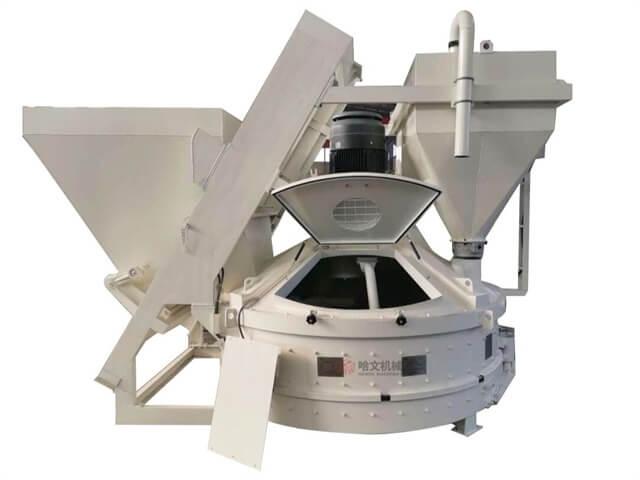
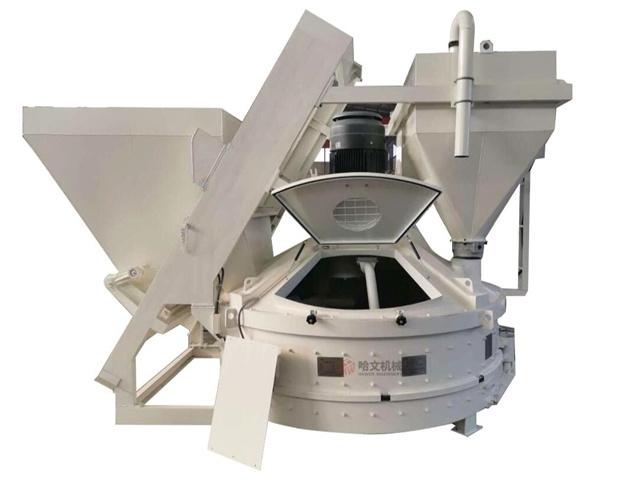
When discussing a planetary concrete mixer used in block production, distinguish the equipment family from the specific replacement requirement. A product description can establish the general mixer type, but it does not identify every blade version or mounting arrangement. Ask the supplier to confirm the proposed part against the available machine and assembly information. Buyers who also maintain a wider stock of wear items may find it useful to review which spare parts a concrete block plant should keep in stock alongside this blade-specific checklist.
Distinguish Mixing Blades from Other Wear Components
Use the names and position references shown in the applicable parts documentation. Mixing blades, scrapers, liners, holders, and mixing arms should not be treated as interchangeable terms. An enquiry that calls every internal wear component a blade can lead the supplier to quote a different item from the one the maintenance team needs.
Identify where the requested component belongs. Mark its location on an available assembly drawing or a clearly referenced photograph taken under the plant's approved inspection arrangements. Where several positions use different parts, preserve those position references in the order. A total quantity without a position breakdown can conceal a mixture of different requirements.
Confirm how orientation is defined. Descriptions such as left, right, inner, or outer can be ambiguous if the buyer and supplier view the assembly from different directions. Use the relevant drawing references and an agreed orientation rather than relying on an unexplained arrow in a photograph. Ask the supplier to resolve uncertainty before approving the quotation.
Check whether the enquiry concerns one blade, several position-specific parts, or a supplier-defined replacement set. These are different purchasing scopes. The buyer should not assume that all items described as a set are identical, or that one photographed component represents every required position. Keep the proposed contents itemized so production, purchasing, and maintenance teams can review the same requirement.
Similar external mixer arrangements do not establish that their internal wear parts are interchangeable.
Use Controlled Drawings Instead of Worn Dimensions Alone
A worn component can provide useful identification evidence, but its present dimensions may not describe the original design. Material loss, damage, earlier repair, or alteration can affect what is measured. Label measurements according to their source, distinguishing an approved drawing value from a field measurement taken from an existing part.
Provide the applicable drawing and revision where available. The supplier should be able to identify the mounting interface, hole arrangement, thickness references, working profile, and any other features relevant to the proposed part. The exact information required depends on the component. Avoid replacing that review with a short list of overall dimensions that omits the actual connection details.
Where drawings are missing, ask the supplier which identification and measurement evidence is needed. Do not invent an original dimension by estimating how much material may have worn away. Any dimensional recovery or reverse-engineering proposal should have a defined review process and an agreed basis before the buyer treats the resulting part as a confirmed replacement.
Keep the measurement method understandable. Record the units, reference points, and orientation used in sketches or inspection sheets. A photograph beside a ruler may support identification but should not automatically be treated as a complete manufacturing specification. The supplier should confirm whether the submitted information is sufficient for a quotation, further review, or manufacture.
Information Group
Evidence to Provide
Question to Resolve
Mixer identity
Manufacturer, model, serial number, and identification photographs
Which installed mixer does the request concern?
Part identity
Part reference, assembly position, description, and quantity
Is the supplier quoting the intended component?
Geometry and interface
Applicable drawing, revision, orientation, and clearly labelled measurements
Is the dimensional basis sufficient and unambiguous?
Configuration history
Known modifications and previous approved replacement records
Does the original documentation still describe the installed assembly?
Supply scope
Itemized parts, associated hardware, documentation, and exclusions
What exactly will arrive with the order?
Receiving requirements
Required identification, inspection basis, and handling of discrepancies
How will the delivered parts be checked before use?
Clarify Material, Supply Scope, and Replacement Recommendations
Ask the supplier to identify the material specification proposed for the replacement and explain its basis for the intended duty. Broad descriptions such as wear-resistant or heavy-duty do not, by themselves, define a complete specification. Where a particular material or treatment is required, put the agreed requirement in the controlled order documents.
Do not select a replacement solely by a claimed hardness or service-life figure. Suitability also depends on the component design, installed arrangement, operating conditions, and the supplier's technical assessment. A universal service-life promise is not an appropriate substitute for an identified part and an agreed specification. Keep any assumptions behind performance statements explicit.
Clarify what accompanies the main part. Holders, fastening components, spacers, or other associated items may be included, excluded, or subject to a separate assessment. The buyer should not assume that existing hardware is suitable for reuse or that every quotation contains a complete installation package. Ask the responsible technical team to define the required scope.
Request the supplier's recommendation on the extent of replacement for the actual assembly. A decision to replace one component or a larger group should follow an appropriate condition and compatibility review. This article does not prescribe a universal replacement-set rule. The purchasing record should state the agreed scope and identify any inspection decisions that remain outstanding.
Build an Enquiry Package That the Supplier Can Review
Combine the identification evidence into one enquiry package. Include the mixer details, parts references, assembly position, relevant drawings, photographs, quantities, and known modifications. Use consistent item numbers across the document set. This reduces the risk that a photograph in one message is incorrectly associated with a different part listed in a later message.
Separate identification evidence from problem descriptions. Photographs of wear or damage can explain why the plant is requesting support, but they do not necessarily define the replacement specification. Record the observed condition and the requested purchasing scope independently. Where the cause of damage is uncertain, describe it as an unresolved technical question rather than a confirmed diagnosis.
Ask the supplier to return a clearly referenced quotation or confirmation. It should identify the proposed part, quantity, applicable drawing or reference, material basis where agreed, included items, and exclusions. If the supplier proposes a revised component, request an explanation of the difference and the relevant compatibility confirmation before treating it as equivalent.
Resolve conflicting information before placing the order. A part number, sketch, and photograph may not agree if the plant has mixed records from different equipment. Do not let the supplier choose silently between them. From a purchasing perspective, a short written clarification before manufacture is more useful than several unreviewed attachments that leave the specification open to interpretation.
Enquiry package checklist
Mixer manufacturer, model, and serial number, with a clear nameplate photograph.
Part reference or assembly position number from the applicable parts documentation.
Applicable drawing and revision, or a labelled sketch with units and reference points.
Itemized quantities per position, not a single combined total.
Known modifications to arms, holders, or related wear components.
Agreed supply scope, including associated hardware and exclusions.
Any unresolved technical questions stated separately from confirmed facts.
Keep the enquiry connected to the actual installation, especially when the factory operates more than one mixer.
Check Delivered Parts Before the Maintenance Handover
On receipt, compare the delivered identification, quantities, and documents with the approved order. Keep position-specific parts distinguishable. If the delivery contains several different components, avoid combining them into an unlabelled storage bin before the maintenance team has confirmed their identity. A correct shipment can still become difficult to use if its identification is lost internally.
Perform the agreed receiving checks under the plant's procedures. These may include document review, identification, and the dimensional or condition checks defined by the responsible team. A receiving check should not become an improvised installation trial. If a discrepancy is found, hold the affected item for review and preserve the evidence needed for the supplier to investigate.
Do not modify an apparently mismatched replacement simply to make it fit. An unexplained difference may indicate an incorrect part, a documentation problem, or a configuration issue that requires technical review. The appropriate supplier and authorized maintenance personnel should resolve the difference before installation proceeds. Purchasing convenience should not override the approved technical basis.
After authorized replacement and verification, update the equipment's spare-parts records. Retain the installed part identity, relevant revision, work record, and any supplier clarification. Keep unused spares labelled and linked to the mixer and position they support. This gives the next purchasing enquiry a stronger starting point than a worn sample and an uncertain description.
Where repeated wear or damage remains a concern, preserve operating and maintenance information for a separate investigation. Do not assume that ordering the same component more frequently resolves the underlying issue. The replacement order and the technical review can support each other, but they answer different questions and should remain separately traceable.
Receiving and maintenance records should preserve the identity of the mixer and the replacement components approved for it.
FAQ
Is the mixer model enough to order replacement blades?
Not always. The serial number, installed assembly, part reference, position, and configuration history may also be needed. Ask the supplier to confirm the actual replacement rather than assuming that every mixer carrying the same model name uses identical components.
Can a worn blade be used as the manufacturing reference?
It can provide useful evidence, but its present shape and dimensions may differ from the original design. Clearly distinguish measured worn dimensions from approved drawing values. Where original information is unavailable, agree the review and dimensional basis with the supplier before manufacture.
Should every blade be replaced when one part is worn?
There is no universal rule suitable for every mixer and condition. Obtain the relevant inspection and supplier recommendation for the actual assembly. Record the agreed scope instead of treating either single-part replacement or complete-set replacement as automatically correct.
Does a similar mounting pattern prove compatibility?
No. The working profile, orientation, material specification, assembly position, and other interfaces may also matter. A part that appears mountable is not automatically a technically confirmed replacement for the intended duty.
What should buyers do if delivered parts differ from the order?
Preserve their identification, document the difference, and refer the affected items for review before use. Provide the supplier with the order reference and clear evidence. Do not resolve an unexplained mismatch through unauthorized alteration or by discarding the original records.
Conclusion
A reliable replacement mixing-blade order connects the installed mixer with an identifiable part, assembly position, controlled dimensional basis, and agreed supply scope. Start with the machine records, distinguish the relevant wear components, and make uncertainties visible before approving the purchase.
On receipt, verify the delivered items against that same basis and preserve their identity through the maintenance handover. The strongest purchasing process does more than obtain a similar-looking component: it leaves a clear record of what was ordered, why it was considered suitable, and how discrepancies will be resolved before use.
Preparing a replacement enquiry? Share the mixer nameplate details, part reference or assembly position, applicable drawing revision, and the quantities required for each position. The supplier can then confirm the proposed part against your installation before manufacture or dispatch.




 Tel: +86-13905968794
 Email: export@hwmachines.com
 MP/WhatsApp: +86-13905968794
 Manufacturer Address:Nanan,Quanzhou City,Fujian Province,China