What Should Buyers Verify Before Upgrading a Block Machine Control System?
Author:HAWEN Block MachineFROM:Brick Production Machine ManufacturerTIME:2026-10-08
MENU
Upgrading the control system on an existing concrete block machine can appear to be a straightforward controller replacement. In practice, the PLC, HMI, sensors, drives, hydraulic valves, safety devices, and downstream equipment work as one sequence. Changing one component may affect timing, interlocks, alarms, recipes, and the way operators recover from a stop. Buyers should therefore define the upgrade as an integration project, not simply a purchase of a controller or touchscreen.
This guide helps plant owners assess a proposed retrofit: document the existing machine, verify hardware and signal compatibility, protect safety functions and production records, and agree on testing and handover. Compatibility must be confirmed by an engineer against the actual equipment.
1. Define the reason and scope before selecting components
Start by describing the operational problem. Examples include a discontinued controller, unreadable HMI, unavailable spare modules, intermittent communication faults, difficulty retrieving alarms, or a need to integrate a specific auxiliary machine. A clear problem statement helps distinguish a targeted repair from a full control redesign. Replacing a display alone may be enough in one case; another machine may need new I/O, wiring, software, or drive interfaces. Avoid deciding on a solution before the failure or limitation has been diagnosed.
Set boundaries for the work. List which equipment is included: the main forming machine, batching and mixing controls, material feeder, pallet feeder, wet block conveyor, stacker, curing equipment, or offline cuber. State what will remain unchanged and identify third-party machines that exchange signals with the block machine. If the control upgrade covers only the host machine, the quotation should say how interfaces to existing equipment will be tested and which party is responsible for them.
2. Document the existing control system
Before requesting a retrofit proposal, collect the machine model and serial number, electrical drawings, PLC and HMI make and model, module list, drive and inverter details, sensor types, valve and actuator information, and available program backups. Photograph cabinet nameplates and terminal labels. Record the software versions that can be read without changing the running system. If drawings are incomplete, identify them as incomplete rather than treating assumptions as verified facts.
Document the production sequence in operator language. Note how the machine starts, feeds material, fills the mould, vibrates, presses, demoulds, transfers pallets, and communicates with upstream and downstream equipment. Capture normal cycle timing ranges only as observed values, not as a substitute for engineering specifications. Include the alarms operators see, what action they currently take, and which interruptions require maintenance intervention.
Make an I/O inventory that connects each signal to its physical device, cabinet terminal, and function. Identify spare inputs and outputs, inter-cabinet connections, network links, and any undocumented modifications. A technician may have added a sensor, relay, or bypass over the years. These changes matter because a new program based on the original drawing may ignore the machine’s present condition. The inventory is a baseline for scope, risk review, commissioning, and future service.
3. Check hardware compatibility as a system
Confirm whether proposed PLC, HMI, I/O modules, power supplies, communication adapters, and programming tools are compatible with one another and supportable in the plant’s region. Component compatibility includes firmware and software versions, available replacement stock, connection standards, environmental ratings, and cabinet space. A modern part is not automatically a drop-in replacement for an older unit. Require the supplier to identify any new modules, adapters, wiring changes, or engineering work needed.
Review the electrical interface to field devices. Check sensor supply voltage and output type, encoder or counter requirements, analog signal ranges, drive command and feedback, valve coil specifications, and the ratings of relays and contactors. Confirm cable shielding and grounding arrangements where signal quality depends on them. Do not reconnect field wiring based on wire colour or a handwritten label alone; verify terminal function against a drawing and suitable electrical tests.
Control hardware should also fit the actual cabinet conditions. Review heat, dust, vibration, moisture exposure, power quality, ventilation, and access for service. Confirm whether the existing cabinet can safely accommodate the new arrangement or whether replacement is required. Cable entry, segregation of power and signal wiring, protective devices, earthing, and enclosure condition all affect maintainability. The upgrade scope should specify who supplies cabinet modifications and who verifies them.
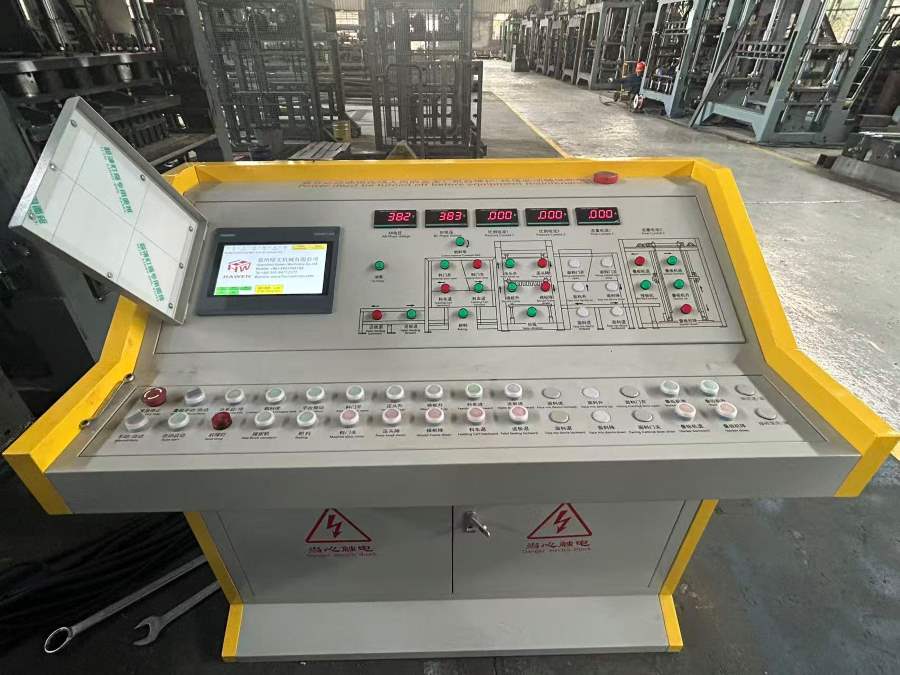
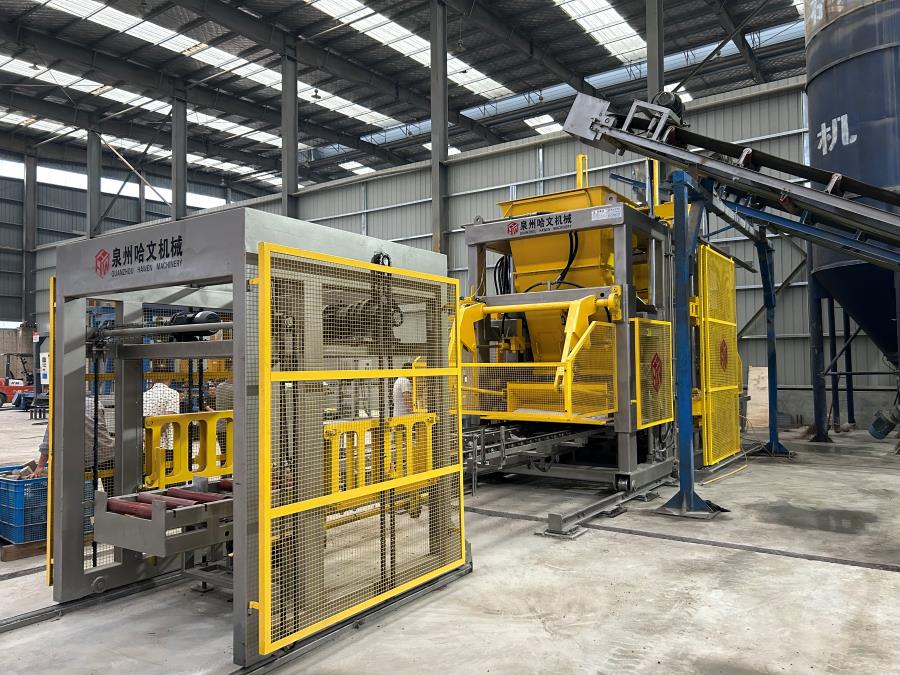
Inventory the existing cabinet and confirm the proposed controller, I/O, wiring, and service access.
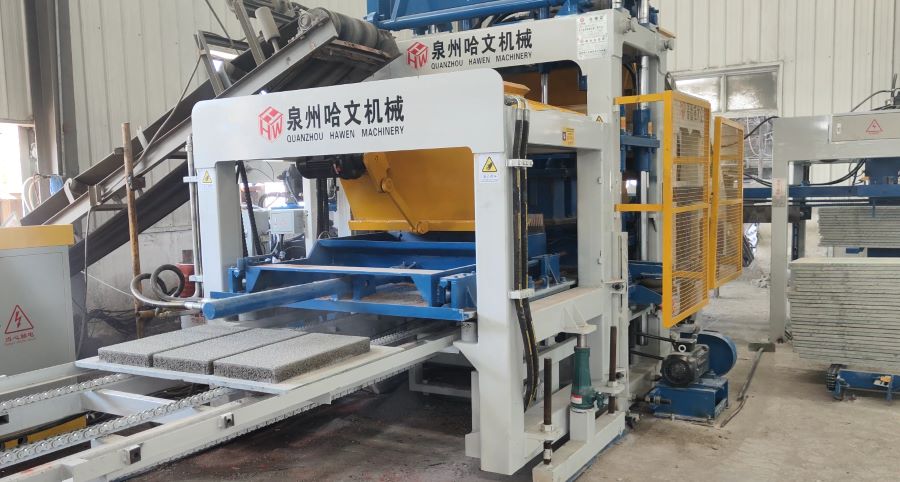
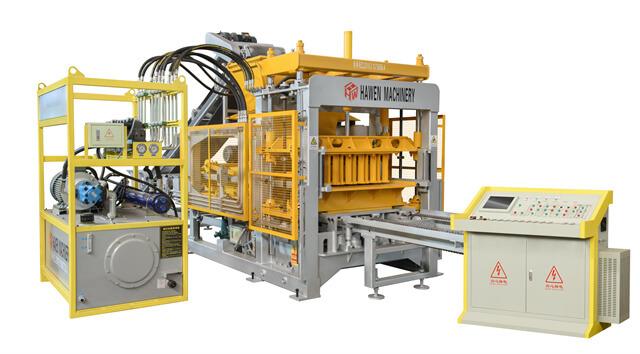
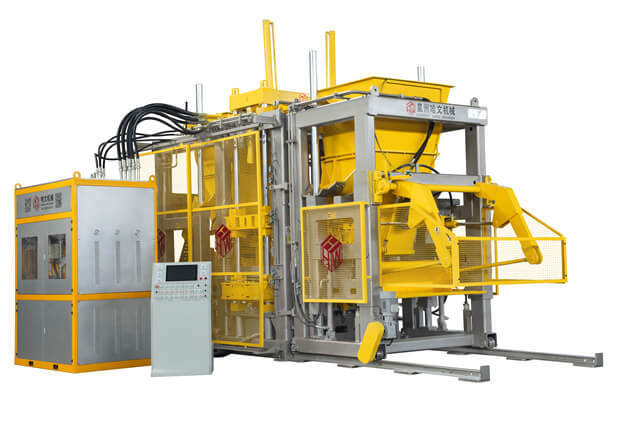
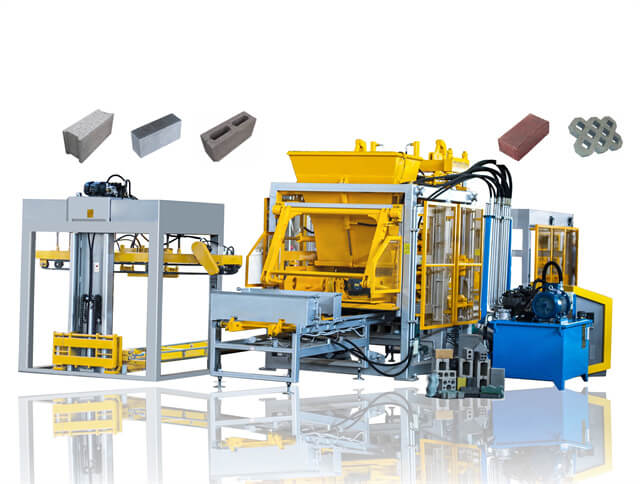
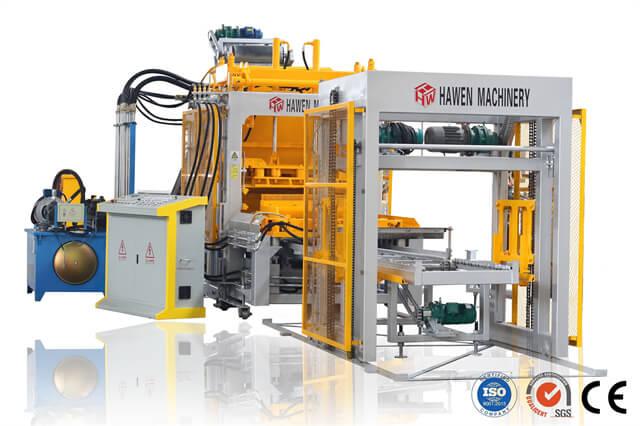
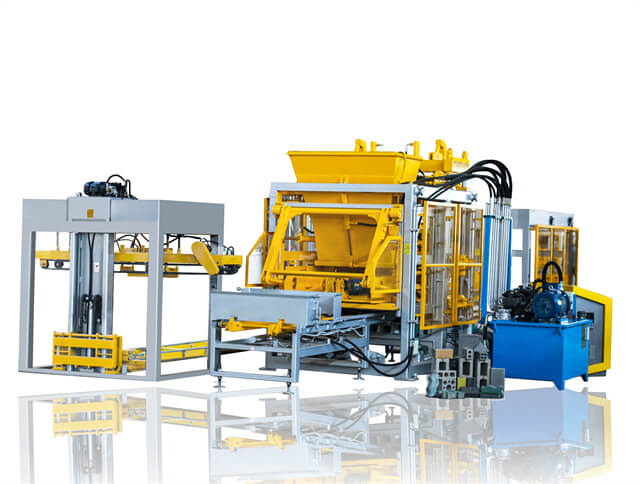
Machine context matters when selecting control components. A buyer comparing an upgrade with a replacement line can review the QT12 automatic hydraulic hollow block production line as one current product reference, while remembering that a new line’s standard configuration does not prove direct compatibility with an older machine. The existing machine drawings and field interfaces remain the basis for retrofit engineering.
4. Map sequences, interlocks, and safety functions
A retrofit must preserve the intended sequence between mechanical actions. Identify which signals confirm mould position, feeder position, pallet presence, hydraulic movement, guards, and downstream readiness. For each step, document the condition that allows it to start, the conditions that stop it, and how the operator resets after a fault. Interlocks should be reviewed explicitly; they should not be removed just to make the machine run through an inconvenient alarm.
Safety functions require a separate, competent review. Record emergency stops, guard switches, enabling devices, safe operating modes, and any safety relay or safety PLC. Determine whether these devices are part of the control upgrade and who validates the resulting safety performance. Ordinary PLC logic should not be treated as a substitute for a suitable safety-rated design. Applicable safety obligations vary by jurisdiction and machine configuration, so the plant should obtain qualified local assessment where necessary.
Build a cause-and-effect or sequence matrix with clear states: normal operation, startup, manual or setup mode, automatic cycle, pause, fault, emergency stop, and recovery. Define what outputs must de-energize and what conditions must be checked before restart. For interfaces to a batching system, stacker, or cuber, record signal ownership, voltage levels, communication method, and expected behavior if communication is lost. This prevents ambiguous handoffs between suppliers.
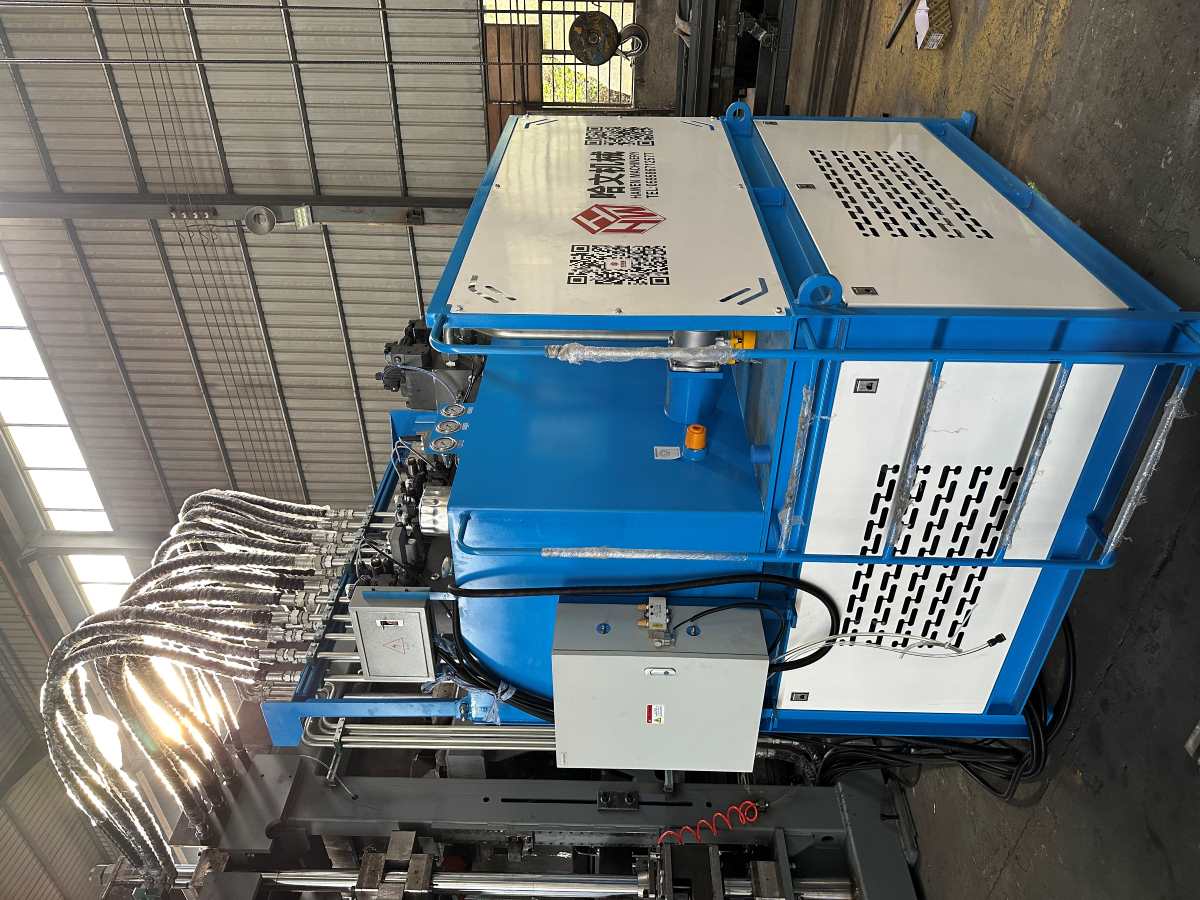
Map controller signals to the hydraulic actions and feedback actually present on the machine.
5. Protect programs, recipes, and operator knowledge
Request a recoverable copy of the current PLC and HMI programs before any changes. Identify the file format, software version, access rights, and the person responsible for storing the backup. A screenshot of a few settings is not a complete program backup. If the source project cannot be obtained, state that limitation and agree what reverse engineering, testing, and documentation will be needed. Keep the original files unchanged and clearly label working copies by date and revision.
Preserve recipes and product-specific settings with their context. Record which mould, product drawing, pallet type, mix, machine arrangement, and process conditions each setting belongs to. A vibration or feed value copied to a different product may not be appropriate. Separate operator-adjustable settings from protected maintenance or engineering parameters, and agree who may change them. The aim is traceability and safe support, not disabling reasonable operator control.
Review the HMI screen structure with the people who run the line. Important status, alarms, sequence position, and recovery instructions should be easy to interpret during a shift. Standardize units and labels, avoid ambiguous abbreviations, and make alarm text point toward a check rather than encourage a blind reset. Where a screen uses a manual jog function, confirm that the permitted conditions and operator instructions are documented.
Evaluate the control upgrade against the complete machine sequence, not only the cabinet hardware.
Review area
Questions to resolve
Evidence to retain
Baseline
What hardware, versions, wiring, and changes exist?
Inventory, photos, drawings, backups
Interfaces
Which sensors, drives, valves, and external machines connect?
I/O list, signal matrix, interface notes
Safety
Which safety functions are changed or verified?
Risk review and validation record
Acceptance
How will normal cycles, faults, and recovery be tested?
Approved test plan and results
6. Plan shutdown, installation, and recovery
Agree when the production line can be stopped and how long the planned work is expected to take. A retrofit plan should list preparation completed before shutdown, required site resources, installation tasks, test stages, and the person authorized to return the line to production. Identify dependencies such as electricians, mechanics, machine access, spare wiring, lifting equipment, and the availability of product materials for a controlled trial.
Define a recovery path before removing the old controller or changing wiring. This may include retaining labelled original components, keeping the old program and wiring records, and specifying the decision point at which work pauses if an unexpected interface is found. Do not promise that rollback is possible until hardware and program dependencies have been reviewed. If a rollback is not technically feasible, state the contingency and escalation process clearly.
Plan production inventory around the stoppage, but avoid using inventory pressure to bypass testing. Tell operations which functions will be unavailable, how the machine will be isolated, and how trial products will be identified. If the upgrade is performed in stages, define what is tested at each stage and whether partial operation is allowed. Written responsibilities reduce confusion between the plant team, machine maker, electrical contractor, and controls integrator.
7. Test and accept the upgrade methodically
Testing should progress from documentation and static checks to controlled machine operation. First verify drawings, wiring terminations, protective devices, and controller configuration. Then test individual inputs and outputs under an approved safe procedure, confirm sensor states and actuator direction, and verify communication with connected equipment. Only after these checks should the team test automatic sequences with suitable guards and safety controls in place.
Prepare scenarios for startup, normal cycles, product selection, pause and resume, sensor failure, low material, downstream-not-ready status, communication loss, emergency stop, and recovery. The test plan should say what result is expected and who records it. Do not use a single successful cycle as proof of all functions. Run a suitable number of cycles under representative conditions and compare cycle behavior with the approved operating requirements.
Acceptance should include operator training, alarm review, final software backups, updated electrical drawings, I/O list, parameter list, and a record of open items. Define how defects are prioritized and who approves closure. Confirm that maintenance staff can identify common components and access the required programming or diagnostic tools. A retrofit is not fully handed over if only the machine runs while the plant lacks documentation to maintain it.
Include machine interfaces and production sequence in the final commissioning record.
8. Avoid common retrofit risks
One risk is buying components before the existing system has been inventoried. This can produce an incompatible module, missing adapter, or unsupported software dependency. Another is relying on incomplete wiring diagrams without checking modifications made in the field. A third is transferring old recipes without confirming which product and mould they belong to. Each risk can be reduced by a verified baseline and a review gate before installation.
Do not permit undocumented changes during commissioning. If a sensor, timing, or sequence is changed to resolve a trial issue, record the reason, affected revision, and retest result. Never bypass a safety device as a permanent workaround. Keep a clear distinction between a temporary diagnostic step performed by a qualified person and the approved final configuration. Plant managers should receive the final files and drawings, not only verbal assurance that the upgrade is complete.
Finally, compare quotations on deliverables rather than headline hardware cost. Check whether engineering, cabinet work, travel, commissioning, production trials, operator training, backup files, updated documentation, and post-installation support are included. Clarify how third-party interfaces are treated and what happens if the original system differs from the information provided. A transparent scope makes it easier to assess risk and avoid disagreements after the line is stopped.
FAQ
Can a new PLC be installed without changing machine wiring? Sometimes, but it depends on the existing I/O, electrical ratings, signal types, cabinet condition, and software. Verify the actual machine before treating the change as a drop-in replacement.
Should the original PLC program be retained? Keep an unchanged, labelled copy where available, along with version information and a restoration plan. It is useful evidence even when it cannot run on replacement hardware.
Can recipes be transferred directly to a new controller? Do not assume that parameter meanings, units, timing resolution, or product context are identical. Map and test each recipe against its mould, product, and production conditions.
Who should validate safety functions? A qualified person familiar with the machine and applicable local requirements should assess and validate any safety functions affected by the retrofit.
What should be included in final handover? At minimum, agree on updated drawings, I/O and parameter lists, program backups, test results, alarm guidance, training records, and unresolved-item status.
Conclusion
A block machine control upgrade should begin with a verified description of the existing equipment and a clear statement of the problems to solve. Buyers should review hardware compatibility, field signals, sequence logic, safety functions, recipe records, shutdown planning, and commissioning tests before approving the scope. A careful baseline allows the integrator to distinguish confirmed facts from assumptions and helps the plant team prepare for the work.
Successful acceptance means more than a new screen powering on. The upgraded system should operate the defined production sequence, communicate with included equipment, handle expected faults safely, and leave the factory with usable documentation and recoverable program files. By agreeing these points before the line is stopped, plant owners can make retrofit decisions with clearer technical responsibilities and a more controlled return to production.





 Tel: +86-13905968794
 Email: export@hwmachines.com
 MP/WhatsApp: +86-13905968794
 Manufacturer Address:Nanan,Quanzhou City,Fujian Province,China