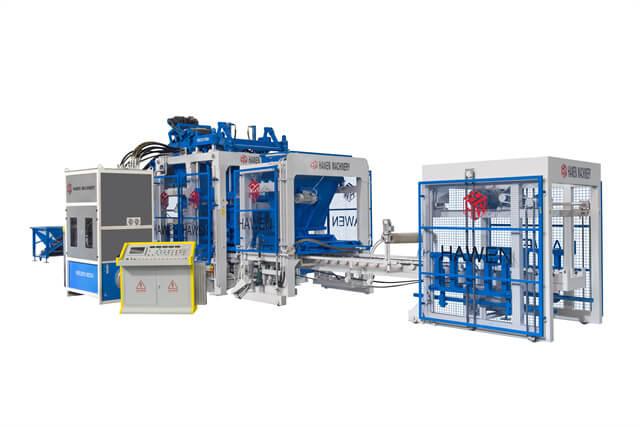
Noise is a normal consideration in concrete block machine operation because block production uses vibration, mixing, hydraulic movement, conveyors, pallet transfer, and forklift handling. Buyers should understand where noise comes from before choosing installation location, workshop layout, foundation design, and operator station position. Noise review is not only about comfort; it can also reveal maintenance issues.
A concrete block machine produces sound from several sources. The vibration system compacts semi-dry concrete. The mixer prepares material. Hydraulic components drive repeated movement. Conveyors move aggregates and concrete. Pallets and stackers move fresh blocks. If these systems are installed or maintained poorly, noise may become stronger and less stable.
Why noise review is part of plant planning
Noise affects operator working conditions and site layout. If the plant is close to offices, residential areas, or other production lines, machine position and building design should be reviewed early. The buyer should consider where operators stand, where the control cabinet is placed, and whether walls or roofing will reflect sound.
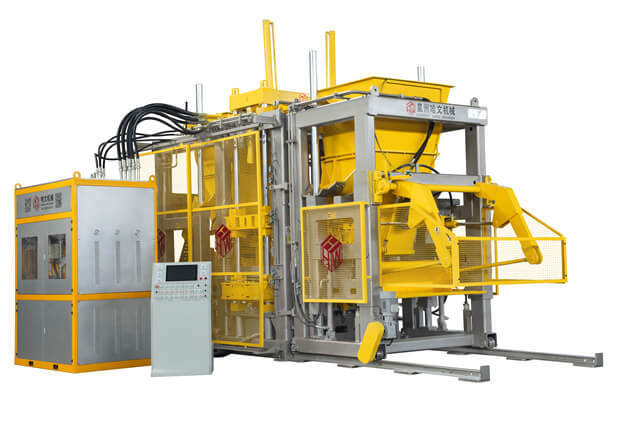
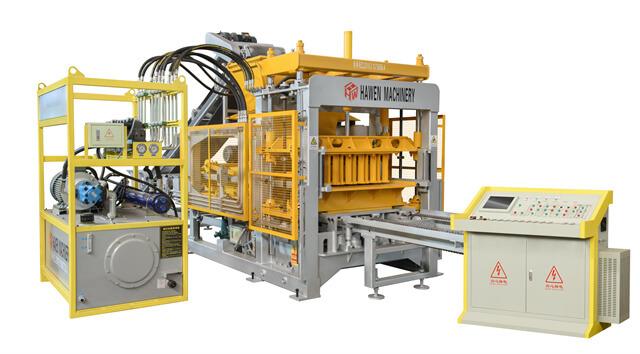
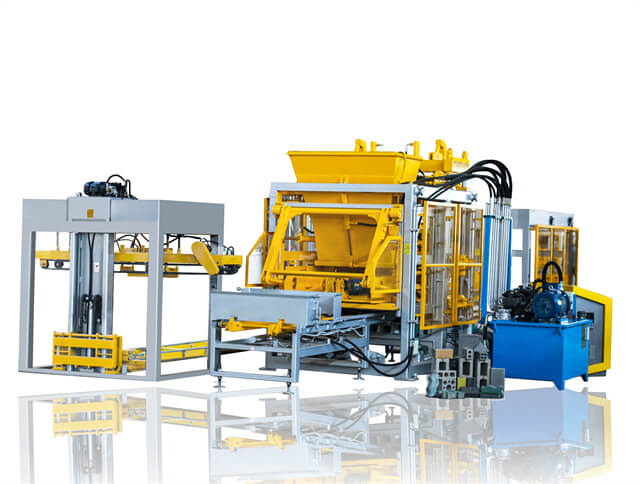
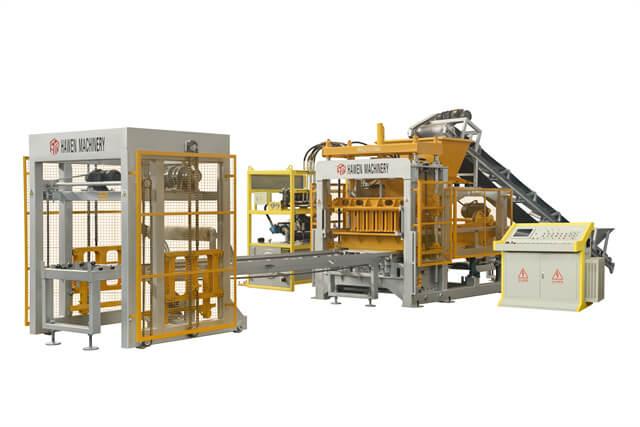
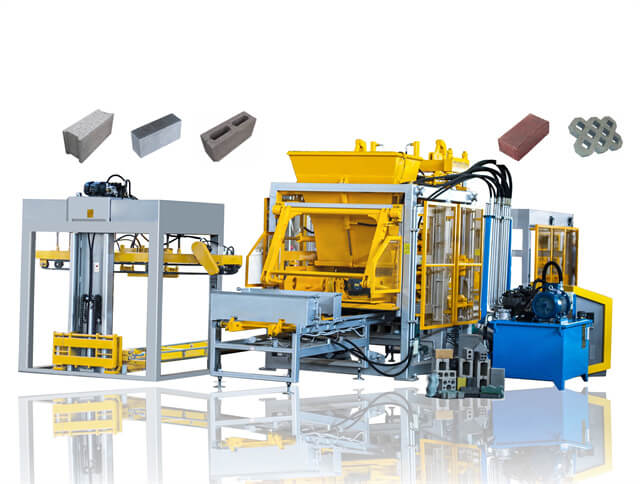
When reviewing a QT8 automatic concrete paver fly ash brick making machine, buyers should understand that vibration is part of block compaction. The goal is not to remove all noise, but to make the machine operate normally, safely, and without abnormal mechanical sound.
Vibration motor, mixer, and hydraulic noise
The vibration system is a main sound source. Vibration motors, vibration box, frame bolts, rubber pads, and mould contact all affect sound. If bolts are loose or parts are worn, the sound may become sharper or irregular. Operators should treat a sudden change in sound as an inspection signal.
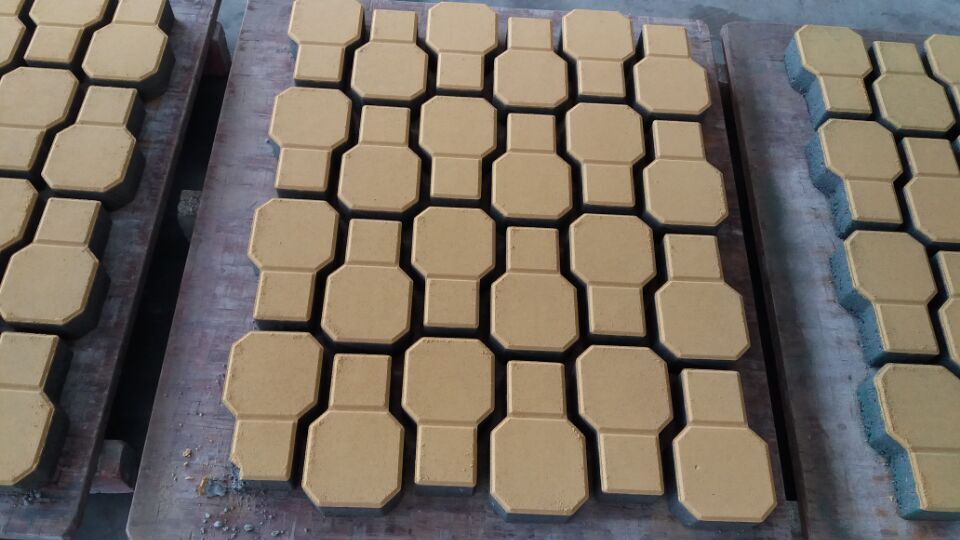
The mixer also creates noise during material preparation. Blade wear, liner plate wear, dry material buildup, and discharge gate impact can increase sound. Hydraulic noise may come from oil pump operation, pressure changes, valve movement, or hose vibration. Stable sound is usually easier to manage than irregular knocking or shaking.
Layout, foundation, and maintenance factors
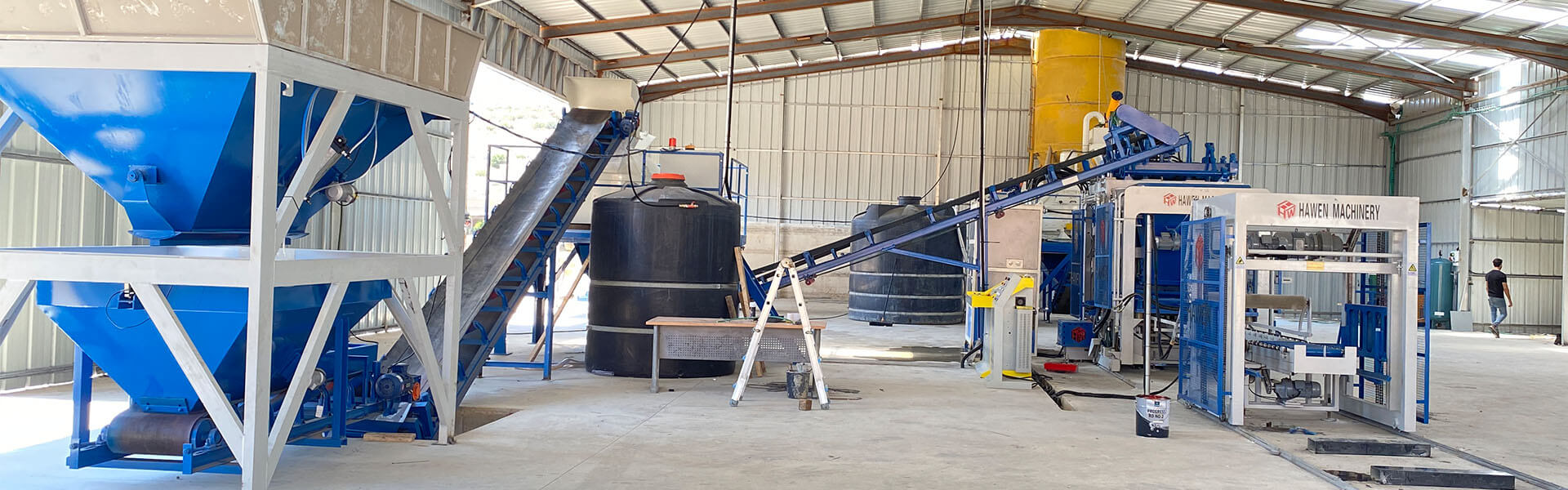
Foundation quality affects vibration behavior. A level and stable foundation helps the machine work as designed. Weak or uneven foundation may increase shaking, frame stress, and abnormal sound. Installation should follow foundation requirements for the host machine, mixer platform, cement silo, and conveyor supports.
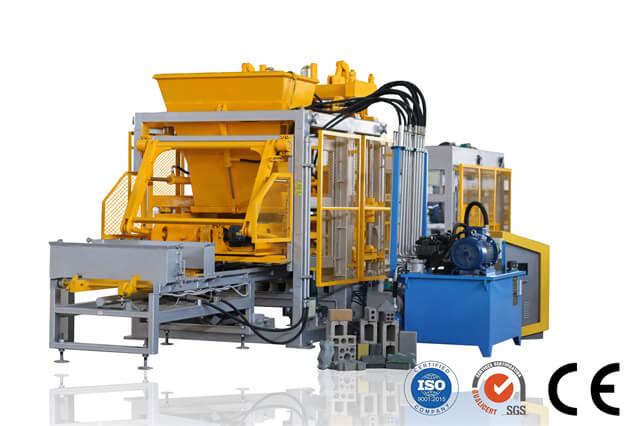
Maintenance also affects noise. Loose bolts, worn bearings, damaged rubber pads, dry chains, damaged pallets, or misaligned conveyors can create abnormal sound. Operators should record when sound changes and inspect the related area. Good maintenance can reduce unnecessary noise while also protecting block quality.
Noise source review table
| Noise source | What to check | Why it matters |
|---|
| Vibration system | Vibration motor, bolts, rubber pads, frame stability, and mould contact. | Abnormal sound may indicate loosening or wear. |
| Mixer | Blade wear, liner plates, material buildup, and discharge gate movement. | Mixer noise may signal wear that affects material quality. |
| Hydraulic station | Oil pump sound, hose vibration, pressure change, and valve movement. | Hydraulic noise changes can indicate maintenance needs. |
| Conveyor and pallet flow | Rollers, chains, pallets, stacker alignment, and contact points. | Reduces avoidable handling noise and mechanical wear. |

FAQ
Is vibration noise normal in block production?
Yes. Vibration is part of compaction. However, sudden changes, sharp knocking, or irregular shaking should be inspected.
Can foundation affect machine noise?
Yes. A weak or uneven foundation can increase vibration transfer and abnormal sound. Foundation quality should be reviewed before installation.
Does maintenance reduce noise?
Good maintenance can reduce avoidable noise caused by loose bolts, worn parts, damaged pads, misalignment, or dry moving components.
Conclusion
Concrete block machine noise comes from vibration, mixing, hydraulic movement, conveyors, pallet transfer, and handling equipment. Buyers should review noise sources during layout planning, installation, and maintenance. The next step is to place the machine on a stable foundation, protect operator areas, and use sound changes as practical maintenance signals.





 Tel: +86-13905968794
 Email: export@hwmachines.com
 MP/WhatsApp: +86-13905968794
 Manufacturer Address:Nanan,Quanzhou City,Fujian Province,China