Concrete blocks can look perfect when they leave the mold, then break later during stacking, palletizing, forklift movement, or truck loading. This is frustrating because the defect appears after value has already been added. Cement, aggregate, power, labor, pallets, curing space, and machine time have already been consumed. For a block plant, reducing breakage is not only a quality issue. It is a direct way to protect daily output and customer trust.
The right solution is not to blame one operator or one machine. Breakage during handling usually comes from a chain of small problems: weak green strength, uneven compaction, poor pallet support, unstable curing, rough clamping, excessive impact, or careless yard movement. A well-designed block machine line controls all of these points before the product reaches the customer.
Why blocks break after production
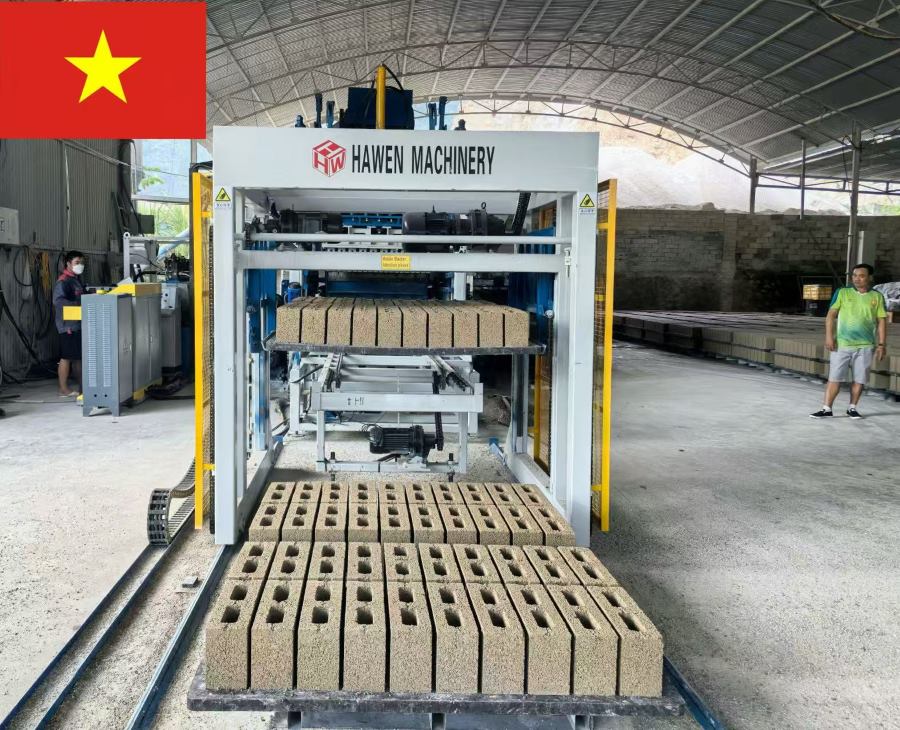
Handling breakage often appears as cracked corners, broken webs, chipped edges, split hollow blocks, or damaged paver surfaces. The visible damage may happen at the palletizer or on the truck, but the cause often begins much earlier. A concrete block with low density, poor moisture balance, or weak edge formation is already vulnerable before any forklift touches it.
Green concrete products are especially sensitive. They have been shaped by the brick machine, but they still need time and controlled curing to gain handling strength. If they are moved too aggressively, placed on uneven pallets, or stacked with poor alignment, the stress concentrates at the weakest area. That is when a small chip becomes a broken product.
Practical observation: when breakage increases suddenly, do not check only the palletizer. Check the mix moisture, mold wear, vibration setting, pallet condition, curing time, forklift route, and stacking method. A downstream defect often has an upstream cause.
The first step is to make a block that can survive handling. This begins with consistent concrete. Aggregate grading should support packing density. Cement and water should be dosed repeatably. The batching machine should feed the mixer with stable weight control, while the cement silo and screw conveyor should deliver cement without interruption.
Mixing also matters. A dry-cast mix that is too dry may not compact fully. A mix that is too wet may deform or stick during demoulding. A planetary concrete mixer can be useful where uniform distribution and surface quality are important, while a twin-shaft concrete mixer is often selected for strong mixing action and efficient discharge. The correct choice depends on product type, plant layout, and required production rhythm.
During forming, vibration must be strong enough to compact the concrete, but controlled enough to avoid segregation and unstable height. Hawen Machinery uses a four-shaft vibration box design with eccentric blocks positioned outside the housing. This arrangement reduces vibration resistance and helps the mix compact more uniformly inside the mold. When compaction is even, the block has fewer weak corners and less risk of breakage during pallet movement.
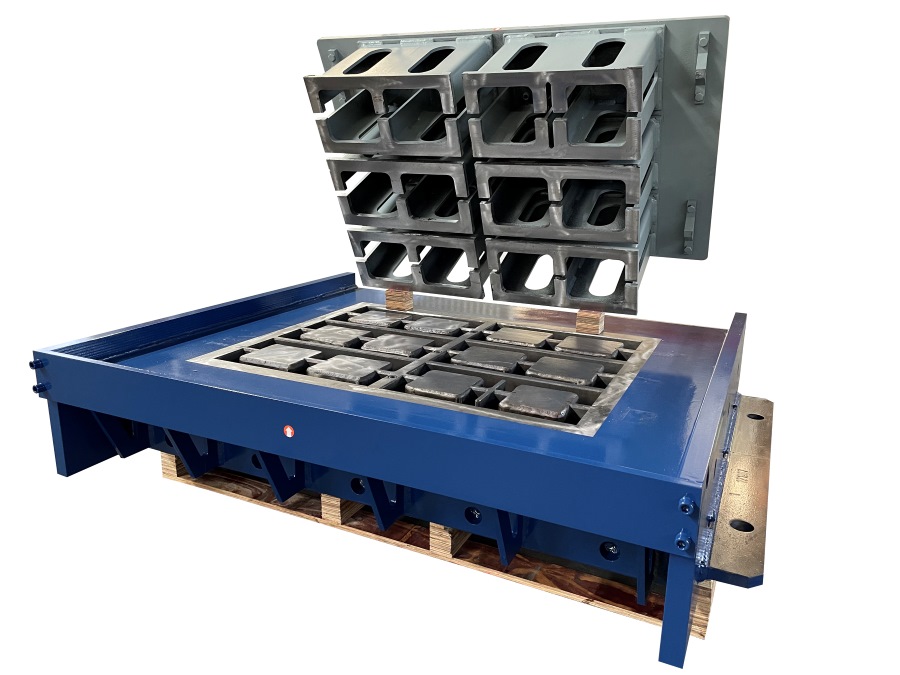
The mold is another key point. Hawen Machinery designs molds compatible with leading block machine brands, including Masa, Hess, Zenith, Poyatos, Besser, Tiger, Columbia, Quadra, and Omag. The molds are manufactured according to original fitting requirements, heat-treated for wear resistance, and checked at HRC59-61 hardness. A precise mold supports clean edges, stable demoulding, and consistent wall thickness, all of which improve handling durability.
Pallets and curing flow
Many breakage problems are caused by poor pallet support. If the pallet bends, twists, or has an uneven surface, fresh blocks are forced to carry stress before they are strong enough. This can create hidden micro-cracks that appear later during stacking or transport. A stable production pallet is not a small accessory. It is part of the quality system.
Pallet condition should be checked regularly. Look for deformation, worn corners, surface contamination, cracked edges, and poor flatness. Blocks should sit fully on the pallet without rocking. If the pallet is dirty or damaged, the bottom surface of the block may form unevenly, and the product can break when lifted later.
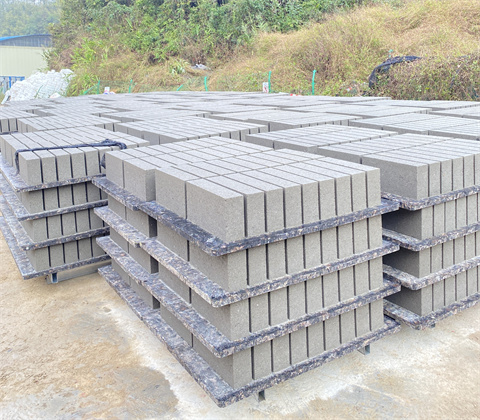
Curing flow must also match the product. Blocks need a controlled environment where moisture loss is not too fast and movement is not too rough. If products are transferred before they have enough early strength, the plant may see more broken webs and chipped corners. If curing space is disorganized, operators may move pallets too many times, increasing the risk of impact damage.
A good curing plan reduces unnecessary handling. The path from the block making machine to the curing area should be clean, short, and predictable. Pallets should be stacked evenly. Forklift routes should avoid sharp turns, sudden braking, and rough ground. A plant that controls curing flow usually sees better product appearance and fewer customer complaints.
Palletizing and clamping control
Palletizing is where small weaknesses become visible. If the block is under-cured, the clamp pressure is too high, or the product layer is misaligned, damage can happen quickly. The solution is to match product strength, clamp surface, gripping pressure, lifting speed, and stacking pattern. The palletizer should handle blocks firmly, but not violently.
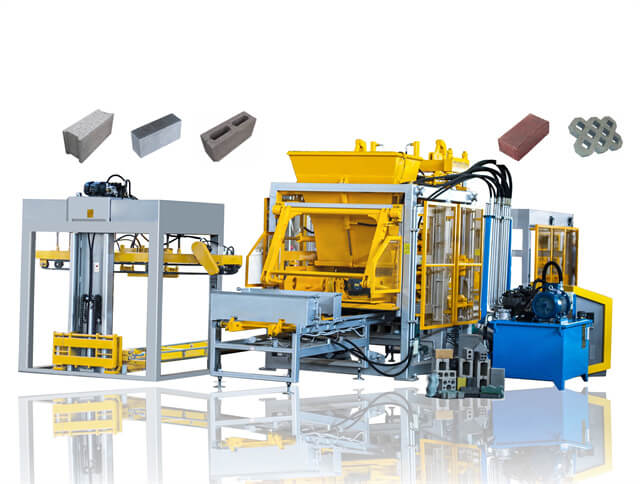
An automatic offline palletizing system can reduce random manual impact and improve stacking consistency. It is especially useful where the plant produces large volumes of hollow blocks, pavers, or solid blocks that need neat packaging for sale. Automation does not remove the need for quality checks, but it makes the handling process more repeatable.
Plants should also check whether the block size, layer arrangement, and palletizing program are matched. A stacking pattern that works for solid blocks may not be suitable for thin-wall hollow blocks. Some products need additional attention at corners and web positions. If the clamp contacts the weakest part of the product, the machine may create breakage even when the block itself is acceptable.
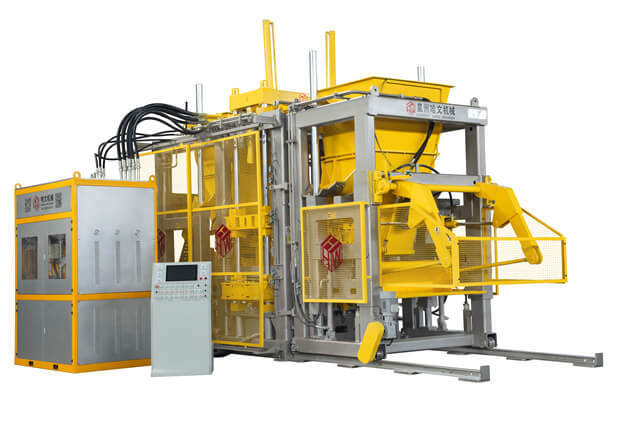
The control system helps keep movement consistent. Hawen Machinery integrates a SIEMENS S7-200 PLC with an intuitive touch panel and remote monitoring capability. Operating status can be observed in real time, and production parameters can be reviewed remotely when adjustment is needed. This helps the brick making machine and auxiliary handling equipment maintain a more stable rhythm.
Transport and yard handling
Transport damage is often caused by vibration, uneven loading, poor packaging, or insufficient product maturity. Before loading, blocks should be stacked in a stable pattern. The base should be flat. Strapping should be tight enough to secure the product, but not so aggressive that it crushes edges. Protective material may be needed for products with visible surfaces, sharp corners, or decorative faces.
Forklift handling should be treated as part of the production process. Operators should lift from the correct position, avoid sudden drops, and keep the load balanced. Yard surfaces should be maintained because rough ground can shake uncured or freshly packed blocks. Truck loading should avoid unsupported overhangs and uneven pressure from other materials.
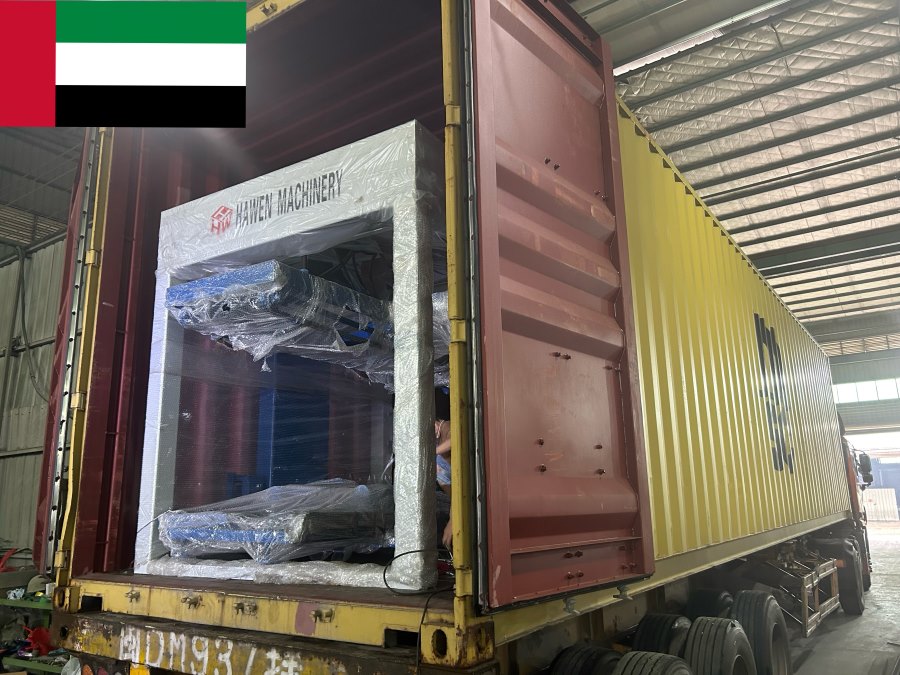
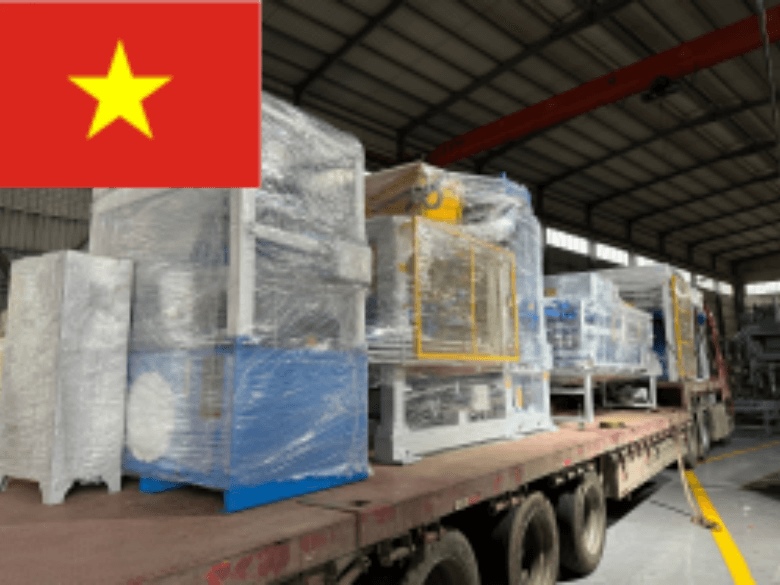
For export or long-distance delivery, packaging deserves more attention. Blocks, pavers, and kerbstones may pass through several handling points before arrival. A clean stacking pattern, proper wrapping, secure loading, and careful container arrangement can prevent many avoidable claims. The cost of better handling is usually lower than the cost of rejected products.
Hawen Machinery solution approach
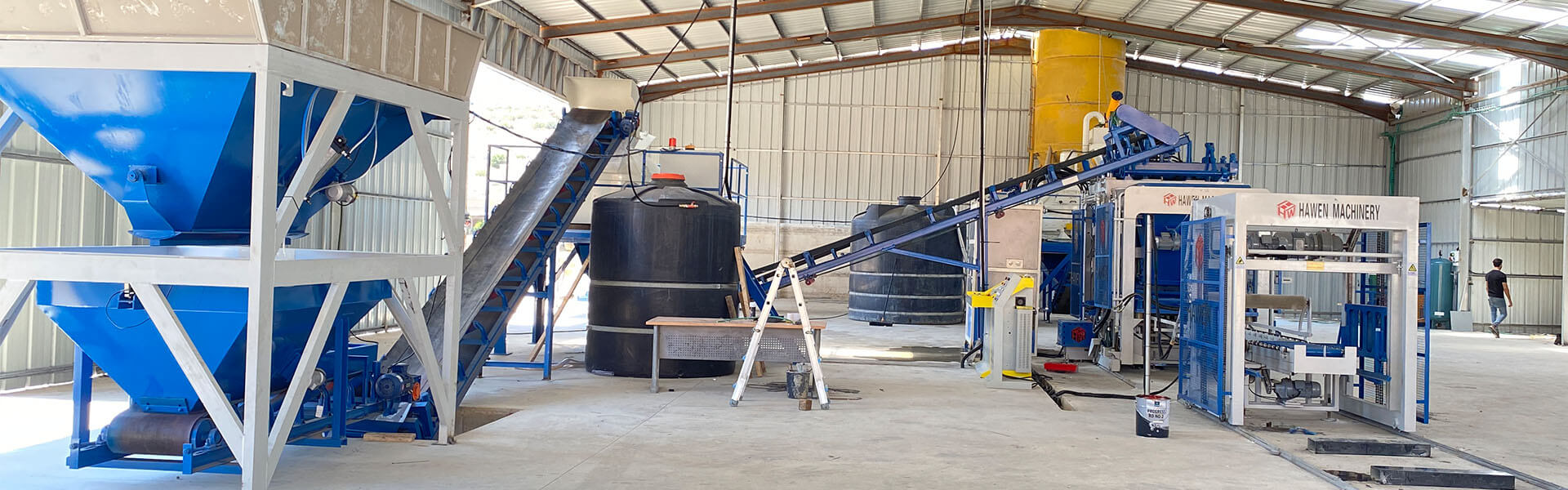
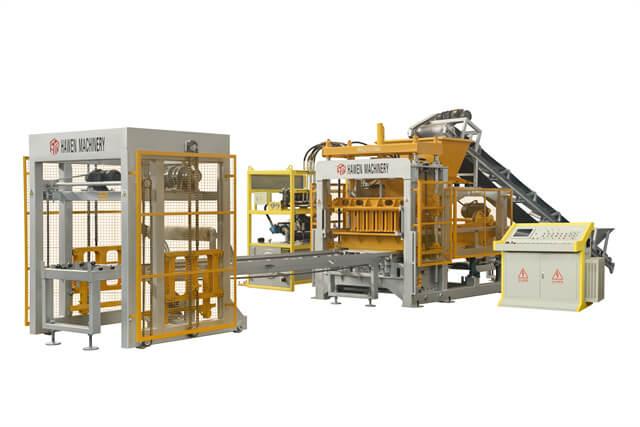
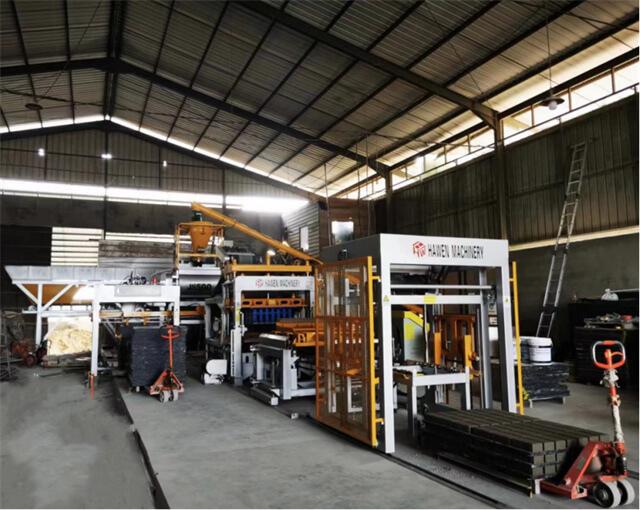
Hawen Machinery looks at breakage control as a complete production system. The block machine, mixer, batching section, mold, pallet system, curing route, and palletizing equipment must work together. If only one part is improved, the plant may still lose products at the next weak point.
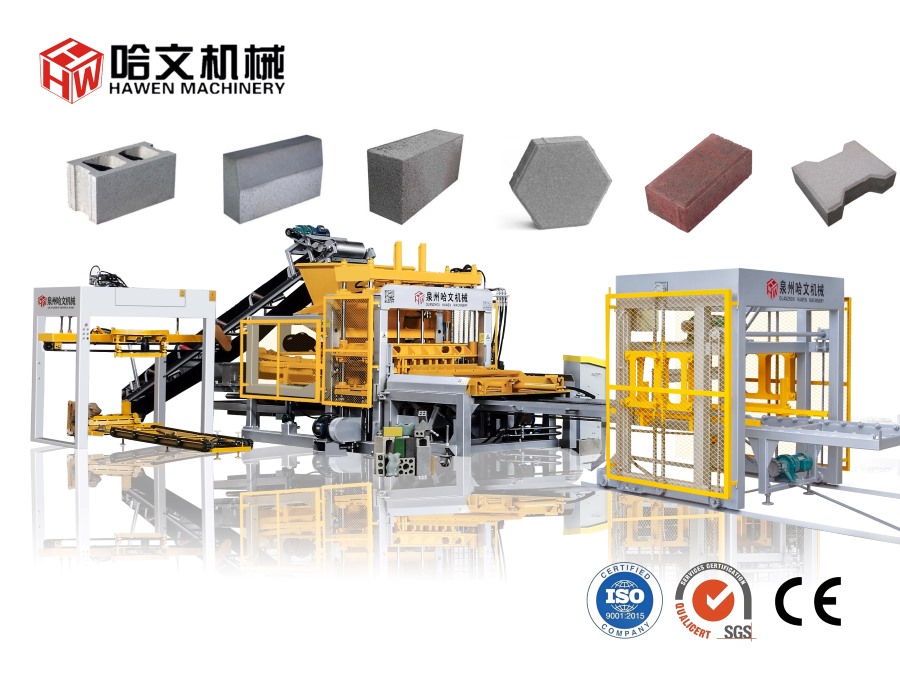
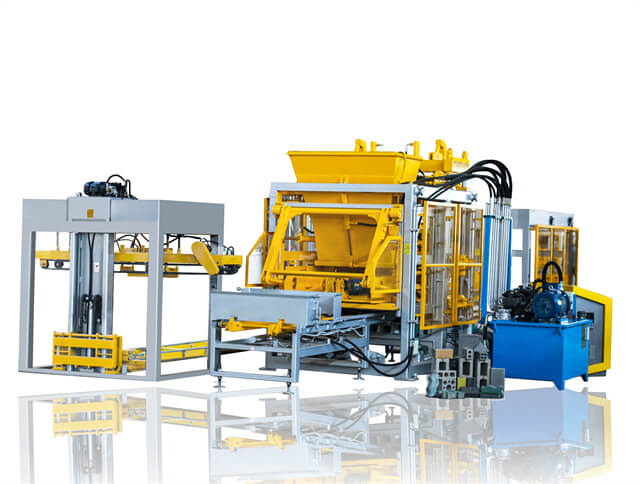
For the main forming machine, Hawen can recommend models such as the QT15 automatic concrete paver block machine, QT4 automatic interlocking paver brick machine, or other configurations according to product size and expected output. The goal is not simply to run fast. The goal is to produce blocks with enough density, edge quality, and dimensional stability for safe handling.
Hydraulic motion control also affects demoulding and product transfer. Hawen block machines use Japanese YUKEN proportional and directional valve components together with an American ALBERT hydraulic pump. This supports accurate movement, steady pressure response, and durable operation under continuous production. Smooth movement reduces shock to the green product and helps prevent avoidable cracking during demoulding.
For customers who produce different products, Hawen can supply or match concrete block moulds, interlocking paver moulds, and curb stone moulds. Matching mold design with the right vibration and material feeding method is one of the most practical ways to reduce edge damage from the beginning.
An automatic pallet provider can further reduce handling disorder by keeping pallet supply steady. When pallets arrive at the right time and in the right position, the brick machine does not need unnecessary stops, and operators do not need to rush manual pallet movement. A calm line is usually a safer line for green products.
Inspection checklist for factory teams
When breakage appears, use a step-by-step inspection instead of guessing. Start from the product and move backward through the process.
Check the breakage position. Broken corners, webs, bottom edges, and surface chips point to different causes.
Review mix condition. Confirm whether moisture, aggregate grading, and cement dosing changed before the problem started.
Inspect mold wear. Worn mold corners or uneven liners can create weak edges before handling begins.
Check vibration and demoulding. Poor compaction or harsh demoulding can reduce early strength.
Inspect pallets. Remove bent, cracked, contaminated, or uneven pallets from production.
Observe curing movement. Count how many times the product is moved before final stacking. Fewer unnecessary moves usually means less damage.
Test palletizer settings. Check clamp pressure, contact position, lifting speed, layer alignment, and release timing.
Review loading practice. Confirm packaging, strapping, forklift route, truck floor condition, and load support.
Concrete block breakage is not solved by one stronger clamp, one thicker pallet, or one slower forklift. It is solved by designing a production rhythm where every step protects the product made by the step before it. When forming is accurate, curing is controlled, pallets are stable, automation is gentle, and transport is disciplined, a block plant becomes more than a place that makes blocks. It becomes a system that carries quality all the way from raw material to the construction site.
FAQ
Why do concrete blocks break after they already look finished?
They may still have low early strength. If moisture, compaction, curing, pallet support, or handling is not controlled, hidden weakness can become visible during stacking or transport.
Does a palletizer cause block breakage?
It can, but it is not always the root cause. Check clamp pressure, contact position, product maturity, stacking pattern, and whether the block already had weak corners before palletizing.
Can better pallets reduce broken blocks?
Yes. Flat, clean, stable pallets help support green products evenly. Bent or dirty pallets can create stress points that later lead to cracks or broken edges.
How does mold quality affect transport damage?
A precise mold helps form consistent walls, clean edges, and stable dimensions. If the product begins with uneven thickness or weak corners, transport damage becomes more likely.
Should forklift operators wait longer before moving fresh blocks?
They should follow the curing and handling procedure set for the product. Moving blocks too early increases risk, especially for hollow blocks, thin products, or products with decorative surfaces.
What should I check first when breakage increases suddenly?
Start with recent changes: raw material moisture, mix design, mold condition, vibration setting, pallet condition, curing time, palletizer program, and forklift route.
Can Hawen Machinery design a line to reduce handling damage?
Yes. Hawen Machinery can match the block making machine, molds, pallets, curing flow, pallet provider, and palletizing system so the product is protected from forming to final handling.





 Tel: +86-13905968794
 Email: export@hwmachines.com
 MP/WhatsApp: +86-13905968794
 Manufacturer Address:Nanan,Quanzhou City,Fujian Province,China