When concrete blocks stick to the mold, the problem can appear small at first. A few corners pull away, the block surface looks rough, the machine pauses during demoulding, or the operator needs to clean the mold more often than usual. If the issue continues, it can reduce output, increase waste, damage product edges, overload the hydraulic system, and make the whole block machine line unstable.
Mold sticking is not caused by one single factor. It can come from wet material, poor aggregate grading, weak vibration, rough mold wear, unstable hydraulic movement, pallet deformation, low green strength, or incorrect timing in the control system. This guide explains how to diagnose the cause and how to fix it in a practical order for hollow blocks, solid bricks, pavers, kerbstones, and other dry-cast concrete products.
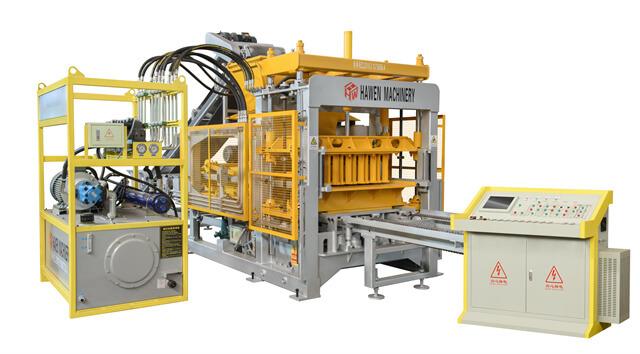
Diagnose the Sticking Pattern First
Mold sticking is a process signal
A concrete block sticking to the mold is a signal from the production process. Before changing pressure or adding more cement, the operator should observe the sticking pattern. Does the block stick on one side only? Does it stick after a product change? Does the problem appear when the material becomes wetter? Does it happen only with pavers, kerbstones, or hollow blocks?
The location of the defect matters. Sticking at the top surface may point to tamper-head contamination or wet material. Sticking along the side wall may point to mold wear, rough surfaces, or poor release movement. Broken bottom edges may involve pallet flatness, vibration, or low green strength. A good diagnosis saves time because the factory does not start adjusting every setting at once.
Factory note: Do not solve sticking by increasing hydraulic pressure first. Higher pressure can hide the symptom for a short time, but it may also stress the mold, cylinder, guides, and fresh product.
| Observed symptom | Likely area | First check |
|---|
| Top material sticks to tamper head | Moisture, fine materials, cleaning, surface mix | Check water addition and material condition |
| Side wall pulls or tears during release | Mold wear, rough surface, demoulding movement | Inspect mold cavity and guide alignment |
| Corners chip at demoulding | Green strength, vibration, pallet support, mold edge | Check compaction and product support |
| Sticking appears after product change | Recipe, vibration timing, mould fit, settings | Compare previous recipe and machine parameters |
Material moisture and mix consistency
Moisture is often the first cause to check. If the mix is too wet, it can smear inside the mold cavity and stick to the tamper head. If the mix is too dry, it may not compact enough, so the green block lacks cohesion and tears during release. Both conditions can look like a mold problem even when the real cause is material control.
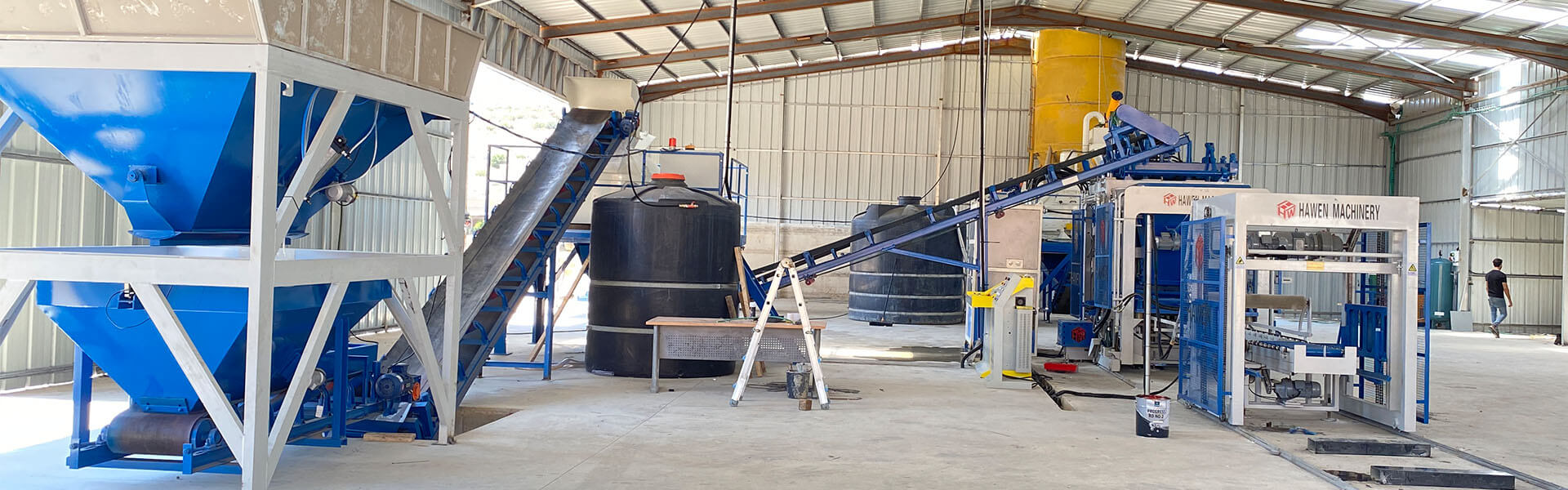
The batching machine in block making should dose aggregate, cement, and water consistently. A stable cement silo in block making also matters because irregular cement discharge can change batch behavior. Operators should record water adjustments, raw material moisture, and product behavior instead of relying only on visual judgment.
When a brick machine produces good blocks in the morning and sticky blocks in the afternoon, the cause may be changing sand moisture, hot weather, rain exposure, or inconsistent aggregate storage. The right solution is process control, not random pressure adjustment.
Aggregate grading and fine materials
Aggregate grading affects release behavior. Too many fines can increase water demand and create a paste-rich surface that sticks to mold walls. Too much coarse material can cause poor cavity filling and weak corners. The mix should pack tightly while still allowing the block making machine to fill and compact each cavity evenly.
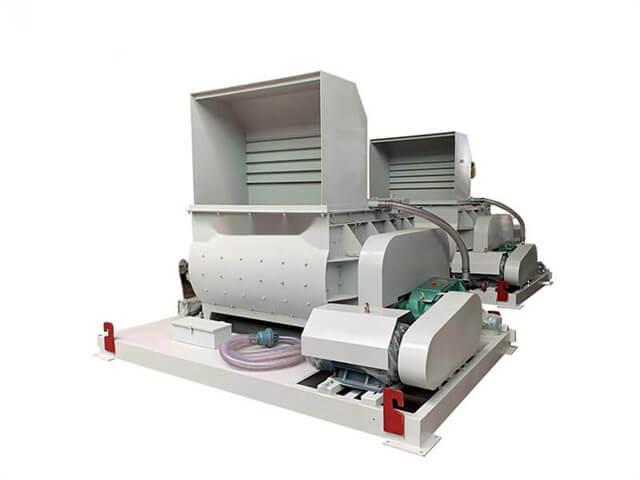
A suitable concrete mixer helps distribute cement, water, fine material, and aggregate uniformly. For pavers or visible-face products, a planetary concrete mixer can support more even material distribution. For larger production capacity, a twin-shaft concrete mixer may be selected according to layout and batch demand.
Machine Settings That Affect Demoulding
Vibration setting and cavity filling
Vibration affects both compaction and release. If vibration is too weak, the product may be loose and tear when the mold lifts. If vibration is too aggressive or poorly timed, material can segregate, the surface can become unstable, or product edges can suffer. The operator should adjust feeding time, vibration time, and pressing behavior according to the product type.
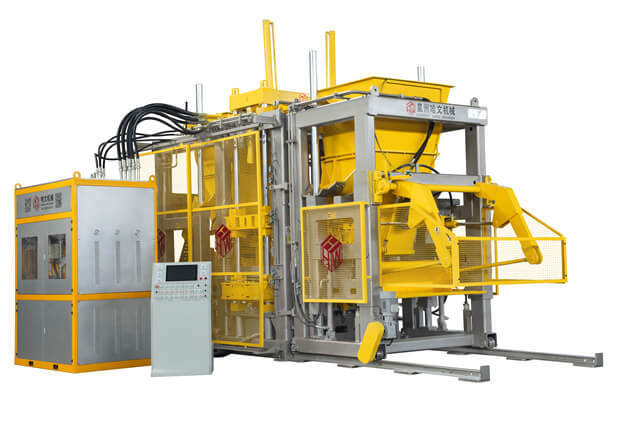
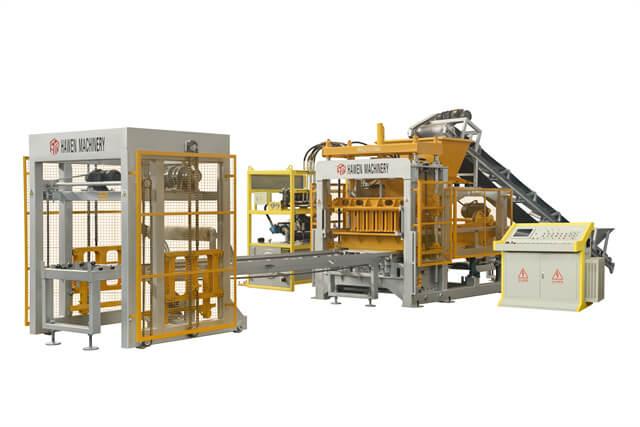
HAWEN Machinery adopts a four-shaft vibration box design with eccentric blocks arranged outside the housing. This structure reduces vibration resistance, supports uniform compaction, and helps lower unnecessary cement compensation while improving efficiency. For demoulding, uniform compaction is important because weak zones are more likely to stick, crack, or pull away.
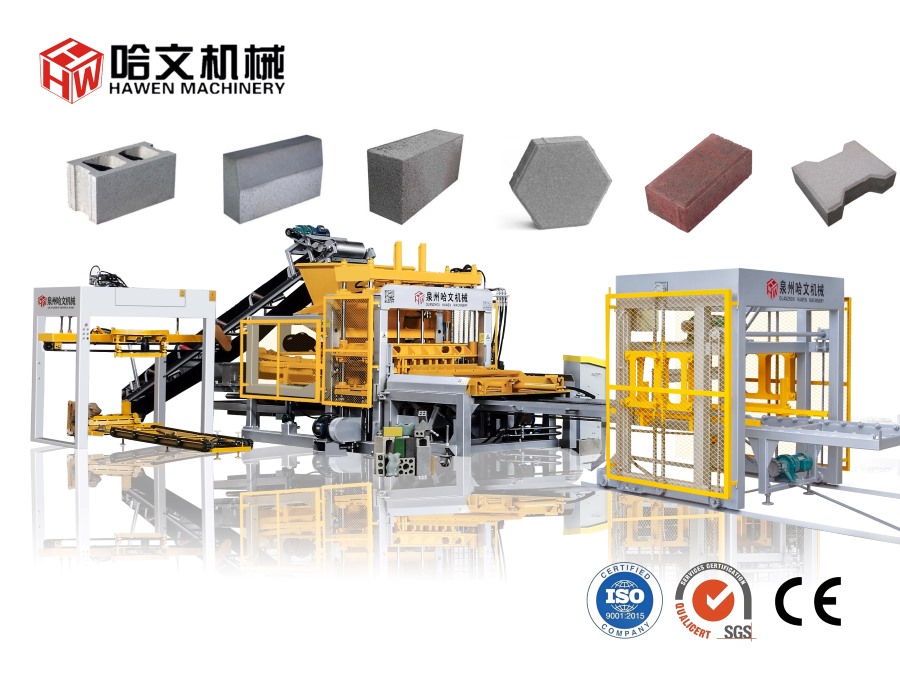
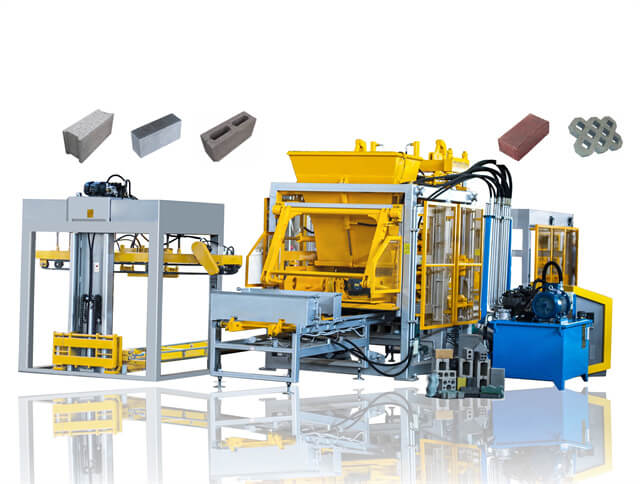
Hollow blocks, solid bricks, pavers, and kerbstones should not use the same vibration logic. A dense paver may need stronger compaction than a hollow block, while a long curb stone may need stable filling along the full mould length. A reliable automatic concrete paver block machine should allow practical parameter adjustment for different products.
Hydraulic demoulding and movement control
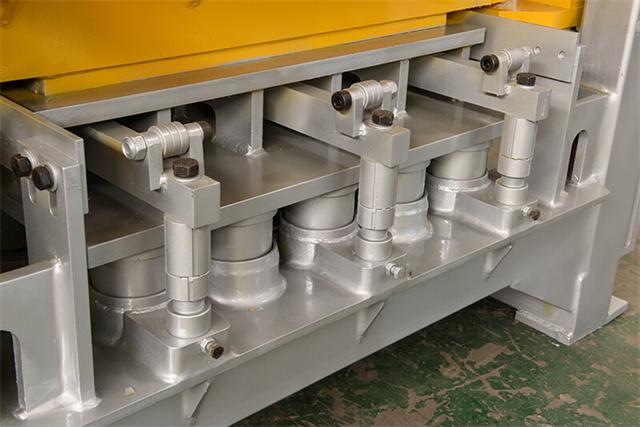
Hydraulic movement must be smooth and repeatable. During demoulding, the mold, tamper head, pallet, and fresh product must separate without shock or twisting. If the hydraulic movement is unstable, the product may drag against the mold wall. If the cylinder movement is delayed or uneven, one side of the product may release before the other side.
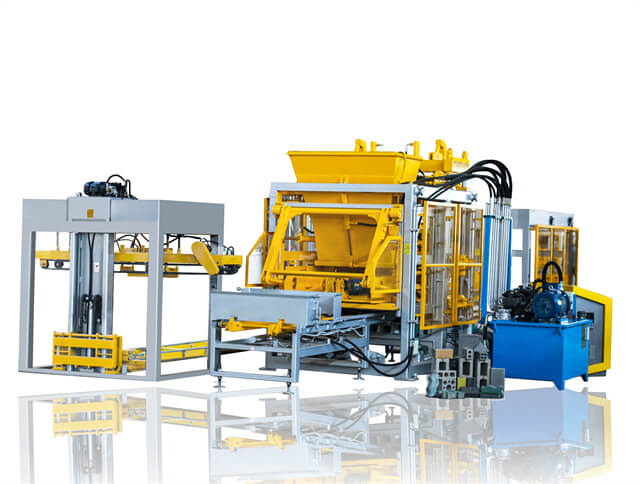
HAWEN Machinery equips its hydraulic station with Japanese YUKEN proportional and directional valves and an American ALBERT hydraulic pump. The system is designed for precise control, strong load response, and long-term durability under repeated production cycles. For the factory, the practical benefit is smoother movement during pressing and demoulding.
When sticking appears during release, check oil level, oil temperature, filters, leakage, valve response, cylinder travel, and guide wear. A hydraulic issue can look like a mold issue because both affect how the product separates from the cavity.
Mold wear surface condition and fit
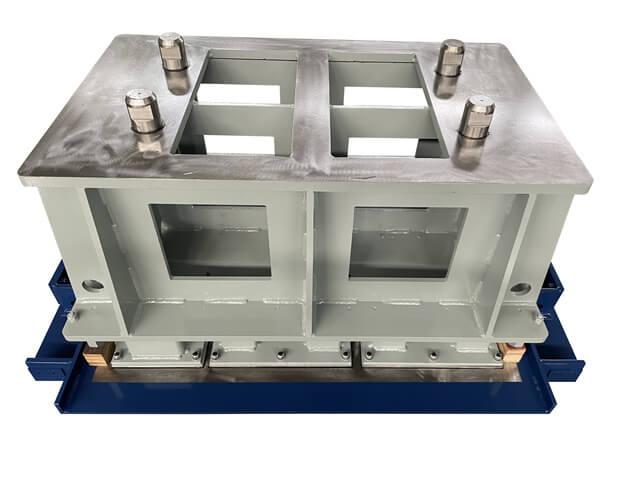
The mold surface should allow material to form cleanly and release smoothly. Rough cavity walls, damaged liners, worn corners, loose parts, poor alignment, and incorrect product clearances can all increase sticking. Cleaning is important, but cleaning alone cannot fix a worn or inaccurate mold.
HAWEN Machinery designs molds compatible with leading block machine brands, including Masa, Hess, Zenith, Poyatos, Besser, Tiger, Columbia, Quadra, and Omag. These molds follow original specifications for precise fit, smooth operation, and consistent product quality across platforms. Heat treatment improves wear resistance, and hardness is checked at HRC 59-61.
A hollow block mould, concrete block mould, or interlocking paver mould should be inspected with the product drawing. If the product geometry has drifted, the brick making machine may still run, but demoulding quality will gradually become worse.
Support Systems That Prevent Sticking
Pallet flatness and product support
The production pallet supports the fresh block immediately after demoulding. If the pallet is bent, dirty, damaged, too thin, or mismatched to the product weight, the fresh block may deform during release. This deformation can be mistaken for sticking because the product edge fails at the same time the mold lifts.
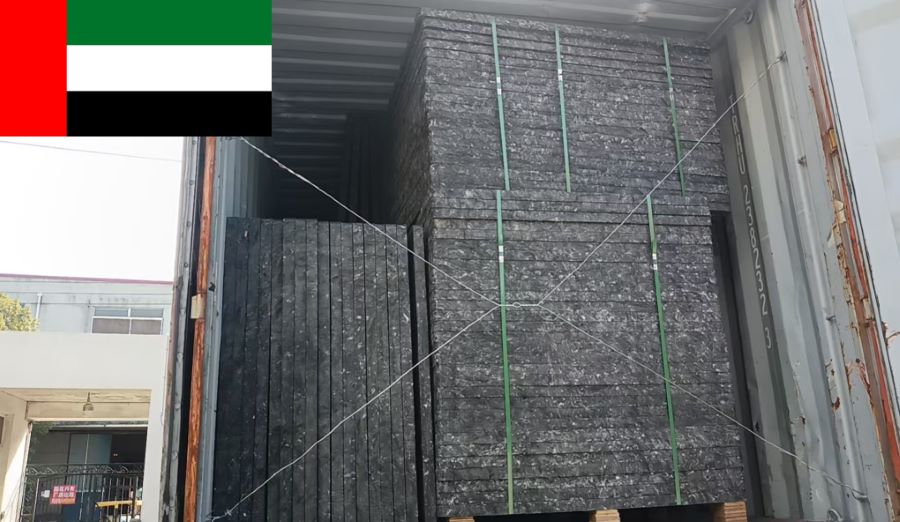
A stable GMT pallet can help support fresh products during transfer and curing when its size and stiffness match the machine. The factory should inspect pallet flatness, surface cleanliness, guide alignment, and replacement timing. Paver and kerbstone production usually requires more attention to pallet support than simple low-value blocks.
If an automatic pallet provider is used, the pallet must arrive in the correct position every cycle. A slight position error can affect mould filling, product support, and demoulding behavior.
Control system timing and repeatability
Demoulding is controlled by timing and signals. Feeding, vibration, pressing, mold lifting, tamper movement, pallet transfer, and alarm protection must follow the correct sequence. If one sensor is delayed, one movement is incomplete, or one parameter is changed without record, the machine may produce sticking only on certain cycles.
HAWEN Machinery integrates a Siemens S7-200 PLC with an intuitive touch panel and remote monitoring capability. Through this control system, the real-time operating status of the block machine can be tracked, parameters can be optimized remotely, and production quality can remain more consistent. This is valuable when troubleshooting sticking because the factory can compare alarm history, cycle timing, and product results.
A smaller cement paver brick production machine and a larger automatic line both need repeatable settings. The difference is not whether control matters. The difference is how much production loss happens when settings are unstable.
Step-by-step factory fix plan
The best fix plan is ordered. First observe the sticking pattern. Then check material moisture and aggregate grading. After that, inspect mixing uniformity, mold cleanliness, pallet flatness, vibration setting, hydraulic movement, and control timing. Changing everything at once makes it impossible to know what actually solved the problem.
Troubleshooting note: If sticking appears only with one product, focus on that mould, recipe, pallet support, and vibration setting. If sticking appears across all products, check material moisture, batching accuracy, hydraulic movement, and general machine timing.
| Step | Action | Expected result |
|---|
| 1 | Record product, cycle position, and sticking location | Separates material, mould, and machine movement causes |
| 2 |





 Tel: +86-13905968794
 Email: export@hwmachines.com
 MP/WhatsApp: +86-13905968794
 Manufacturer Address:Nanan,Quanzhou City,Fujian Province,China