A Step-by-Step Guide to Starting a Concrete Block Business
Author:HAWEN Block MachineFROM:Brick Production Machine Manufacturer
TIME:2026-05-15
The global demand for concrete blocks continues to expand alongside urbanization, infrastructure development, and affordable housing projects. From residential construction to municipal engineering, concrete masonry products remain indispensable in both emerging and mature markets.
For many entrepreneurs, the concrete block business appears deceptively simple. The assumption is often straightforward: purchase a block machine, hire several workers, and begin production immediately.
Reality, however, is considerably more complex.
A successful concrete block factory depends not only on equipment investment, but also on market positioning, raw material management, production stability, operational discipline, and long-term planning. Many startups fail not because the market lacks demand, but because the production system lacks structure.
This step-by-step guide explains how to establish a sustainable and profitable concrete block manufacturing business from both a technical and commercial perspective.
Step 1. Study the Local Construction Market Carefully
Before purchasing any brick making machine, the first task is understanding local market demand.
Different regions prioritize different products:
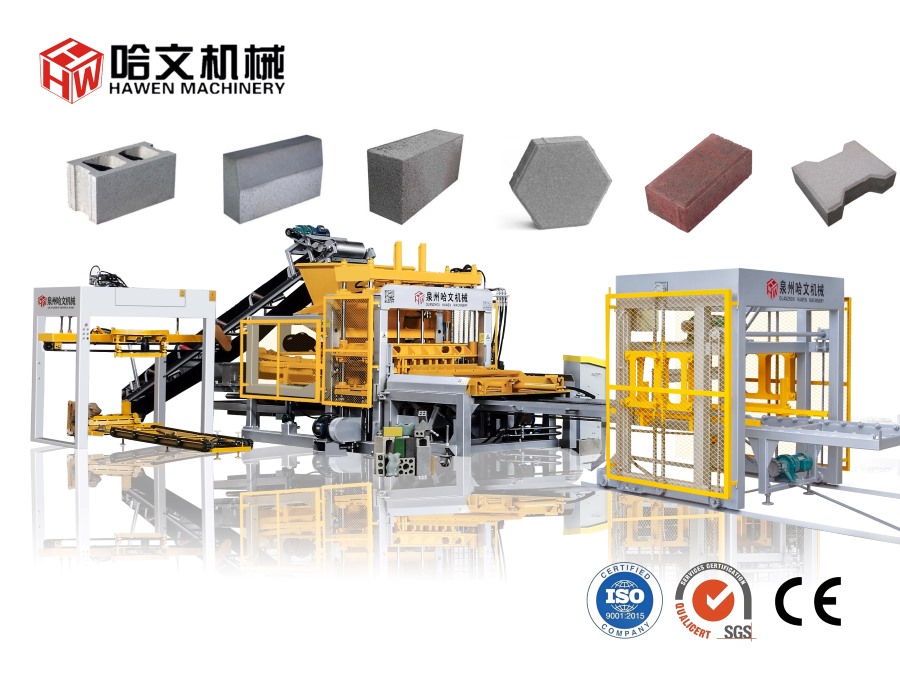
Hollow blocks for residential walls
Solid bricks for load-bearing structures
Pavers for municipal landscaping
Curbstones for road infrastructure
Interlocking blocks for low-cost housing projects
Many beginners purchase a block making machine without clearly identifying which products sell consistently in their target region.
A proper market study should include:
Local construction trends
Competitor pricing
Common block specifications
Daily market demand volume
Cement and aggregate availability
Transportation distance to construction sites
A factory located near stable construction activity usually possesses stronger long-term viability than one relying solely on speculative demand.
Step 2. Determine Your Investment Scale
Not every factory requires a fully automatic production line initially.
The correct investment scale depends on:
Available capital
Local labor cost
Electricity conditions
Production targets
Market maturity
For smaller startups, semi-automatic brick machine systems may offer lower financial risk during the early stage.
Larger markets with stable demand may justify investment in fully automatic block machine production lines equipped with batching systems, conveyors, stackers, and automatic cubing systems.
The key principle is scalability.
An overly small investment may restrict future expansion, while excessive investment can create unnecessary financial pressure before stable sales channels are established.
Step 3. Choose the Right Block Machine Configuration
The equipment selection stage directly influences production efficiency, maintenance cost, and future competitiveness.
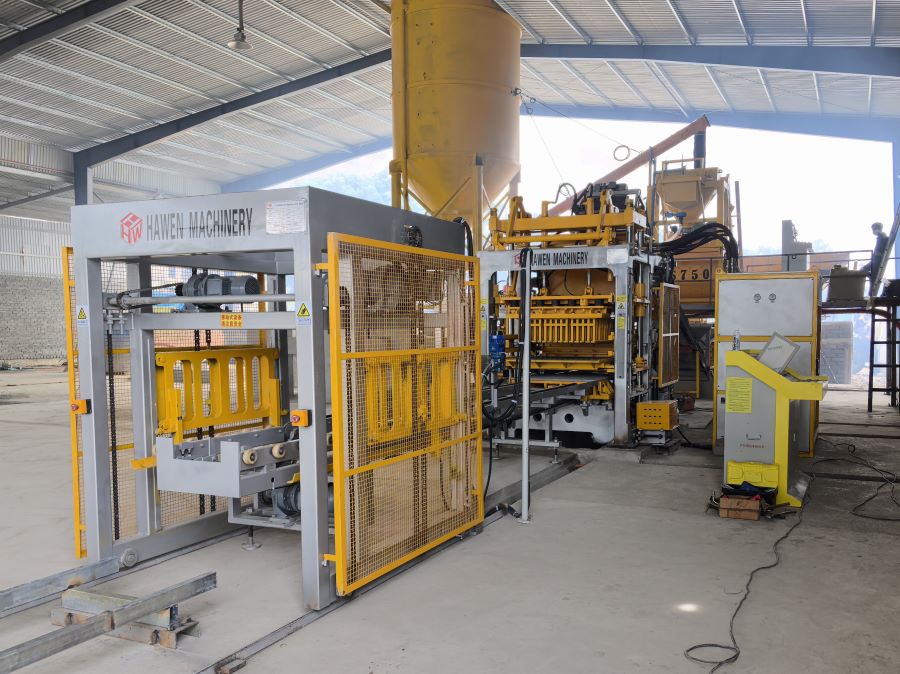
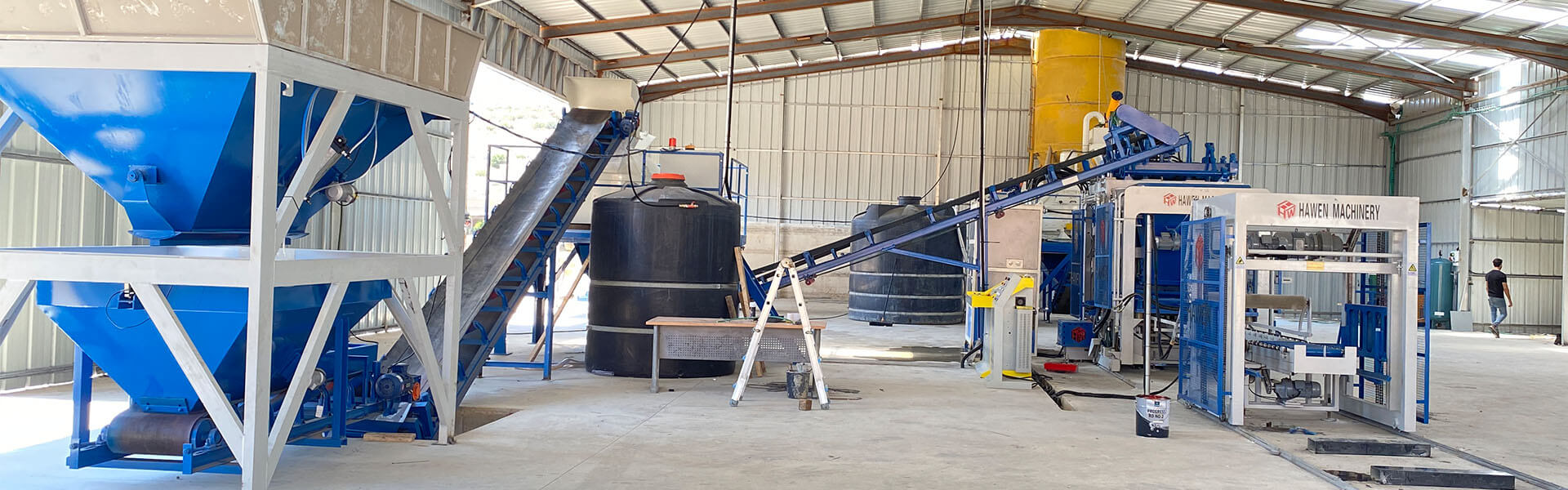
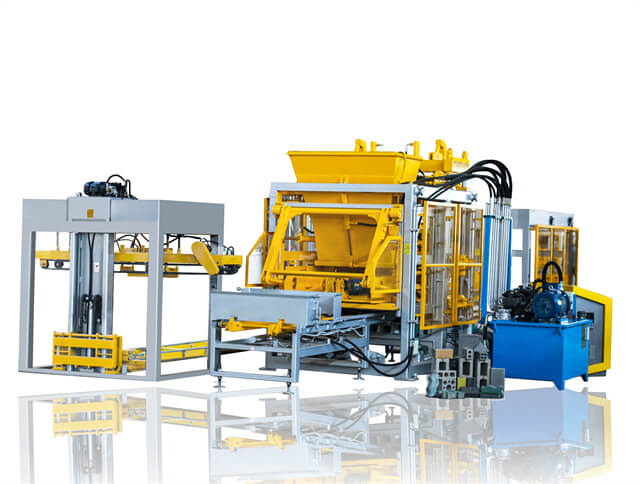
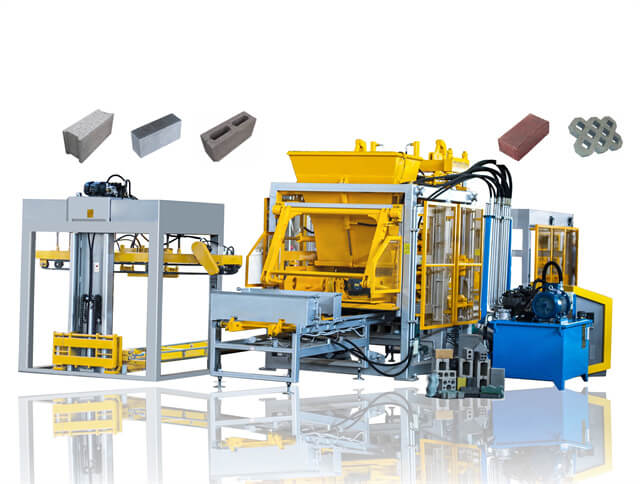
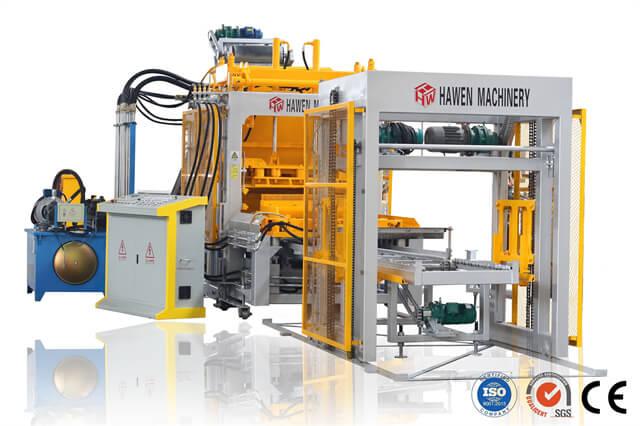
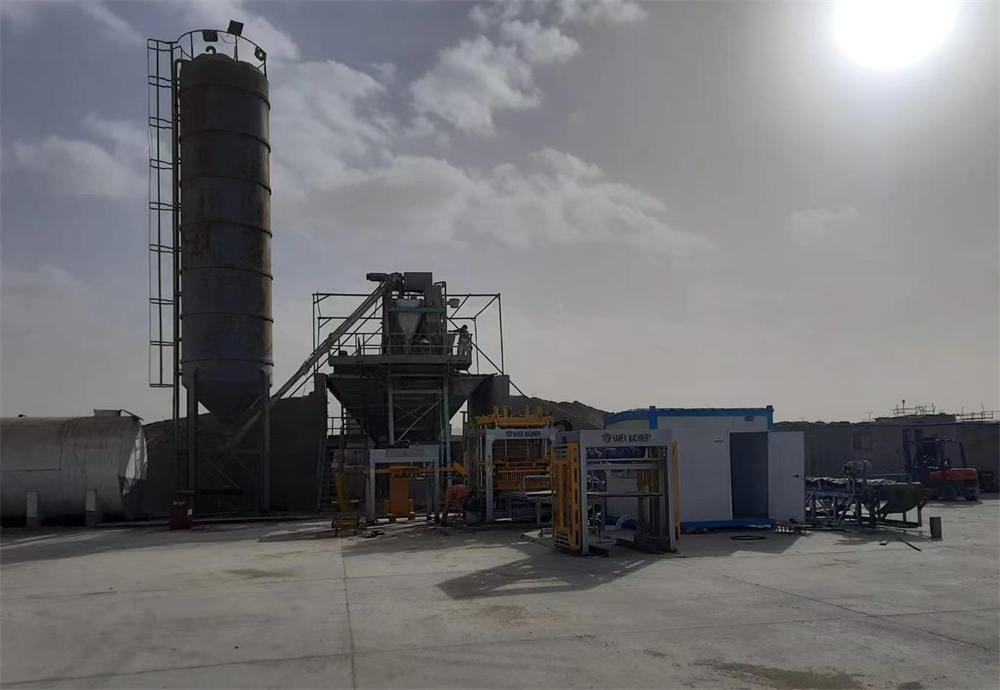
A complete concrete block production system typically includes:
Batching machine
Concrete mixer
Belt conveyor
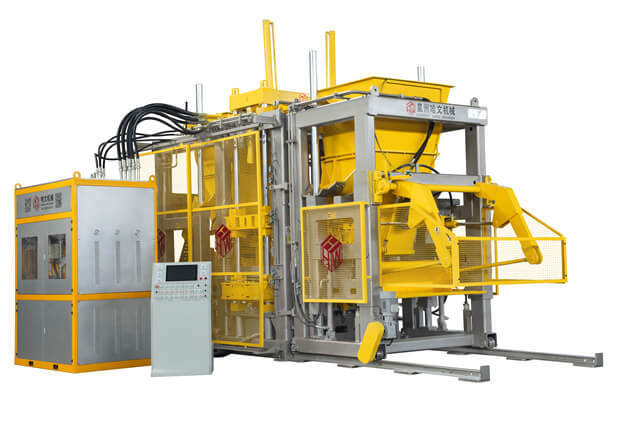
Block machine
Hydraulic station
PLC control system
Pallet feeding system
Stacker or cubing system
Moulds for different block types
Many inexperienced buyers focus exclusively on machine price while overlooking configuration quality.
In industrial production, component reliability matters enormously.
At Hawen Machinery, hydraulic systems integrate internationally recognized components such as Japanese YUKEN proportional valves and durable ALBERT hydraulic pumps from the United States. This configuration improves hydraulic precision, operational stability, and long-term durability under continuous production conditions.
For high-temperature operating environments, optional oil cooling systems help maintain hydraulic oil stability and reduce overheating risks.
Reliable hydraulic coordination is essential for stable block production cycles.
Step 4. Pay Attention to Vibration Technology
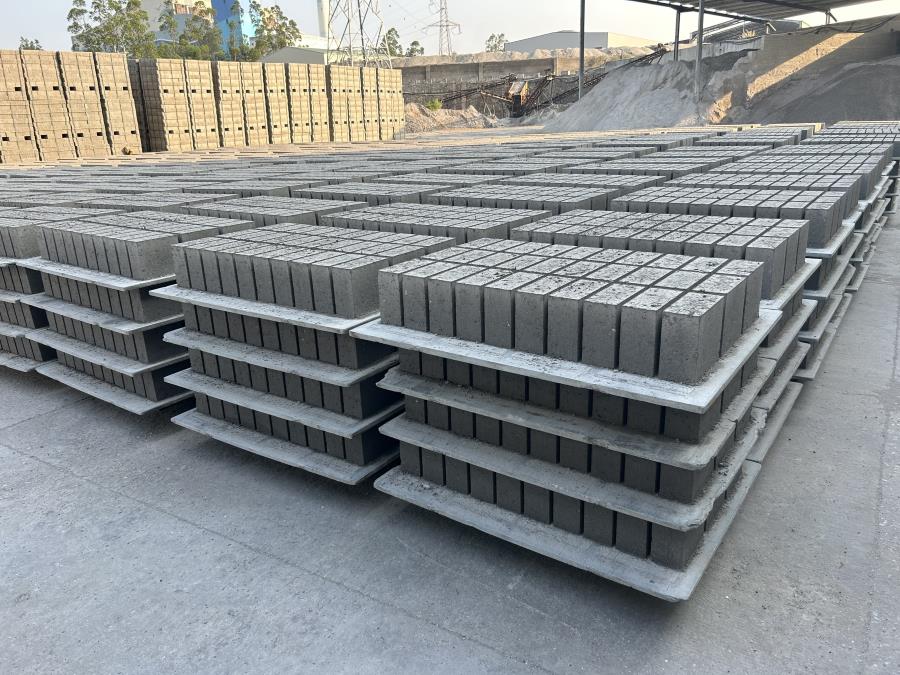
Vibration performance determines block density, compressive strength, and overall production efficiency.
Poor vibration systems often cause:
Weak concrete blocks
Inconsistent dimensions
Excessive cement consumption
Structural cracking
Unstable machine operation
Hawen Machinery adopts a four-shaft vibration box design with eccentric blocks mounted outside the vibration housing. This structural arrangement reduces operational resistance during vibration, improves force transmission efficiency, and ensures more uniform compaction throughout the mould cavity.
As a result:
Block density becomes more consistent
Cement utilization improves
Machine wear is reduced
Production stability increases
For any block making machine, vibration quality is one of the most decisive indicators of long-term performance.
Step 5. Select High-Quality Moulds
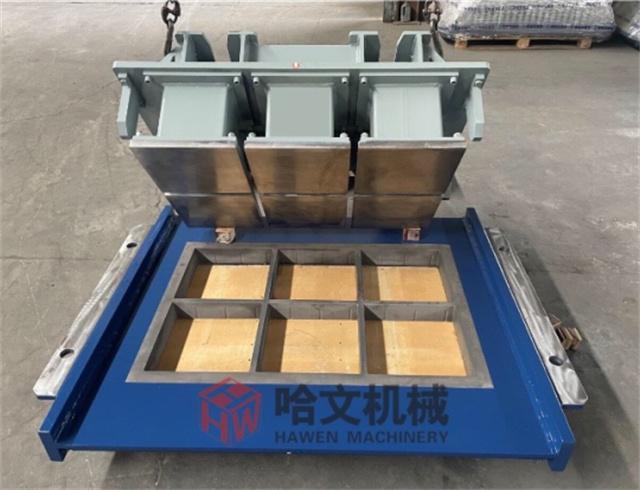
Mould quality directly influences block appearance, dimensional accuracy, and service life.
Low-quality moulds frequently cause:
Edge damage
Uneven block dimensions
Difficult demoulding
Excessive machine vibration
Increased maintenance costs
Hawen Machinery manufactures moulds compatible with leading international block machine brands including Masa, Hess, Zenith, Poyatos, Besser, Tiger, Columbia, Quadar, Omag, and others.
By following original technical specifications, the moulds ensure:
Precise fitment
Smooth operational coordination
Stable vibration transmission
Consistent product quality across different platforms
All moulds undergo professional heat treatment procedures to improve wear resistance. Surface hardness is carefully tested within the HRC 60–62 range, balancing durability with structural toughness.
In practical production environments, mould precision often determines whether a factory achieves stable profitability or continuous operational interruptions.
Step 6. Establish Stable Raw Material Management
Even the most advanced brick machine cannot compensate for poor raw material control.
Factories should establish consistent standards for:
Aggregate grading
Cement quality
Moisture content
Water supply
Material storage conditions
Unstable materials frequently result in:
Cracking
Color inconsistency
Low compressive strength
Production interruptions
Long-term production stability depends heavily on disciplined material management.
Note: Many block quality problems originate in the raw material yard rather than inside the machine itself.
Step 7. Implement Intelligent Control Systems
Automation significantly improves production consistency and reduces dependence on operator experience.
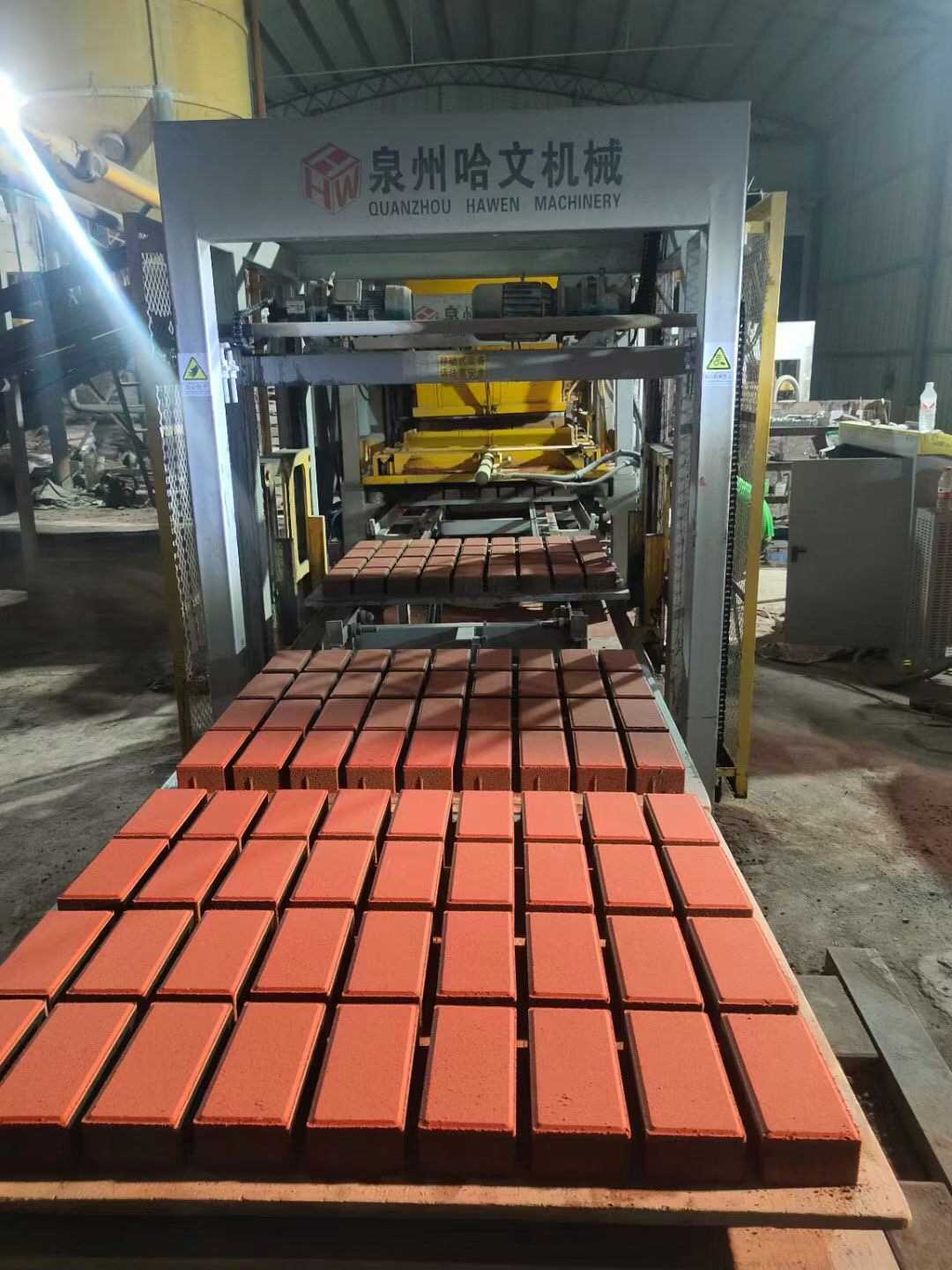
Hawen Machinery integrates a SIEMENS S7-200 PLC control system with a user-friendly touch panel and remote monitoring functionality. Through this intelligent platform, operators can monitor real-time machine conditions, optimize operational parameters remotely, and maintain stable production quality.
This intelligent control architecture improves:
Production efficiency
Fault diagnosis speed
Operational consistency
Maintenance management
Energy utilization
Modern concrete block production increasingly depends on data coordination rather than purely manual operation.
Step 8. Train Operators and Standardize Procedures
Many startup factories underestimate the importance of operator training.
Even advanced block machine systems can suffer from:
Incorrect parameter settings
Poor maintenance habits
Improper vibration adjustment
Unstable material feeding
Hydraulic misuse
Clear operational standards help reduce human error and improve equipment lifespan.
Factories with disciplined management structures usually achieve higher product consistency and lower long-term maintenance costs.
Step 9. Build Reliable Sales Channels
Production capacity alone does not guarantee business success.
A sustainable concrete block business requires stable customer networks, including:
Construction contractors
Real estate developers
Municipal projects
Material distributors
Local builders
Many startups fail not because their concrete blocks are poor, but because their market channels remain underdeveloped.
In practical business terms, sales stability is just as important as production stability.
Conclusion
Starting a concrete block business is not simply about purchasing a brick making machine and producing masonry units. It is about building an integrated manufacturing system capable of balancing engineering precision, operational discipline, market demand, and long-term efficiency.
The factories that survive and expand are rarely those pursuing the lowest initial investment. More often, they are the ones focusing on stable production quality, reliable equipment performance, disciplined management, and sustainable customer relationships.
In the concrete products industry, success is built gradually—through thousands of production cycles, countless operational decisions, and continuous process optimization.
Because a concrete block factory is more than a manufacturing site.
It is a place where raw materials are transformed into infrastructure, where machinery becomes productivity, and where disciplined engineering quietly shapes the physical foundation of cities, roads, homes, and communities.
And behind every successful block business lies the same enduring principle:
Long-term strength is never created by shortcuts. It is built layer by layer, cycle after cycle, with consistency, precision, and trust.
FAQ
1. What is the minimum equipment needed to start a concrete block business?
A basic setup usually includes a mixer, block machine, moulds, pallets, and curing space. Additional automation depends on production scale and budget.
2. Should beginners choose a manual, semi-automatic, or fully automatic block machine?
This depends on local labor cost, budget, and market demand. Semi-automatic systems are often suitable for startups seeking balanced investment and production efficiency.
3. Why are mould quality and heat treatment important?
Heat-treated moulds with proper hardness improve wear resistance, dimensional accuracy, and long-term production stability.
4. How important is PLC automation in block production?
PLC systems improve operational coordination, reduce human error, and enhance production consistency in modern block manufacturing.
5. What is the biggest mistake new block factories make?
Many beginners focus only on machine price while overlooking raw material management, market research, operator training, and long-term operational planning.





 Tel: +86-13905968794
 Email: export@hwmachines.com
 MP/WhatsApp: +86-13905968794
 Manufacturer Address:Nanan,Quanzhou City,Fujian Province,China