Introduction: Beyond Cement and Aggregate
In modern concrete block manufacturing, achieving high strength is no longer dependent solely on cement content or aggregate quality. Instead, carefully selected additives—often referred to as admixtures—play a decisive role in enhancing mechanical performance, durability, and production efficiency.
These additives operate at the microstructural level, modifying hydration kinetics, pore structure, and particle interaction. As a result, manufacturers can produce stronger, denser blocks while simultaneously reducing material consumption and operational costs.
1. Water-Reducing Admixtures: Enhancing Strength Without Excess Cement
Water-reducing agents, particularly plasticizers and superplasticizers, are among the most widely used additives in high-strength block production. Their primary function is to improve workability while lowering the water-to-cement ratio.
A lower water content leads to reduced porosity after curing, which directly translates into higher compressive strength and improved durability.
Note: In block production, controlling water content is often more effective than increasing cement dosage, especially when combined with efficient compaction systems.
2. Mineral Admixtures: Refining the Internal Structure
Mineral additives such as fly ash, silica fume, and ground granulated blast furnace slag (GGBS) are commonly incorporated to enhance long-term strength and durability.
Fly ash improves workability and contributes to secondary hydration reactions.
Silica fume significantly refines pore structure, leading to higher density and strength.
GGBS enhances durability and resistance to chemical attack.
These materials act as micro-fillers, occupying voids within the concrete matrix and promoting a more compact internal structure.
Annotation: The pozzolanic reaction of these materials is critical in forming additional calcium silicate hydrate (C-S-H), the primary source of concrete strength.
3. Air-Entraining Agents: Controlled Durability Enhancement
Although primarily used in environments exposed to freeze-thaw cycles, air-entraining agents can also contribute to durability by introducing microscopic air voids. These voids relieve internal stress and improve resistance to environmental damage.
However, excessive air content can reduce compressive strength, so precise dosage is essential.
4. Accelerators and Retarders: Controlling Hydration Timing
Chemical accelerators are used to speed up early strength development, particularly in cold climates or when rapid demolding is required. Conversely, retarders slow down the setting process, allowing more time for handling and forming in hot conditions.
These additives enable manufacturers to adapt production cycles to environmental conditions without compromising quality.
5. Integral Water Repellents: Enhancing Durability
Water-repellent additives reduce the permeability of concrete blocks by modifying capillary absorption. This improves resistance to moisture penetration, efflorescence, and long-term degradation.
For construction applications where durability is critical, such additives significantly extend the service life of concrete blocks.
6. Additives and Machinery: A Critical Synergy
While additives improve the intrinsic properties of concrete, their effectiveness depends heavily on production technology. Proper mixing, compaction, and forming are essential to fully realize their benefits.
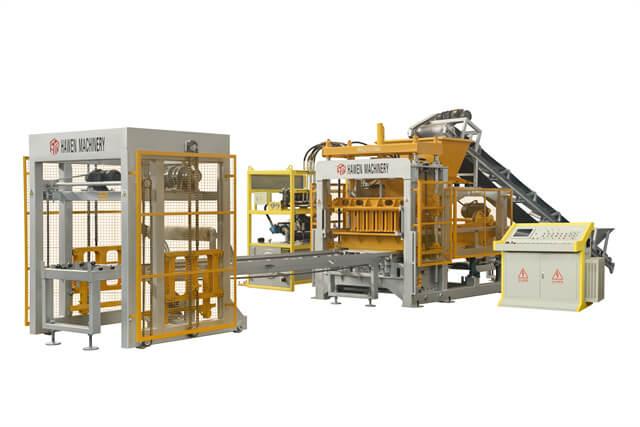
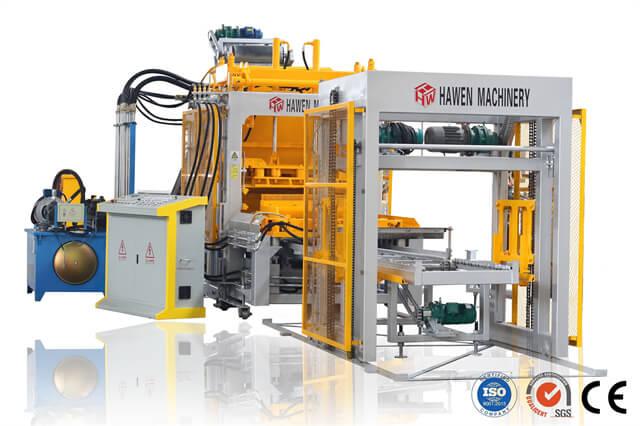
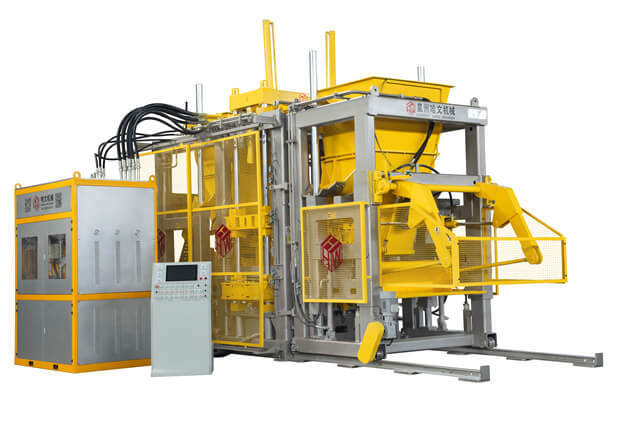
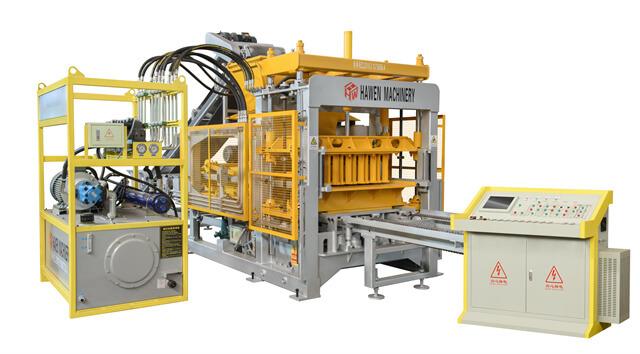
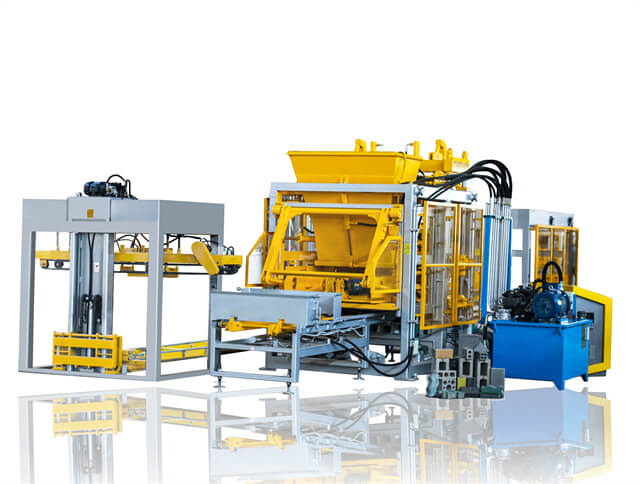
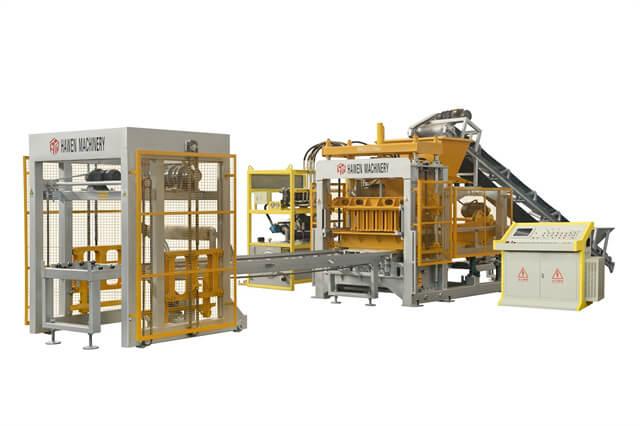
Hawen Machinery adopts a four-shaft vibration box design, with eccentric blocks arranged outside the housing. This configuration reduces vibration resistance, ensures uniform compaction, and enhances material density. As a result, additives can function more effectively within a well-compacted matrix, reducing cement consumption while maintaining high strength.
7. Precision Control for Consistent Performance
The incorporation of additives requires precise dosing and process control. Variations can lead to inconsistent performance or even defects.
Hawen Machinery integrates a SIEMENS S7-200 PLC system with an intuitive touch interface and remote monitoring capabilities. This allows operators to monitor real-time production conditions, adjust parameters remotely, and maintain consistent quality across batches.
Insight: In high-strength block production, consistency is as critical as peak performance.
8. Hydraulic Stability and Material Distribution
Uniform distribution of additives within the mix depends on stable material handling.
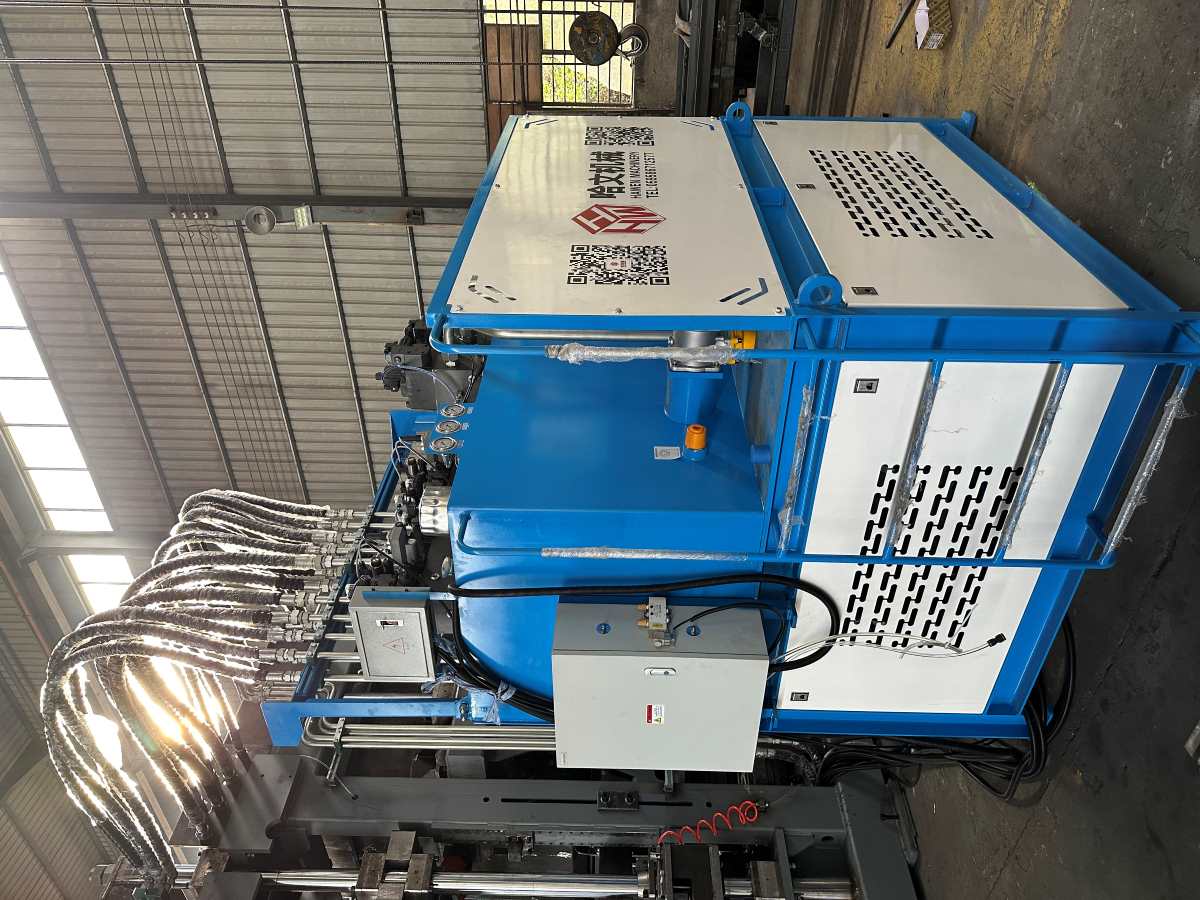
Hawen’s hydraulic system utilizes advanced components, including Japanese YUKEN proportional and directional valves paired with durable American ALBERT pumps. This setup ensures smooth and accurate control of material feeding, preventing segregation and enabling homogeneous mixing of additives throughout the batch.
9. Mold Precision and Final Product Quality
Even the most advanced additives cannot compensate for poor mold design.
Hawen Machinery manufactures molds compatible with leading global brands such as MASA, HESS, ZENITH, POYATOS, BESSER, and TIGER. These molds are heat-treated to enhance durability and are engineered according to original specifications, ensuring precise fit, stable operation, and consistent block quality.
Conclusion: Engineering Strength at the Microscopic Level
High-strength concrete blocks are not merely the result of increased cement content. They are the outcome of a carefully orchestrated system in which additives, materials, and machinery interact seamlessly.
Additives refine the internal structure, optimize hydration, and enhance durability. Advanced equipment ensures these improvements are consistently realized in production.
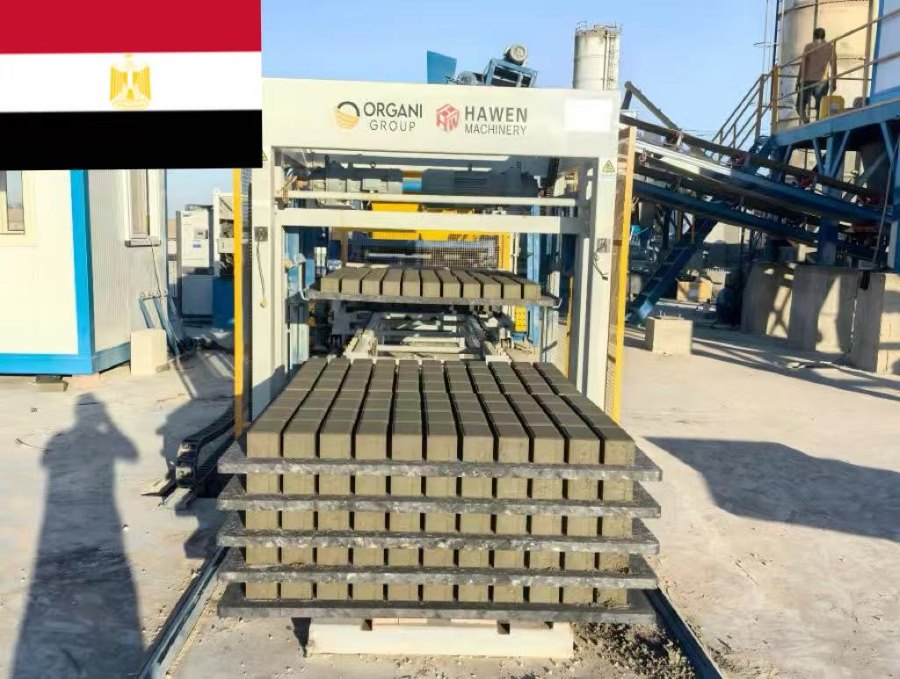
Hawen Machinery exemplifies this integration by combining intelligent control, precise hydraulics, and optimized vibration technology. Together, they transform raw materials into high-performance building units with remarkable efficiency.
In an industry where margins are tight and standards are rising, the strategic use of additives is no longer optional—it is a defining factor in achieving superior quality and long-term competitiveness.
FAQ
1. Which additive is most important for high-strength concrete blocks?
Water-reducing admixtures are often the most critical, as they lower the water-to-cement ratio and directly improve compressive strength without increasing cement usage.
2. Can additives replace cement in block production?
Not entirely, but mineral admixtures such as fly ash or slag can partially replace cement, improving performance while reducing cost and environmental impact.
3. Do additives affect production efficiency?
Yes. Properly selected additives can improve workability, reduce cycle times, and enhance compaction, leading to higher overall production efficiency.
4. How can manufacturers ensure consistent additive performance?
By using precise dosing systems, stable hydraulic control, and real-time monitoring, manufacturers can maintain uniform distribution and predictable results in every batch.





 Tel: +86-13905968794
 Email: export@hwmachines.com
 MP/WhatsApp: +86-13905968794
 Manufacturer Address:Nanan,Quanzhou City,Fujian Province,China