Why Your Block Machine Is Not Producing Consistent Results
Author:HAWEN Block MachineFROM:Brick Production Machine Manufacturer
TIME:2026-03-26
In concrete block manufacturing, consistency is the true measure of quality. A single high-strength block proves little; what matters is whether every unit, across every cycle, meets the same standard. Yet in practice, many manufacturers encounter fluctuations in block density, strength, dimensions, or surface finish.
These inconsistencies are rarely random. They are usually the consequence of systemic deviations in materials, machinery, or process control. This article dissects the root causes and provides technically grounded solutions to restore production stability.
1. Inconsistent Raw Material Quality
Variability often begins before production even starts. Changes in aggregate grading, moisture content, or cement quality can disrupt the internal structure of blocks.
Key issue:
Unstable water-cement ratio leads to fluctuating workability and strength
Solution:
Implement strict incoming material inspection
Standardize mix design and adjust in real time based on moisture content
Annotation: Even a slight increase in moisture can reduce compaction efficiency, leading to weaker blocks.
2. Uneven Vibration and Compaction
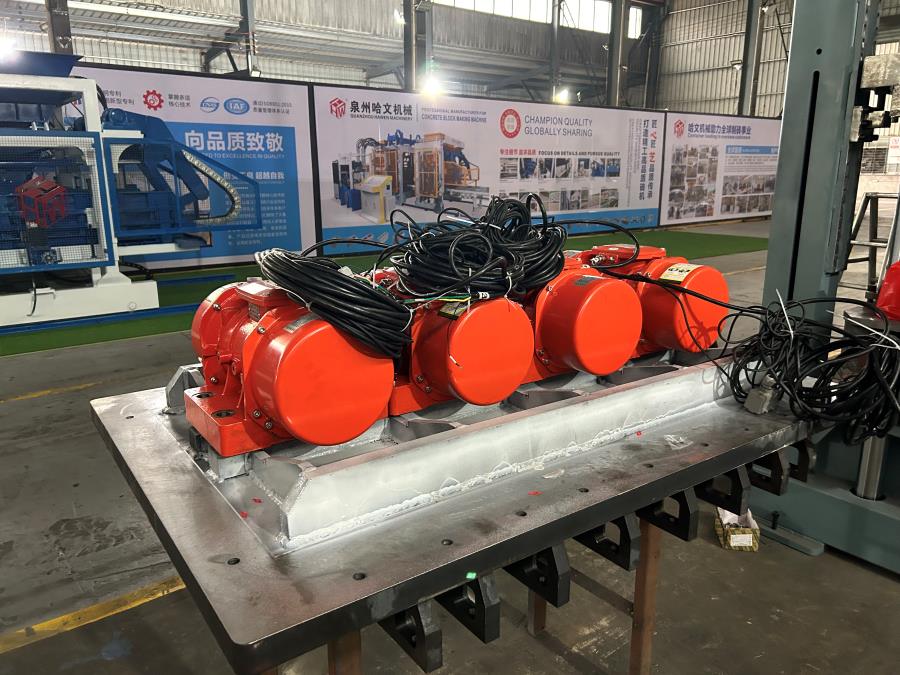
Compaction determines the density and integrity of each block. If vibration energy is uneven or insufficient, internal voids will form, causing strength variation.
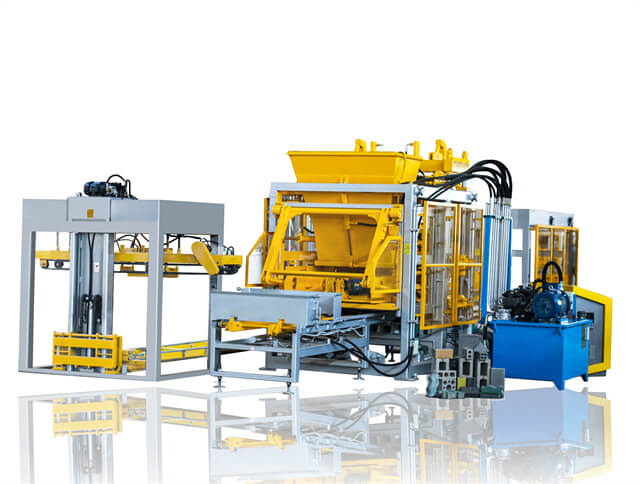
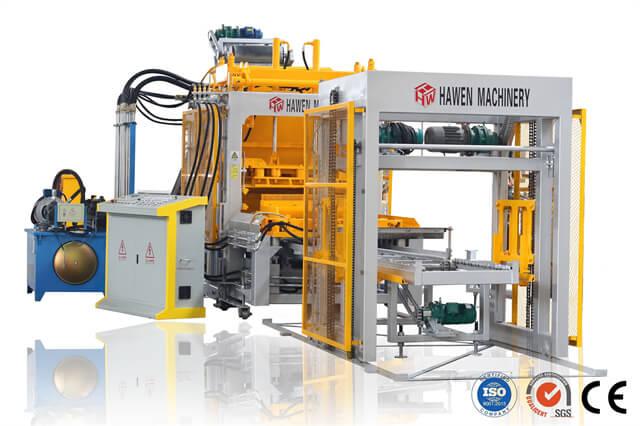
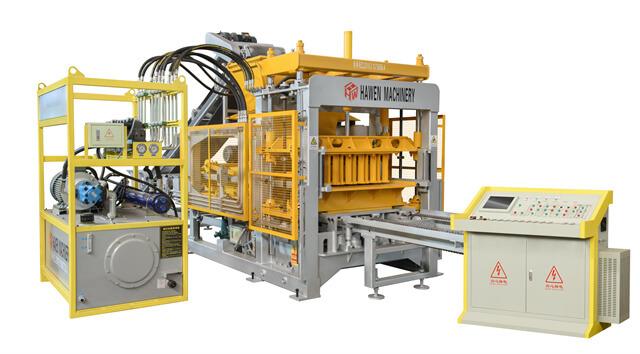
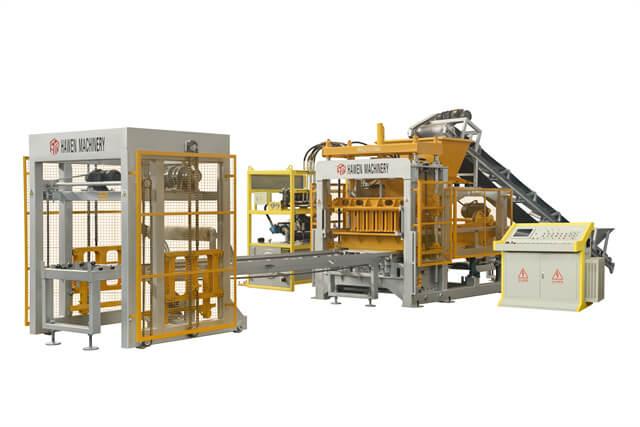
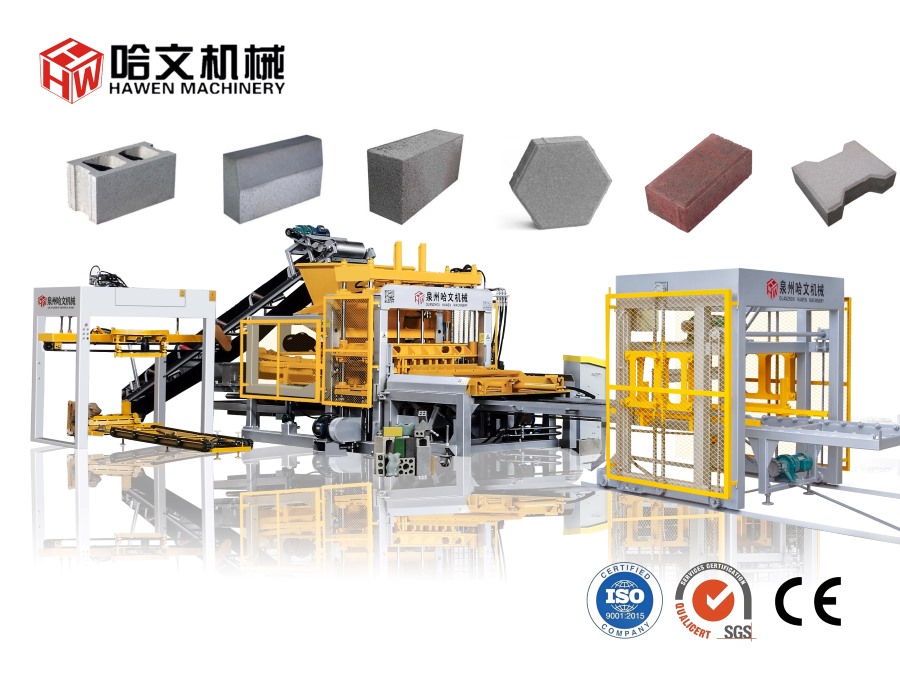
At Hawen Machinery, a four-shaft vibration box design with externally positioned eccentric blocks is adopted. This configuration minimizes resistance during vibration, ensures uniform energy distribution, and improves compaction efficiency while reducing cement consumption.
 Common mistakes:
Incorrect vibration frequency or duration
Mechanical wear in vibration components
Solution:
Regularly calibrate vibration parameters
Maintain vibration system components to ensure uniform performance
Common mistakes:
Incorrect vibration frequency or duration
Mechanical wear in vibration components
Solution:
Regularly calibrate vibration parameters
Maintain vibration system components to ensure uniform performance
3. Fluctuating Hydraulic Pressure
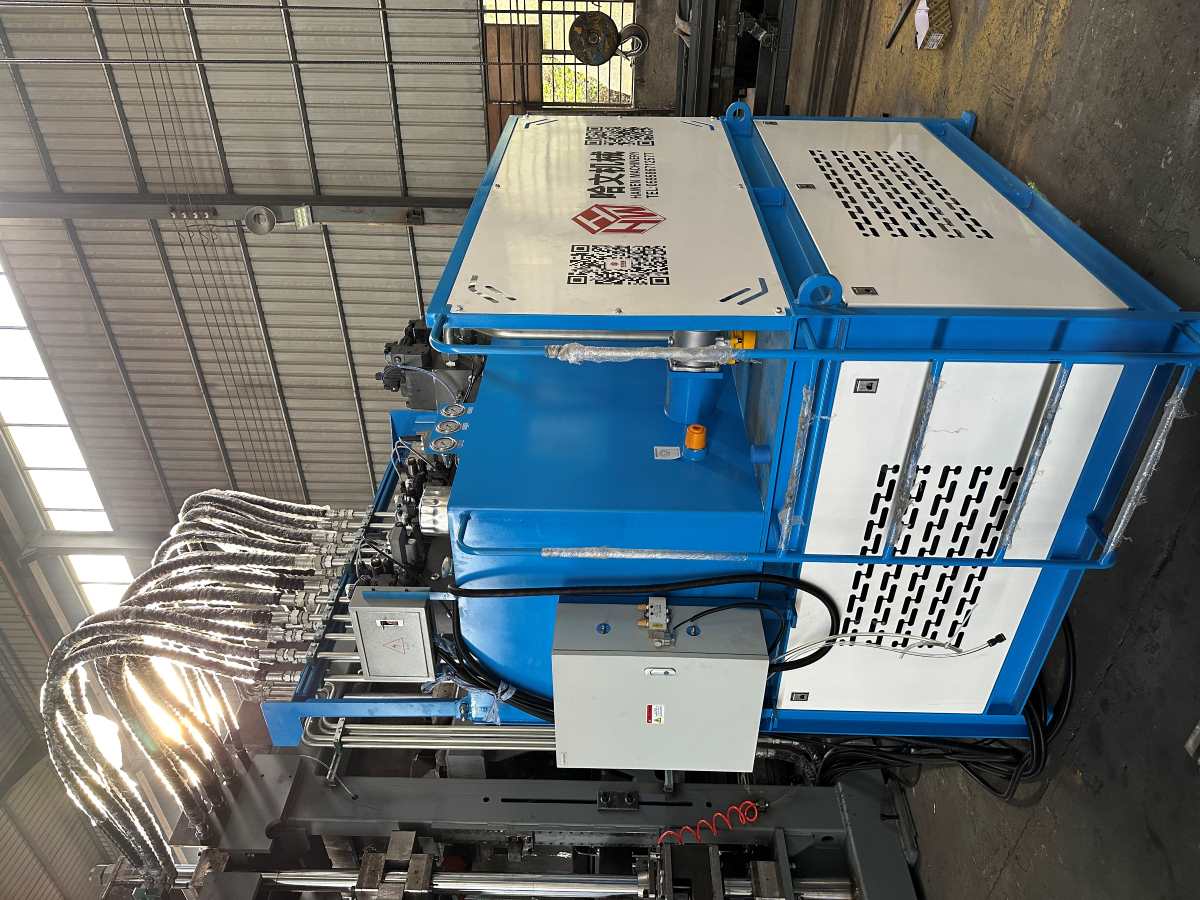
The hydraulic system governs forming pressure, mold movement, and material distribution. Any instability directly affects block density and dimensional accuracy.
Hawen Machinery utilizes a hydraulic configuration that combines precision-engineered proportional and directional valves from Japan with high-performance hydraulic pumps from the United States, ensuring stable pressure delivery, responsive control, and long-term durability.
 Common issues:
Pressure fluctuations during high-speed cycles
Delayed response in hydraulic valves
Solution:
Monitor hydraulic pressure in real time
Conduct preventive maintenance to avoid leakage or system lag
Common issues:
Pressure fluctuations during high-speed cycles
Delayed response in hydraulic valves
Solution:
Monitor hydraulic pressure in real time
Conduct preventive maintenance to avoid leakage or system lag
4. Lack of Intelligent Process Control
Manual adjustments and experience-based operation often lead to inconsistent results across shifts or operators.
Hawen Machinery integrates a SIEMENS S7-200 PLC system, equipped with an intuitive touch interface and remote monitoring capabilities. This allows operators to:
track real-time machine performance
adjust parameters with precision
maintain consistent output across production cycles
Annotation: Automation does not eliminate variability entirely, but it significantly reduces human-induced deviations.
5. Mold Wear and Misalignment
Molds are critical to ensuring dimensional accuracy and surface quality. Over time, wear or improper alignment can lead to uneven block geometry.
Hawen Machinery designs molds compatible with leading brands such as MASA, HESS, ZENITH, POYATOS, BESSER, TIGER, all of which undergo heat treatment for enhanced durability.
Common issues:
worn mold cavities
improper installation or alignment
Solution:
inspect molds regularly
replace or refurbish worn components
ensure precise installation before production
6. Inadequate Curing Conditions
Even perfectly formed blocks can exhibit inconsistent strength if curing conditions vary. Differences in humidity or temperature lead to uneven hydration of cement.
Solution:
maintain controlled curing environments
standardize curing duration before handling
avoid premature transportation
7. Poor Process Integration
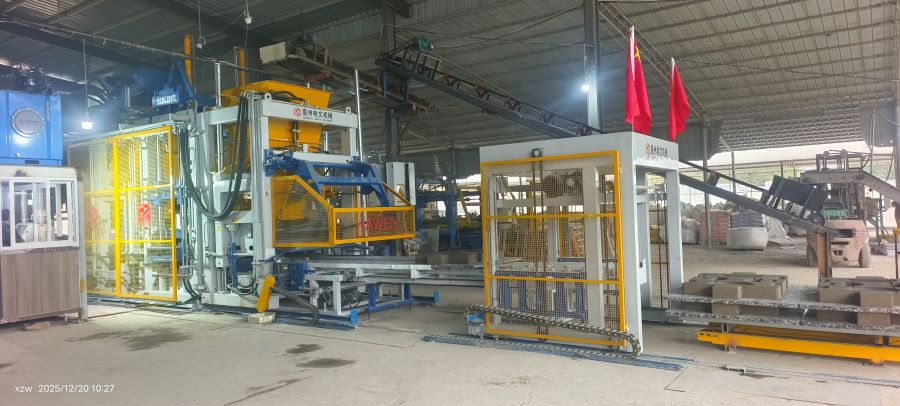
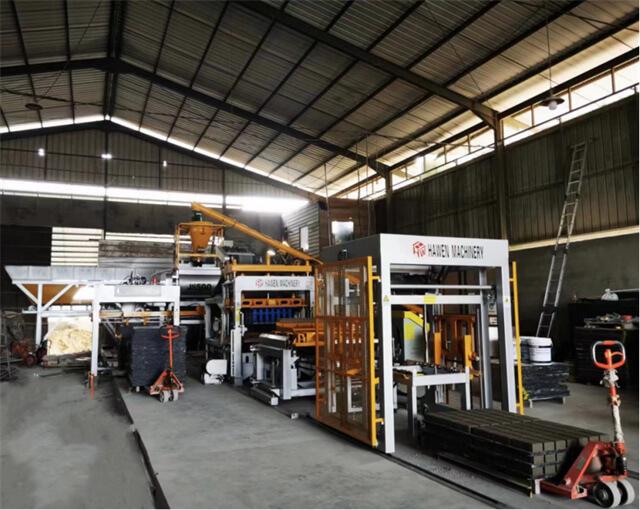
In many cases, inconsistency is not caused by a single factor but by a lack of coordination across the entire production line.
material feeding is irregular
vibration and pressure are not synchronized
curing is not aligned with production speed
Solution:
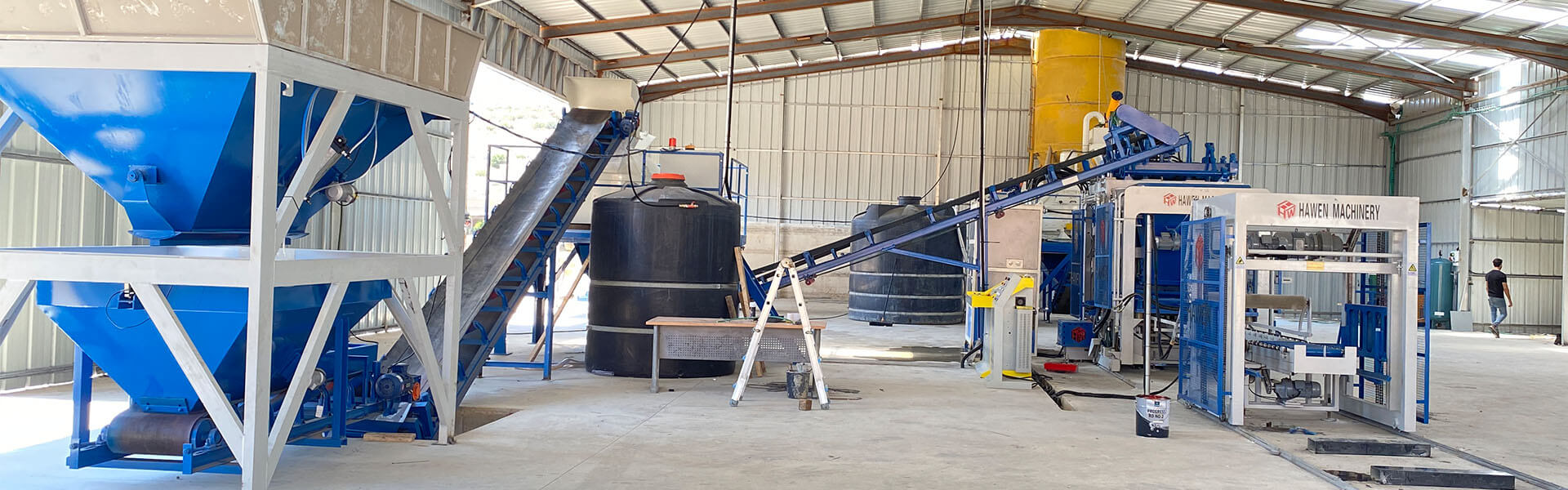
Adopt an integrated production approach where materials, machinery, and control systems operate in a coordinated manner.
From Variability to Repeatability
The transition from inconsistent output to stable production requires a shift in mindset. Manufacturers must move from reactive troubleshooting to proactive process engineering.
Hawen Machinery embodies this philosophy by integrating advanced vibration technology, precise hydraulic systems, intelligent PLC control, and high-quality molds, enabling manufacturers to achieve repeatable and reliable production outcomes.
In modern construction, where large-scale projects demand uniform materials, consistency is not a luxury—it is a prerequisite. The true value of a block machine lies not in its peak performance, but in its ability to deliver predictable results under continuous operation.
Ultimately, consistency reflects the maturity of the entire production system. It is the point where engineering precision, operational discipline, and technological integration converge, transforming block manufacturing from a variable process into a controlled, reliable, and scalable industrial practice.
FAQ: Inconsistent Block Production
1. What is the main cause of inconsistent block quality?
The most common causes are unstable raw materials, uneven compaction, and fluctuating hydraulic pressure, often combined with insufficient process control.
2. How can I quickly identify the source of inconsistency?
Analyze production data step by step—check materials, vibration settings, hydraulic pressure, and molds—to isolate the variable causing deviation.
3. Can automation solve inconsistency completely?
Automation significantly reduces variability, but consistent results still depend on proper setup, maintenance, and material control.
4. How often should production parameters be adjusted?
Parameters should be monitored continuously and adjusted whenever material conditions or environmental factors change.
5. Why do blocks vary between shifts?
Differences in operator experience and manual adjustments can cause variability. Implementing PLC-based control systems helps standardize production across shifts.





 Tel: +86-13905968794
 Email: export@hwmachines.com
 MP/WhatsApp: +86-13905968794
 Manufacturer Address:Nanan,Quanzhou City,Fujian Province,China