What Is the Ideal Compression Strength for Concrete Blocks
Author:HAWEN Block MachineFROM:Brick Production Machine Manufacturer
TIME:2026-03-23
What Is the Ideal Compression Strength for Concrete Blocks
In modern construction, compressive strength is not merely a technical parameter; it is the fundamental indicator of structural reliability and durability. For concrete blocks, determining the ideal compressive strength is not about pursuing the highest possible number, but about achieving a balanced performance profile—where strength, density, cost efficiency, and application requirements converge.
This article examines what constitutes the ideal compressive strength for concrete blocks, how it is defined across applications, and how advanced manufacturing technologies—such as those adopted by Hawen Machinery—ensure consistent and reliable results.
Understanding Compressive Strength in Concrete Blocks
Compressive strength refers to the maximum load a block can withstand before failure, typically measured in MPa (megapascals). It directly reflects the block’s ability to support structural loads without cracking or crushing.
In practical terms, compressive strength is influenced by:
Raw material composition (cement, aggregates, water ratio)
Compaction quality during forming
Curing conditions and duration
Manufacturing precision and consistency
Annotation: A higher compressive strength does not always imply better performance; excessive strength may lead to increased material costs without proportional structural benefits.
 Typical Strength Standards by Application
The “ideal” compressive strength varies depending on the intended use of the block. Industry standards and engineering practice generally define the following ranges:
1. Non-Load-Bearing Blocks
Used for partition walls and non-structural applications:
Typical strength: 3.5 – 7.5 MPa
Priority: lightweight, thermal insulation, cost efficiency
2. Load-Bearing Blocks
Used in structural walls and foundations:
Typical strength: 7.5 – 15 MPa
Priority: structural stability, durability, safety margin
3. High-Performance / Heavy-Duty Blocks
Used in infrastructure or industrial projects:
Typical strength: 15 – 25 MPa or higher
Priority: high load capacity, abrasion resistance, long service life
These ranges highlight a key principle:
The ideal compressive strength is application-specific, not universal.
Typical Strength Standards by Application
The “ideal” compressive strength varies depending on the intended use of the block. Industry standards and engineering practice generally define the following ranges:
1. Non-Load-Bearing Blocks
Used for partition walls and non-structural applications:
Typical strength: 3.5 – 7.5 MPa
Priority: lightweight, thermal insulation, cost efficiency
2. Load-Bearing Blocks
Used in structural walls and foundations:
Typical strength: 7.5 – 15 MPa
Priority: structural stability, durability, safety margin
3. High-Performance / Heavy-Duty Blocks
Used in infrastructure or industrial projects:
Typical strength: 15 – 25 MPa or higher
Priority: high load capacity, abrasion resistance, long service life
These ranges highlight a key principle:
The ideal compressive strength is application-specific, not universal.
 Factors That Determine the Ideal Strength
Achieving the desired compressive strength requires precise control across the entire production process. Several factors are particularly critical:
Raw Material Optimization
The ratio of cement to aggregates must be carefully calibrated. Excess cement increases cost, while insufficient cement compromises strength.
Compaction Efficiency
Uniform and sufficient compaction is essential to eliminate internal voids. Poor compaction leads to weak zones within the block structure.
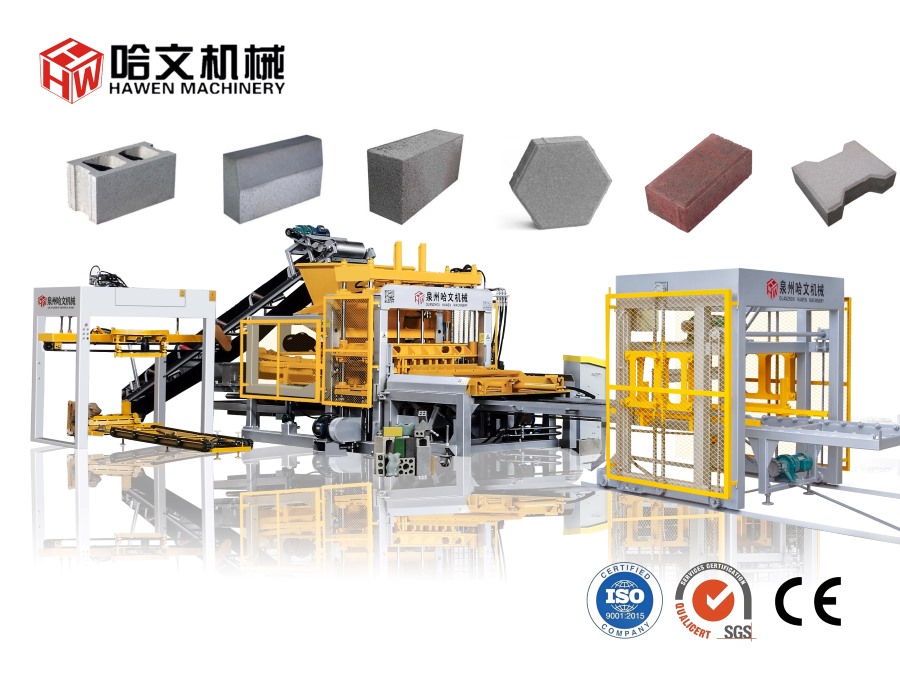
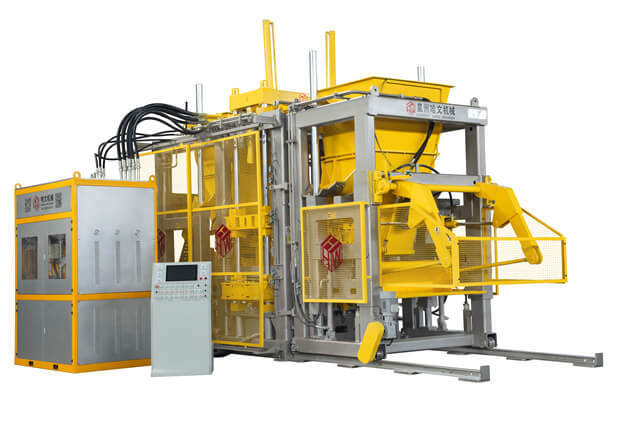
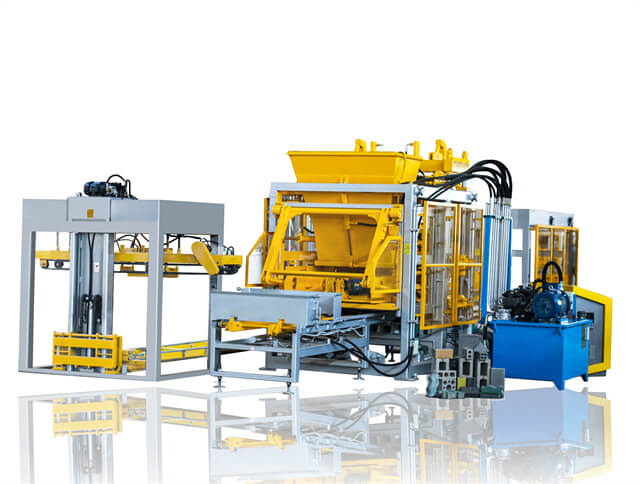
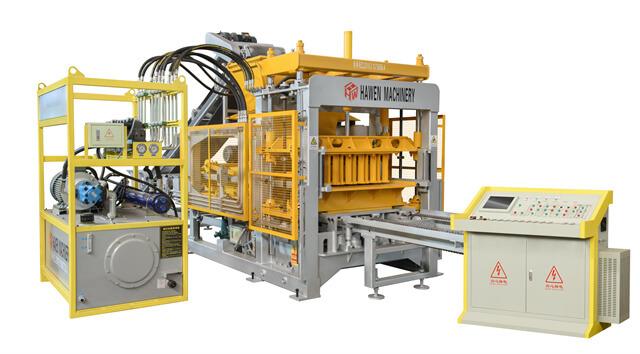
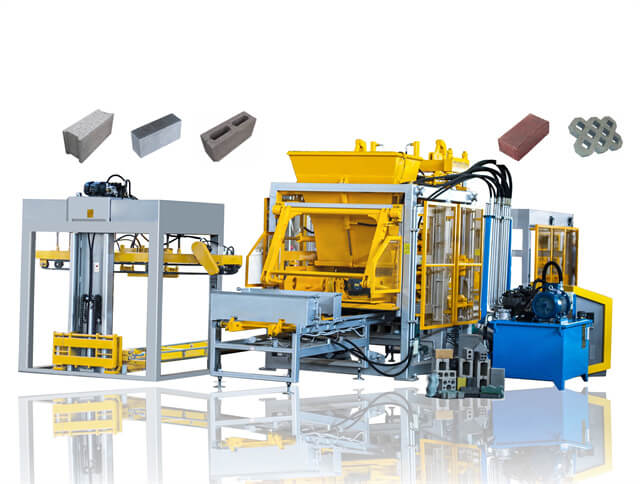
At Hawen Machinery, a four-shaft vibration box system with externally positioned eccentric blocks is employed. This configuration reduces resistance during vibration, ensures uniform compaction, and improves density while lowering cement consumption.
Hydraulic Stability
Consistent forming pressure is vital for achieving uniform compressive strength across batches. Hawen’s hydraulic system integrates Japanese YUKEN proportional and directional valves alongside American ALBERT pumps, delivering stable and precise pressure control under continuous operation.
Intelligent Process Control
Hawen Machinery integrates a SIEMENS S7-200 PLC system with an intuitive interface and remote monitoring capability. This allows operators to track real-time production data, adjust parameters remotely, and maintain consistent block quality across different production cycles.
Mold Precision and Durability
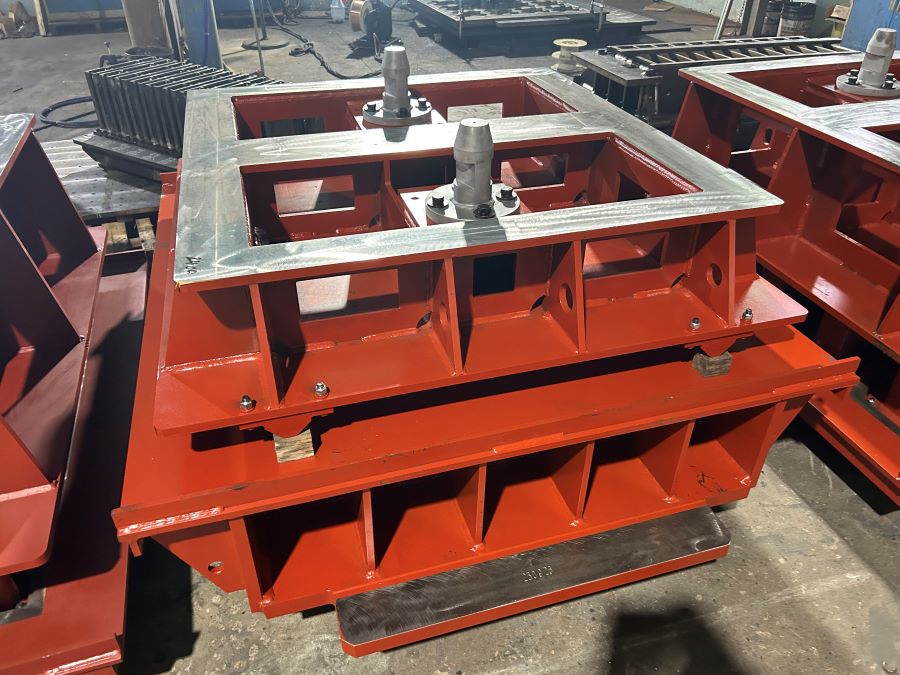
Mold accuracy directly affects block dimensions and structural integrity. Hawen Machinery designs molds compatible with leading brands such as MASA, HESS, ZENITH, POYATOS, BESSER, TIGER, all of which undergo heat treatment to ensure durability and consistent performance.
Factors That Determine the Ideal Strength
Achieving the desired compressive strength requires precise control across the entire production process. Several factors are particularly critical:
Raw Material Optimization
The ratio of cement to aggregates must be carefully calibrated. Excess cement increases cost, while insufficient cement compromises strength.
Compaction Efficiency
Uniform and sufficient compaction is essential to eliminate internal voids. Poor compaction leads to weak zones within the block structure.
At Hawen Machinery, a four-shaft vibration box system with externally positioned eccentric blocks is employed. This configuration reduces resistance during vibration, ensures uniform compaction, and improves density while lowering cement consumption.
Hydraulic Stability
Consistent forming pressure is vital for achieving uniform compressive strength across batches. Hawen’s hydraulic system integrates Japanese YUKEN proportional and directional valves alongside American ALBERT pumps, delivering stable and precise pressure control under continuous operation.
Intelligent Process Control
Hawen Machinery integrates a SIEMENS S7-200 PLC system with an intuitive interface and remote monitoring capability. This allows operators to track real-time production data, adjust parameters remotely, and maintain consistent block quality across different production cycles.
Mold Precision and Durability
Mold accuracy directly affects block dimensions and structural integrity. Hawen Machinery designs molds compatible with leading brands such as MASA, HESS, ZENITH, POYATOS, BESSER, TIGER, all of which undergo heat treatment to ensure durability and consistent performance.
 Balancing Strength and Efficiency
From a manufacturing perspective, the goal is not to maximize compressive strength indiscriminately, but to optimize it within economic and operational constraints.
Higher strength → increased cement consumption and cost
Lower strength → potential structural risk and reduced durability
The optimal solution lies in precision engineering, where each parameter—material ratio, vibration intensity, hydraulic pressure, and curing conditions—is finely tuned.
Annotation: Advanced automation enables manufacturers to achieve target strength levels with minimal variability, which is often more valuable than achieving peak strength in isolated cases.
The Role of Advanced Block Machines
Modern block machines play a decisive role in achieving consistent compressive strength. Automation ensures:
repeatable compaction quality
stable forming pressure
reduced human error
consistent product performance across batches
By integrating vibration technology, hydraulic systems, intelligent control, and precision molds, manufacturers can maintain tight tolerances in compressive strength, which is critical for large-scale construction projects.
Elevating Standards in Concrete Block Manufacturing
The question of ideal compressive strength ultimately reflects a broader industrial transformation. It is no longer sufficient to produce blocks that merely meet minimum standards; manufacturers must deliver consistent, reliable, and application-specific performance at scale.
Hawen Machinery exemplifies this shift by combining advanced vibration systems, precise hydraulic control, intelligent automation, and high-quality molds to ensure that every block achieves its intended structural role.
In the evolving landscape of global construction—where efficiency, sustainability, and safety are increasingly intertwined—the true benchmark is not the maximum strength a block can achieve, but the precision with which that strength is delivered, replicated, and sustained over time.
FAQ: Compressive Strength of Concrete Blocks
1. What is the minimum compressive strength required for concrete blocks?
It depends on the application. Non-load-bearing blocks typically require at least 3.5 MPa, while load-bearing blocks usually require 7.5 MPa or higher.
2. Is higher compressive strength always better?
No. Excessively high strength increases material cost and may not provide additional structural benefits. The ideal strength should match the application requirements.
3. How can manufacturers ensure consistent compressive strength?
By controlling material ratios, compaction quality, hydraulic pressure, and curing conditions, and by using advanced automated block machines with precise control systems.
4. How does vibration affect compressive strength?
Proper vibration ensures uniform compaction and reduced internal voids, which directly improves density and compressive strength.
5. Can block machines influence compressive strength significantly?
Yes. Modern machines with advanced vibration, stable hydraulics, and intelligent control systems play a crucial role in achieving consistent and reliable compressive strength.
Balancing Strength and Efficiency
From a manufacturing perspective, the goal is not to maximize compressive strength indiscriminately, but to optimize it within economic and operational constraints.
Higher strength → increased cement consumption and cost
Lower strength → potential structural risk and reduced durability
The optimal solution lies in precision engineering, where each parameter—material ratio, vibration intensity, hydraulic pressure, and curing conditions—is finely tuned.
Annotation: Advanced automation enables manufacturers to achieve target strength levels with minimal variability, which is often more valuable than achieving peak strength in isolated cases.
The Role of Advanced Block Machines
Modern block machines play a decisive role in achieving consistent compressive strength. Automation ensures:
repeatable compaction quality
stable forming pressure
reduced human error
consistent product performance across batches
By integrating vibration technology, hydraulic systems, intelligent control, and precision molds, manufacturers can maintain tight tolerances in compressive strength, which is critical for large-scale construction projects.
Elevating Standards in Concrete Block Manufacturing
The question of ideal compressive strength ultimately reflects a broader industrial transformation. It is no longer sufficient to produce blocks that merely meet minimum standards; manufacturers must deliver consistent, reliable, and application-specific performance at scale.
Hawen Machinery exemplifies this shift by combining advanced vibration systems, precise hydraulic control, intelligent automation, and high-quality molds to ensure that every block achieves its intended structural role.
In the evolving landscape of global construction—where efficiency, sustainability, and safety are increasingly intertwined—the true benchmark is not the maximum strength a block can achieve, but the precision with which that strength is delivered, replicated, and sustained over time.
FAQ: Compressive Strength of Concrete Blocks
1. What is the minimum compressive strength required for concrete blocks?
It depends on the application. Non-load-bearing blocks typically require at least 3.5 MPa, while load-bearing blocks usually require 7.5 MPa or higher.
2. Is higher compressive strength always better?
No. Excessively high strength increases material cost and may not provide additional structural benefits. The ideal strength should match the application requirements.
3. How can manufacturers ensure consistent compressive strength?
By controlling material ratios, compaction quality, hydraulic pressure, and curing conditions, and by using advanced automated block machines with precise control systems.
4. How does vibration affect compressive strength?
Proper vibration ensures uniform compaction and reduced internal voids, which directly improves density and compressive strength.
5. Can block machines influence compressive strength significantly?
Yes. Modern machines with advanced vibration, stable hydraulics, and intelligent control systems play a crucial role in achieving consistent and reliable compressive strength.





 Tel: +86-13905968794
 Email: export@hwmachines.com
 MP/WhatsApp: +86-13905968794
 Manufacturer Address:Nanan,Quanzhou City,Fujian Province,China