How Block Machine Automation Improves Production Efficiency
Author:HAWEN Block MachineFROM:Brick Production Machine Manufacturer
TIME:2026-03-12
How Block Machine Automation Improves Production Efficiency
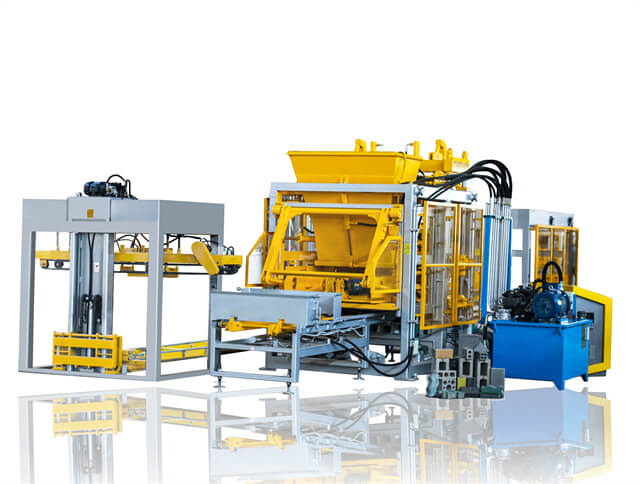
In modern construction materials manufacturing, productivity is no longer determined solely by mechanical strength or installed capacity. Instead, automation architecture—the integration of control systems, hydraulic precision, vibration dynamics, and intelligent material handling—has become the decisive factor in determining whether a block production line operates merely adequately or truly efficiently.
Block machine automation transforms a traditionally labor-intensive process into a coordinated, data-driven production ecosystem. By reducing operational variability, optimizing cycle times, and ensuring repeatable product quality, automation enables manufacturers to achieve higher throughput with lower material waste and reduced labor dependency.
This article examines how automation in block machines improves production efficiency from multiple technical dimensions, including control systems, vibration technology, hydraulic power management, and mold engineering.
 1. Automation as the Foundation of Modern Block Manufacturing
In traditional semi-manual block production lines, efficiency fluctuations often arise from human intervention—manual pallet handling, inconsistent feeding of raw materials, or irregular vibration timing. Even small deviations in these stages accumulate over time, leading to unstable output and inconsistent block quality.
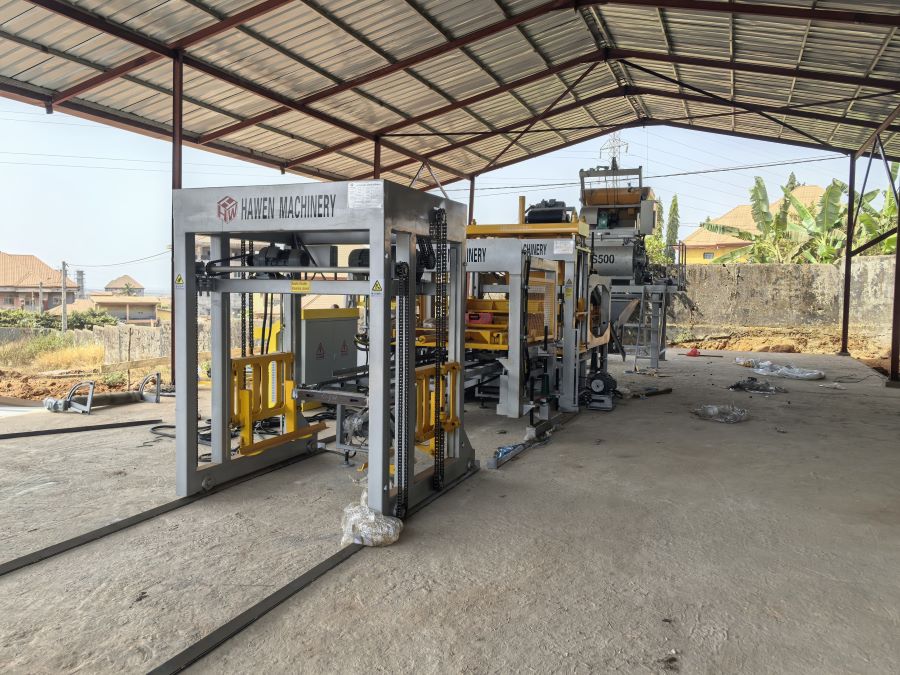
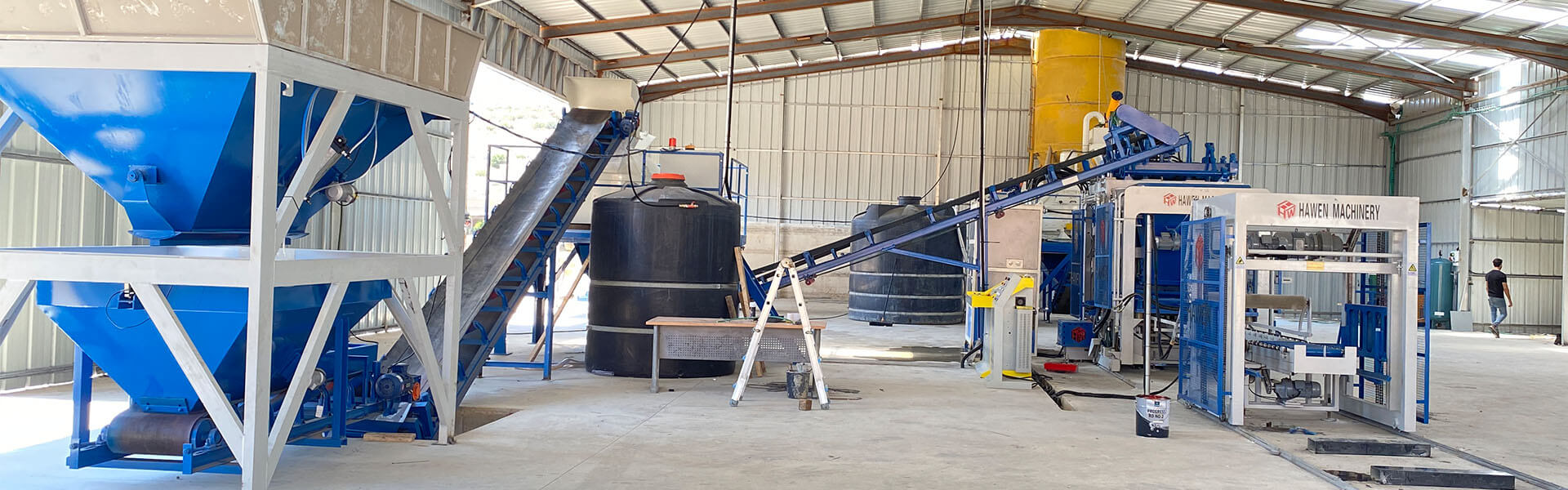
Automation addresses this structural inefficiency through systematic synchronization. Each stage—batching, feeding, vibration compaction, demolding, and stacking—is coordinated through programmable logic control. As a result, cycle times become predictable and production flows continuously.
More importantly, automated systems enable process repeatability, a critical factor in industrial manufacturing. When vibration duration, pressure levels, and material distribution are controlled electronically rather than manually, the machine can reproduce the same parameters thousands of times with minimal deviation.
From an operational standpoint, this means:
Shorter and more stable production cycles
Reduced operator intervention
Lower probability of process interruptions
Collectively, these improvements translate into substantial gains in overall equipment effectiveness (OEE).
2. Intelligent Control Systems: The Brain of Automation
The efficiency of an automated block machine depends heavily on the sophistication of its control system. Modern systems must not only execute commands but also monitor operational conditions in real time.
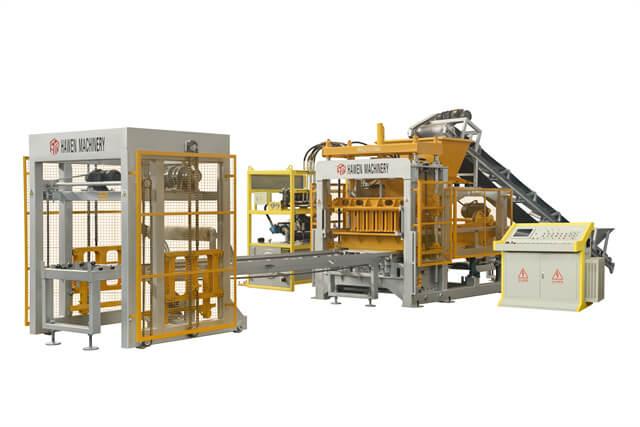
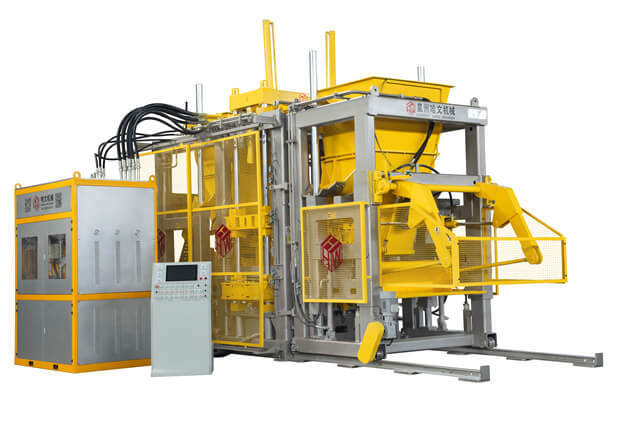
Hawen Machinery integrates a SIEMENS S7-200 PLC platform combined with an intuitive touch-screen interface and remote monitoring functionality. This architecture allows operators to visualize machine performance instantly and adjust parameters with precision.
Through this system, several critical advantages emerge:
Real-time monitoring of equipment status
Rapid parameter adjustment for different block types
Remote diagnostics and operational optimization
Because the system allows engineers to access machine data remotely, production issues can often be diagnosed and resolved without waiting for on-site service.
Note: Remote monitoring has become increasingly important for international projects where technical teams may be located in different countries.
By transforming the control system into a centralized decision platform, automation significantly reduces downtime and enhances operational transparency.
3. Precision Vibration Technology and Material Efficiency
In block manufacturing, vibration is the core process that determines the density, strength, and dimensional accuracy of concrete products. Poor vibration control leads to uneven compaction, higher cement consumption, and inconsistent block quality.
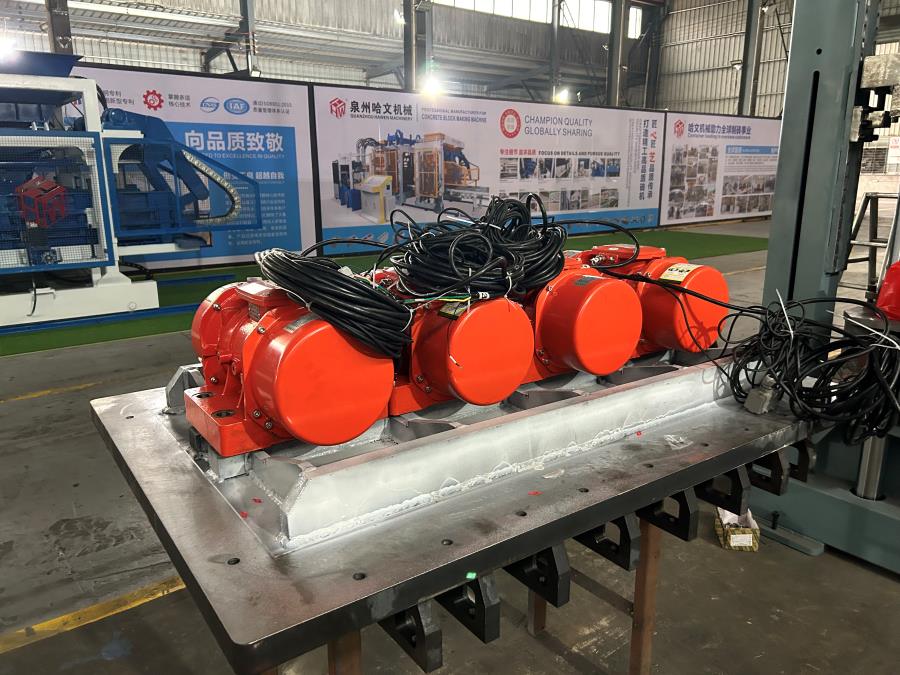
Hawen Machinery adopts a four-shaft vibration box configuration with eccentric blocks positioned outside the housing. This structural design offers several technical advantages:
Reduced internal resistance during vibration
More uniform transmission of vibratory force across the mold surface
Improved compaction consistency
Because the vibratory energy is distributed evenly, the concrete mixture can achieve optimal density with less cement consumption.
From a production perspective, this design delivers two major efficiency gains:
Faster compaction cycles
Lower material cost per block
The relationship between vibration efficiency and cement consumption is particularly significant. In large-scale block production, even a small reduction in cement usage can lead to substantial cost savings over time.
1. Automation as the Foundation of Modern Block Manufacturing
In traditional semi-manual block production lines, efficiency fluctuations often arise from human intervention—manual pallet handling, inconsistent feeding of raw materials, or irregular vibration timing. Even small deviations in these stages accumulate over time, leading to unstable output and inconsistent block quality.
Automation addresses this structural inefficiency through systematic synchronization. Each stage—batching, feeding, vibration compaction, demolding, and stacking—is coordinated through programmable logic control. As a result, cycle times become predictable and production flows continuously.
More importantly, automated systems enable process repeatability, a critical factor in industrial manufacturing. When vibration duration, pressure levels, and material distribution are controlled electronically rather than manually, the machine can reproduce the same parameters thousands of times with minimal deviation.
From an operational standpoint, this means:
Shorter and more stable production cycles
Reduced operator intervention
Lower probability of process interruptions
Collectively, these improvements translate into substantial gains in overall equipment effectiveness (OEE).
2. Intelligent Control Systems: The Brain of Automation
The efficiency of an automated block machine depends heavily on the sophistication of its control system. Modern systems must not only execute commands but also monitor operational conditions in real time.
Hawen Machinery integrates a SIEMENS S7-200 PLC platform combined with an intuitive touch-screen interface and remote monitoring functionality. This architecture allows operators to visualize machine performance instantly and adjust parameters with precision.
Through this system, several critical advantages emerge:
Real-time monitoring of equipment status
Rapid parameter adjustment for different block types
Remote diagnostics and operational optimization
Because the system allows engineers to access machine data remotely, production issues can often be diagnosed and resolved without waiting for on-site service.
Note: Remote monitoring has become increasingly important for international projects where technical teams may be located in different countries.
By transforming the control system into a centralized decision platform, automation significantly reduces downtime and enhances operational transparency.
3. Precision Vibration Technology and Material Efficiency
In block manufacturing, vibration is the core process that determines the density, strength, and dimensional accuracy of concrete products. Poor vibration control leads to uneven compaction, higher cement consumption, and inconsistent block quality.
Hawen Machinery adopts a four-shaft vibration box configuration with eccentric blocks positioned outside the housing. This structural design offers several technical advantages:
Reduced internal resistance during vibration
More uniform transmission of vibratory force across the mold surface
Improved compaction consistency
Because the vibratory energy is distributed evenly, the concrete mixture can achieve optimal density with less cement consumption.
From a production perspective, this design delivers two major efficiency gains:
Faster compaction cycles
Lower material cost per block
The relationship between vibration efficiency and cement consumption is particularly significant. In large-scale block production, even a small reduction in cement usage can lead to substantial cost savings over time.
 4. Hydraulic Systems: Stability and Power Management
Automation in block machines also depends on the reliability of the hydraulic system, which drives critical operations such as mold lifting, pallet movement, and pressure control.
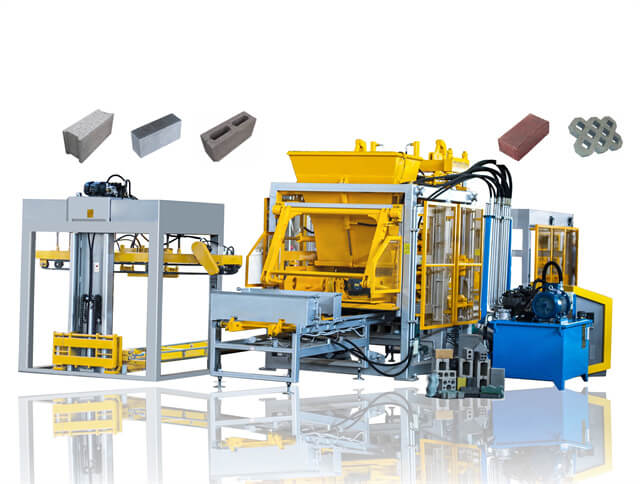
At Hawen Machinery, the hydraulic stations are configured with Japanese YUKEN proportional and directional control valves paired with hydraulic pumps supplied by the American manufacturer ALBERT. This combination allows the system to deliver both precise flow regulation and robust power output.
The practical benefits include:
Stable hydraulic pressure during high-frequency cycles
Smooth and accurate movement of mechanical components
Enhanced durability under continuous production conditions
In automated systems, hydraulic stability directly influences cycle efficiency. Any fluctuation in pressure can delay machine actions or disrupt synchronization with the control system. By ensuring precise hydraulic regulation, the system maintains consistent operational rhythm throughout long production runs.
5. Mold Engineering and Cross-Platform Compatibility
While automation improves machine coordination, mold design ultimately determines the final product geometry and surface quality.
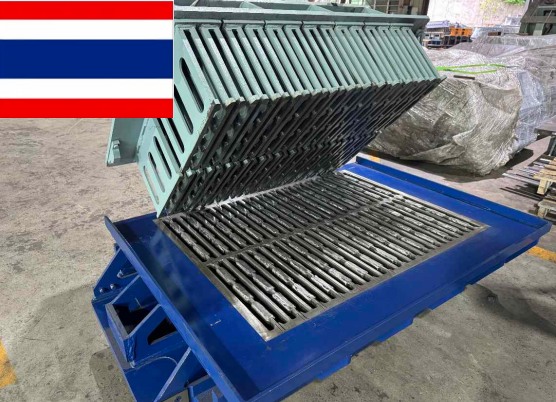
Hawen Machinery manufactures molds that are compatible with leading international block machine brands, including MASA, HESS, ZENITH, POYATOS, BESSER, TIGER, and others. By following original equipment specifications, these molds achieve accurate alignment and smooth installation across different machine platforms.
All molds undergo controlled heat treatment, which significantly enhances wear resistance and structural stability. This process extends mold lifespan and ensures that dimensional tolerances remain consistent even after prolonged production cycles.
From an efficiency perspective, well-engineered molds contribute in several ways:
Faster block release during demolding
Reduced maintenance downtime
Stable product dimensions across large batches
In automated production lines, where machines operate continuously for extended periods, mold durability becomes a key determinant of long-term productivity.
6. Automation and the Economics of Scale
The true value of block machine automation becomes evident when production volumes increase. As output scales upward, even minor inefficiencies can accumulate into significant operational losses.
Automation mitigates this risk by maintaining process consistency regardless of production scale. Once parameters are optimized, the system can sustain stable operation over thousands of cycles without the variability introduced by manual intervention.
This allows manufacturers to achieve:
Higher daily output
Reduced labor intensity
Lower defect rates
Consequently, automated block plants are better positioned to meet the growing demand for construction materials in rapidly developing markets.
Conclusion: Automation as a Strategic Advantage
Block machine automation is not merely a technological upgrade; it represents a structural transformation of production methodology. By integrating intelligent control systems, advanced vibration engineering, stable hydraulic power, and precision mold manufacturing, modern block machines operate with a level of coordination that traditional systems cannot achieve.
At Hawen Machinery, continuous engineering refinement aims to align machine design with the evolving requirements of global construction markets. Automation allows manufacturers to produce more blocks, with greater consistency, while using resources more efficiently.
Ultimately, the significance of automation extends beyond productivity metrics. It reflects a broader shift toward precision manufacturing in the construction materials industry—a shift in which efficiency, quality, and technological integration converge to redefine how concrete products are made.
4. Hydraulic Systems: Stability and Power Management
Automation in block machines also depends on the reliability of the hydraulic system, which drives critical operations such as mold lifting, pallet movement, and pressure control.
At Hawen Machinery, the hydraulic stations are configured with Japanese YUKEN proportional and directional control valves paired with hydraulic pumps supplied by the American manufacturer ALBERT. This combination allows the system to deliver both precise flow regulation and robust power output.
The practical benefits include:
Stable hydraulic pressure during high-frequency cycles
Smooth and accurate movement of mechanical components
Enhanced durability under continuous production conditions
In automated systems, hydraulic stability directly influences cycle efficiency. Any fluctuation in pressure can delay machine actions or disrupt synchronization with the control system. By ensuring precise hydraulic regulation, the system maintains consistent operational rhythm throughout long production runs.
5. Mold Engineering and Cross-Platform Compatibility
While automation improves machine coordination, mold design ultimately determines the final product geometry and surface quality.
Hawen Machinery manufactures molds that are compatible with leading international block machine brands, including MASA, HESS, ZENITH, POYATOS, BESSER, TIGER, and others. By following original equipment specifications, these molds achieve accurate alignment and smooth installation across different machine platforms.
All molds undergo controlled heat treatment, which significantly enhances wear resistance and structural stability. This process extends mold lifespan and ensures that dimensional tolerances remain consistent even after prolonged production cycles.
From an efficiency perspective, well-engineered molds contribute in several ways:
Faster block release during demolding
Reduced maintenance downtime
Stable product dimensions across large batches
In automated production lines, where machines operate continuously for extended periods, mold durability becomes a key determinant of long-term productivity.
6. Automation and the Economics of Scale
The true value of block machine automation becomes evident when production volumes increase. As output scales upward, even minor inefficiencies can accumulate into significant operational losses.
Automation mitigates this risk by maintaining process consistency regardless of production scale. Once parameters are optimized, the system can sustain stable operation over thousands of cycles without the variability introduced by manual intervention.
This allows manufacturers to achieve:
Higher daily output
Reduced labor intensity
Lower defect rates
Consequently, automated block plants are better positioned to meet the growing demand for construction materials in rapidly developing markets.
Conclusion: Automation as a Strategic Advantage
Block machine automation is not merely a technological upgrade; it represents a structural transformation of production methodology. By integrating intelligent control systems, advanced vibration engineering, stable hydraulic power, and precision mold manufacturing, modern block machines operate with a level of coordination that traditional systems cannot achieve.
At Hawen Machinery, continuous engineering refinement aims to align machine design with the evolving requirements of global construction markets. Automation allows manufacturers to produce more blocks, with greater consistency, while using resources more efficiently.
Ultimately, the significance of automation extends beyond productivity metrics. It reflects a broader shift toward precision manufacturing in the construction materials industry—a shift in which efficiency, quality, and technological integration converge to redefine how concrete products are made.
 FAQ: Block Machine Automation
1. Does automation completely eliminate the need for operators?
No. Automated block machines still require operators for supervision, parameter adjustment, and routine maintenance. However, automation significantly reduces manual intervention and labor intensity.
2. How does automation influence production cycle time?
Automation synchronizes feeding, vibration, and demolding processes through programmable control systems. This coordination shortens cycle times and ensures consistent production rhythm.
3. Is automation beneficial for small or medium-sized block plants?
Yes. Even smaller production facilities can benefit from automation because it improves product consistency, reduces material waste, and lowers dependence on skilled manual labor.
4. Do automated block machines consume more energy?
Not necessarily. Modern systems optimize hydraulic pressure, vibration intensity, and operational timing, which often results in better energy efficiency per block produced.
5. How important is mold quality in automated production lines?
Mold quality is critical. Since automated systems operate continuously at high frequency, molds must maintain dimensional accuracy and wear resistance to prevent production interruptions and quality deviations.
FAQ: Block Machine Automation
1. Does automation completely eliminate the need for operators?
No. Automated block machines still require operators for supervision, parameter adjustment, and routine maintenance. However, automation significantly reduces manual intervention and labor intensity.
2. How does automation influence production cycle time?
Automation synchronizes feeding, vibration, and demolding processes through programmable control systems. This coordination shortens cycle times and ensures consistent production rhythm.
3. Is automation beneficial for small or medium-sized block plants?
Yes. Even smaller production facilities can benefit from automation because it improves product consistency, reduces material waste, and lowers dependence on skilled manual labor.
4. Do automated block machines consume more energy?
Not necessarily. Modern systems optimize hydraulic pressure, vibration intensity, and operational timing, which often results in better energy efficiency per block produced.
5. How important is mold quality in automated production lines?
Mold quality is critical. Since automated systems operate continuously at high frequency, molds must maintain dimensional accuracy and wear resistance to prevent production interruptions and quality deviations.




 Tel: +86-13905968794
 Email: export@hwmachines.com
 MP/WhatsApp: +86-13905968794
 Manufacturer Address:Nanan,Quanzhou City,Fujian Province,China