How to Evaluate Block Machine Output and Efficiency
Author:HAWEN Block MachineFROM:Brick Production Machine Manufacturer
TIME:2026-01-31
How to Evaluate Block Machine Output and Efficiency
In block manufacturing, output and efficiency are often mentioned together, yet they are rarely understood in equal depth. High nominal capacity does not automatically translate into high effective output, just as fast cycle times do not guarantee economic efficiency. To evaluate a block machine accurately, manufacturers must move beyond brochure figures and examine how mechanical design, system integration, and operational stability interact over time. The following framework provides a structured and professional approach to this evaluation.
1. Distinguish Nominal Output from Effective Output
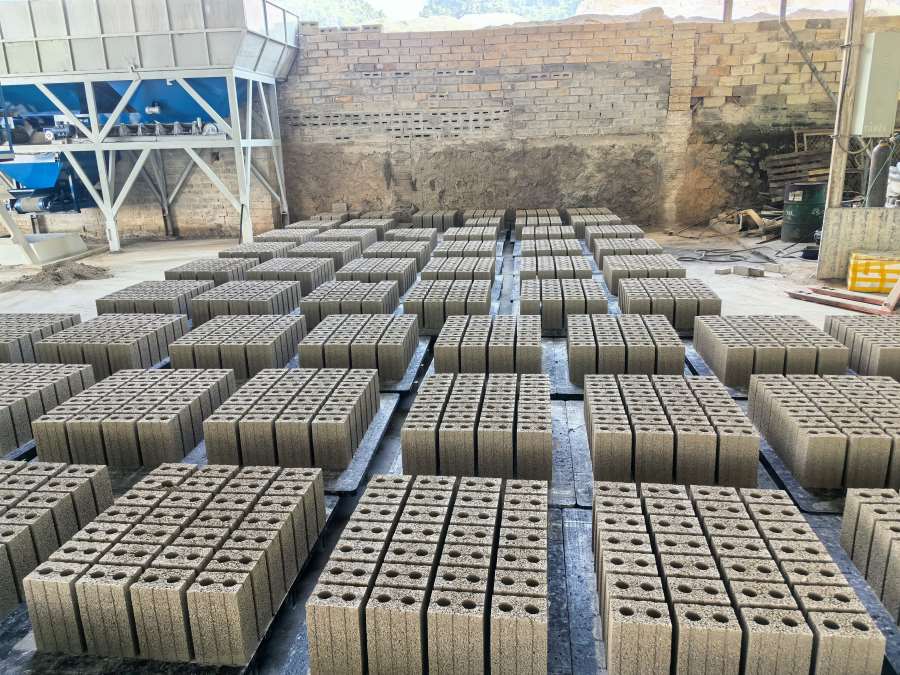
The first and most common misunderstanding lies in confusing theoretical capacity with actual production. Nominal output is typically calculated under ideal conditions—short cycle times, uninterrupted operation, and standardized products. Effective output, by contrast, reflects real-world performance, incorporating mold changes, downtime, maintenance intervals, and operator interaction.
A machine that appears highly productive on paper may underperform in practice if its systems lack stability or adaptability. Therefore, effective hourly or daily output should always be assessed over extended operating periods rather than isolated test runs.
 2. Analyze Cycle Time in Relation to Stability
Cycle time is a critical parameter, but speed alone is not a reliable indicator of efficiency. Excessively short cycles may increase vibration stress, hydraulic shock, and component wear, ultimately reducing uptime. True efficiency emerges when cycle time is optimized—not minimized—within the machine's structural and mechanical limits.
Stable repetition of cycles, with minimal variation in block density and dimensions, is far more valuable than marginal gains in speed that compromise consistency.
3. Evaluate the Vibration System as a Productivity Driver
Vibration directly influences compaction quality, cement utilization, and cycle repeatability. An effective vibration system enables faster mold filling and compaction without rework or rejection.
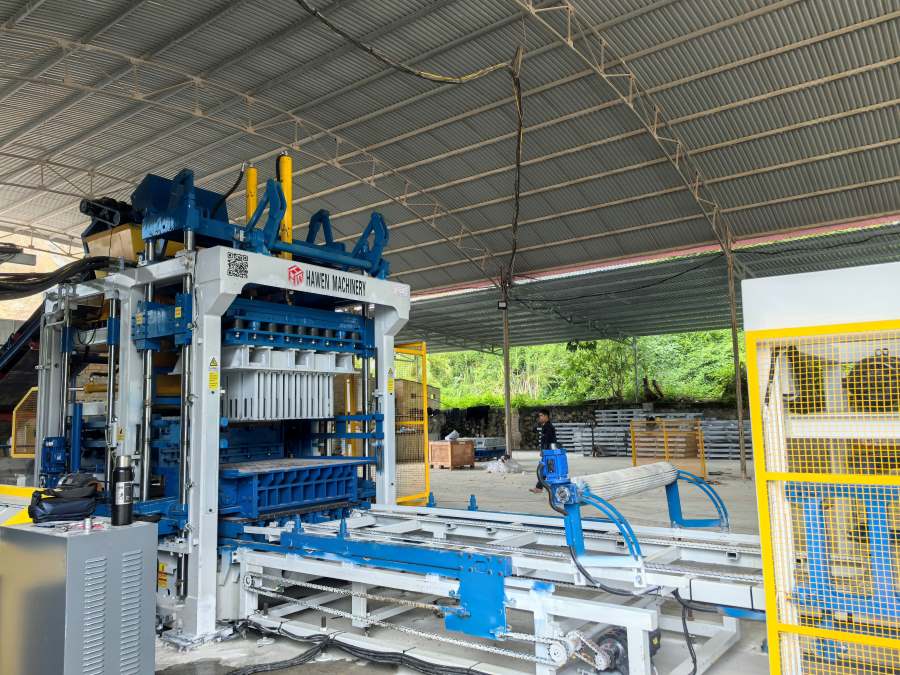
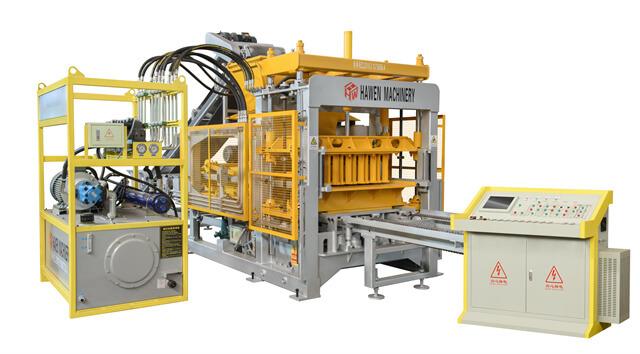
Hawen Machinery adopts a four-shaft vibration box design, positioning eccentric blocks outside the housing. This reduces resistance during vibration, ensures uniform compaction, and lowers cement consumption while improving overall efficiency.
By reducing internal energy loss and achieving even force distribution, such a system supports both higher output rates and lower material costs, linking mechanical performance with economic efficiency.
2. Analyze Cycle Time in Relation to Stability
Cycle time is a critical parameter, but speed alone is not a reliable indicator of efficiency. Excessively short cycles may increase vibration stress, hydraulic shock, and component wear, ultimately reducing uptime. True efficiency emerges when cycle time is optimized—not minimized—within the machine's structural and mechanical limits.
Stable repetition of cycles, with minimal variation in block density and dimensions, is far more valuable than marginal gains in speed that compromise consistency.
3. Evaluate the Vibration System as a Productivity Driver
Vibration directly influences compaction quality, cement utilization, and cycle repeatability. An effective vibration system enables faster mold filling and compaction without rework or rejection.
Hawen Machinery adopts a four-shaft vibration box design, positioning eccentric blocks outside the housing. This reduces resistance during vibration, ensures uniform compaction, and lowers cement consumption while improving overall efficiency.
By reducing internal energy loss and achieving even force distribution, such a system supports both higher output rates and lower material costs, linking mechanical performance with economic efficiency.
 4. Assess the Hydraulic Station Under Load Conditions
The hydraulic station determines whether a block machine can sustain output under continuous production. Pressure stability, response accuracy, and thermal control all directly affect cycle consistency and downtime frequency.
At Hawen Machinery, the hydraulic station of our block machines adopts Japanese YUKEN proportional and directional valves and an American ALBERT hydraulic pump, combining precise control with high load capacity and long-term durability.
This configuration allows the machine to maintain stable pressing force and smooth motion even under high-output conditions, preventing efficiency losses caused by pressure fluctuation or overheating.
5. Examine Mold Quality and Compatibility
Molds are often overlooked when evaluating efficiency, yet they define product geometry, demolding smoothness, and cycle reliability. Poorly designed or mismatched molds increase resistance, slow down cycles, and raise rejection rates.
Hawen Machinery designs molds compatible with leading block machine brands, including MASA, HESS, ZENITH, POYATOS, BESSER, TIGER, and others. By following original specifications, these molds provide precise fit, smooth operation, and consistent block quality across platforms.
Such precision ensures that output gains achieved by the machine are not undermined at the mold interface.
6. Measure Control Systems and Data Transparency
Modern efficiency is inseparable from control intelligence. A reliable control system enables precise coordination between vibration, hydraulics, and material feeding, while also reducing operator dependency.
Hawen Machinery integrates a SIEMENS S7-200 PLC with an intuitive touch panel and remote monitoring capabilities. Through this system, we can track the real-time operating status of customers' block machines, optimize operational parameters remotely, and ensure consistent production quality.
This level of visibility transforms efficiency from a subjective impression into a measurable, manageable variable.
7. Consider Output Over the Machine's Lifecycle
True efficiency must be evaluated across the entire service life of the machine. Energy consumption, cement savings, maintenance frequency, spare-part longevity, and technical support responsiveness all shape long-term output performance. A machine that maintains stable production year after year delivers far greater value than one that peaks briefly before declining.
4. Assess the Hydraulic Station Under Load Conditions
The hydraulic station determines whether a block machine can sustain output under continuous production. Pressure stability, response accuracy, and thermal control all directly affect cycle consistency and downtime frequency.
At Hawen Machinery, the hydraulic station of our block machines adopts Japanese YUKEN proportional and directional valves and an American ALBERT hydraulic pump, combining precise control with high load capacity and long-term durability.
This configuration allows the machine to maintain stable pressing force and smooth motion even under high-output conditions, preventing efficiency losses caused by pressure fluctuation or overheating.
5. Examine Mold Quality and Compatibility
Molds are often overlooked when evaluating efficiency, yet they define product geometry, demolding smoothness, and cycle reliability. Poorly designed or mismatched molds increase resistance, slow down cycles, and raise rejection rates.
Hawen Machinery designs molds compatible with leading block machine brands, including MASA, HESS, ZENITH, POYATOS, BESSER, TIGER, and others. By following original specifications, these molds provide precise fit, smooth operation, and consistent block quality across platforms.
Such precision ensures that output gains achieved by the machine are not undermined at the mold interface.
6. Measure Control Systems and Data Transparency
Modern efficiency is inseparable from control intelligence. A reliable control system enables precise coordination between vibration, hydraulics, and material feeding, while also reducing operator dependency.
Hawen Machinery integrates a SIEMENS S7-200 PLC with an intuitive touch panel and remote monitoring capabilities. Through this system, we can track the real-time operating status of customers' block machines, optimize operational parameters remotely, and ensure consistent production quality.
This level of visibility transforms efficiency from a subjective impression into a measurable, manageable variable.
7. Consider Output Over the Machine's Lifecycle
True efficiency must be evaluated across the entire service life of the machine. Energy consumption, cement savings, maintenance frequency, spare-part longevity, and technical support responsiveness all shape long-term output performance. A machine that maintains stable production year after year delivers far greater value than one that peaks briefly before declining.
 Conclusion: Efficiency as a System, Not a Number
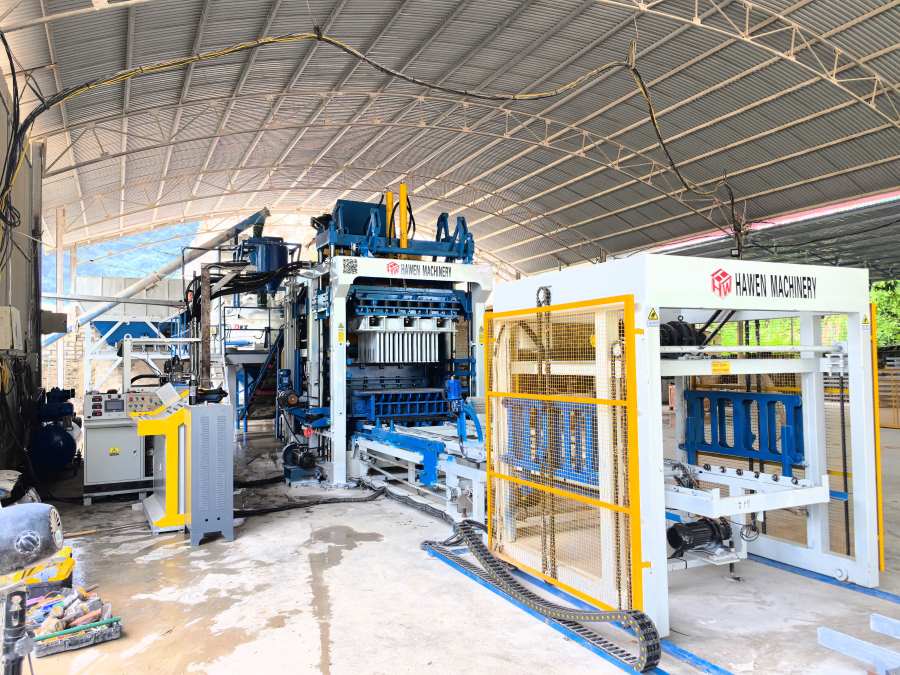
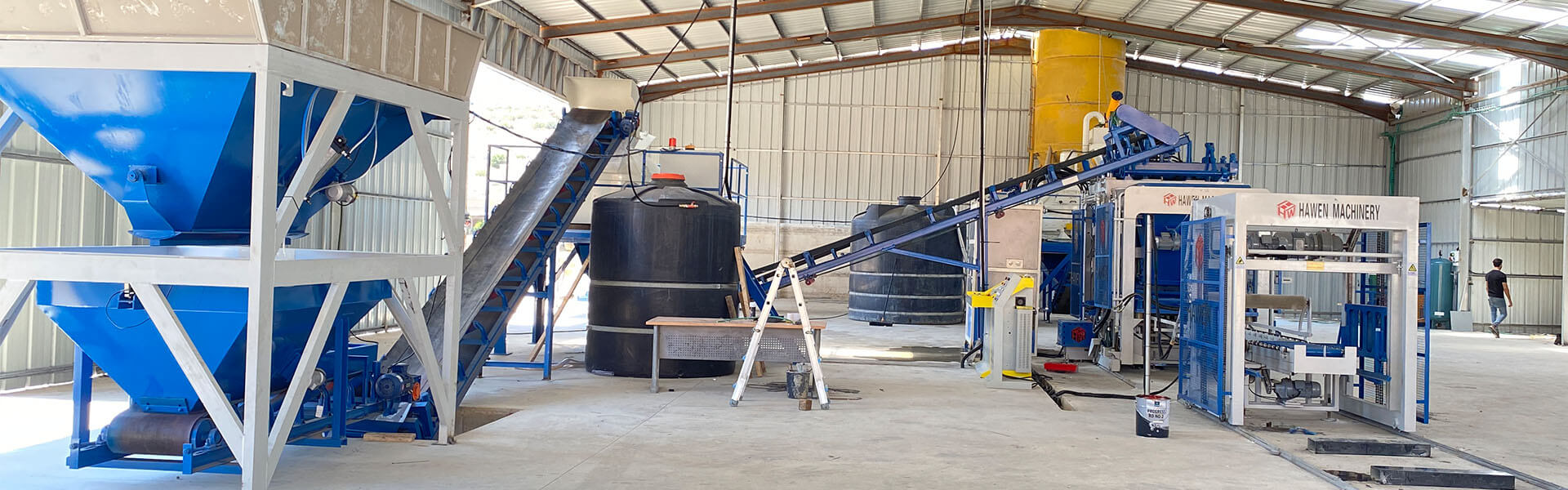
Evaluating block machine output and efficiency is not about chasing the highest figure on a specification sheet. It is about understanding how structure, vibration, hydraulics, molds, and control systems converge into a coherent production system.
At Hawen Machinery, we view efficiency as a disciplined balance between speed and stability, capacity and consistency, technology and durability. When output is supported by robust engineering and intelligent control, efficiency ceases to be a short-term metric and becomes a sustainable competitive advantage—one that compounds over time and anchors long-term industrial success.
Conclusion: Efficiency as a System, Not a Number
Evaluating block machine output and efficiency is not about chasing the highest figure on a specification sheet. It is about understanding how structure, vibration, hydraulics, molds, and control systems converge into a coherent production system.
At Hawen Machinery, we view efficiency as a disciplined balance between speed and stability, capacity and consistency, technology and durability. When output is supported by robust engineering and intelligent control, efficiency ceases to be a short-term metric and becomes a sustainable competitive advantage—one that compounds over time and anchors long-term industrial success.





 Tel: +86-13905968794
 Email: export@hwmachines.com
 MP/WhatsApp: +86-13905968794
 Manufacturer Address:Nanan,Quanzhou City,Fujian Province,China