What Safety Features Are Used in Modern Block Machines
Author:HAWEN Block MachineFROM:Brick Production Machine Manufacturer
TIME:2026-02-03
What Safety Features Are Used in Modern Block Machines
In today's concrete block manufacturing industry, operational efficiency alone no longer defines technological sophistication. As production lines accelerate, automation deepens, and capital investment increases, safety has emerged as a critical engineering priority. Modern block machines therefore adopt a layered safety architecture, integrating structural, electrical, hydraulic, and operational protections into a cohesive system.
Structural Safety: Strength Engineered into Design
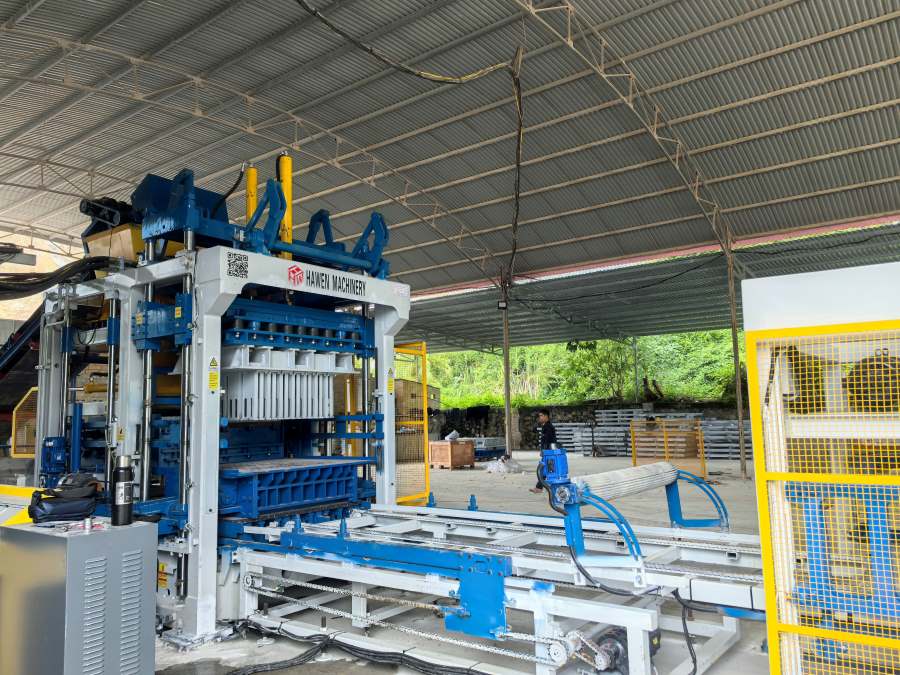
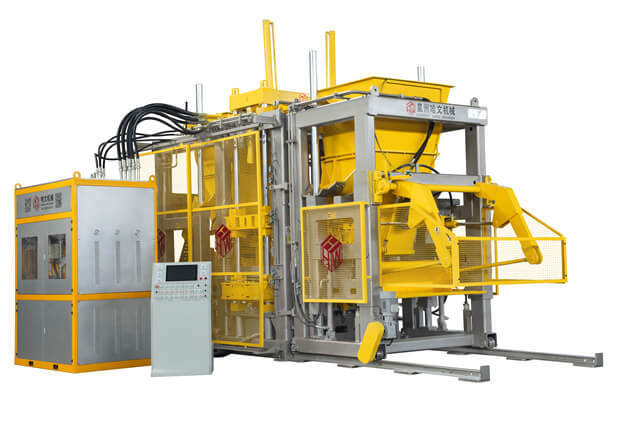
The foundation of safety begins with structural engineering. Contemporary block machines utilize high-tensile steel frames and reinforced load-bearing components, ensuring stability under continuous vibration and repetitive loading. Optimized stress distribution and minimized mechanical deformation reduce the risk of fatigue failure. Enclosed vibration systems and protective covers around moving parts isolate high-energy components, converting inherent mechanical robustness into operational safety.
 Electrical Safety: Intelligent Control and Redundant Protection
Electrical safety is achieved through advanced PLC-based control systems. Real-time monitoring by sensors, limit switches, and interlocks ensures that abnormal conditions are detected immediately. Emergency stop circuits are designed according to fail-safe principles, automatically cutting power when anomalies arise. This redundancy allows operators to intervene before minor deviations escalate into serious incidents, ensuring both equipment protection and personnel safety.
Hydraulic Safety: Precision Control and Brand Reliability
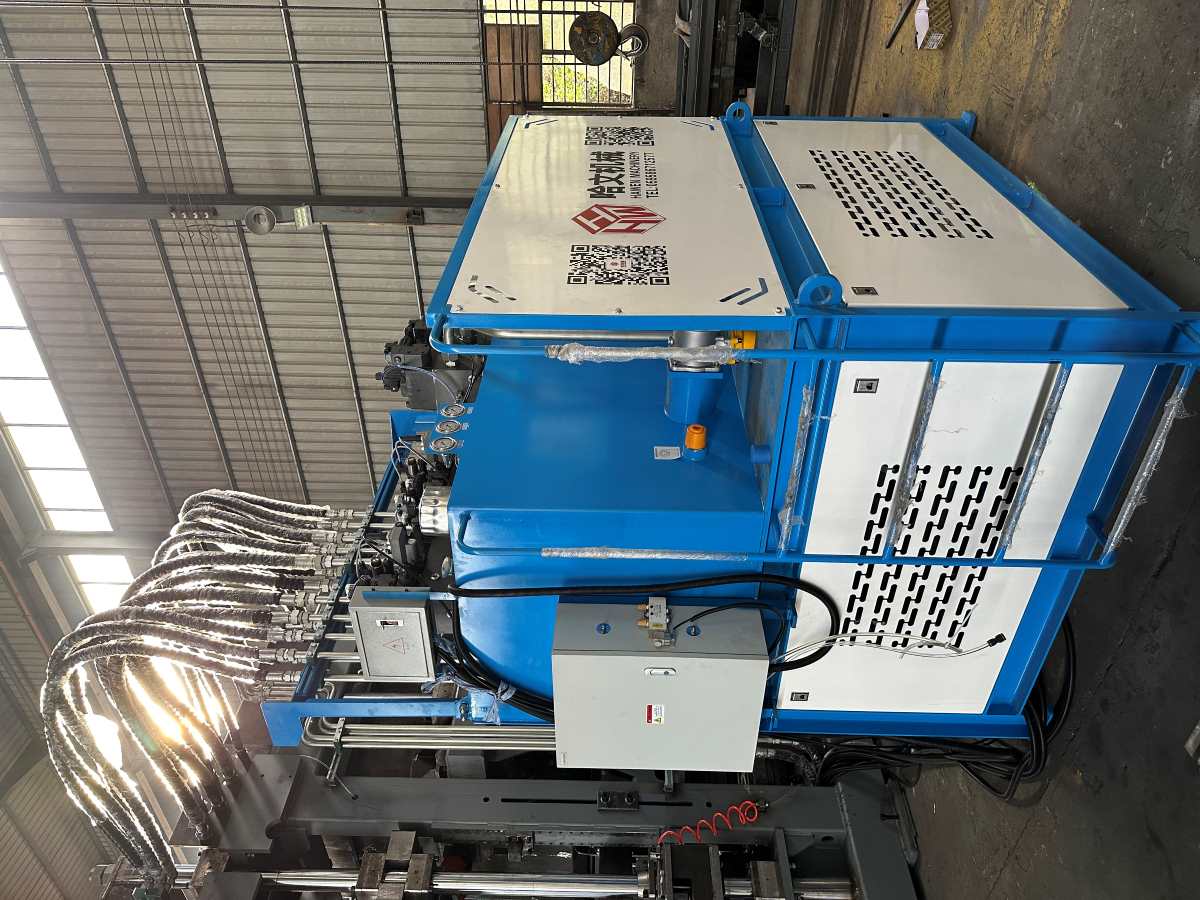
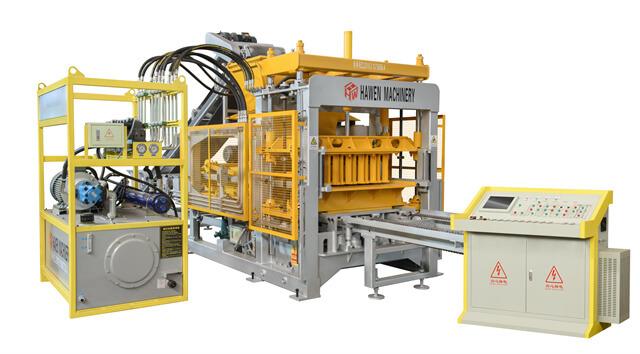
Hydraulic systems, which provide the force required for block compaction, constitute a pivotal safety dimension. Modern machines employ proportional valves, pressure relief valves, and temperature sensors to maintain consistent operating conditions. At Hawen Machinery, our hydraulic stations incorporate Japanese YUKEN proportional and directional valves alongside American ALBERT hydraulic pumps, combining precise control with high load capacity and long-term durability. The use of internationally recognized components enhances system stability, prevents sudden pressure surges, and significantly reduces operational risks, while also ensuring consistent block quality.
Electrical Safety: Intelligent Control and Redundant Protection
Electrical safety is achieved through advanced PLC-based control systems. Real-time monitoring by sensors, limit switches, and interlocks ensures that abnormal conditions are detected immediately. Emergency stop circuits are designed according to fail-safe principles, automatically cutting power when anomalies arise. This redundancy allows operators to intervene before minor deviations escalate into serious incidents, ensuring both equipment protection and personnel safety.
Hydraulic Safety: Precision Control and Brand Reliability
Hydraulic systems, which provide the force required for block compaction, constitute a pivotal safety dimension. Modern machines employ proportional valves, pressure relief valves, and temperature sensors to maintain consistent operating conditions. At Hawen Machinery, our hydraulic stations incorporate Japanese YUKEN proportional and directional valves alongside American ALBERT hydraulic pumps, combining precise control with high load capacity and long-term durability. The use of internationally recognized components enhances system stability, prevents sudden pressure surges, and significantly reduces operational risks, while also ensuring consistent block quality.
 Operational Safety: Human–Machine Interface and Access Control
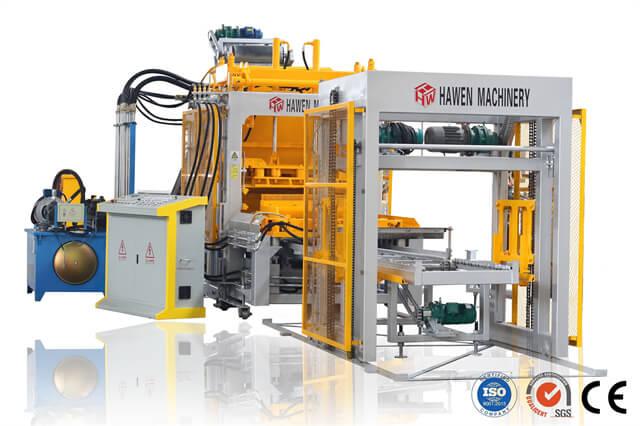
Operational safety is closely linked to human interaction. Advanced human–machine interfaces present real-time operational data, alarms, and diagnostics in a clear, hierarchical manner, minimizing misinterpretation. Interlocked access doors, combined with light curtains or position sensors, prevent production cycles from resuming when personnel are within hazardous zones. This integration of automation and situational awareness substantially lowers the likelihood of human error.
Preventive Safety: From Reactive Measures to Predictive Management
Modern block machines increasingly emphasize predictive safety. Automated maintenance alerts, vibration analysis, and performance monitoring enable early identification of latent risks. By shifting from reactive problem-solving to continuous risk mitigation, manufacturers embed safety into the machine lifecycle, ensuring operational reliability and extending equipment longevity.
Hawen Machinery: Safety as a Systemic Philosophy
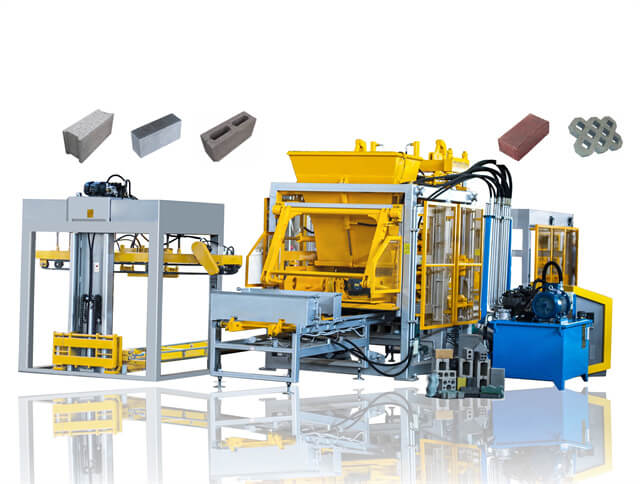
At Hawen Machinery, safety is conceived as an integrated system rather than isolated features. Reinforced mechanical structures, independently controlled hydraulic stations, and Siemens-based PLC systems with comprehensive interlocks work in concert to create a unified safety framework. Efficiency and protection are designed to reinforce one another, rather than exist in tension.
Operational Safety: Human–Machine Interface and Access Control
Operational safety is closely linked to human interaction. Advanced human–machine interfaces present real-time operational data, alarms, and diagnostics in a clear, hierarchical manner, minimizing misinterpretation. Interlocked access doors, combined with light curtains or position sensors, prevent production cycles from resuming when personnel are within hazardous zones. This integration of automation and situational awareness substantially lowers the likelihood of human error.
Preventive Safety: From Reactive Measures to Predictive Management
Modern block machines increasingly emphasize predictive safety. Automated maintenance alerts, vibration analysis, and performance monitoring enable early identification of latent risks. By shifting from reactive problem-solving to continuous risk mitigation, manufacturers embed safety into the machine lifecycle, ensuring operational reliability and extending equipment longevity.
Hawen Machinery: Safety as a Systemic Philosophy
At Hawen Machinery, safety is conceived as an integrated system rather than isolated features. Reinforced mechanical structures, independently controlled hydraulic stations, and Siemens-based PLC systems with comprehensive interlocks work in concert to create a unified safety framework. Efficiency and protection are designed to reinforce one another, rather than exist in tension.
 Conclusion: Safety as the Pillar of Sustainable Production
Ultimately, the safety features of modern block machines signify more than regulatory compliance; they reflect a commitment to sustainable industrial development. A truly advanced machine safeguards productivity, ensures human well-being, and secures long-term operational reliability. When safety is embedded at the core of design, productivity gains endure, and industrial progress achieves both resilience and dignity.
Conclusion: Safety as the Pillar of Sustainable Production
Ultimately, the safety features of modern block machines signify more than regulatory compliance; they reflect a commitment to sustainable industrial development. A truly advanced machine safeguards productivity, ensures human well-being, and secures long-term operational reliability. When safety is embedded at the core of design, productivity gains endure, and industrial progress achieves both resilience and dignity.




 Tel: +86-13905968794
 Email: export@hwmachines.com
 MP/WhatsApp: +86-13905968794
 Manufacturer Address:Nanan,Quanzhou City,Fujian Province,China