How to Prevent Freeze-Thaw Scaling in Concrete Paver Production is a practical topic for buyers and plant managers who want a more stable block making machine workflow. The goal is not only to explain the issue, but to give a clear method that supports better output, cleaner operation, and stronger customer confidence.
In a professional concrete products factory, the block machine, material system, mold, pallet circulation, control system, and operator routine must work as one process. A good solution therefore looks at the whole line before changing one visible setting.
Winter durability begins with a dense, uniform paver body formed from qualified constituents, measured liquid, even filling, and consolidation.
Identify scaling before choosing a factory fix
Freeze-thaw scaling is the progressive loss of a thin outer skin after wetting, freezing, thawing, and often exposure to deicing chemicals. It may begin as light flaking and later expose particles. Distinguish it from white efflorescence, isolated pop-outs, abrasion, impact chipping, poor joint support, and damage from aggressive cleaning. Each distress needs a different response.
Record where the damage appears. Uniform loss from exposed faces suggests a constituent, skin-compactness, hydration, or exposure issue. Edge-only damage can involve geometry, handling, installation support, or retained liquid. A few circular pits may point toward unsound particles rather than general scaling. Photograph the paver before washing it and keep representative failed units for examination.
Ask for exposure history before blaming the brick machine. Note climate, saturation, drainage, deicer type and concentration, application timing, cleaning method, traffic, sealing, and age at first winter exposure. Severe misuse can harm a durable unit, while a weak factory-made face may deteriorate during a normal winter. Diagnosis must consider both sides.
Define the unit requirement and exposure class
Start with the contract, local code, unit specification, and project climate. ASTM C936/C936M addresses solid concrete interlocking paving units and references ASTM C1645 for freeze-thaw and deicing-salt durability where applicable. Other countries and paving categories may use different methods. Use the specified edition and a qualified laboratory instead of importing a limit from an unrelated market.
A source note from CMHA explains that winter durability is supported by low-absorption stone, controlled grading, enough paste to coat particles, and sufficient manufacturing consolidation. These are useful factory principles rather than permission to self-certify a unit. Required sampling, solution, temperature cycle, evaluation, and acceptance remain those of the governing test plan.
Define the lot so a result can be traced to a geometry, constituent set, recipe, forming condition, and hydration route. Avoid averaging unlike pavers simply because they share a color. If the paver machine changes tooling, face mix, granular source, pigment, or chamber condition, preserve those groups as separate evidence.
Consistent cavity filling and face formation reduce local weak zones where meltwater and deicing solution can enter more easily.
Qualify granular constituents, binders, and pigments
Review stone and sand soundness, absorption, pore structure, cleanliness, and grading. A porous or freeze-thaw-susceptible particle can saturate and disrupt surrounding paste. Excess clay or uncontrolled fines can increase liquid demand and weaken bonding. Base approvals on representative source testing and delivery control rather than quarry name alone. Quarantine a changed source until trials confirm performance.
Maintain a granular skeleton that fills space efficiently and supports high compactness. Sudden changes in fine-to-coarse balance can alter liquid demand, feeder behavior, face texture, and connected voids. Measure stockpile wetness before weighing through the aggregate batching machine. Visual rain correction can move the effective liquid content far from the approved trial.
Check binder identity, storage, age, and compatibility with pigments or admixtures. Color cannot become the only acceptance signal. A visually rich face mix can still contain poor particle coating or local liquid variation. Keep pigment dosing accurate and powders protected in the cement storage system, then confirm the complete recipe through durability testing.
Measure effective liquid content and mixing energy
Dry-cast paver concrete needs enough liquid for hydration, coating, filling, and consolidation, but an excess can enlarge connected capillary paths and reduce green stability. Calculate effective liquid from measured stockpile wetness and every addition. Avoid chasing feeder appearance with unrecorded dosing. The same setting can produce a different mix when the stockpile changes during a shift.
Use a defined charging order and mixing time in the concrete mixer. Inspect blade wear, sidewall buildup, discharge residue, and batch size. Cement balls, dry pockets, pigment streaks, or coarse-particle concentration create local weak zones that may scale first. Longer mixing is rarely a complete answer; sequence, fill level, liquid distribution, and mixer condition must work together.
For two-layer units, coordinate base and face mixes. The interface must receive each layer at the intended consistency and timing. Long delays, contaminated contact, or a large wetness difference can create separation that resembles winter damage. Record both recipes and both mixers when investigating, including the face-mix planetary mixer where used.
A traceable paver line links mix records, consolidation settings, conditioning history, and durability samples to the same lot.
Build uniform compactness across the paver face
Check feeder distribution, tooling fill depth, scraper condition, tamper alignment, board stiffness, and cavity-to-cavity mass. An average unit weight can hide a porous corner. Compare green height and mass by cavity position, then examine trial units when the approved quality plan allows. Correct concrete distribution before increasing vibration or pressure.
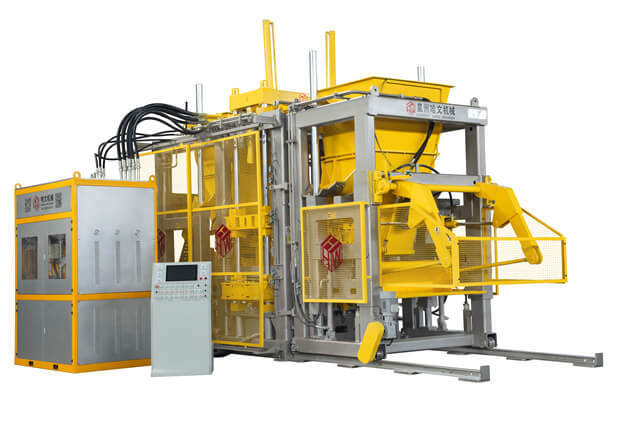
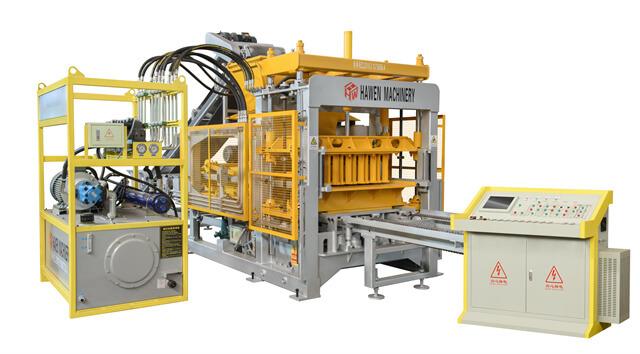
Hawen Machinery applies a four-shaft vibration box with eccentric blocks mounted outside the housing. By reducing resistance in the mechanism, the design supports even energy delivery, efficient consolidation, and economical cement use. The result still depends on stable consistency, full cavities, a rigid board, and synchronized timing. Excessive oscillation can segregate concrete or disturb the face layer.
Inspect the interlocking paver mould for worn chamfers, uneven shoes, buildup, and guide clearance. Hawen produces tooling compatible with Masa, Hess, Zenith, Poyatos, Besser, Tiger, Columbia, Quadra, Omag, and other major platforms. Heat treatment improves wear resistance, and finished sets are hardness-checked around HRC59-61 for stable geometry and service life.
Protect early hydration and handling
New pavers need controlled humidity and temperature so the face and body develop together. Prevent direct drafts, early drying, dripping condensation, and abrupt temperature transitions. Track chamber position because doors, heaters, steam outlets, roof panels, and outside rows create different microclimates. A room label cannot prove that every carrier received the same hydration environment.
Avoid early washing, aggressive brushing, or packaging before adequate strength develops. Check transfer acceleration, board level, rack support, and cube pressure. The automatic palletizing system should handle accepted units without scraping faces or concentrating load on vulnerable edges. Factory damage can later open an entry route for winter brine.
Preserve traceability from the chamber through the production pallet and finished cube. Mark samples before storage and retain companion units. If scaling appears months later, the factory should recover constituent certificates, recipe records, forming parameters, conditioning route, test results, and shipment identity. Without that chain, every explanation remains a guess.
Validate freeze-thaw and deicing-salt durability
Use representative random samples and the specified laboratory method. Do not simulate acceptance by freezing a few wet pavers outdoors or placing them in a household freezer. Standardized cycling controls specimen conditioning, solution, temperature, collection of scaled material, measurement, and reporting. Informal trials may compare options, but they cannot replace contractual testing.
Review mass loss or the required rating together with absorption, compactness, compressive strength, visible distress, and factory variation. A passing strength result alone cannot establish deicing-salt durability. Conversely, a failed durability test should trigger checks of specimen identity, exposure procedure, granular source, effective liquid, consolidation, chamber history, and face condition before a broad recipe change.
When a trial fails, isolate the lot and preserve failed specimens. Test an evidence-based correction against a baseline. The correction might involve source qualification, liquid dosing, grading, paste volume, mixing, cavity filling, consolidation, or early conditioning. Require repeatable results over consecutive output and normal stockpile replenishment before the revised method is considered stable.
Connect winter durability with Hawen line records
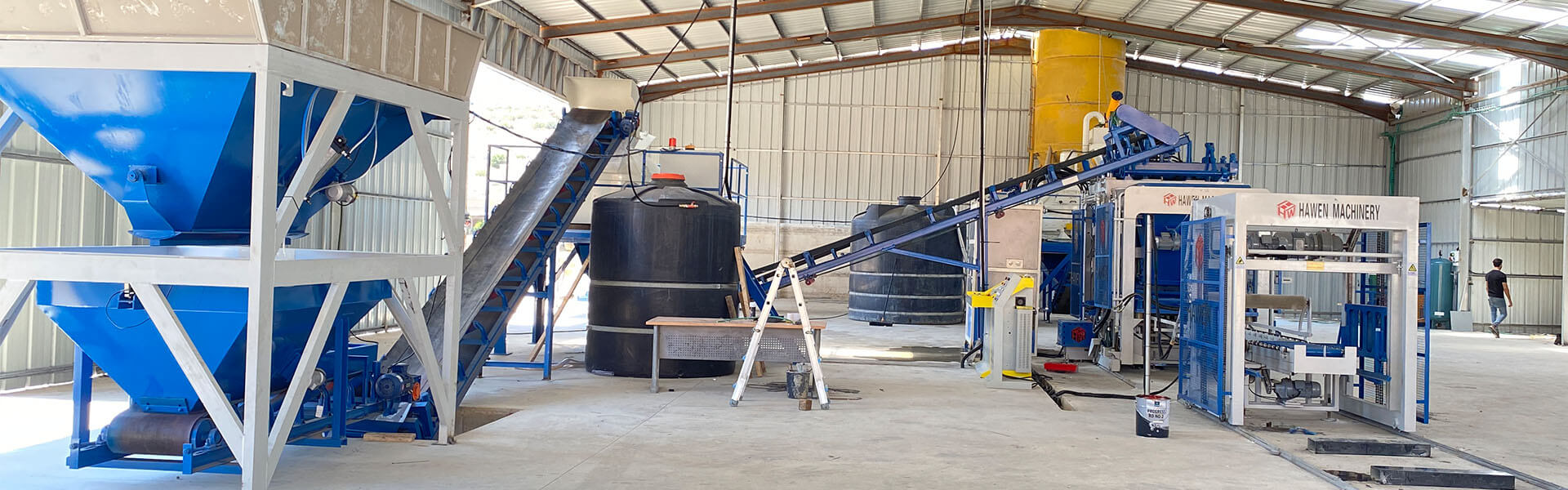
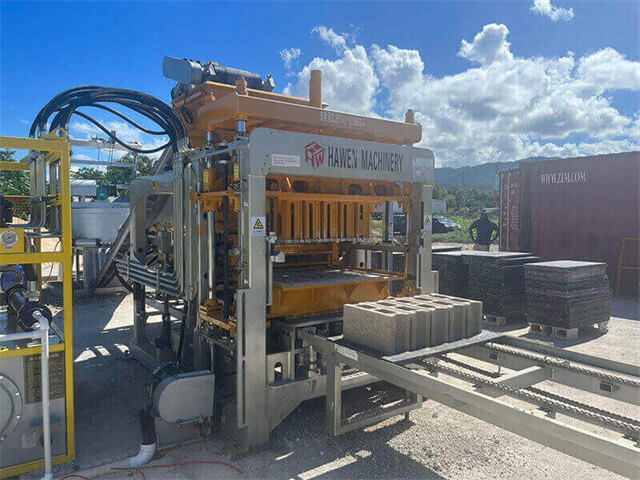
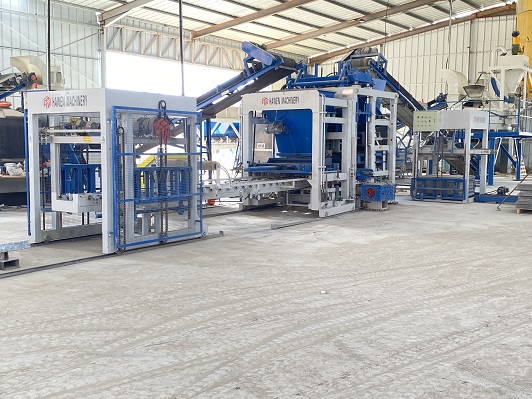
A QT15 block making machine, QT10 brick making machine, or QT8 production line can repeat a validated recipe only when inputs and measurements remain controlled. Hawen reviews weighing, mixing, transfer, forming, board flow, chamber interfaces, and finished handling as a connected factory path.
Hawen combines a SIEMENS S7-200 PLC, a clear touch panel, and remote monitoring to show real-time operating status and preserve repeatable sequence parameters. Hawen engineers can support remote optimization after the plant supplies reliable input and quality data. Parameter access should be controlled, and every approved recipe revision should have an owner, reason, trial record, and effective date.
Hydraulic stability also supports repeatable demoulding and pressing. Hawen configures the station with Japanese YUKEN proportional and directional valves and an American ALBERT pump, balancing precise response with sustained manufacturing duty. Operators should trend oil condition, temperature, pressure behavior, and motion consistency. Hydraulic force supports compactness but cannot replace sound particles, measured dosing, uniform filling, and verified chamber conditioning.
Action checklist
Confirm that the distress is scaling rather than efflorescence, pop-outs, abrasion, impact, or installation damage.
Define the unit specification, exposure class, test method, and traceable factory lot.
Qualify aggregate soundness, absorption, cleanliness, grading, and delivery consistency.
Measure effective liquid and control charging, mixing, face-layer timing, filling, and consolidation.
Protect early hydration and handling while preserving cavity-position and carrier traceability.
Validate the corrected process through specified freeze-thaw and deicing-salt testing before release.
A winter-resistant paver is created through a continuous chain rather than a stronger setting or richer recipe. Qualified stone and sand enter at the correct wetness, every particle receives controlled paste, the cavities fill evenly, consolidation builds uniform compactness, early hydration protects the new face, and testing proves performance under the exposure that matters. When that chain is measured and repeatable, the paver does more than survive a laboratory cycle. It protects the factory's reputation through seasons the producer may never see, turning disciplined manufacturing into durable public space.
FAQ
Is white material on a paver always freeze-thaw scaling? No. Efflorescence is a salt deposit, while scaling removes part of the concrete face. Clean and examine the unit before selecting a remedy.
Does high compressive strength guarantee salt-scaling resistance? No. Strength is useful evidence, but particle durability, absorption, connected pores, face compactness, hydration, saturation, and deicer exposure also matter.
Can more vibration always improve winter durability? No. Adequate uniform consolidation is important, but excessive or poorly synchronized vibration can segregate the mix or disrupt a face layer.
Should every market use the same freeze-thaw test limit? No. Apply the specified product standard, climate exposure, contract, and current local requirements for the destination market.
Why should stockpile wetness be measured during cold-weather manufacture? Wetness changes effective liquid content, coating, filling, consolidation, and pore structure even when the displayed recipe remains unchanged.
Can a sealer repair pavers made with a weak face? A sealer may change liquid entry when properly specified, but it cannot replace compliant constituents, manufacturing compactness, hydration protection, and durability verification.
How can Hawen help prevent repeat failures? Hawen can connect material dosing, mixing, forming, vibration, hydraulics, PLC records, molds, and handling into a traceable control plan for laboratory validation.










 Tel: +86-13905968794
 Email: export@hwmachines.com
 MP/WhatsApp: +86-13905968794
 Manufacturer Address:Nanan,Quanzhou City,Fujian Province,China