Concrete Block Water Absorption Test: Sampling, Drying, and Result Interpretation is a practical topic for buyers and plant managers who want a more stable block making machine workflow. The goal is not only to explain the issue, but to give a clear method that supports better output, cleaner operation, and stronger customer confidence.
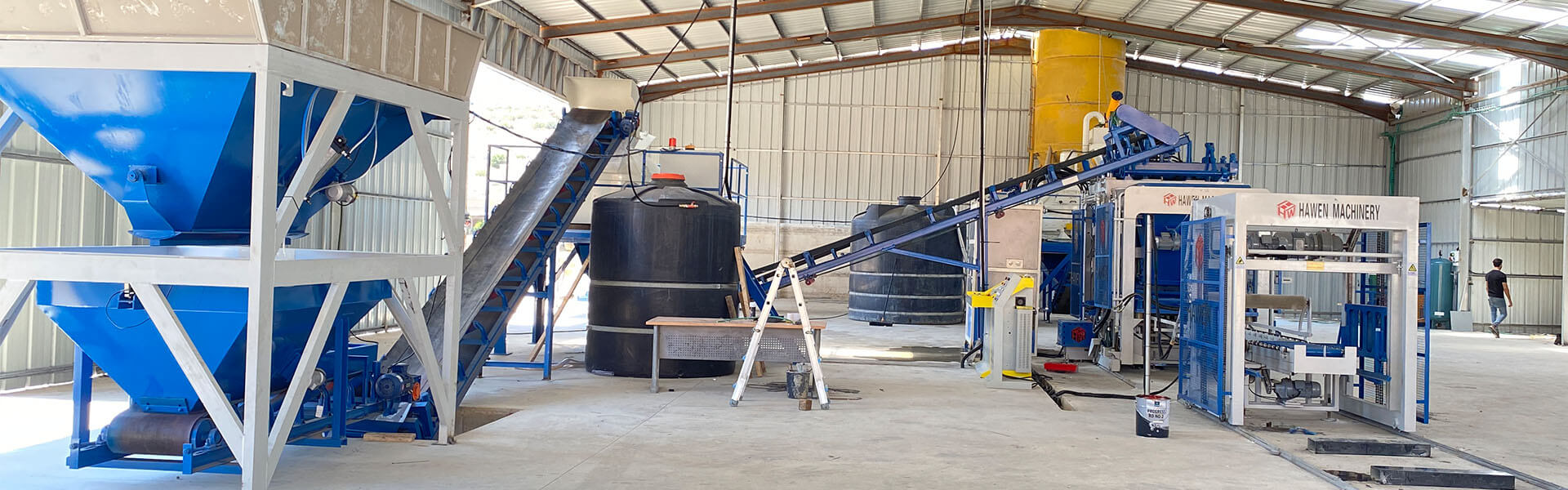
In a professional concrete products factory, the block machine, material system, mold, pallet circulation, control system, and operator routine must work as one process. A good solution therefore looks at the whole line before changing one visible setting.
A meaningful absorption result begins with units that represent a stable production lot, not hand-picked showcase pieces.
Understand what an absorption result means
Water absorption describes how much water a concrete masonry unit can hold under the specified saturated and dry conditions. It is influenced by aggregate pore structure, paste quality, consolidation, and the connected void system. It can reveal process variation, but it is not a direct test of an entire wall against rain penetration.
Absorption is also different from moisture content at delivery and from compressive strength. Two results may be related through density or production consistency, yet one cannot be substituted for the other. ASTM C140/C140M provides separate procedures for absorption, density, dimensions, and strength for this reason.
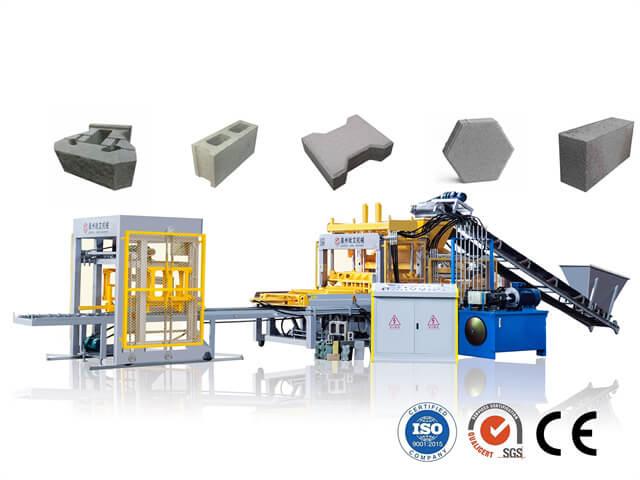
Choose the applicable product specification before judging the number. Hollow masonry units, concrete brick, interlocking pavers, and retaining-wall units can have different requirements. The block machine model does not determine the acceptance limit; the product type, density classification, contract, and governing standard do.
Build a sample that represents the production lot
Define the lot by product configuration, materials, mix design, manufacturing process, and curing condition. Select units randomly across the lot rather than taking only the cleanest top layer. Mark each unit with a traceable code that survives laboratory handling.
Record production date, pallet or cube number, recipe, curing route, and any process interruption. CMHA testing guidance emphasizes representative random sampling because the purpose is to describe the range of the lot, not the appearance of one preferred block.
Do not combine unlike geometries or production conditions into one average. If a hollow block line changed aggregate, recipe, tooling, or curing during the run, preserve those groups for separate evaluation. Keep spare identified units in case confirmation is required.
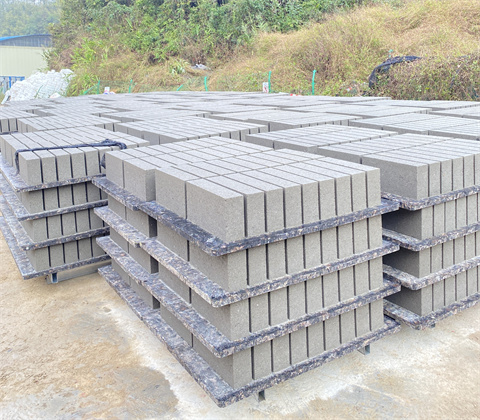
Pallet and batch identity allow the laboratory result to be traced back to materials, settings, curing, and handling.
Control every mass and conditioning step
Use the current applicable edition of ASTM C140/C140M and the correct product annex. The procedure relies on controlled received, immersed, saturated-surface-dry, and oven-dry mass determinations. A calibrated balance, suitable immersion arrangement, controlled oven, and consistent surface-drying practice are essential.
Follow the specified order, duration, temperature, and repeated-dry-mass criteria. Do not improvise a shorter soak or stop drying because the unit looks dry. Small procedural differences can change calculated absorption and density enough to create a false production alarm.
Units conditioned through immersion and oven drying should not automatically be reused for compression testing. Moisture and heat history can influence strength results. Maintain separate, correctly identified specimens in accordance with the test plan and laboratory procedure.
Interpret the result before changing the recipe
Check calculation units, specimen identity, balance records, surface-dry technique, oven-dry stability, and transcription before blaming production. Compare individual values as well as the reported average where the specification requires both. A single swapped mass can produce an impossible conclusion.
Trend the result against density, unit mass, aggregate source, moisture correction, mixing record, curing lot, and visual condition. Higher absorption may reflect porous aggregate or a more open internal structure. Wide variation within one lot can point toward batching, mixing, filling, compaction, curing, or sampling inconsistency.
Review the batching system, concrete mixer, and retained raw-material records before adding cement or water. Test a controlled correction on the brick making machine and keep the affected lot quarantined until its disposition is documented.
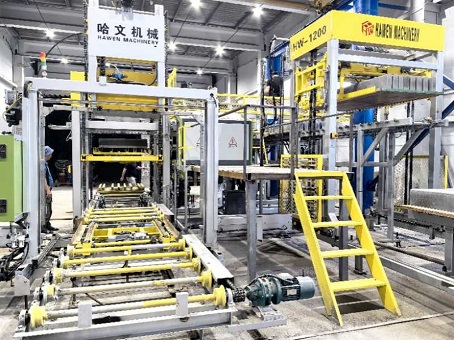
Accepted units can move into organized palletizing only after test results and lot disposition are documented.
Connect laboratory evidence with Hawen production data
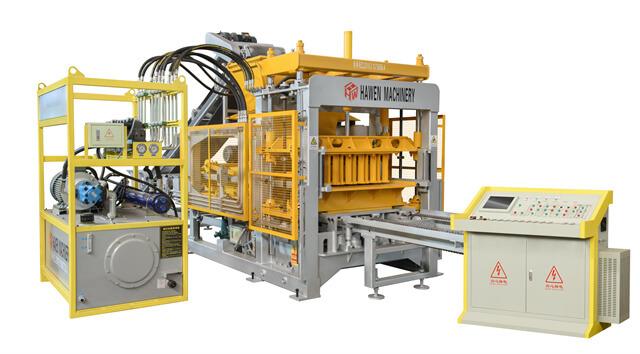
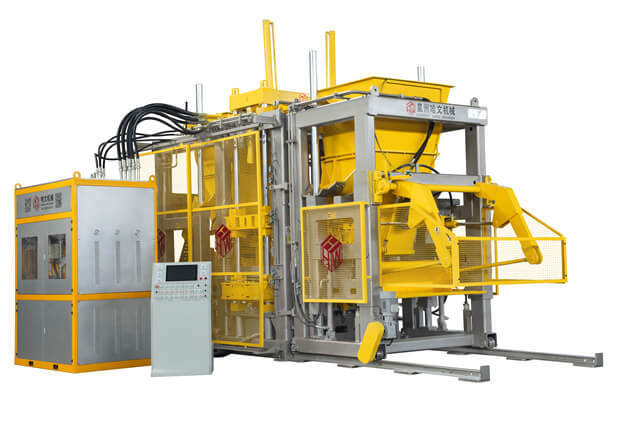
Hawen Machinery uses a four-shaft vibration box with eccentric blocks arranged outside the housing. The layout reduces resistance within the vibration mechanism and supports uniform compaction, helping the line use cement efficiently when feed and moisture are already controlled. Absorption testing can help verify whether that repeatability reaches the finished unit.
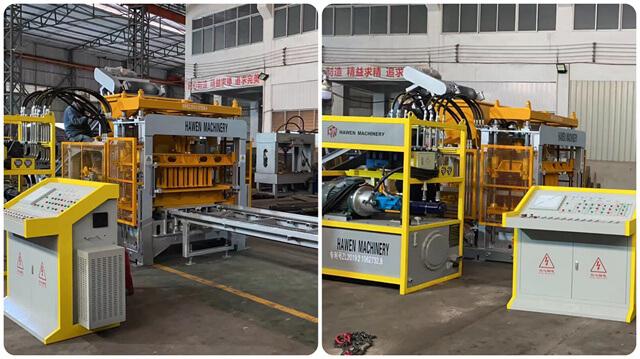
The Hawen control platform combines a SIEMENS S7-200 PLC, a clear touch panel, and remote monitoring. It lets operators review live machine status and repeatable sequence settings, while Hawen engineers can assist with remote parameter optimization. Laboratory records should be matched to those operating records rather than interpreted in isolation.
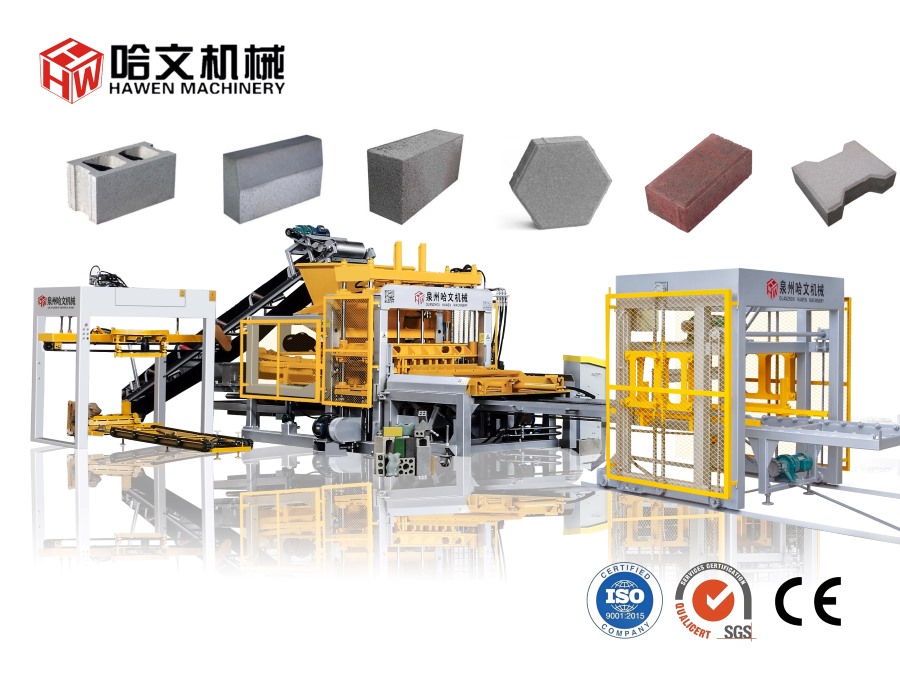
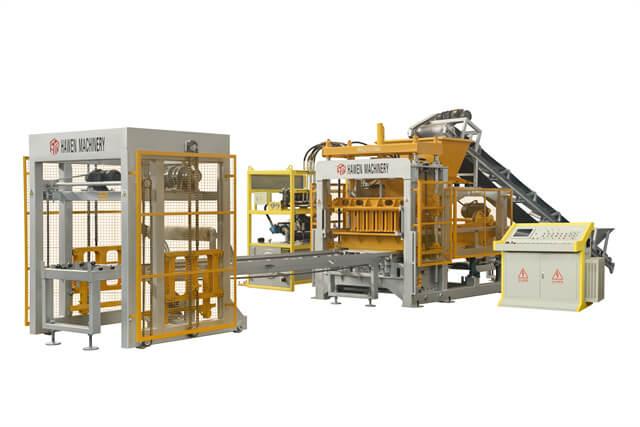
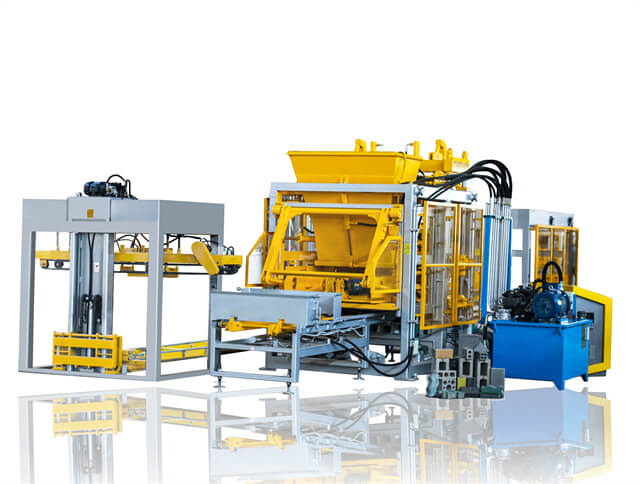
Whether the plant runs a QT6 brick machine or QT10 block making machine, the response to an abnormal result should be measured: verify the test, isolate the lot, identify the process change, trial one correction, and retest before release to the offline palletizing system.
Action checklist
Identify the governing product specification and the correct ASTM C140/C140M annex.
Define the production lot and select units randomly across its full range.
Preserve pallet, recipe, material, curing, and interruption traceability for every specimen.
Verify the balance, immersion setup, oven, mass sequence, and surface-dry procedure.
Audit calculations and test variables before changing water, cement, or machine settings.
Quarantine affected output and confirm any production correction through a new compliant test.
An absorption result is only a number until it is connected to a representative unit, a disciplined laboratory sequence, and a traceable production history. When those three lines meet, testing stops being paperwork after manufacture. It becomes a precise conversation between material, machine, and customer requirement, allowing every released block to carry evidence as well as strength.
FAQ
Is water absorption the same as water penetration through a wall? No. Unit absorption measures water held under a specified laboratory condition. Wall leakage also depends on joints, workmanship, detailing, exposure, and the complete assembly.
Can the same block be used for absorption and compression testing? Follow the applicable standard and laboratory plan. Units subjected to immersion and oven drying should not be assumed suitable for compression because conditioning can influence the result.
Why must samples be chosen randomly? Random selection reduces showcase bias and gives the result a better chance of representing the full production lot.
Does a high absorption result always mean insufficient cement? No. Aggregate porosity, grading, moisture, mixing, connected voids, consolidation, curing, and laboratory error can all influence the result.
Should hollow blocks and pavers use the same absorption limit? Not automatically. Apply the requirement for the specific product, density class, contract, and governing standard.
What should be checked before changing the recipe? Confirm specimen identity, weighing, conditioning, calculations, raw materials, batching, mixing, compaction evidence, and curing records.
How can Hawen support an absorption investigation? Hawen can help match laboratory trends with batching, mixing, forming, PLC status, machine settings, and lot traceability while the qualified laboratory controls the test.






 Tel: +86-13905968794
 Email: export@hwmachines.com
 MP/WhatsApp: +86-13905968794
 Manufacturer Address:Nanan,Quanzhou City,Fujian Province,China