Why Does the Block Machine Produce Different Block Densities? Different block densities can occur even when the same mould and machine are used throughout production. When some concrete blocks are denser than others, the products may show differences in weight, strength, surface appearance, or dimensional stability. The cause is usually related to material distribution, vibration, mould filling, or pressing conditions.

Overview
Density is an important indicator of concrete block quality. In an automatic block making machine, the concrete must be distributed and compacted consistently before the fresh products are removed from the mould.
If different cavities produce blocks with noticeably different density, the first step is to determine whether the difference occurs between mould cavities or between production cycles. This helps identify whether the problem is related to material distribution, machine operation, or changes in the concrete mix.
Process note: Block density should not be judged by vibration time alone. Concrete moisture, aggregate grading, feeding quantity, mould filling, vibration, and pressing all influence the final compacted condition.
Material Feeding
Uneven material feeding is one of the first factors to check when block density is inconsistent. Before vibration and pressing, each mould cavity needs to receive a suitable quantity of concrete.
If one cavity receives more material while another receives less, the amount of concrete available for compaction will be different. This can result in variations in product weight and density even when the same forming parameters are used.
Material moisture also affects feeding behavior. Concrete that is too wet may flow differently from a drier mix, while concrete that is too dry may have difficulty filling narrow or deep mould cavities evenly.

The concrete mixer should provide a relatively uniform mixture before the material enters the forming machine. Changes in aggregate moisture, cement content, or mixing time can change the behavior of the concrete during feeding and compaction.
Vibration and Compaction
Vibration helps the concrete move into the mould cavities and reduces the air gaps within the material. Consistent vibration allows the concrete to reach a more stable compacted condition before pressing and demoulding.
If vibration is insufficient, more air may remain inside the concrete, resulting in lower density. However, simply increasing vibration time does not always solve the problem. Excessive vibration can change the movement and distribution of the concrete and may also increase the production cycle time.
The vibration condition should therefore be considered together with the product type, concrete moisture, aggregate grading, and material quantity. Hollow blocks and solid blocks, for example, may require different forming conditions because their mould structures are different.
Pressing and Mould Filling
The pressing system provides the force needed to compact the concrete after material feeding and vibration. If the pressing movement is not stable or the mould is not correctly positioned, the compacted density may vary from one cycle to another.
The condition of the concrete block mould should also be checked. Worn or damaged mould cavities can affect material distribution and product geometry, while concrete residue inside the cavity can change the available forming space.
When only one or two cavities show a density difference, operators should compare those cavities with the others before changing the complete machine setting. A localized problem is often easier to identify through direct comparison.
If the density difference appears across all cavities, the operator should instead check the general material condition, vibration system, hydraulic pressing movement, and forming parameters.

Hawen Machinery Note
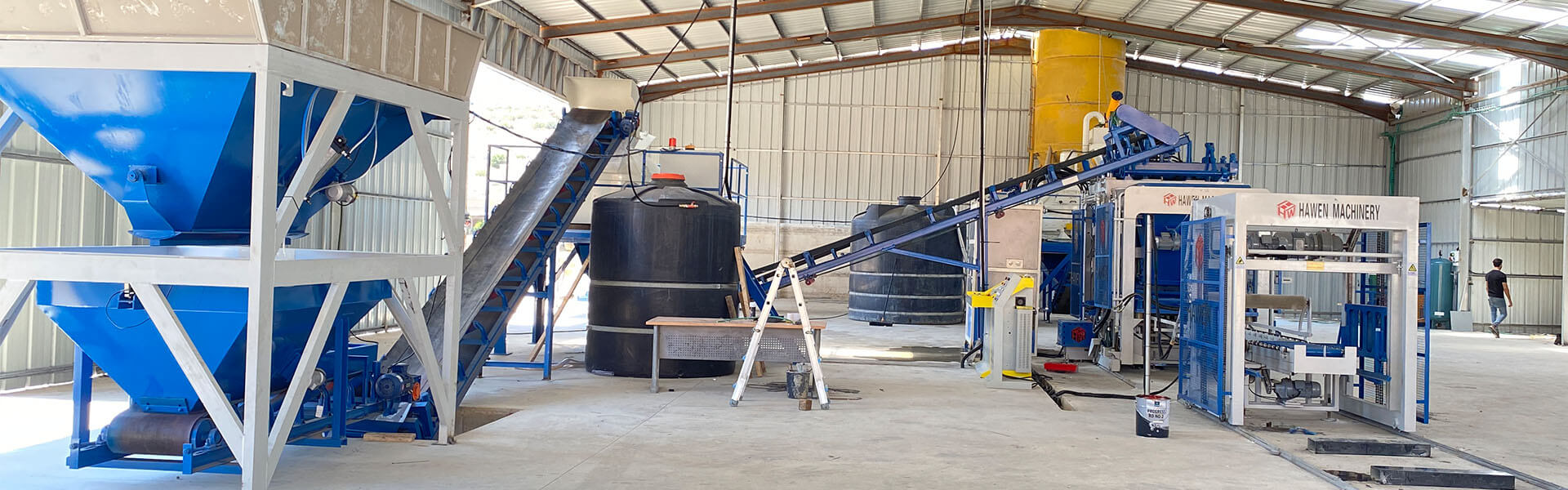
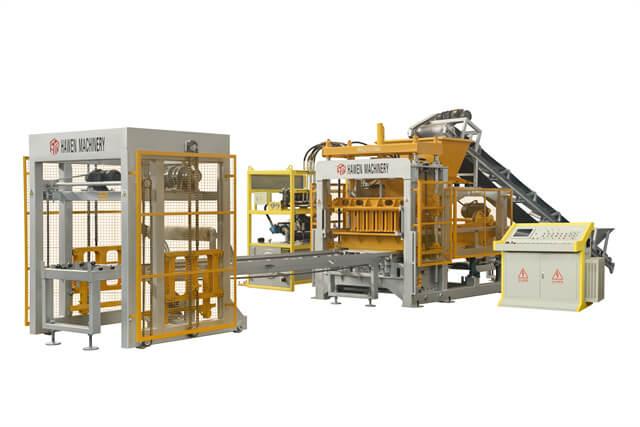
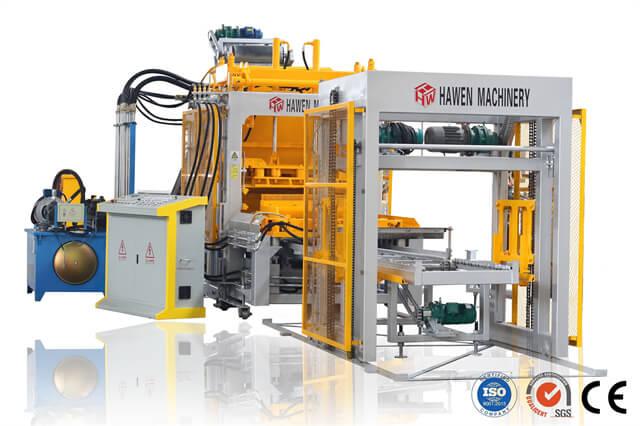
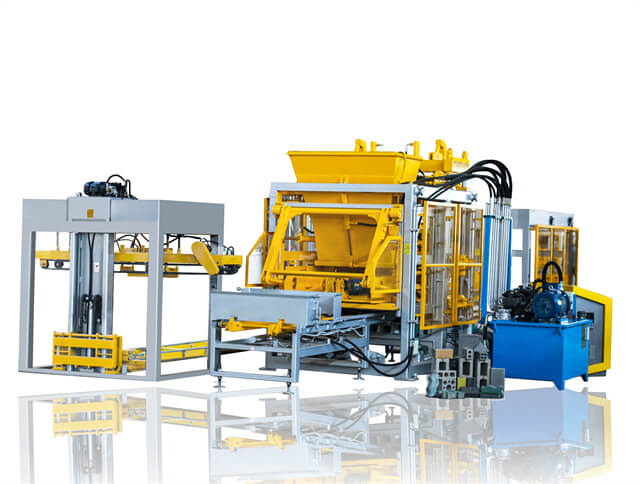
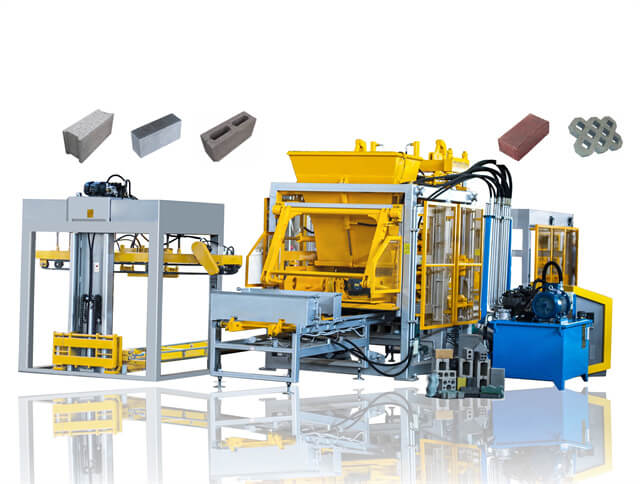
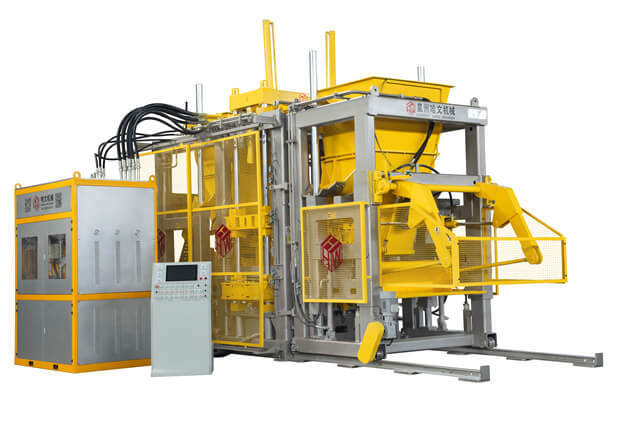
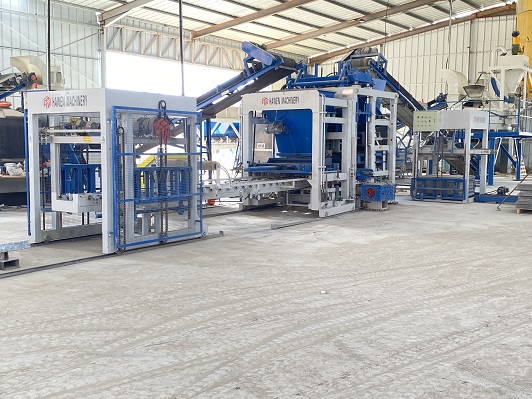
Hawen Machinery automatic block making machines combine material feeding, vibration, hydraulic pressing, and mould movement in one forming process. The vibration structure is selected according to the machine model and production requirements.
For different machine sizes, vibration systems can use different shaft configurations to provide the required compaction force. The hydraulic system controls the pressing and mould movement so that the forming sequence can be adjusted according to the product and mould.
During commissioning, trial production can be used to compare block weight, dimensions, surface condition, and density between different cavities. This provides a practical basis for adjusting the forming parameters instead of relying only on theoretical settings.
Production Checklist
- Check whether the concrete mix is uniform before feeding.
- Check concrete moisture and aggregate grading.
- Observe whether material is distributed evenly across all mould cavities.
- Check vibration time and vibration condition.
- Inspect the mould cavities for residue, wear, or deformation.
- Observe hydraulic pressing and mould movement during forming.
- Compare the weight and dimensions of blocks from different cavities.
- Change one parameter at a time and record the production result.
Consistent block density comes from a stable forming process. Material feeding, concrete condition, vibration, mould filling, and pressing should work together rather than being adjusted separately without checking the complete process.
FAQ
Why do some concrete blocks have different densities?
Common causes include uneven material feeding, changes in concrete moisture, inconsistent vibration, mould filling differences, or unstable pressing conditions.
Can concrete moisture affect block density?
Yes. Changes in moisture can affect material flow, filling, vibration behavior, and the final compacted condition of the block.
Does longer vibration always increase block density?
No. Vibration needs to be matched with the concrete mix and product type. Excessive vibration does not necessarily produce better compaction.
Why is only one mould cavity producing a different density?
Check that cavity for material distribution, mould residue, wear, or deformation before changing the complete machine setting.
How can block density be checked during production?
Operators can compare product weight, dimensions, surface condition, and, when required, laboratory test results between different production samples.




 Tel: +86-13905968794
 Email: export@hwmachines.com
 MP/WhatsApp: +86-13905968794
 Manufacturer Address:Nanan,Quanzhou City,Fujian Province,China