Why Your Production Costs Keep Increasing
Author:HAWEN Block MachineFROM:Brick Production Machine Manufacturer
TIME:2026-05-13
In the concrete products industry, rising production costs rarely originate from a single problem. More often, they emerge gradually through accumulated inefficiencies: unstable raw materials, excessive cement consumption, poor machine coordination, unplanned downtime, or inadequate process control.
For many manufacturers operating a block machine or brick making machine, the most dangerous issue is not visible failure, but invisible waste hidden inside daily production cycles.
The reality is straightforward: if your concrete blocks are becoming more expensive to produce year after year, your production system is likely losing efficiency somewhere in the chain.
This article examines the real reasons why block production costs continue to increase and how manufacturers can regain operational control before profitability begins to erode.
1. Excessive Cement Consumption
In most concrete block factories, cement represents one of the largest recurring expenses. Even a slight increase in cement ratio can substantially affect long-term production costs.
Many operators attempt to compensate for poor compaction or inconsistent block strength by simply adding more cement. While this may temporarily improve compressive strength, it often masks deeper production problems.
Typical causes include:
Uneven vibration performance
Incorrect moisture ratio
Poor aggregate grading
Worn mould components
Inconsistent feeding systems
In a modern block making machine, efficient compaction should reduce dependence on excessive cement usage rather than encourage it.
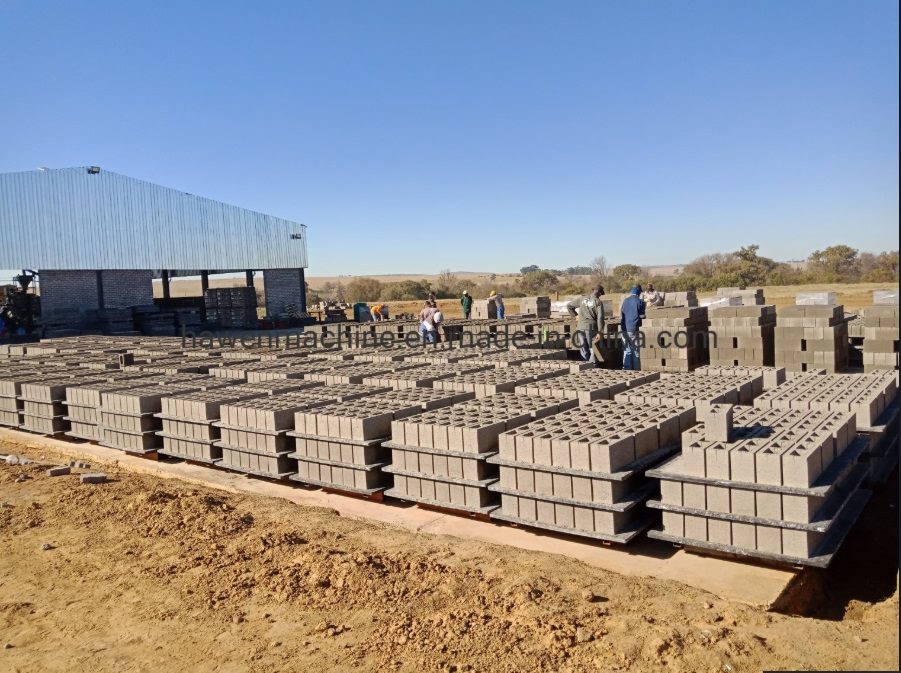
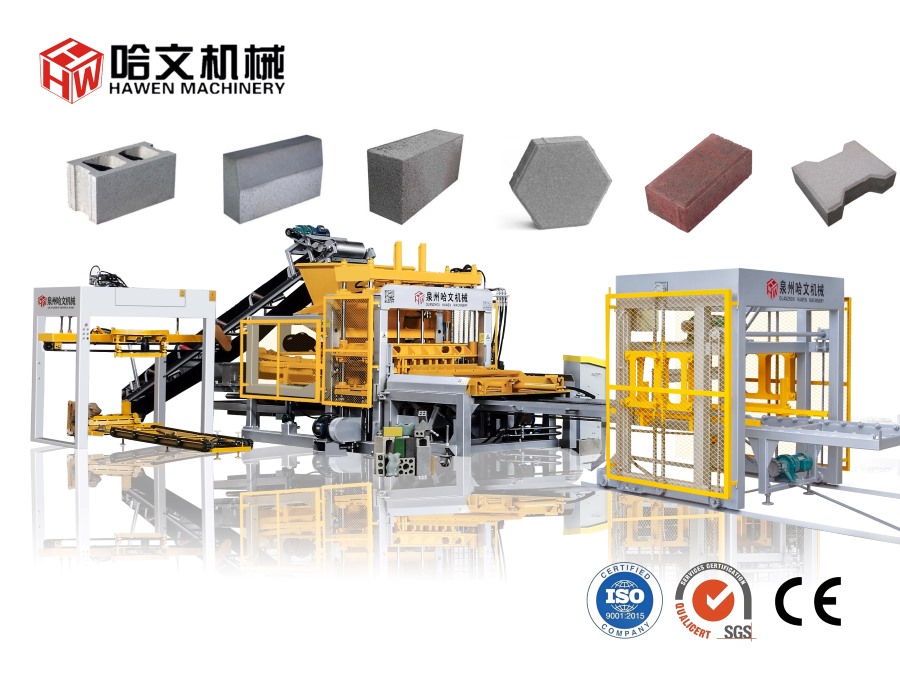
Hawen Machinery adopts a four-shaft vibration box structure with externally positioned eccentric blocks. This configuration minimizes vibration resistance, improves material distribution, and enhances compaction uniformity. As a result, concrete density can be improved while unnecessary cement consumption is reduced.
Note: In large-scale block production, reducing cement usage by even 3–5% may significantly improve annual operating margins.
2. Frequent Machine Downtime
Production interruption is one of the most underestimated cost drivers in the block manufacturing business.
A brick machine that stops repeatedly due to hydraulic instability, sensor failure, or electrical malfunction does not merely lose production time. It also increases labor inefficiency, energy waste, and material loss.
In many factories, downtime originates from:
Hydraulic oil overheating
Delayed maintenance
Poor-quality electrical components
Inadequate lubrication
Incorrect machine parameter settings
This is why equipment stability is economically more important than nominal production capacity.
At Hawen Machinery, the hydraulic systems of our block machines integrate Japanese YUKEN proportional valves together with high-performance ALBERT hydraulic pumps from the United States. This combination enables more accurate pressure regulation, smoother operation under heavy load, and stronger long-term durability in continuous production environments.
For high-temperature regions, oil cooling systems can further stabilize hydraulic performance and prevent thermal degradation of hydraulic oil.
3. Inconsistent Block Quality Creates Hidden Financial Losses
Many factories focus exclusively on production quantity while overlooking rejection rates.
However, cracked blocks, uneven density, dimensional deviation, and surface defects all contribute to hidden operational losses.
Once defective products accumulate, manufacturers face:
Increased material waste
Customer complaints
Transportation losses
Reduced market credibility
Higher replacement costs
A stable block machine must therefore prioritize consistency, not merely output volume.
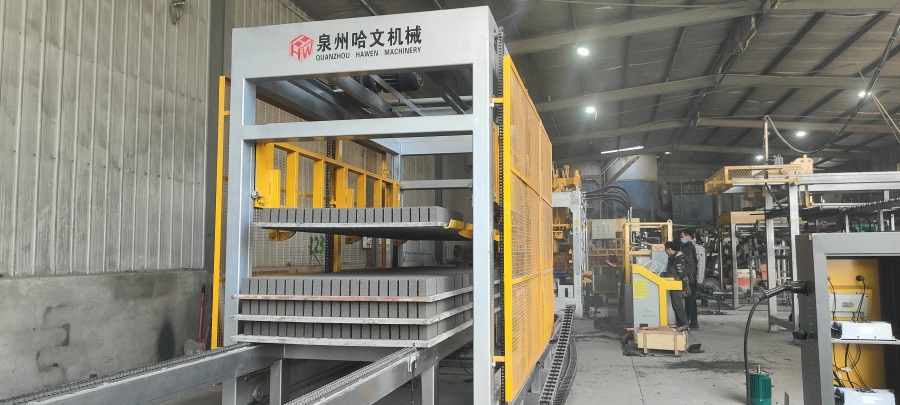
Modern control systems play a decisive role here. Hawen Machinery integrates a SIEMENS S7-200 PLC system combined with an intelligent touch-screen interface and remote monitoring capability. Through real-time operational analysis, production parameters can be adjusted remotely, allowing operators to maintain stable block quality under varying working conditions.
This level of automation significantly reduces human error and improves long-term production consistency.
4. Low-Quality Moulds Increase Long-Term Costs
Some manufacturers attempt to reduce initial investment by purchasing low-cost moulds. In practice, this often produces the opposite economic result.
Inferior moulds wear rapidly, lose dimensional precision, and generate unstable block geometry. As wear intensifies, vibration efficiency declines and cement consumption frequently increases.
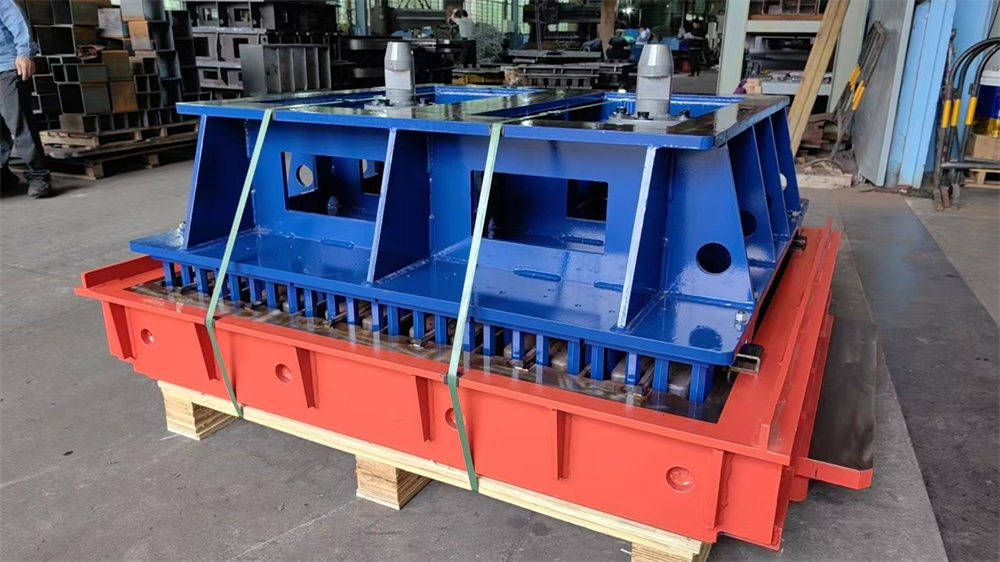
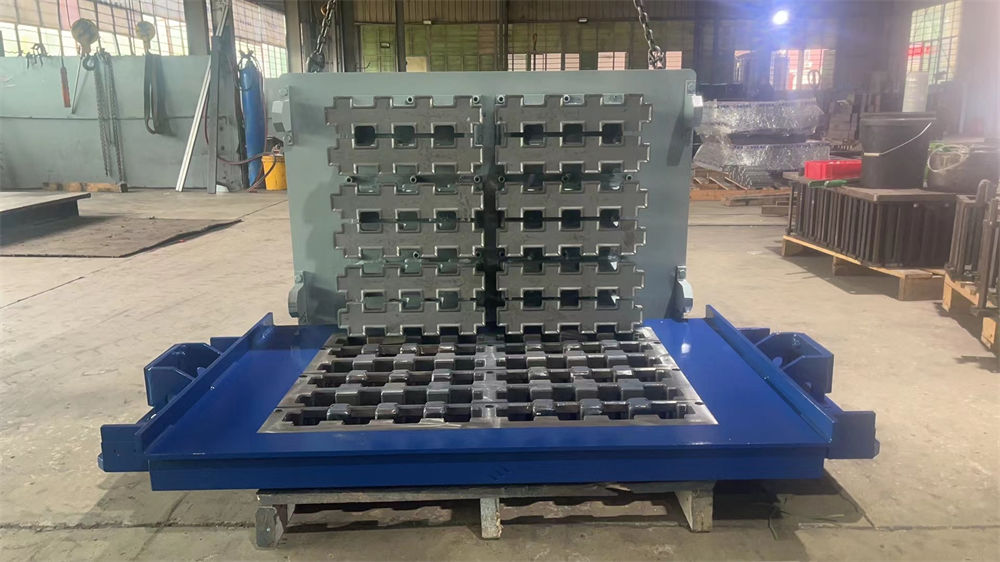
At Hawen Machinery, moulds are manufactured for compatibility with internationally recognized block machine brands, including Masa, Hess, Zenith, Poyatos, Besser, Tiger, Columbia, Quadar, Omag, and others.
By following original technical specifications, these moulds ensure:
Accurate installation
Stable operation
Reduced vibration deviation
Consistent product dimensions
All moulds undergo heat treatment to improve abrasion resistance, while hardness testing reaches approximately HRC 60–62 to ensure long service life under continuous industrial production conditions.
In reality, durable moulds are not an expense; they are a cost-control instrument.
5. Inefficient Labor Allocation
In factories with outdated management structures, labor costs often rise faster than production output.
This typically occurs when:
Operators manually adjust machine parameters
Material feeding lacks automation
Pallet handling depends heavily on manpower
Production scheduling remains inconsistent
A well-designed brick making machine should reduce operational dependence on manual intervention.
Automation does not necessarily eliminate workers. More importantly, it reallocates labor toward supervision, quality control, and logistics coordination rather than repetitive physical tasks.
Factories that fail to modernize operational workflows often experience rising labor costs without proportional increases in productivity.
6. Poor Data Monitoring Leads to Chronic Inefficiency
Many factories still rely on subjective judgment rather than measurable production data.
Without accurate monitoring, operators cannot precisely identify:
Energy consumption trends
Downtime frequency
Production bottlenecks
Material loss ratios
Output fluctuations
As a result, inefficiency becomes normalized.
Modern block making machine systems increasingly depend on data-driven management rather than purely experience-based operation.
Real-time monitoring allows manufacturers to optimize vibration cycles, feeding intervals, hydraulic pressure, and curing consistency with far greater precision.
Over time, these small adjustments create substantial cost reductions.
7. Lack of Preventive Maintenance
Some factory owners only repair equipment after failure occurs.
This reactive maintenance model is significantly more expensive than preventive maintenance.
Neglected issues such as:
Loose vibration bolts
Contaminated hydraulic oil
Worn bearings
Misaligned mould components
can gradually evolve into severe mechanical failures.
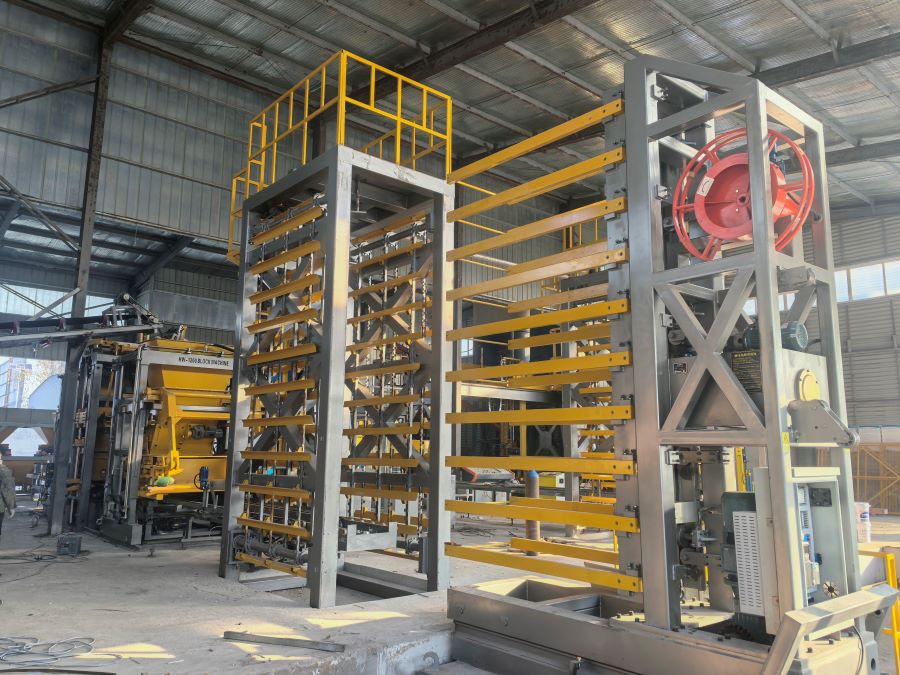
Preventive maintenance extends equipment lifespan, stabilizes production quality, and reduces unexpected shutdowns.
In industrial manufacturing, reliability is rarely accidental. It is usually the result of disciplined maintenance routines.
Conclusion
Rising production costs are not inevitable. In most cases, they are symptoms of inefficiency embedded within the production system itself.
The factories that remain competitive are not always those with the largest plants or the lowest selling prices. More often, they are the manufacturers capable of controlling waste, stabilizing quality, and optimizing every stage of production with precision.
A modern block machine is no longer merely a piece of mechanical equipment. It is a coordinated industrial system in which vibration efficiency, hydraulic stability, mould precision, automation logic, and operational data collectively determine profitability.
Ultimately, sustainable success in block manufacturing does not come from producing more at any cost. It comes from producing intelligently, consistently, and efficiently in an increasingly competitive market.
Because in the long run, the true advantage does not belong to the factory that works the hardest. It belongs to the factory that understands its production system the best.
FAQ
1. Why does my block production cost increase even when raw material prices remain stable?
In many cases, rising costs originate from hidden inefficiencies such as excessive cement usage, unstable machine operation, high rejection rates, or increasing downtime rather than raw material inflation alone.
2. Can an advanced control system really reduce production costs?
Yes. Intelligent PLC systems improve parameter accuracy, reduce human error, stabilize product quality, and minimize unnecessary material waste during operation.
3. How often should moulds be inspected in a concrete block factory?
For continuous industrial production, mould inspection should be conducted regularly based on production volume and wear conditions. Early detection of wear helps maintain block quality and prevents excessive material consumption.
4. Does vibration performance affect cement consumption?
Absolutely. Poor vibration efficiency can lead to insufficient compaction, forcing operators to increase cement ratio to maintain block strength. Efficient vibration systems improve density while reducing unnecessary cement usage.
5. Why is preventive maintenance important for a brick making machine?
Preventive maintenance helps identify small issues before they develop into major mechanical failures. This reduces downtime, extends equipment lifespan, and improves long-term production stability.





 Tel: +86-13905968794
 Email: export@hwmachines.com
 MP/WhatsApp: +86-13905968794
 Manufacturer Address:Nanan,Quanzhou City,Fujian Province,China