The Real Reasons Your Block Machine Output Is Low
Author:HAWEN Block MachineFROM:Brick Production Machine Manufacturer
TIME:2026-05-08
In the concrete products industry, low output is rarely caused by a single mechanical defect. More often, it is the cumulative consequence of inefficient workflow design, unstable raw materials, inadequate maintenance, improper parameter settings, and insufficient coordination between different systems inside the production line.
Many factory owners invest heavily in a new block machine, brick machine, block making machine, or brick making machine, expecting immediate productivity growth. Yet after several months of operation, the actual production volume remains far below expectations.
This discrepancy reveals an important industrial reality:
Production capacity on paper is not the same as effective production capacity in real-world operation.
Understanding the genuine causes behind low output is therefore essential for any manufacturer seeking sustainable profitability.
1. Inconsistent Raw Materials Slow Down Production
One of the most underestimated factors in block production is material consistency.
When aggregate grading fluctuates excessively or moisture content changes throughout the day, the feeding and compaction process becomes unstable. Operators are then forced to repeatedly adjust vibration time, water dosage, or pressing parameters.
This interrupts production rhythm and reduces cycle efficiency.
In many factories operating a block making machine, unstable raw materials create hidden downtime that is never formally recorded, yet cumulatively causes substantial productivity loss.
Even a highly advanced brick making machine cannot maintain stable output if the concrete mixture itself lacks consistency.
Note:
Stable production begins long before the material enters the mold cavity. Aggregate screening and moisture control are often more important than operators initially assume.
2. Improper Moisture Content Reduces Forming Efficiency
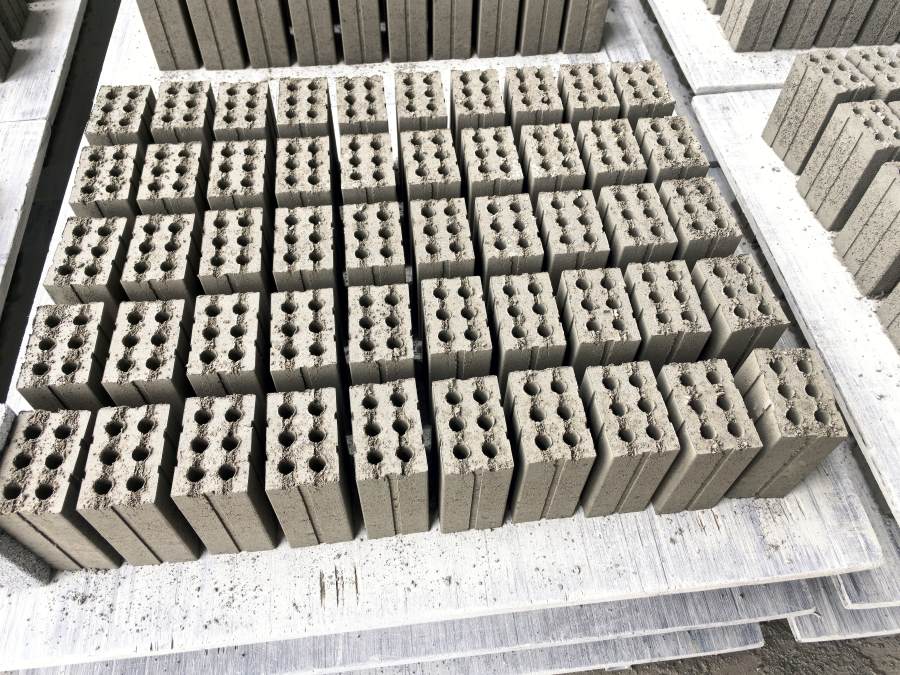
Concrete that is excessively wet tends to stick to the mold surface, prolonging demolding time and increasing cleaning frequency. Conversely, overly dry mixtures fail to compact efficiently, leading to cracks and structural weakness.
Both situations reduce production speed.
Efficient block formation depends on achieving an optimal balance between flowability and compactability.
This is particularly critical in high-frequency block machine operations where even a two-second delay per cycle can significantly reduce daily output.
3. Vibration Performance Is Insufficient
Vibration efficiency directly determines forming speed and block density.
Weak or poorly synchronized vibration systems require longer compaction cycles to achieve acceptable strength. As production continues, this dramatically lowers hourly capacity.
In modern brick machine engineering, vibration structure design has become increasingly sophisticated.
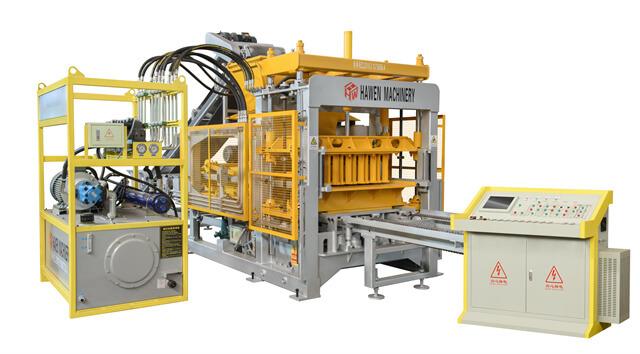
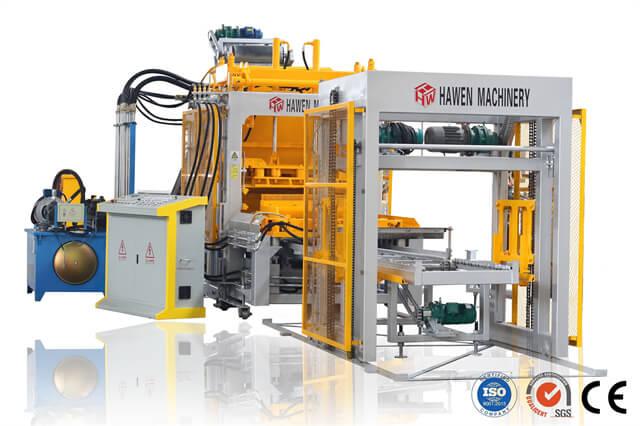
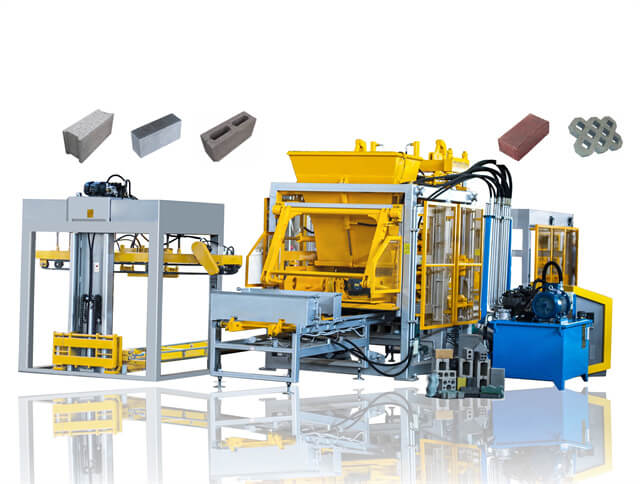
Hawen Machinery, for instance, employs a four-shaft vibration box configuration with eccentric blocks mounted externally to the housing. This arrangement minimizes internal resistance during operation, improves vibration transmission efficiency, enhances material compaction uniformity, and helps reduce unnecessary cement consumption.
The practical result is shorter cycle time with more stable block quality.
4. Hydraulic System Instability Creates Hidden Downtime
The hydraulic system functions as the dynamic core of a block making machine. Once pressure fluctuations emerge, operational synchronization deteriorates rapidly.
Slow cylinder response, overheating hydraulic oil, internal leakage, or unstable pressure control can all reduce production efficiency.
In severe cases, operators repeatedly stop the machine for manual intervention, which significantly lowers overall output.
At Hawen Machinery, hydraulic systems are configured using high-precision Japanese YUKEN proportional and directional valves together with robust American ALBERT hydraulic pumps. This combination improves response sensitivity, stabilizes pressure transmission, and supports continuous heavy-duty operation under demanding industrial conditions.
For tropical or high-temperature regions, oil cooling devices are often integrated into the hydraulic station to maintain oil viscosity stability and prevent thermal degradation.
5. Mold Wear Gradually Reduces Production Speed
Many operators focus exclusively on machine performance while neglecting mold condition.
However, worn molds create multiple operational problems:
Difficult demolding
Increased block edge damage
Material leakage
Longer cycle adjustment time
Reduced dimensional accuracy
Over time, these issues substantially reduce effective output.
High-quality molds therefore play a strategic role in production efficiency.
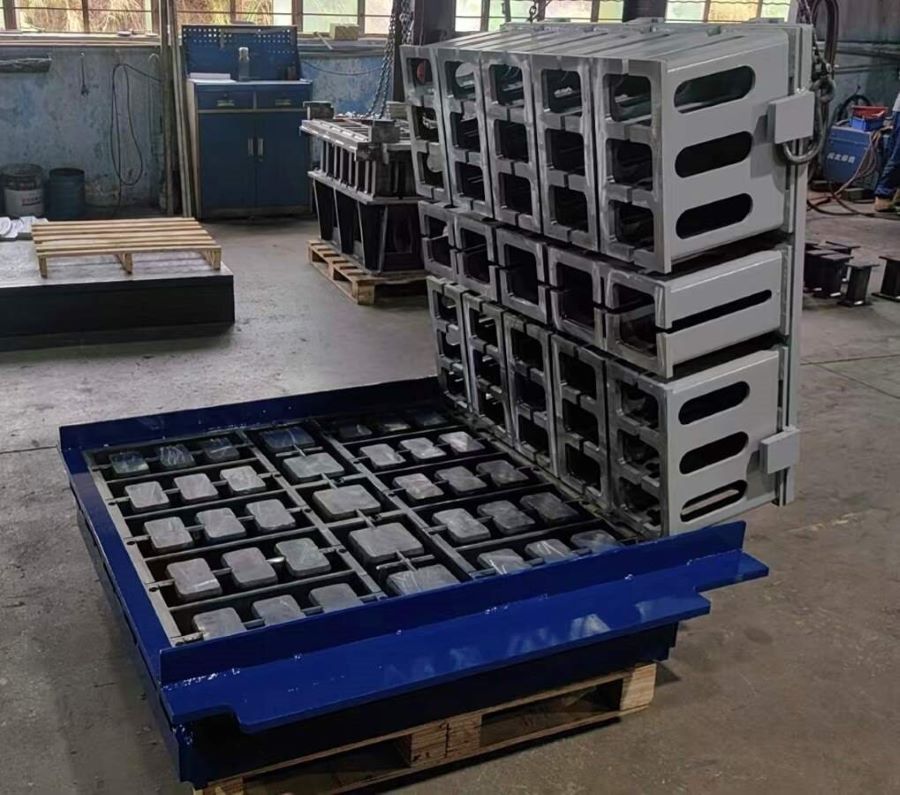
Hawen Machinery manufactures molds compatible with internationally recognized block machine brands such as MASA, HESS, ZENITH, POYATOS, BESSER, and TIGER. By adhering to original dimensional specifications, the molds maintain stable installation accuracy and smooth operational coordination.
Additionally, all molds undergo heat treatment processes and hardness verification within the HRC 60–62 range, improving wear resistance under long-term high-frequency production.
6. Operators Lack Technical Understanding
Even advanced automation cannot fully compensate for insufficient operator training.
Many production inefficiencies arise because operators fail to correctly interpret:
Pressure fluctuation signals
Vibration abnormalities
Material flow inconsistencies
Hydraulic temperature warnings
Sensor feedback delays
As a result, minor problems gradually evolve into major production interruptions.
Factories with strong technical training programs often outperform competitors using identical equipment.
7. Poor Coordination Between Systems
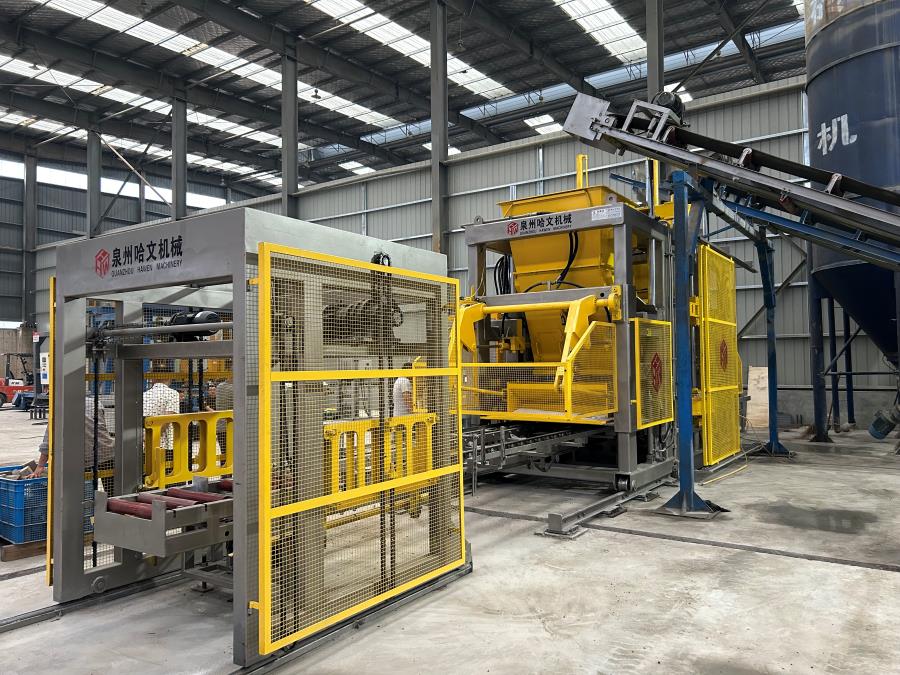
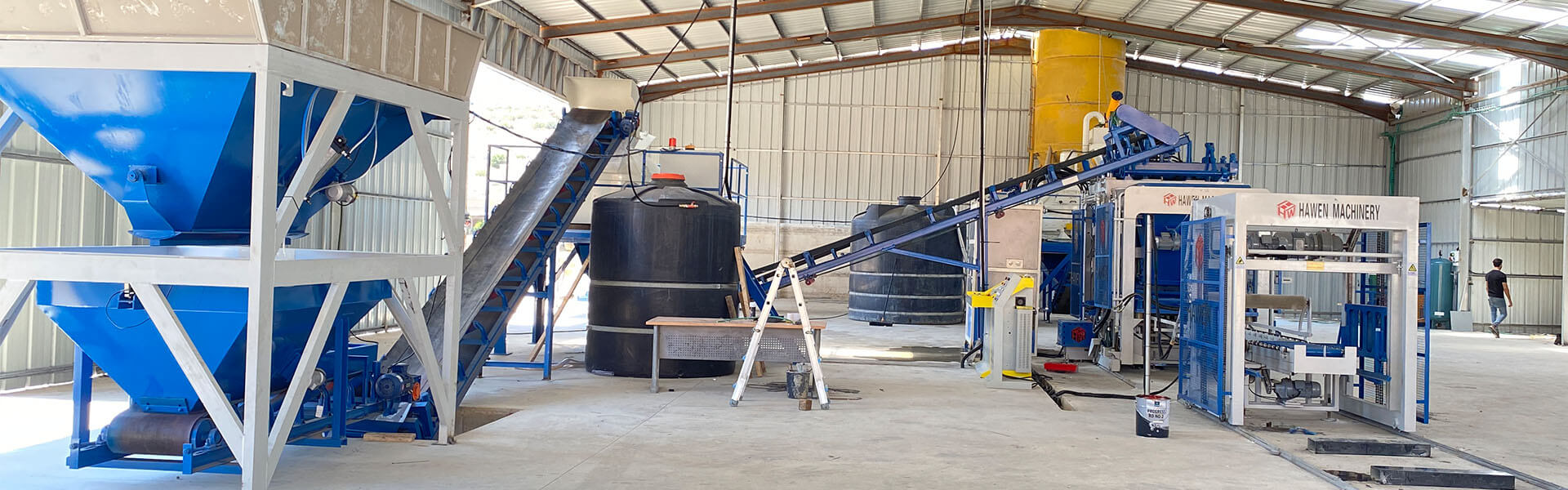
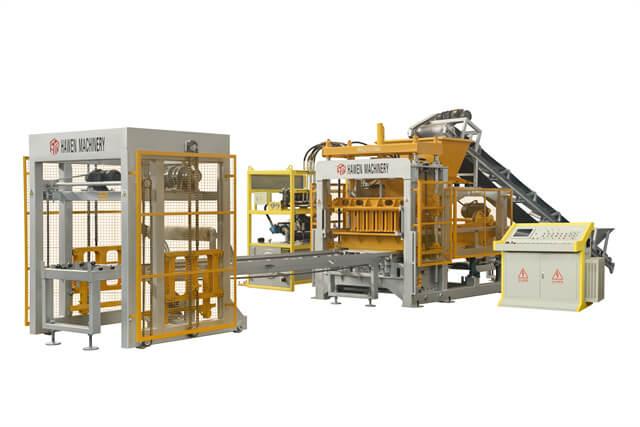
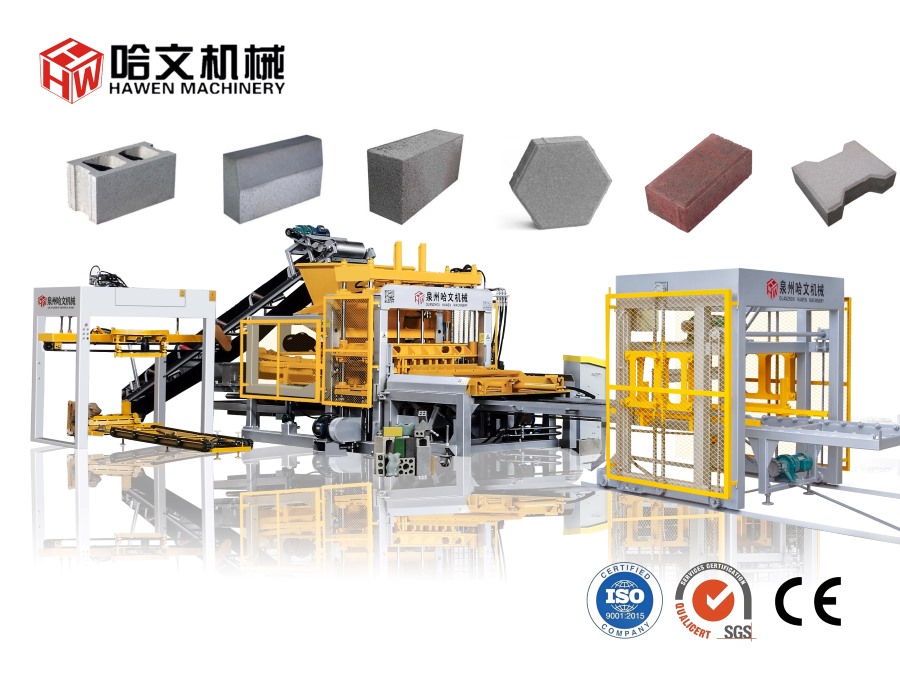
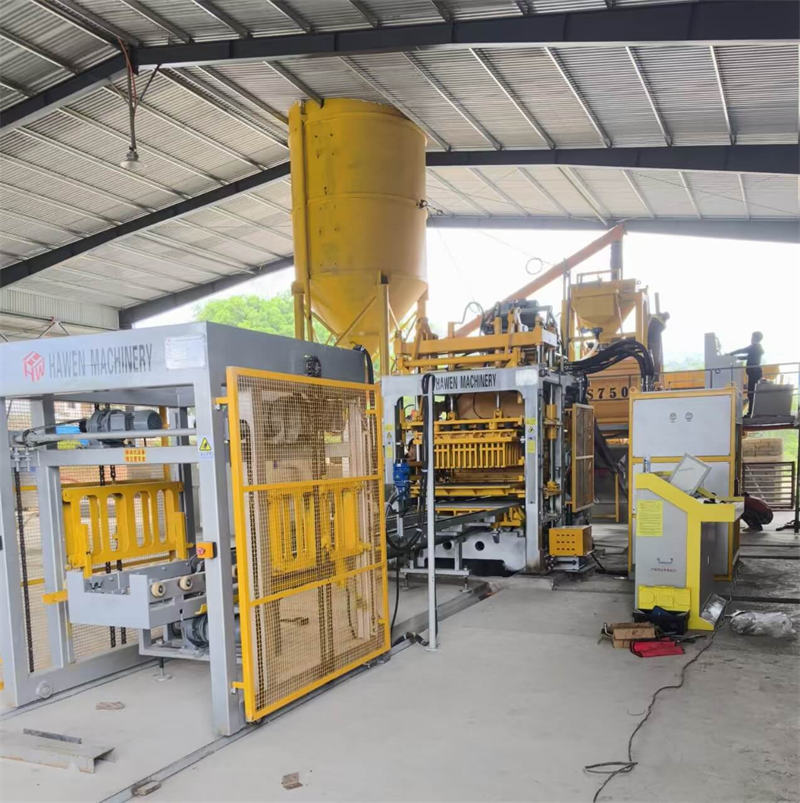
A brick making machine does not operate as an isolated unit. Productivity depends on synchronization across the entire production line, including:
Batching systems
Mixers
Conveyors
Pallet feeding units
Stacking equipment
Control systems
If one subsystem operates slower than the others, the entire line experiences bottlenecks.
This is why modern automation increasingly relies on intelligent control integration.
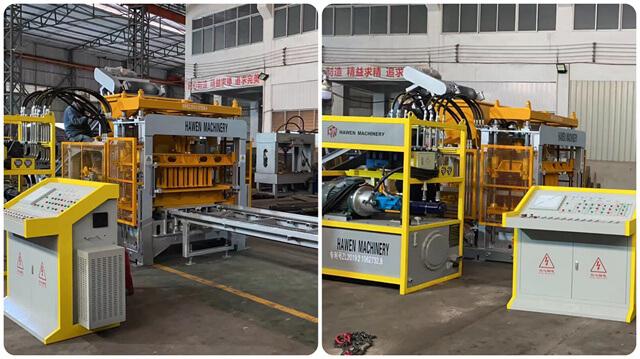
Hawen Machinery integrates SIEMENS S7-200 PLC control systems with touchscreen interfaces and remote monitoring functionality. Through real-time operational analysis, production parameters can be optimized remotely, helping customers maintain stable output and minimize avoidable downtime.
8. Maintenance Is Reactive Rather Than Preventive
Many factories only perform maintenance after visible failures occur.
This approach is economically inefficient.
Preventive maintenance—including lubrication, hydraulic oil inspection, vibration component checks, and electrical diagnostics—significantly extends machine stability and reduces unexpected stoppages.
Ironically, the factories producing the highest daily output are often not those with the newest block machine, but those with the most disciplined maintenance culture.
FAQ: Low Output in Block Production
1. Why does my block machine produce fewer blocks than the rated capacity?
Rated capacity is calculated under ideal conditions. In actual production, raw material inconsistency, operator skill, maintenance quality, and cycle interruptions all reduce effective output.
2. Can poor molds reduce production speed?
Yes. Worn or inaccurate molds increase demolding resistance, prolong cycle time, and create more defective blocks.
3. Does hydraulic oil temperature affect production efficiency?
Absolutely. Overheated hydraulic oil reduces viscosity stability, weakens pressure transmission, and may cause slower machine response.
Final Thoughts
Low production output is rarely a purely mechanical problem. More often, it reflects a deeper imbalance between equipment capability, operational discipline, material consistency, and technical management.
A modern block machine, brick machine, block making machine, or brick making machine is not merely a piece of industrial equipment. It is a coordinated manufacturing ecosystem in which hydraulics, vibration, automation, molds, raw materials, and human expertise must function in precise alignment.
Factories that understand this principle do not pursue output through brute force alone. Instead, they cultivate stability, process control, and operational intelligence.
And in industrial manufacturing, sustainable efficiency ultimately becomes a form of competitive power.
Because the true objective is not simply to produce more blocks per day, but to build a production system capable of performing reliably, economically, and consistently for years rather than months.






 Tel: +86-13905968794
 Email: export@hwmachines.com
 MP/WhatsApp: +86-13905968794
 Manufacturer Address:Nanan,Quanzhou City,Fujian Province,China