In international construction materials manufacturing, consistency and durability are not merely desirable—they are decisive. This recent cooperation with a Ukrainian client illustrates how precision tooling, when aligned with practical production needs, can significantly enhance both efficiency and product quality.
Project Background: From Trial Order to Bulk Reorder
The customer, based in Ukraine, had previously sourced molds from European suppliers. After operating two sets of molds over an extended period, they developed a clear benchmark: dimensional accuracy, wear resistance, and long service life were non-negotiable.
Seeking a more cost-effective yet equally reliable alternative, the client initiated a trial order with Hawen Machinery. The scope was deliberately limited, allowing for real-world validation under their existing production conditions.
The outcome was decisive. Following successful testing and stable performance in daily production, the client proceeded with a repeat order of seven additional mold sets. This transition—from cautious trial to confident bulk procurement—reflects not only product reliability but also trust built through performance.
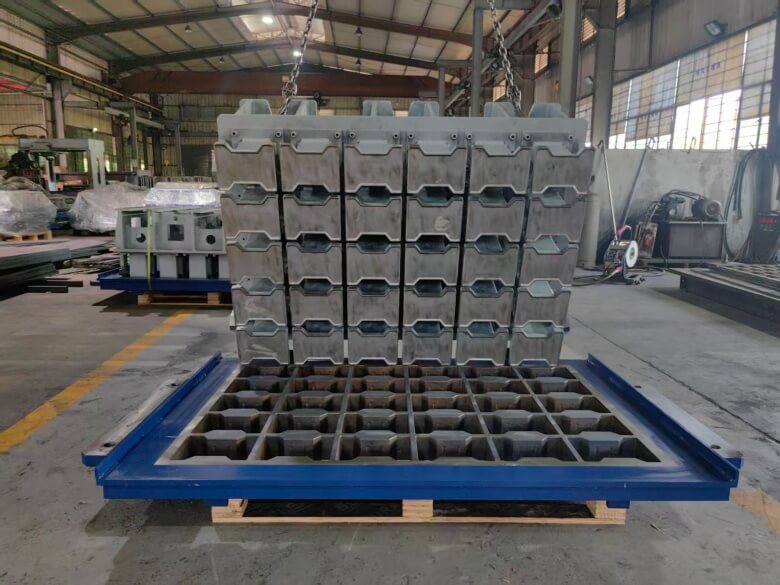 Mould Types and Application Scope
The delivered molds were designed for three primary product categories:
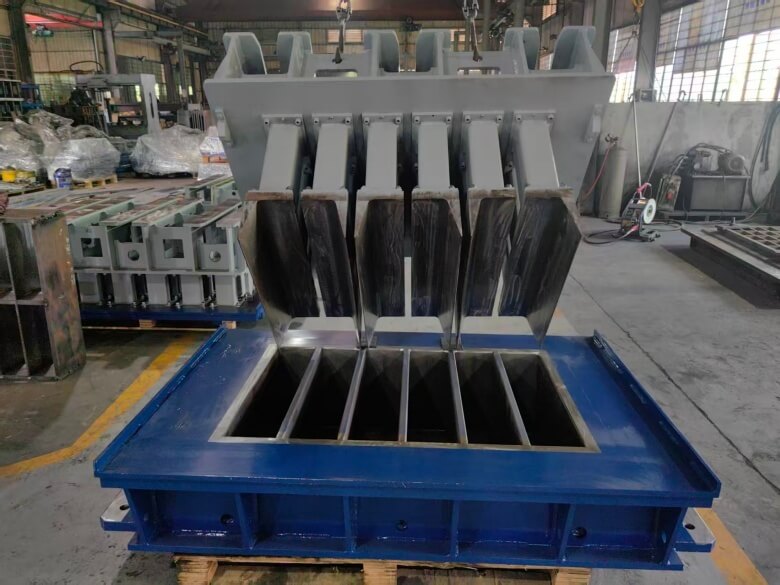
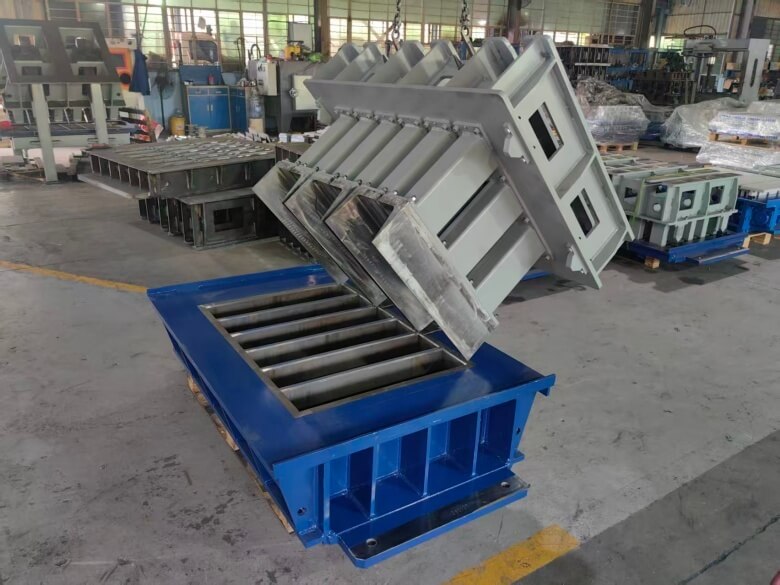
Hollow Block Moulds – for structural masonry units requiring high compressive strength and dimensional consistency
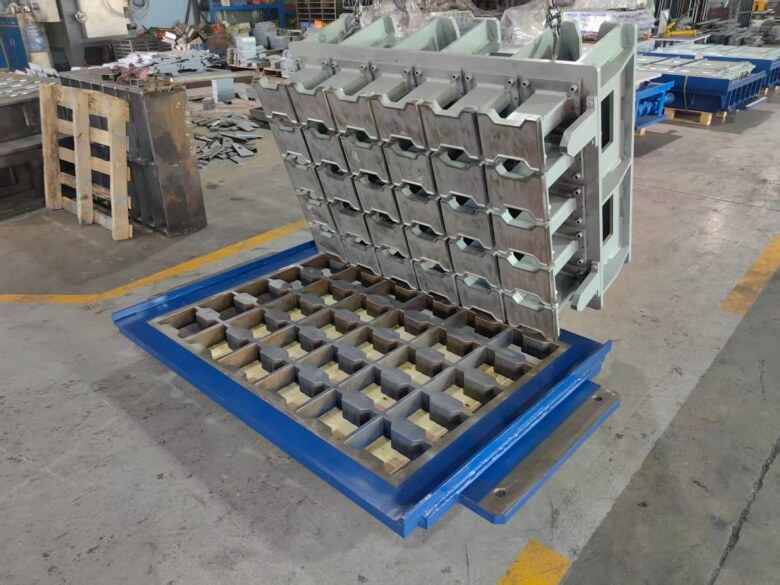
Paver Moulds – for interlocking paving blocks where surface finish and edge precision are critical
Curb Stone Moulds – for infrastructure applications demanding both strength and aesthetic uniformity
Each mold was engineered to meet specific production parameters, ensuring compatibility with the client’s existing block machine setup.
Manufacturing Standards: Precision Meets Durability
To ensure long-term operational stability, several key manufacturing principles were strictly applied:
Mould Types and Application Scope
The delivered molds were designed for three primary product categories:
Hollow Block Moulds – for structural masonry units requiring high compressive strength and dimensional consistency
Paver Moulds – for interlocking paving blocks where surface finish and edge precision are critical
Curb Stone Moulds – for infrastructure applications demanding both strength and aesthetic uniformity
Each mold was engineered to meet specific production parameters, ensuring compatibility with the client’s existing block machine setup.
Manufacturing Standards: Precision Meets Durability
To ensure long-term operational stability, several key manufacturing principles were strictly applied:
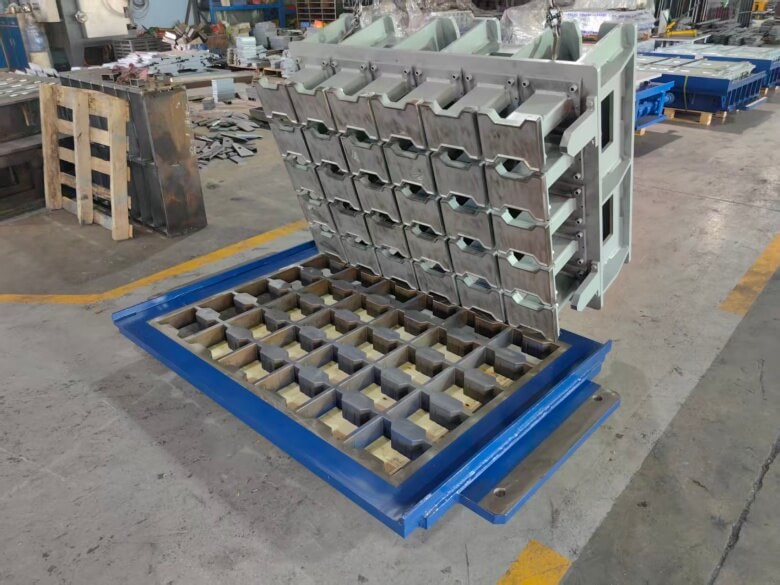 1. Heat Treatment for Wear Resistance
All molds underwent controlled heat treatment processes to enhance structural integrity. This significantly improves resistance to abrasion, which is particularly important in high-frequency production environments.
2. Hardness Control (HRC 60-62)
The mold surfaces were tested and verified to reach a hardness level of HRC 60, a benchmark that balances wear resistance with toughness.
Note: Excessive hardness without toughness can lead to brittleness—precision here is critical.
3. Brand Compatibility and Dimensional Accuracy
Hawen molds are designed in accordance with original specifications of leading global block machine brands, including MASA, HESS, ZENITH, POYATOS, BESSER, and TIGER. This ensures:
Seamless installation
Minimal adjustment during commissioning
Stable operation without vibration deviation
Such compatibility reduces downtime and eliminates unnecessary recalibration.
1. Heat Treatment for Wear Resistance
All molds underwent controlled heat treatment processes to enhance structural integrity. This significantly improves resistance to abrasion, which is particularly important in high-frequency production environments.
2. Hardness Control (HRC 60-62)
The mold surfaces were tested and verified to reach a hardness level of HRC 60, a benchmark that balances wear resistance with toughness.
Note: Excessive hardness without toughness can lead to brittleness—precision here is critical.
3. Brand Compatibility and Dimensional Accuracy
Hawen molds are designed in accordance with original specifications of leading global block machine brands, including MASA, HESS, ZENITH, POYATOS, BESSER, and TIGER. This ensures:
Seamless installation
Minimal adjustment during commissioning
Stable operation without vibration deviation
Such compatibility reduces downtime and eliminates unnecessary recalibration.
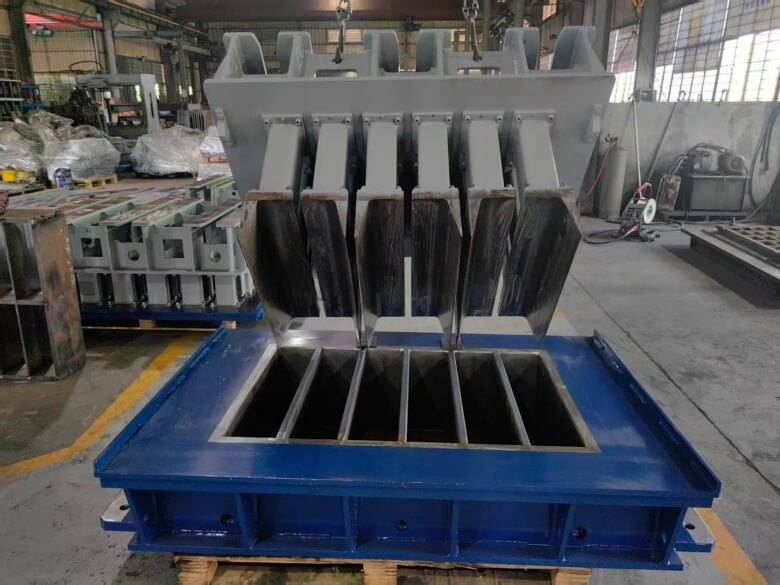 Quality Verification Before Shipment
Before dispatch, each mold set underwent comprehensive inspection procedures, including:
Dimensional tolerance checks
Surface finish evaluation
Assembly testing on reference equipment
This pre-shipment validation ensures that the molds can be deployed directly into production with minimal setup time.
Logistics and Delivery
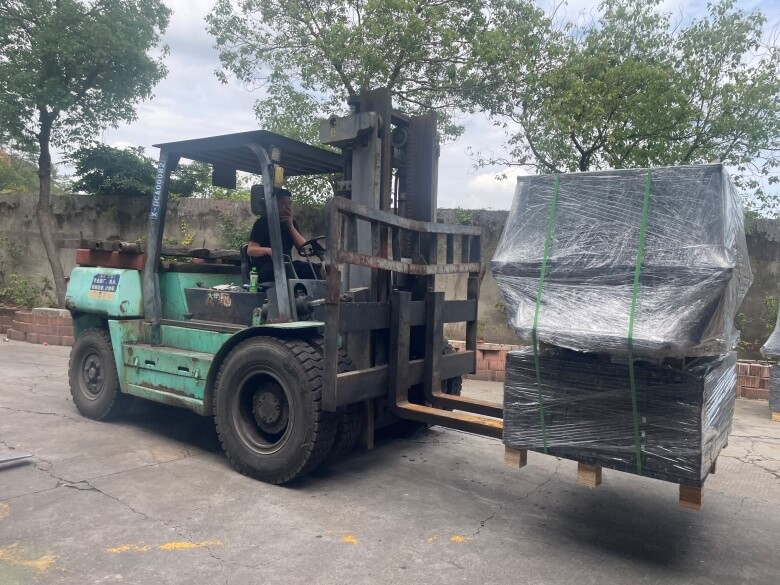
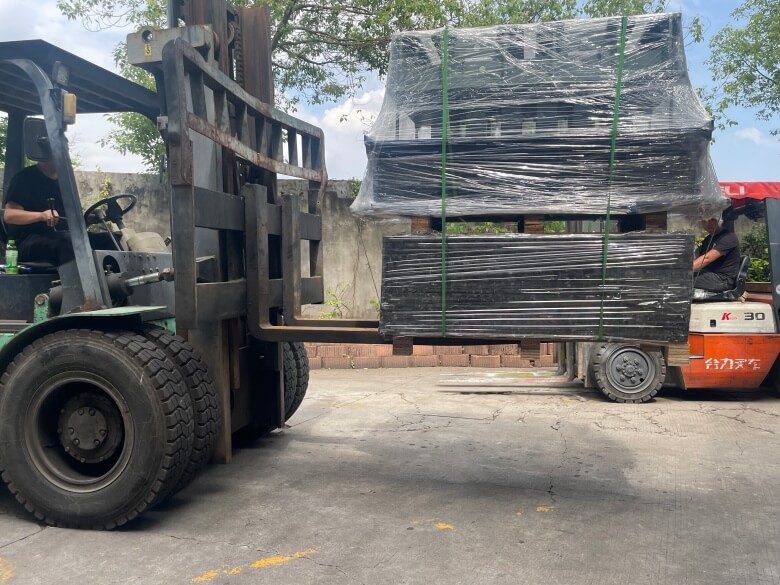
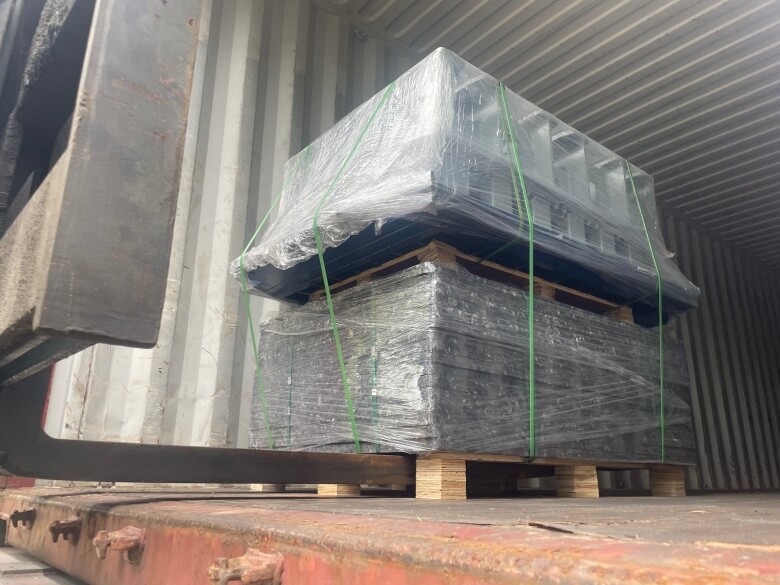
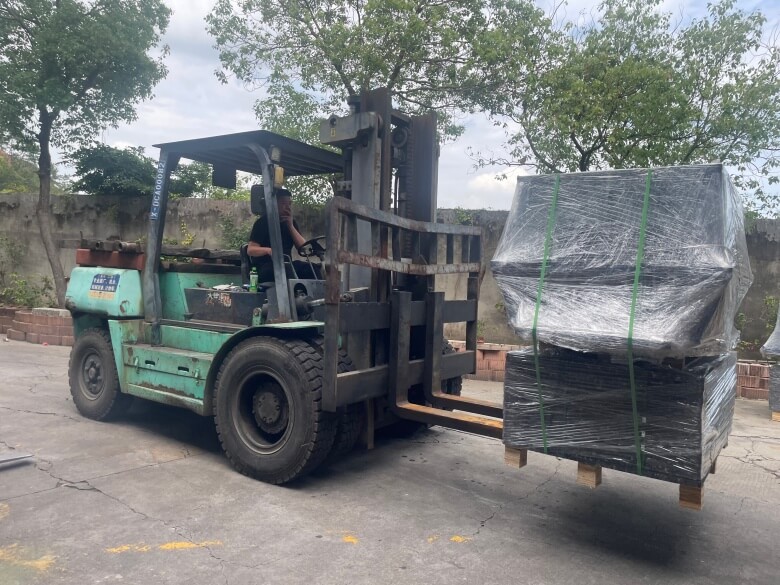
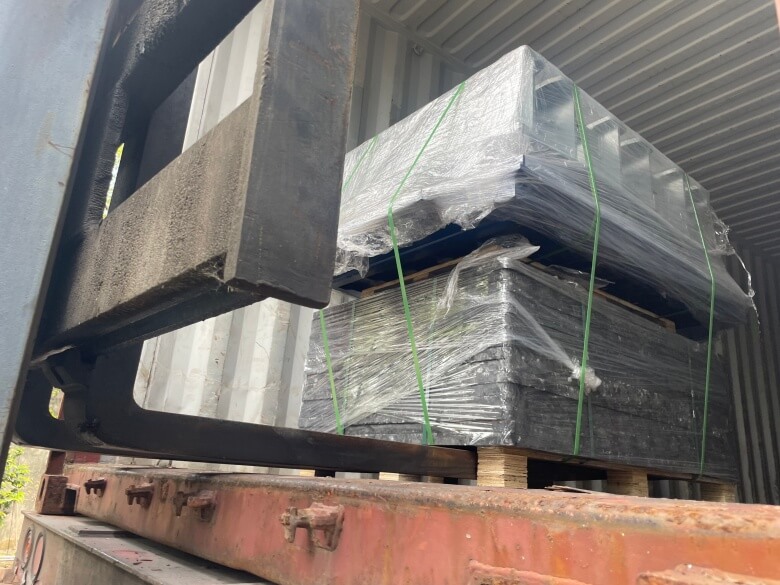
The molds were carefully packaged and shipped to Ukraine, ensuring protection against deformation and corrosion during transit. Given the long-distance international transportation, the cargo was firmly secured using high-strength steel wire ropes, combined with effective moisture-proof protection.
This approach ensured that the molds remained structurally intact and dimensionally stable throughout the entire logistics process, even under extended transit conditions.
Efficient coordination between production and logistics teams further guaranteed timely delivery, fully aligning with the customer's production schedule.
Quality Verification Before Shipment
Before dispatch, each mold set underwent comprehensive inspection procedures, including:
Dimensional tolerance checks
Surface finish evaluation
Assembly testing on reference equipment
This pre-shipment validation ensures that the molds can be deployed directly into production with minimal setup time.
Logistics and Delivery
The molds were carefully packaged and shipped to Ukraine, ensuring protection against deformation and corrosion during transit. Given the long-distance international transportation, the cargo was firmly secured using high-strength steel wire ropes, combined with effective moisture-proof protection.
This approach ensured that the molds remained structurally intact and dimensionally stable throughout the entire logistics process, even under extended transit conditions.
Efficient coordination between production and logistics teams further guaranteed timely delivery, fully aligning with the customer's production schedule.
 Customer Feedback and Operational Impact
According to feedback from the client:
“The molds demonstrate excellent durability and precision. After the trial order, we were confident to proceed with larger quantities. The performance is comparable to European suppliers, with better cost efficiency.”
This endorsement highlights a critical industry insight: reliability is not defined by origin, but by engineering discipline and manufacturing consistency.
Customer Feedback and Operational Impact
According to feedback from the client:
“The molds demonstrate excellent durability and precision. After the trial order, we were confident to proceed with larger quantities. The performance is comparable to European suppliers, with better cost efficiency.”
This endorsement highlights a critical industry insight: reliability is not defined by origin, but by engineering discipline and manufacturing consistency.
 Conclusion: Performance Builds Trust
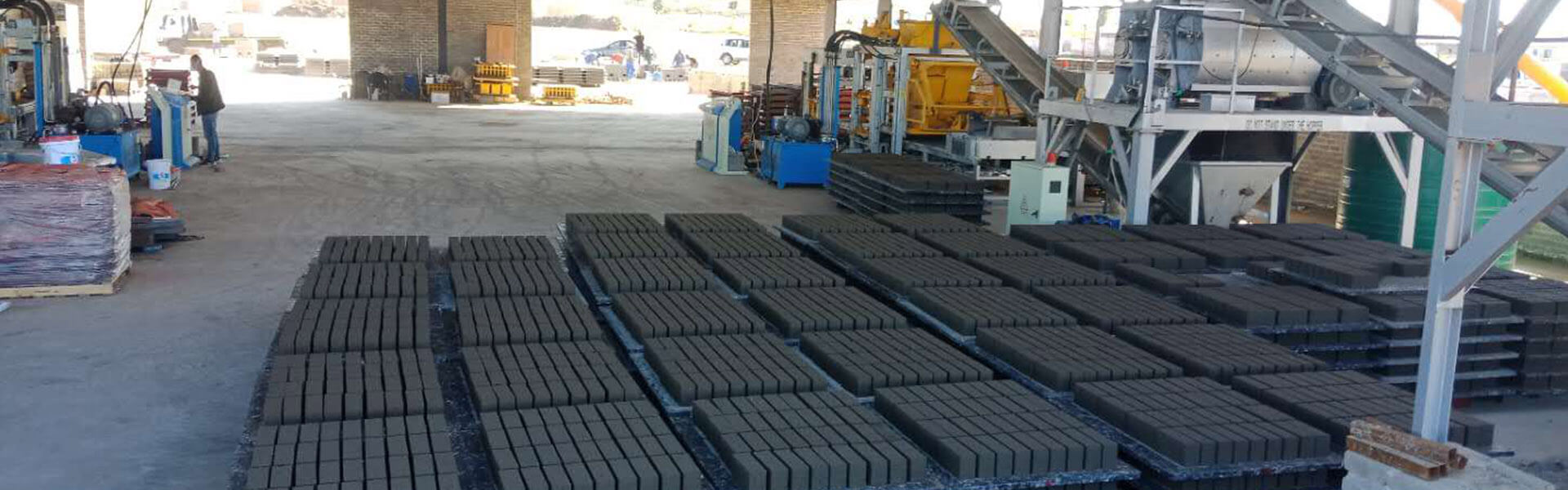
In block production, molds are not consumables—they are strategic assets. Their quality directly influences product strength, dimensional accuracy, and overall production efficiency.
This case reinforces a broader principle:
When engineering precision meets practical application, trust follows naturally—and repeat business becomes inevitable.
Conclusion: Performance Builds Trust
In block production, molds are not consumables—they are strategic assets. Their quality directly influences product strength, dimensional accuracy, and overall production efficiency.
This case reinforces a broader principle:
When engineering precision meets practical application, trust follows naturally—and repeat business becomes inevitable.
For manufacturers seeking to optimize both cost and performance, the focus should not be on minimizing initial expenditure, but on maximizing lifecycle value. Because in the long run, the most economical solution is the one that performs consistently, cycle after cycle.










 Tel: +86-13905968794
 Email: export@hwmachines.com
 MP/WhatsApp: +86-13905968794
 Manufacturer Address:Nanan,Quanzhou City,Fujian Province,China