How Should Buyers Compare One Large Mixer with Two Smaller Mixers for a Block Plant?
A buyer planning a concrete block plant may receive one proposal with a larger concrete mixer and another with two smaller mixers. Adding the nominal capacities can make the offers appear equivalent. In practice, the two arrangements may serve different production duties, rely on different shared equipment, and require different operating sequences.
The useful comparison is not simply one machine against two machines. It is a comparison of how identified materials are prepared and delivered to the intended production routes. The buyer needs to know what each mixer will do, when its output is required, and which conditions allow that output to reach the receiving equipment.
This guide explains how to compare mixer quantity and capacity without assuming that a larger vessel always offers better efficiency or that two mixers automatically provide backup production. It does not prescribe a preferred arrangement, mixing duration, minimum batch size, or capacity allowance. Those decisions require a review of the actual materials, products, equipment configuration, and operating plan.
Compare the complete mixing duty and material route rather than the number of mixer bodies alone.
Define the Mixing Duties Before Comparing Mixer Quantities
Start with a duty schedule. Identify the products to be made, the mixes required, the receiving production routes, and the intended operating pattern. A factory producing standard hollow blocks has a different planning problem from a plant that also makes coloured face-mix pavers. The same proposed mixer quantity can therefore represent very different functions.
Establish whether two mixers are intended for the same duty or separate duties. One may prepare a base mix while another prepares face material. Alternatively, two units may serve separate forming lines or a proposed shared production arrangement. These configurations should not be compared as though both mixers can always perform the same task.
Record the assumptions behind each proposal. If the larger mixer serves one product route while the smaller mixers serve two routes, the offers are not yet on a common basis. Ask each supplier to describe the intended material flow and operating scenarios. A clear explanation is more useful than a capacity total without a process boundary.
Connect the duty schedule with the actual order pattern. Identify whether the factory expects long campaigns of one product, frequent changes between products, simultaneous production, or occasional special batches. Avoid choosing an arrangement from a single peak-output requirement when most operating time will be spent under a different demand pattern.
Compare Usable Batch Delivery on a Common Basis
Clarify the capacity terms used in each quotation. Feeding volume, discharged batch volume, and a mass-based batch statement are not interchangeable descriptions. Retain the supplier's definitions and the material assumptions behind them. Do not add unlike figures together and describe the result as equivalent mixing capacity.
For the same intended duty, ask how each proposed arrangement supplies the required concrete quantity over the relevant operating period. The comparison should include the applicable loading, mixing, discharge, transfer, and waiting sequence. A vessel's nominal volume does not by itself establish how much suitable material reaches the forming section.
Where smaller batches are part of the production plan, request confirmation of the proposed operating range for the actual mixer and material. Do not assume that every mixer can produce every fraction of its nominal batch equally well. Similarly, do not assume that two smaller batches can replace one larger batch without reviewing the receiving and production sequence.
Separate theoretical output from demonstrated usable delivery. A quotation may calculate capacity under uninterrupted conditions, while the factory must also manage material availability, recipe changes, cleaning, and receiving-equipment demand. Ask the supplier to explain which conditions its estimate includes and what remains an operating assumption.
Capacity figures become comparable only when their definitions, material duties, and operating boundaries are consistent.
Identify Shared Equipment That Can Still Stop Both Mixers
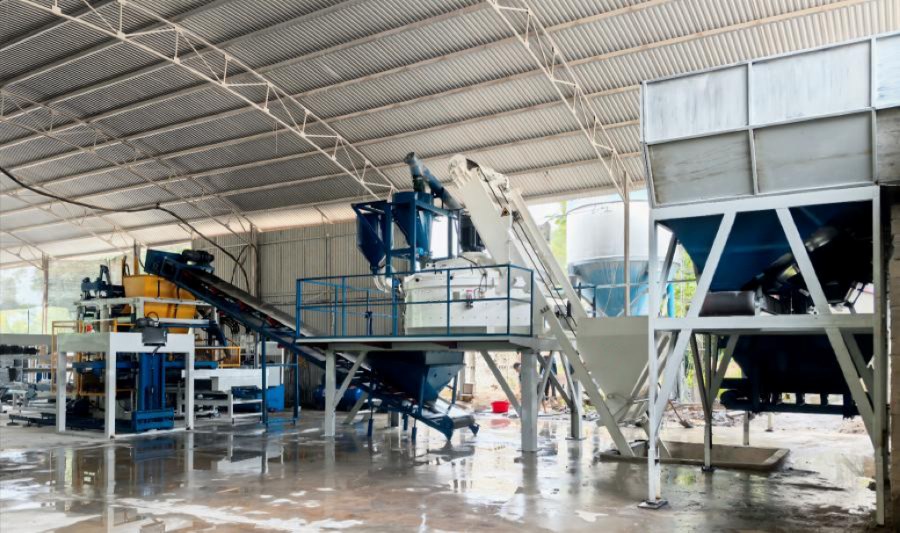
Draw the upstream and downstream connections for each proposed mixer. Identify aggregate supply, cement transfer, liquid dosing, weighing equipment, charging arrangements, discharge routes, controls, and the receiving production equipment. Mark which items are dedicated and which are shared. Two mixer bodies do not establish two independent production routes.
A shared resource may limit simultaneous operation. For example, the proposed arrangement may use a common weighing or transfer stage whose sequence determines when each mixer can be supplied. The supplier should explain how that resource serves the intended duties. Do not assume that separate mixers eliminate every waiting point in the material-preparation route.
Review any claimed backup function as a defined operating scenario. If one mixer is unavailable, which products can the remaining unit prepare, through which confirmed route, and with what reviewed limitations? A maintenance contingency should not depend on an unverified connection or an improvised change to the installed system.
Keep equipment availability separate from product approval. Even where the remaining mixer can serve another route, the corresponding recipe and product arrangements may require review. Buyers should ask for a documented assessment rather than interpreting physical connectivity as permission to transfer every production duty between mixers.
Comparison Topic
Information Required
Assumption to Avoid
Production duty
Products, mixes, receiving routes, and campaign pattern
Every mixer serves the same purpose
Capacity
Defined batch quantities and complete delivery sequence
Adding nominal volumes proves equivalent output
Shared equipment
Dedicated and common supply, transfer, and control interfaces
Two mixers create fully independent routes
Recipe flexibility
Approved duties, material separation, and changeover requirements
Every recipe can move freely between units
Maintenance
Access, isolation arrangements, service scope, and support
An extra mixer guarantees uninterrupted production
Acceptance
Representative operating scenarios and agreed evidence
An isolated demonstration verifies the complete proposal
Review Recipe Separation and Changeover Requirements
Identify which recipes require separate material handling or a controlled changeover. Colour, constituent selection, and product requirements can affect how the plant organizes its mixing duties. The proposed arrangement should explain those duties without promising that simply adding a second mixer removes all possible carryover or production-control concerns.
Check the complete material route when evaluating separation. Dedicated mixing vessels may still receive material through common equipment or deliver through a shared transfer stage. Ask which parts of the route are included in the separation proposal. The buyer should understand whether the quotation addresses only the vessel or the entire relevant production path.
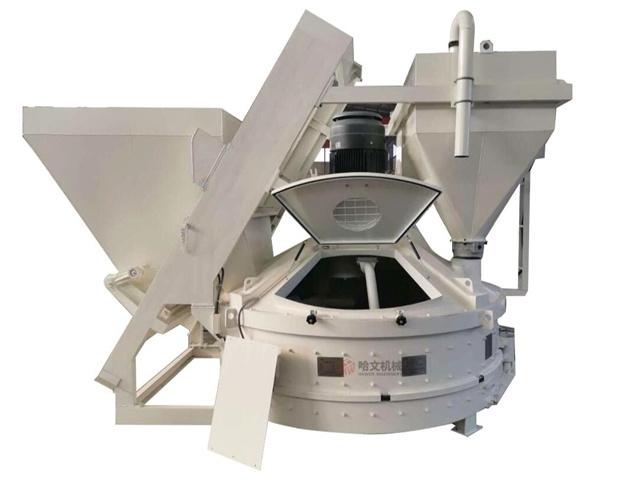
For a proposed planetary concrete mixer arrangement for block production, provide the actual recipe duties and expected campaign pattern. A supplier can then assess the configuration against an identified requirement. A generic request for flexibility gives little basis for deciding whether one mixer, two mixers, or another arrangement suits the business.
Include ordinary changeover activities in the comparison. Record the required preparation, cleaning, verification, and authorization arrangements under the applicable procedures. Do not present a two-mixer proposal as eliminating changeovers unless its actual duties and material routes support that conclusion. Likewise, do not assume that a larger mixer necessarily makes every changeover more difficult.
Recipe flexibility should be assessed against the actual material routes and approved production duties.
Compare Complete Layout and Maintenance Arrangements
Request an arrangement drawing that includes the supporting equipment and access requirements. Comparing the external dimensions of the mixer bodies alone can omit charging equipment, platforms, supports, discharge connections, and service space. The relevant site specialists and supplier should review the complete installation before the buyer approves its footprint.
Identify routine maintenance and inspection needs for each proposal. Ask which components require service, what records are recommended, and how the plant will obtain suitable parts and technical support. Neither one larger unit nor two smaller units is maintenance-free. The comparison should reflect the equipment actually offered and the plant's ability to support it.
Review maintenance availability without assuming that neighbouring equipment can continue operating during every task. Shared structures, supplies, controls, or work areas may affect the permitted operating arrangement. The applicable isolation and maintenance procedures must be defined by responsible personnel. This guide does not authorize work beside moving equipment or changes to protective functions.
Compare the complete installed scope. Include the relevant drives, controls, dosing interfaces, supports, transfer equipment, installation work, and commissioning responsibilities. A quotation containing two mixer bodies may exclude items that another supplier includes with a single larger mixer. Keep exclusions visible rather than assigning them an assumed zero cost.
Request Evidence for the Intended Operating Scenarios
Prepare a short list of scenarios that the selected arrangement needs to support. These may include the principal product campaign, a smaller approved batch requirement, a recipe change, simultaneous duties where proposed, and a defined maintenance contingency. Only include scenarios relevant to the business and technically covered by the proposed configuration.
Ask the supplier to identify what evidence supports each scenario. A demonstration should state the equipment, materials, batch arrangement, receiving route, and operating conditions involved. Where the demonstration differs from the proposed installation, record the differences and which conclusions remain applicable. Do not treat an illustrative video as verification of the buyer's final plant.
Evaluate the resulting material and product requirements as well as the movement sequence. Delivering a batch without a visible interruption does not establish that every relevant production requirement has been met. The responsible materials and quality teams should define the appropriate verification and acceptance arrangements for the intended products.
Record unresolved assumptions before selecting the offer. From a quotation-review perspective, the important question is not which proposal contains the most equipment. It is whether the proposed configuration can explain how the required production duties will be performed, supported, and verified. Missing evidence should remain visible in the decision.
Translate the accepted operating basis into the purchase documentation. Identify the approved duties, supplied equipment, responsibilities, relevant drawings, and agreed verification scope. If a future expansion is discussed but not included, label it as a separate proposal rather than treating it as an established capability of the purchased arrangement.
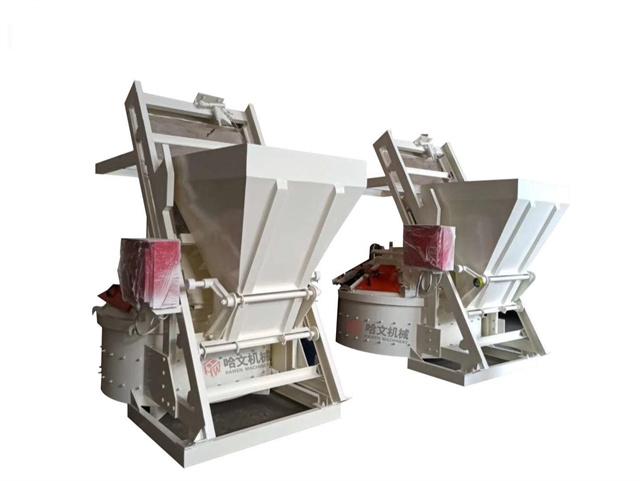
Equipment photographs illustrate mixer arrangements; they do not demonstrate equivalence between different proposed production systems.
FAQ
Are two smaller mixers equivalent to one mixer with the same combined nominal capacity?
Not automatically. Compare defined batch quantities, complete delivery sequences, material duties, shared resources, and receiving requirements. The arithmetic total does not establish equivalent usable production.
Do two mixers guarantee backup production?
No. The remaining mixer needs a confirmed route, suitable duty, and reviewed operating conditions. Shared equipment can still affect both units. Any backup claim should describe the actual scenario and its limitations.
Should base mix and face mix always have separate mixers?
The appropriate arrangement depends on the proposed products, material handling, production requirements, and supplier assessment. Define the duties and required separation before treating any equipment configuration as universally necessary.
Is one larger mixer always more economical?
No general conclusion follows from mixer quantity alone. Compare the complete installed scope, operating pattern, changeover needs, maintenance arrangements, and usable production basis. Avoid unsupported savings claims based only on purchase price or nominal capacity.
What should buyers provide before requesting a recommendation?
Provide the product range, recipe duties, batch requirements, expected campaigns, receiving routes, available layout, and any retained equipment. State whether simultaneous operation or a backup scenario is genuinely required.
Conclusion
Comparing one large mixer with two smaller mixers requires a common production basis. Define each mixing duty, clarify capacity terms, identify shared resources, and review recipe flexibility and maintenance arrangements. Keep the complete material route in view rather than comparing vessel quantities alone.
The stronger proposal explains how the intended products will be supported under identifiable operating conditions. Before ordering, connect those conditions with the supplied equipment, layout, responsibilities, and verification evidence. That provides a more useful decision basis than assuming that either larger capacity or additional mixer bodies automatically creates a better block plant.
Planning a block plant and unsure whether one larger mixer or two smaller units fits your production duties? Share your product range, recipe duties, batch requirements, expected campaigns, receiving routes, available layout, and any retained equipment with the Hawen team. You can also review the batching machine main parts to understand the shared supply and weighing interfaces that affect both mixer arrangements.











 Tel: +86-13905968794
 Email: export@hwmachines.com
 MP/WhatsApp: +86-13905968794
 Manufacturer Address:Nanan,Quanzhou City,Fujian Province,China